Viewing results 919 - 924 of 1402
A documentary film entitled "Dreamers", released by BWG Production in Uzbekistan, has won the award for "Best Historical Film of December" at the World Film Festival in Cannes, France. This win opens the door for the movie to compete for the festival's prized "Film of the Year" title. Ruslan Saliev, the film's director, hailed the success as extraordinary for Uzbek film. He was confident that Dreamers, which explores the nation's historical suffering, would strike a chord with viewers around the world. Saliev emphasized the value of these festivals in showcasing the nation’s cultural legacy abroad. He also hoped for the chance to represent Uzbekistan at more international film festivals. "The use of reconstructions and art installations as a modern artistic interpretation in the documentary film Dreamers [should] be considered a positive experience," explained Uzbek film critic Mohinur Ahmetjonova. "Of course, this approach doesn't always fully reveal the [true] reality, but it gives an effective result in creating a general representation. But when it comes to covering the historical truth, it is noticeable that there is an attempt to avoid the bloody past and to present the atrocities that happened in a [softer light]. It's no coincidence that the approach of trying to describe the achievements of the period has caused several objections by historians and film experts." "The fact that the filmmakers tried to combine large-scale events in one film gives the impression that they were a little distracted from the original goal... in general, in this period when new views on history are being formed, it's natural that there are different opposing opinions about the film," Ahmetjonova added. Dreamers won the prize over the English film The Shamrock Spitfire, which tells the story of an Irish military pilot during WWII.
According to the World Bank’s latest ‘Listening to Kazakhstan’ survey, around 70% of people in the country are happy with their life – a figure that has remained constant since its first survey in 2021. The survey for 2023, conducted in partnership with the United Kingdom’s department for international development, monitors the economic and social wellbeing of Kazakhstan’s population, and provides insights into the impact of policy changes on households. The survey reaches 1,400 households in urban and rural areas. It revealed that public perceptions of economic conditions significantly improved last year. It found that a higher percentage of respondents in 2023 believed it was a good time to start a business compared to 2021 and 2022. However, this opinion dipped in the final quarter of 2023. Around three-quarters of respondents expressed optimism about the country’s long-term economic outlook. This optimism was especially strong in respondents aged 18-24 and in high-income families. The survey showed that support for the government’s reforms increased to 67% last year and was particularly high among young people, the elderly, and people in rural areas. Metin Nebiler, head of the World Bank in Kazakhstan’s poverty and equity team, commented: “We found it very encouraging to see that the overall wellbeing of Kazakhstanis has been improving. The views on the [economic] outlook and the government’s performance are stable or trending positive.” However, citizens also registered several concerns. Inflation remains a significant issue for 94% of respondents, although the annual inflation rate declined in 2023. The survey also found that challenges such as income inequality (92%) and worries about job losses (over 50%) still need to be addressed. Additionally, perceptions of government openness and anti-corruption efforts only showed only slight improvement.
Jewelers in Kyrgyzstan produced goods worth $1.6 million in 2023, five times more than in 2022, the Ministry of Economy and Commerce of Kyrgyzstan has stated. The ministry said the jewelry industry is important for the republic, not only because of its income, but also because of its importance in the country's culture, history, and tourism, and the government will support it in every way possible. "As part of the state support to date, jewelry manufacturers pay VAT with an 80% reduction. The leadership of the ministry highly appreciates the contribution of manufacturers to the preservation and development of this beautiful art," Deputy Minister of the Economy and Commerce, Ainura Usenbekova said at a meeting with jewelers. Meanwhile, the jewelers noted that despite the fact that more than 20 tons of gold is mined annually in Kyrgyzstan, the main problem for their industry is the supply of this precious metal. "The situation in this area has not changed for many years. We do not have physical access to metal, and if we do, it is at an inflated price. Gold bars sold to us by the National Bank between 5 and 20% more expensive than the global gold price. Plus, another 5% is added by Kyrgyzaltyn," said Stalbek Akmatov, president of the Kyrgyz Jewellers Union. Kyrgyzaltyn a Kyrgyz state company which controls gold circulation in the country Jewelers believe that until issues with the price of gold are settled so it's sold on the domestic market at prices comparable to those on the London Mercantile Exchange, serious development of the industry is out of the question. The Ministry of the Economy stated that they are aware of the problem, and the authorities are ready to discuss and work on creating competitive conditions for the continued development of the industry.
Kristina Menisova from Almaty has been named the Model of the Year at the U.S.'s National Social Media Awards, an event that honors the best online brands, influencers, models and artists. The National Social Media Awards are held annually in major cities around the world, including Dubai, Los Angeles and London. Menisova took first place in the Best Model category. The 29-year-old has already achieved success in the modeling business; for the last six years she has appeared at fashion shows for famous global brands. Her face has also graced the covers of magazines such as Vogue, Marie Claire and Elle. Kristina works with Chopard, Cartier, Michael Costello, Balmain, Roberto Cavalli and Yves Saint Laurent, among others. The National Social Media Awards is her third major win; she has previously won the Model of the Year category for Glamour Bulgaria and FashionTV Russia's Model of the Year 2023. In 2022 Kristina took home the title of Miss Universe World International.
The International Finance Corporation (IFC) will help launch a project to rehabilitate, modernize and operate the outdated electricity distribution system in Samarkand using a public-private partnership. A local distribution system operator has been selected as the platform for the pilot project. Expansion of the project across the entire country is being considered in the future. The Uzbek economy is one of the most energy-intensive economies in the world. On average, it consumes three times more energy for the same unit of GDP than other European and Central Asian countries. Uzbekistan's outdated electricity transmission and distribution infrastructure leads to high losses across the power grid. Modernization and digitization of transmission and distribution systems will also enable the introduction of more green energy-generation capacity. This is especially relevant for renewable energy sources, such as solar and wind, as flexible smart systems can more easily adapt to their variable output. Public-private partnership projects have in recent years become increasingly in demand in Uzbekistan. The plan is to implement such initiatives worth $14 billion by 2026. This will cover half of the country's investment needs. With the help of foreign investment, Uzbekistan intends to develop its transportation, energy, agriculture, and social-services infrastructure.
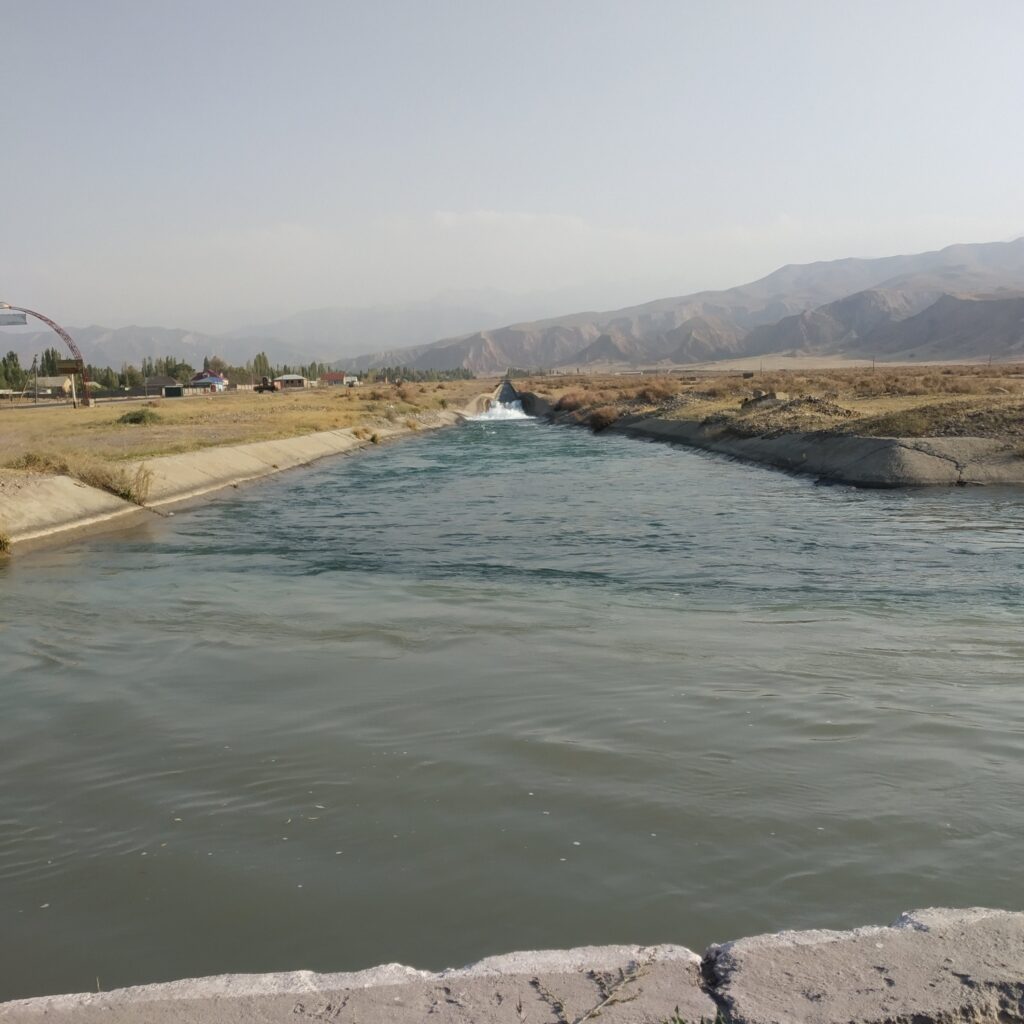
The government of Kazakhstan has approved the development of a water resources management system for 2024-2030. Speaking at a meeting on January 30th, the minister for water resources and irrigation, Nurzhan Nurzhigitov, said that his department plans to build 20 new and reconstruct 15 existing reservoirs, as well as modernize over 14,000km of irrigation canals and hydraulic structures. Mr Nurzhigitov added that irrigation water losses during transportation should be reduced from the current 50% to 25%, which will make it possible to increase the area of irrigated land in the country to 2.5 million hectares by 2030. To encourage farmers to use water-saving technologies, subsidies for creating irrigation systems and buying drip and sprinkler irrigation equipment will be increased from 50% to 80% of their costs respectively. Prime minister Alikhan Smailov, who chaired the meeting, emphasized the importance of the rational use of water. He pointed out that the Big Almaty Canal, for instance, had not been repaired in the 40 years of its existence. In the country’s Turkestan, Kyzylorda and Zhambyl regions most of the main and inter-farm canals are in a worn-out condition, with water losses reaching 40%. Mr Smailov also pointed out that water-saving systems in the country are currently being introduced only slowly. Drip irrigation is currently used on as little as 84,000 hectares out of the planned 312,000. Kazakhstan, especially its dry southern and eastern regions, is largely dependent on irrigation water coming from its upstream neighbors, Kyrgyzstan and China.