• KGS/USD = 0.01144 0%
  • KZT/USD = 0.00218 0%
  • TJS/USD = 0.10663 0.38%
  • UZS/USD = 0.00008 0%
  • TMT/USD = 0.28530 0%
  • KGS/USD = 0.01144 0%
  • KZT/USD = 0.00218 0%
  • TJS/USD = 0.10663 0.38%
  • UZS/USD = 0.00008 0%
  • TMT/USD = 0.28530 0%
  • KGS/USD = 0.01144 0%
  • KZT/USD = 0.00218 0%
  • TJS/USD = 0.10663 0.38%
  • UZS/USD = 0.00008 0%
  • TMT/USD = 0.28530 0%
  • KGS/USD = 0.01144 0%
  • KZT/USD = 0.00218 0%
  • TJS/USD = 0.10663 0.38%
  • UZS/USD = 0.00008 0%
  • TMT/USD = 0.28530 0%
  • KGS/USD = 0.01144 0%
  • KZT/USD = 0.00218 0%
  • TJS/USD = 0.10663 0.38%
  • UZS/USD = 0.00008 0%
  • TMT/USD = 0.28530 0%
  • KGS/USD = 0.01144 0%
  • KZT/USD = 0.00218 0%
  • TJS/USD = 0.10663 0.38%
  • UZS/USD = 0.00008 0%
  • TMT/USD = 0.28530 0%
  • KGS/USD = 0.01144 0%
  • KZT/USD = 0.00218 0%
  • TJS/USD = 0.10663 0.38%
  • UZS/USD = 0.00008 0%
  • TMT/USD = 0.28530 0%
  • KGS/USD = 0.01144 0%
  • KZT/USD = 0.00218 0%
  • TJS/USD = 0.10663 0.38%
  • UZS/USD = 0.00008 0%
  • TMT/USD = 0.28530 0%

Viewing results 835 - 840 of 1322

Kazakhstan in 80th Place in New Global Ranking of Average Wages

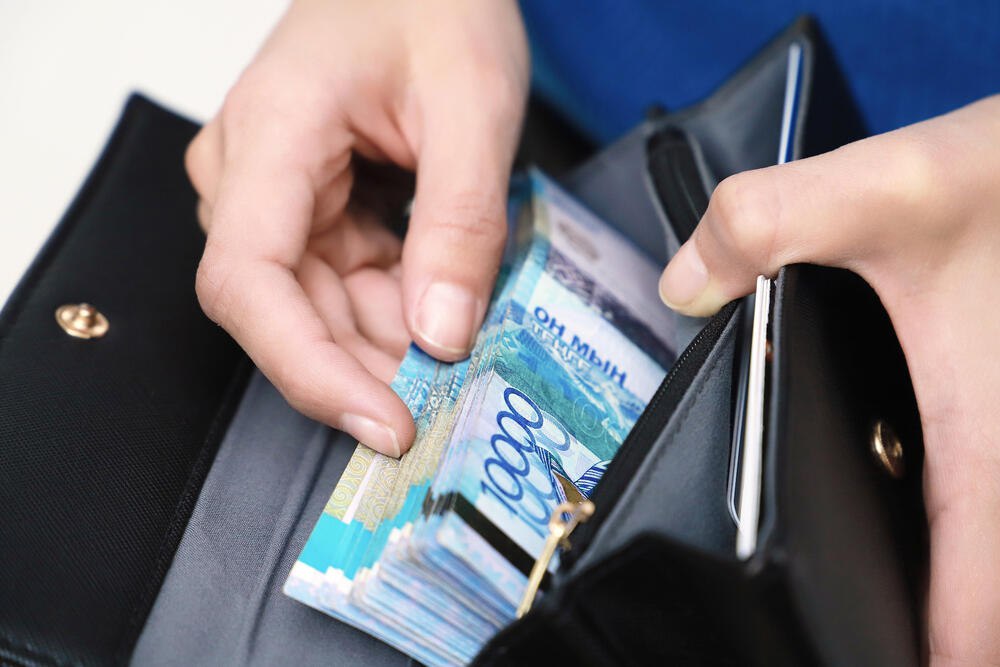
In a new ranking of the gross average salary in 196 countries recently published by CEO World Magazine, Kazakhstan is in 80th place. The average wage in the country amounts to $673 per month. Salaries are highest in the oil-producing western Atyrau and Mangystau regions, followed by the capital city Astana, and business capital Almaty. Wages are lowest in the southern regions of Zhambyl, Zhetysu and Turkestan, as well as in the North Kazakhstan region. Gross wages are the total sum of wages before taxes and other deductions, such as contributions to pension funds, health insurance, and others. Kazakhstan has the highest average salaries in Central Asia, followed by Turkmenistan ($654 per month), Uzbekistan ($351), Kyrgyzstan ($228) and Tajikistan ($169). The CEO World ranking states that in the first quarter of 2024, the average monthly nominal salary of workers in Kazakhstan amounted to 382,000 tenge ($844), which is 12.2% more in value terms than a year earlier. The index of real wages amounted to 102.7%, which shows an increase in purchasing power of 2.7%.

Water Shortages in Kyrgyzstan’s Cities Despite Full Reservoirs

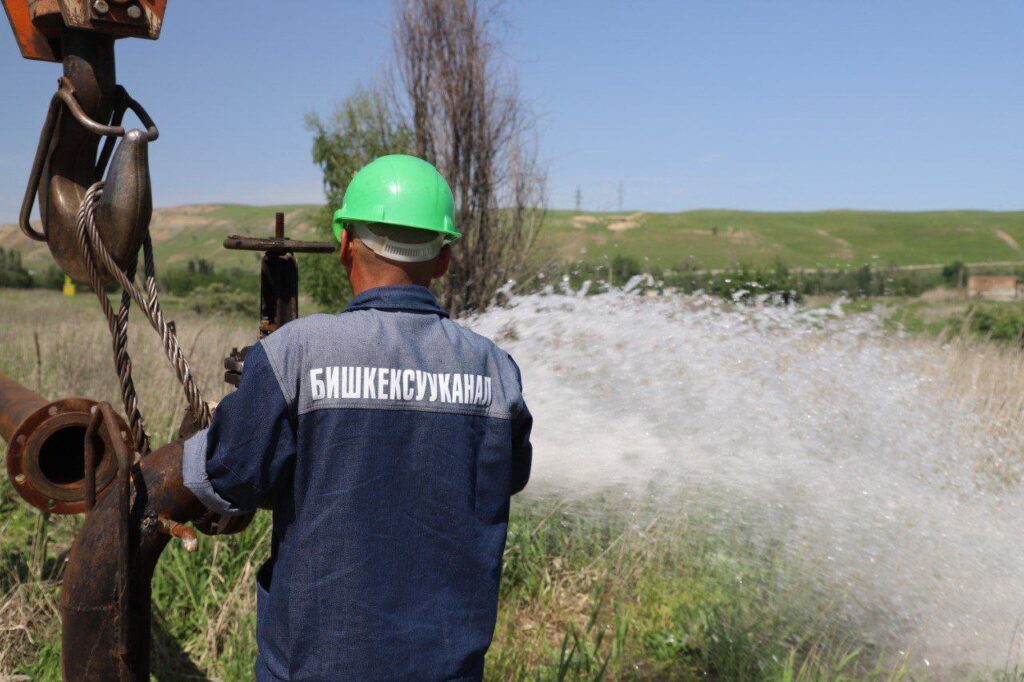
Due to a shortage, Kyrgyz authorities have banned the use of drinking water to irrigate cities' gardens and orchards. Implemented in Bishkek and Osh, the ban which operates during daytime hours, is set to run until the end of the summer. In a report to TCA,  Erlan Timurov, chief public relations specialist for Bishkekgorvodokanal, the company in charge of drinking water in Bishkek, stated: "Every year, Bishkekvodokanal produces about 145 million cubic meters of drinking water, around  48m cubic meters of which are lost as a result of  illegal connections to our networks and leaks caused by worn-out infrastructure" The situation is similar in southern Kyrgyzstan and in Osh, utility companies in the course of monitoring levels, regularly identify and cut off water supplies to those illegally  connected to the system. "The average daily consumption of drinking water in residential areas increases fivefold in summer," explained Timurov. "Most of this increase is spent on watering vegetable gardens and filling swimming pools. As a result, some residents experience water shortages." Ironically, the water deficit is developing against a backdrop of overflowing local reservoirs caused partly by abnormal weather melting mountain glaciers. Under the circumstances, the Tien Shan High Mountain Research Centre at the Institute of Water Problems and Hydropower in Kyrgyzstan blames cities' water shortages on irrational use. "In the 1980s , collective and state farms universally introduced the so-called sprinkler system. Back then,  500 to 1,000 cubic meters of water were required to irrigate one hectare.  Today, that has risen to  2 to 3 thousand cubic meters. The problem is that we have lost many technologies and do not know how to use water effectively," claimed  the scientific center. Drip irrigation used worldwide, is now being introduced in Kyrgyzstan. However, because  it's expensive, the percentage of Kyrgyz farmers using this type of irrigation is extremely small and the majority  continue their habit of using drinking water in their fields, gardens, and orchards using outdated irrigation systems .

Former Opposition Party Leader Saidjafar Usmonzoda Arrested in Tajikistan

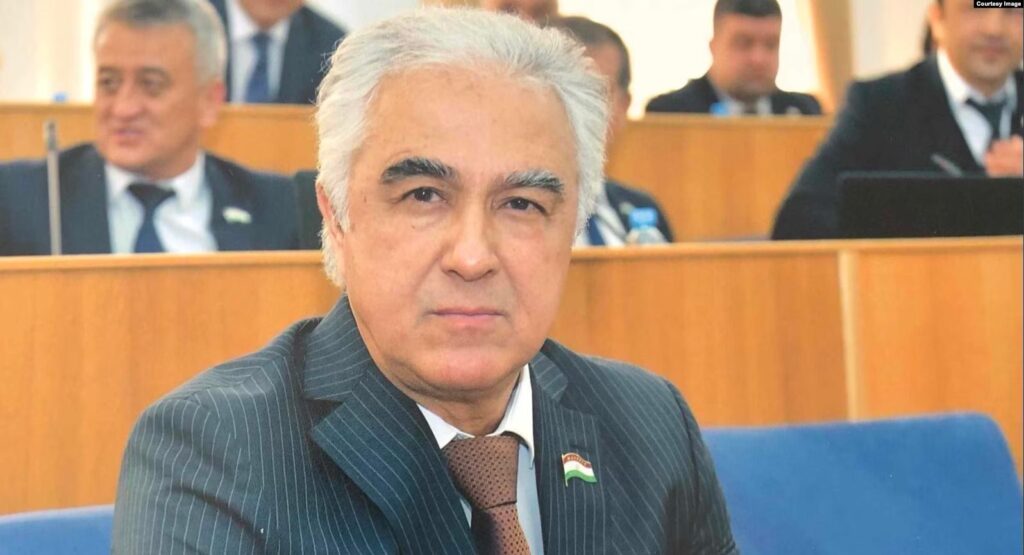
Saidjafar Usmonzoda, a member of parliament and former chairman of the Democratic Party of Tajikistan, has been stripped of his parliamentary immunity and arrested in Dushanbe. The decision to strip Usmonzoda of immunity was made at a meeting of the fifth session of the Majlisi Namoyandagon (parliament) at the suggestion of Tajikistan's Prosecutor General, the Khovar news agency has reported. A preliminary investigation found that in September 2021, Usmonzoda spoke on a cell phone with Sharofiddin Gadoev, deputy head of the extremist terrorist organization, Paimoni Milli Tochikiston, discussing plans to usurp state power in Tajikistan. According to the investigation, Gadoev promised that to achieve this goal, the head of the Islamic Renaissance Party, which is banned in Tajikistan, Mukhiddin Kabiri, would provide financial assistance and more than 3,000 fighters from the terrorist organization Jamaat Ansarulloh from abroad. According to law enforcement, Usmonzoda recruited supporters from various social strata inside and outside the country to destabilize the sociopolitical situation in several regions in the shortest possible time, seizing law enforcement agencies and military structures, taking weapons, and violently overthrowing the state. According to the investigation materials, to implement these plans, Usmonzoda requested $10 million from a representative of a foreign country to attract influential persons and organize rallies. On June 12th, 2024, a criminal case was initiated against Usmonzoda and his associates, with Usmonzoda being arrested as a suspect.

Controversial Petition on “LGBT Propaganda” Passes Threshold for Consideration in Kazakhstan

A petition against so-called “LGBT propaganda” has received more than 50,000 signatures, meaning Kazakhstan’s Ministry of Culture and Information must consider it. However, a number of experts believe that restrictions on the gay community would damage Kazakhstan’s image. In addition, the petition’s authors are known for their controversial initiatives.  The Kazakhstan Parents' Union is the author of the petition “We are Against Open and Concealed LGBT Propaganda in the Republic of Kazakhstan,” which was published on the official E-Petition.kz portal. According to Article 90-4 of the Administrative Procedural Code, the government must consider a petition with 50,000 signatures. A working group including interested parties, government agencies, and public associations will be created. The consideration of official petitions are a relatively recent innovation. So far, only three have collected the required number of signatures. The first came in the wake of the Nukenova murder at the hands of a disgraced former minister.  It was considered by the Kazakhstan president himself and brought about landmark legislation on domestic violence. The decision to allow public input via petitions is seen as a sign of the fulfillment of President Tokayev's promise of a more engaging and aware "listening state." Kazakhstan has seen repeated attempts to include in various legislative acts such a ban on promoting “nontraditional relations.” However, these amendments were not adopted, though numerous Mazhilis (lower chamber of parliament) deputies and public figures spoke out in favor of them. Nevertheless, there have been cases in Kazakhstan where media products containing what is deemed “homosexual content” did not reach the market. For example, in 2022, the former Minister of Culture and Information, Dauren Abaev, announced that, "In response to numerous requests from citizens and the media, I inform you, the animated film Lightyear will not be shown in Kazakhstan." Officially, however, the ministry did not prohibit the screening of the Hollywood animation in cinemas. According to rumors, distributors themselves canceled showings in response to the public outcry. Also, in January 2024, a website for LGBT people was blocked in Kazakhstan. The site, among other things, had materials to help young people answer questions about their sexual orientation. “During monitoring of the internet resource selftanu.kz, a violation of the law was identified related to the posting of information harmful to the health and development of children,” the Ministry of Culture stated in justifying blocking the site. The head of the group pushing the current petition, Bagila Baltabaeva, stated that, “Same-sex love is being openly forced on our children. It is forced [on them] in bookstores, on TV screens, and on smartphones. Young people openly spread [information about] and promote their unhealthy relationships. Thus, stealthily and subtly, new standards of sexual relations are taking shape among young people. In parallel, it is promoted that traditional values are relics of the past, a sign of backwardness. Therefore, for fear of criticism, many remain silent. And those who work up the courage and speak out against LGBT propaganda are branded as retrogrades and conservatives.” This is not the...

Famous Tajik Blogger Subjected to Domestic Violence

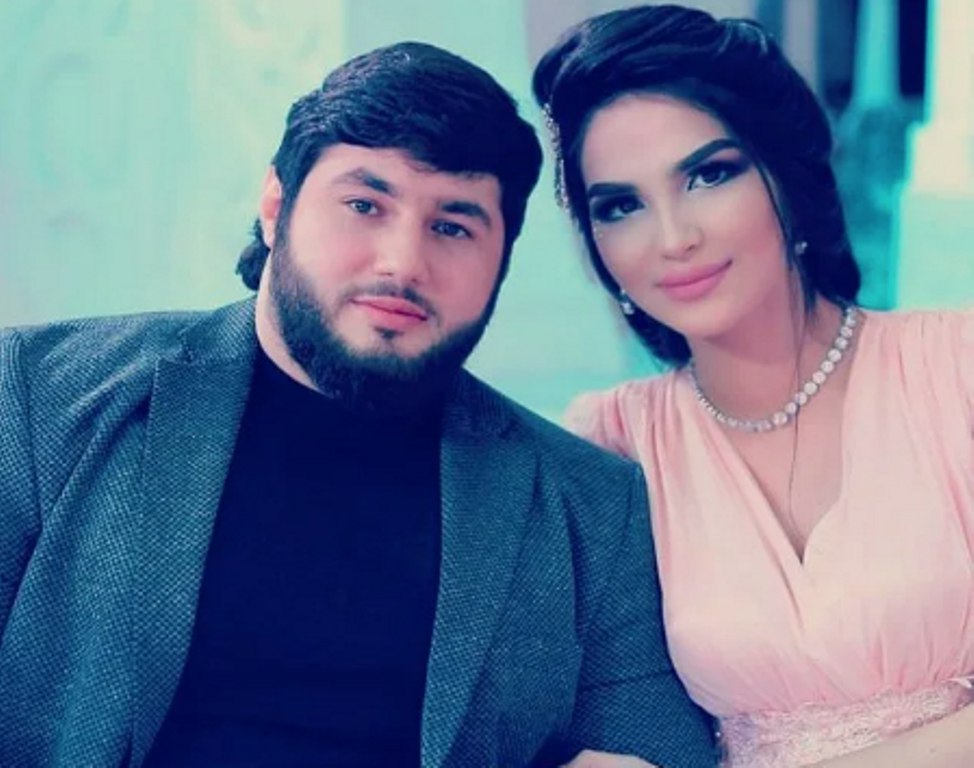
In Tajikistan, the husband of famous blogger Rukhshona Rakhmatulloeva has been arrested after she complained of domestic violence, Asia-Plus reports. According to the Dushanbe City Department of Internal Affairs, Rukhshona Rakhmatulloyeva, known on Instagram under the nickname Sofi_1111 where she has more than 400,000 followers, appealed to the authorities through an e-mail in which she complained of beatings and rough treatment by her 32-year-old husband, Umed Rakhmatulloyev. Earlier, followers circulated screenshots of the blogger's post on her page, where she reported that her husband abuses her and threatens her with a knife. In the posts, it is reported that her husband sleeps and sits at home all day while she has to work and support the family. In addition, it is claimed that their children suffer psychologically due to frequent conflicts at home. "The investigation, which included interrogations of the suspect, the victim, and witnesses, confirmed the facts of violence and misunderstanding in the family. The Shohmansur district court sentenced him to administrative arrest for seven days,” the Ministry of Internal Affairs said in a statement. The problem of domestic violence is acute in Tajikistan. According to the Bureau for Human Rights and Rule of Law, 50 to 80% of women and children in the country are subjected to violence. According to the UN, every fifth woman in this country is a victim of domestic violence perpetrated by their husband, mother-in-law, or other family members. Nevertheless, only 1 in 10 women seek help to remedy the situation.

Radicalism Attracts Disenfranchised Youth in Tajikistan

On June 11th, eight natives of Tajikistan were detained in the United States suspected of attempting to organize terrorist attacks and belonging to ISIS. Previously, citizens of Tajikistan were arrested in Russia, accused of participating in the attack on the Crocus City Hall near Moscow. In just the past few years, natives of Central Asian states have been involved in ten attempted terrorist attacks. Zamir Karazhanov, a Kazakhstani political scientist and director of the Kemel Arna Public Foundation, believes that the deteriorating economic situation in the country is behind such radicalization. As reported by TCA, eight citizens of Tajikistan taken into custody in Los Angeles, New York, and Philadelphia are suspected of having links to the terrorist group, ISIS. The detentions were made by U.S. Immigration and Customs Enforcement (ICE) in close coordination with the FBI's Joint Terrorism Task Force. Initially, it was stated that those arrested were Russian citizens of Tajik origin, but now their nationality has now been clarified. Citing sources from law enforcement agencies, media in the U.S. has reported that officially the migrants were held in connection with the violation of immigration laws. At the same time, they have not yet been charged with making preparations for a terrorist attack. According to sources, FBI agents have been following those detained for several months, and audio picked up by a bug allegedly has one of the suspects talking "about bombs.” Several days have now elapsed, but the U.S. authorities are still to release an official comment. The authorities in Tajikistan, meanwhile, are glossing over the incident. However, a Radio Ozodi source in New York said that the detentions of citizens from Central Asian countries began two months ago, since when 20 people have been detained, including 16 natives of Tajikistan, though “some of them were later released,” the source stated. According to the political scientist and Russia expert, Malek Dudakov, 50,000 Central Asians illegally entered the U.S. in 2023 alone: 17,000 from Uzbekistan, 7,000 from Kyrgyzstan, and 3,000 from Tajikistan. "Republicans blame Biden for artificially creating an explosive situation inside the United States, which could lead to a wave of terrorist attacks. And U.S. law enforcers fear that the U.S. may also expect an October 7th scenario in Israel with simultaneous attacks by Islamists in different cities,” he wrote on the Telegram. Following the terrorist attack on the Crocus City Hall, several countries, including Russia and Turkey, have tightened their migration policies toward people from Tajikistan. Kazakhstani political scientist, Zamir Karazhanov, told The Times of Central Asia that terrorist movements are influencing Tajik citizens because of the dire economic situation in the country. "During the 1990s and the civil war, a severe Islamicization of society began. Families were Islamiziced, and the economic factor, poverty, was superimposed on this. Similar processes were observed in all Central Asian countries, where religious young people began to come into contact with various radical extremist organizations. They are then processed and brainwashed into believing that everything they do is for the good...