• KGS/USD = 0.01144 0%
  • KZT/USD = 0.00208 0%
  • TJS/USD = 0.10516 0.77%
  • UZS/USD = 0.00008 0%
  • TMT/USD = 0.28571 0%
  • KGS/USD = 0.01144 0%
  • KZT/USD = 0.00208 0%
  • TJS/USD = 0.10516 0.77%
  • UZS/USD = 0.00008 0%
  • TMT/USD = 0.28571 0%
  • KGS/USD = 0.01144 0%
  • KZT/USD = 0.00208 0%
  • TJS/USD = 0.10516 0.77%
  • UZS/USD = 0.00008 0%
  • TMT/USD = 0.28571 0%
  • KGS/USD = 0.01144 0%
  • KZT/USD = 0.00208 0%
  • TJS/USD = 0.10516 0.77%
  • UZS/USD = 0.00008 0%
  • TMT/USD = 0.28571 0%
  • KGS/USD = 0.01144 0%
  • KZT/USD = 0.00208 0%
  • TJS/USD = 0.10516 0.77%
  • UZS/USD = 0.00008 0%
  • TMT/USD = 0.28571 0%
  • KGS/USD = 0.01144 0%
  • KZT/USD = 0.00208 0%
  • TJS/USD = 0.10516 0.77%
  • UZS/USD = 0.00008 0%
  • TMT/USD = 0.28571 0%
  • KGS/USD = 0.01144 0%
  • KZT/USD = 0.00208 0%
  • TJS/USD = 0.10516 0.77%
  • UZS/USD = 0.00008 0%
  • TMT/USD = 0.28571 0%
  • KGS/USD = 0.01144 0%
  • KZT/USD = 0.00208 0%
  • TJS/USD = 0.10516 0.77%
  • UZS/USD = 0.00008 0%
  • TMT/USD = 0.28571 0%

Viewing results 925 - 930 of 1441

President Rahmon Invites Qatari Business to Invest in Tajikistan

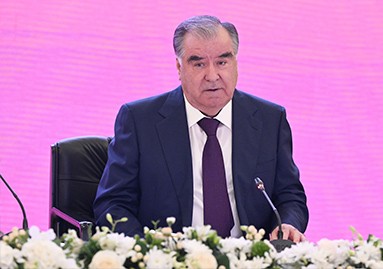
During his state visit to Qatar on January 22nd, the president of Tajikistan, Emomali Rahmon, held negotiations in Doha with the emir of the state of Qatar, Sheikh Tamim bin Hamad Al Thani.  During the meeting, it was proposed to launch joint transport-transit projects in order to expand the logistics networks between the two countries. This will facilitate the transportation of cargo and passengers, as well as transit to other countries, Rahmon’s press service reported. Also on January 22nd, Rahmon met with Qatar’s business community, expressing his views on a broad scope of cooperation opportunities with leading Qatari companies in the fields of agriculture, transport infrastructure, logistics, civil aviation, and tourism. The president emphasized that the government of Tajikistan is ready to support the proposals of investors to establish cooperation in these priority areas. In his speech to the Qatari business community, Rahmon spoke about the current economic situation in Tajikistan and the macroeconomic stability ensured in the country. The president said that Tajikistan’s GDP growth rate in the last 20 years has been more than 7% on average, and in 2023 reached 8.3%, while inflation was 3.8%. “Today, more than 720 public investment projects worth more than USD 13.8 billion are under implementation in our country.” Rahmon said that attracting investments is a priority for the Tajik government, and in this context, vast opportunities for investment have been created, and tax and customs incentives and guarantees are widely applied.  According to Rahmon, Tajikistan’s aluminum production and lithium resources provide for favorable conditions for the production of electric vehicles. “That’s the two main types of materials for the production of electric cars available in our country,” he said. The president pointed out that industrial production can be another future direction of cooperation, adding that projects in the light industry, food, metallurgy, machine building, chemistry, production of construction materials and pharmaceuticals are a priority for Tajikistan. Rahmon also mentioned that Tajikistan is rich in mineral resources, with some 800 deposits of minerals, rare and precious metals, including copper, silver, gold, lead, lithium, antimony, nickel, tungsten, vanadium and other rare minerals having been discovered and partially prepared for mining in Tajikistan. The president added that the reserves of food salt in Tajikistan amount to more than 72 billion tons, which is sufficient to meet the consumption needs of all inhabitants of the planet for this product for more than 300 years.

Infrastructure development: Qatari investors see prospects in Tajikistan

During a state visit to Qatar, Tajik president Emomali Rahmon met with Ahmad Muhammad Tayyib, the head of investment at the Qatari company Diyori, to discuss the implementation of the ‘Diar Dushanbe’ construction project. Qatari companies see prospects for investing in Tajikistan’s tourism infrastructure and social facilities. During the meeting with Mr Rahmon the parties expressed the need for timely realization of the next stages of construction of the project. The Diar Dushanbe project was identified as a “5-star multifunctional complex", which emphasizes its importance for the development of the region. Diar Dushanbe will have an autonomous system for water and energy supply. It will also include business and shopping centers, restaurants, cafes and apartments.

European Parliament Condemns Repression in Tajikistan, Underlying Issues Persist

On January 18th, the European Parliament adopted a resolution on human rights in Tajikistan which condemns the ongoing crackdown against independent media, government critics, human rights activists and independent lawyers, as well as the closure of independent media and websites. Parliament members urged the authorities to stop persecuting lawyers defending government critics and journalists, and immediately and unconditionally release those arbitrarily detained and drop all charges against them, including human rights lawyers Manuchehr Kholiknazarov and Buzurgmehr Yorov. In the resolution, the European Parliament members insisted that respect for freedom of expression in Tajikistan should be taken into account when assessing the application of the EU’s Generalised Scheme of Preferences (GSP+) for Tajikistan and negotiations of a new EU-Tajikistan Partnership and Cooperation Agreement. In December 2023, the chair of the U.S. Senate Committee on Foreign Relations, Ben Cardin sent a letter to the President of Tajikistan, Emomali Rahmon, urging him to cease acts of domestic and transnational repression against political opponents and religious minorities. “There are persistent reports of arbitrary arrest, denial of judicial due process, as well as acts of violence including torture, assault and even instances of murder of journalists, political dissidents, as well as community and religious leaders,” Cardin wrote. In recent years, several Tajik journalists, activists, and opposition politicians have been sentenced to lengthy prison terms largely based on accusations of collaborating with organizations labelled as extremist or banned in Tajikistan.[/vc_column_text][vc_single_image image="13842" img_size="full" el_class="scond-image" parallax_scroll="no" woodmart_inline="no"][vc_column_text woodmart_inline="no" text_larger="no"]Still a relatively young country, the official date of the independence of Tajikistan - a front-line state facing the extremism of the Taliban - is September 9th 1991. Whilst criticisms are warranted and accurate, particularly through the prism of western democracy, the crux of the problem would appear to be endemic corruption and weak institutions propagated by kleptocratic wealth and organized crime. As to how high up the criminality goes, in 2000 the Tajik Ambassador to Kazakhstan was arrested in Almaty with 86 kilos of heroin in his car. In 2001, the Deputy Minister of the Interior was murdered, the prosecution in the case arguing he’d been assassinated for refusing to pay for a shipment of 50 kilos. A statement released by the UNDP in 2001 estimated that drug money accounted for between 30 -50% of the Tajik economy. The year Tajikistan took over policing of its border with Afghanistan from the Russians, seizures of heroin halved. Piqued by the critical international response, President Rahmon levelled counter-allegations of Russian complicity in the heroin trade. “Why do you think generals lined up in Moscow all the way across Red Square and paid enormous bribes to be assigned here?” he complained to U.S. officials. “Just so they could do their patriotic duty?”

Ambitious Program to Plant 65 Million Trees and Shrubs Launched

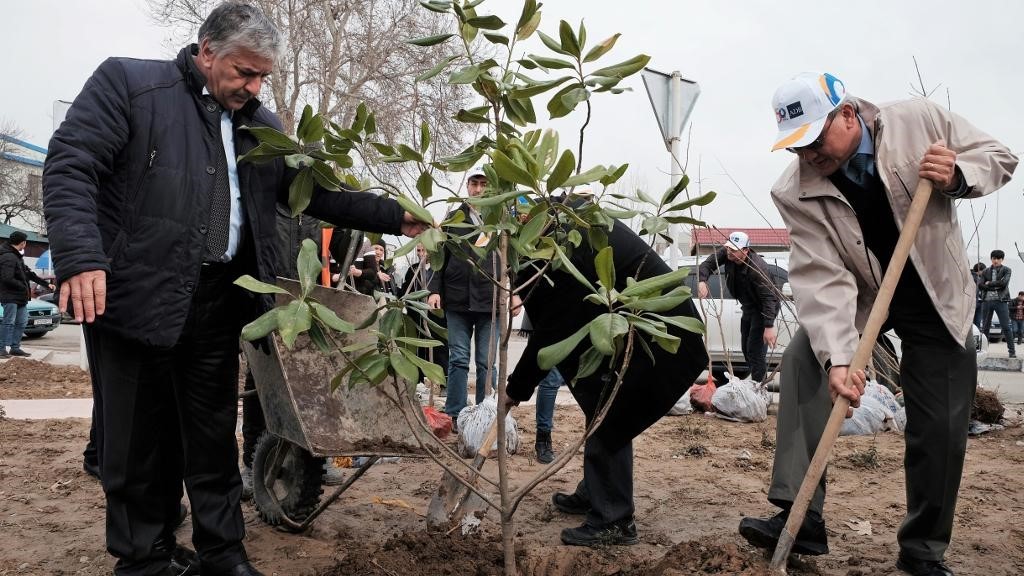
As part of the National Program, "Green Country," Tajikistan intends to plant 65 million trees and shrubs on an area spanning over 4,000 hectares by 2025.  Special attention will be paid to the planting of fruit trees, rosehip and pine. This ambitious initiative is designed to improve the state of the environment, which has been suffering in recent years due to both natural and human impacts. The program is also aimed at combating global climate change and developing green energy, which will improve the quality of the environment and public health. It is reported that financing in the amount of 129,875,000, somoni ($11.8 million) is to be provided for the implementation of the Green Country program, which will comprise two stages: the first will executed from 2023 to 2025, and the second from 2026 to 2027.

Kyrgyzstan and Tajikistan continue to work on harmonizing state border

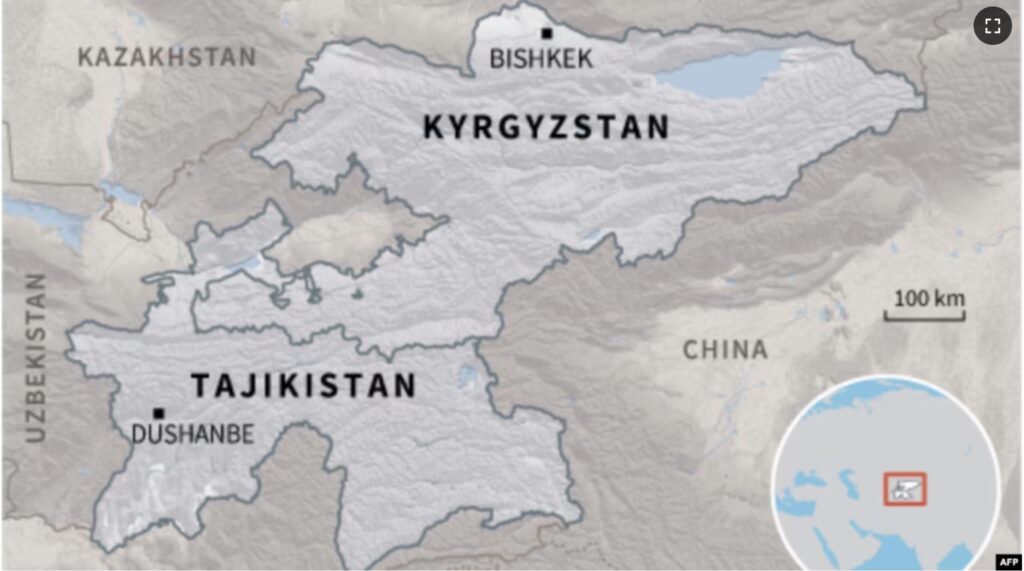
Topographic working groups of the two countries gathered in the city of Batken in the Batken region of Kyrgyzstan between January 10 and January 16, and agreed on another major 38.35-kilometer section their state borders, the press service of the Kyrgyzstan Cabinet of Ministers reports. "In accordance with the agreement reached in the period from January 10 to 16, 2024 in the city of Batken of Batken oblast of the Kyrgyz Republic held a meeting of topographic working groups and working groups on legal issues of the government delegations of the Kyrgyz Republic and the Republic of Tajikistan on delimitation and demarcation of the Kyrgyz-Tajik state border," reported Cabinet of Kyrgyzstan on its website. The Kyrgyz authorities note that the meeting was held in an atmosphere of friendship and mutual understanding, and a protocol was signed following the meeting. The parties will continue work on the description of the remaining areas at the next meeting, which will be held in Tajikistan. The previous meeting was also held on the territory of Tajikistan from December 17 to 23, 2023. At that time, almost 12 kilometers of the state border were agreed upon. It should be noted that as of today, Kyrgyzstan and Tajikistan have agreed on 90 percent of the territories of the state border, the total of which is 975 kilometers. Next year, the authorities of both countries plan to finalize the delimitation. Issues related to delineating a common border between the two countries arose after the collapse of the USSR, particularly with regards to lands rich in water resources, given that irrigation of agricultural lands and private plots is critical in this arid region. More than 30 years have passed since the collapse of USSR, and the parties still have not agreed on the disputed territories. This has caused periodic conflicts between the citizens of border villages and residents of enclaves and border guards of Kyrgyzstan and Tajikistan, including the use of heavy weapons. The last such conflict took place on the territory of Batken oblast of Kyrgyzstan and Sughd oblast of Tajikistan in September 2022, where hundreds died deaths on both sides and civilian infrastructure was destroyed. Since May 2021, land and air communication between the countries remains closed. The presidents of the Kyrgyz Republic and Tajikistan have repeatedly discussed the delimitation and demarcation of the state border, and have decided to put an end to this ongoing issue after the above-mentioned most recent conflict. Since then, meetings of topographic groups have been held on a regular basis. The situation on the disputed territories is also monitored by the Collective Security Treaty Organization (CSTO). Both countries are members of the CSTO.

Tajikistan Elevates Cultural Presence with Permanent Delegation at UNESCO

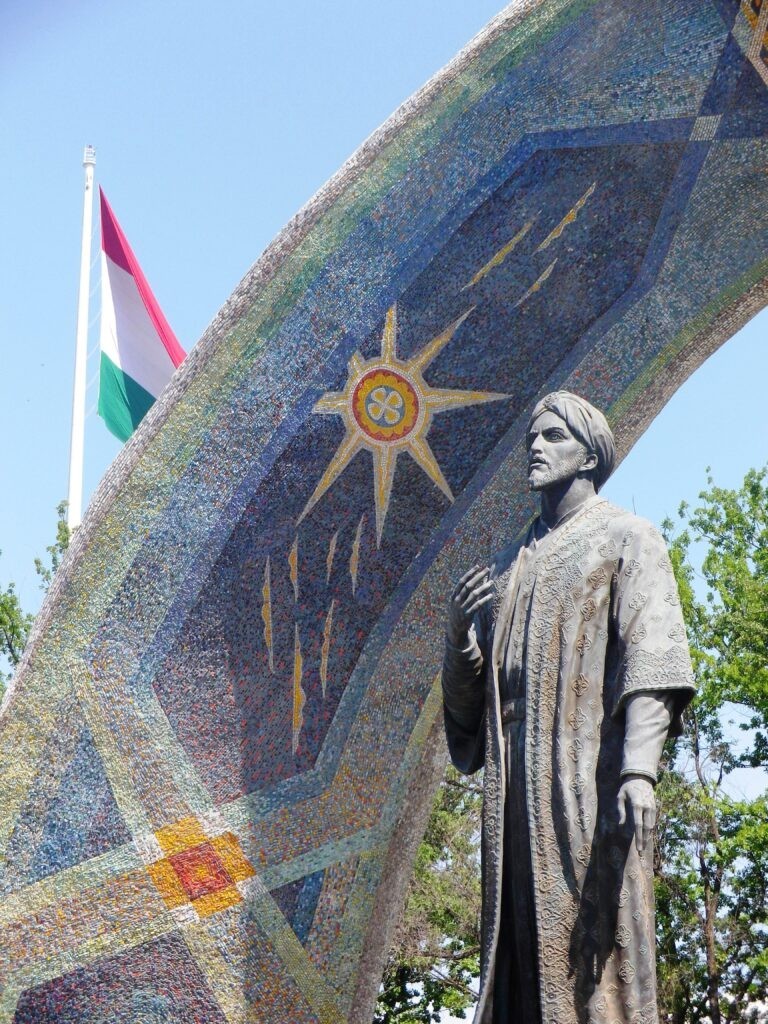
In a significant move, Tajikistan has taken a stride towards enhancing its international cultural representation by establishing a Permanent Delegation to UNESCO. President Emomali Rahmon, on January 12th, issued a decree formalizing the establishment of this delegation. The decision is expected to bolster Tajikistan's standing in the global community, facilitating active engagement with UNESCO, and providing a platform to advocate for and safeguard the nation’s cultural heritage on the international stage. Tajikistan has already made notable contributions to UNESCO's recognition of cultural treasures. In December, the traditional art of text decoration known as "Tazhib" and the celebration of "Sada" secured places on the Representative List of the Intangible Cultural Heritage of Humanity. Additionally, the craft of producing atlas and adras, as well as cultural elements like chakan, the musical genre "falak," and the observance of "Yaldo night" have earned spots on UNESCO's list. Given the shared cultural heritage of Central Asian nations, certain elements transcend national borders, embodying the essence of regional traditions. For instance, Tajikistan, along with other Central Asian countries, shares intangible cultural heritage items like the Navruz holiday, shashmakom music, silk weaving techniques, and the art of making the traditional dish, plov. Tajikistan is actively pursuing UNESCO recognition for the ancient farmers' festival, Mehrgon, as part of its intangible cultural heritage. Mehrgon, deeply rooted in Tajik history, marks the culmination of the harvest season. Its inclusion in UNESCO's list would represent an acknowledgment of Tajikistan's distinctive cultural traditions. Moreover, Tajikistan has submitted a proposal to inscribe twelve sites of ancient Khuttal on the UNESCO World Cultural Heritage Register. This collection of sites includes cities, palaces, fortresses, mausoleums, and monasteries, collectively bearing witness to the profound history of the region. If accepted, the inclusion of these sites on the World Cultural Heritage List would contribute to their preservation for generations to come.