• KGS/USD = 0.01144 0%
  • KZT/USD = 0.00218 0%
  • TJS/USD = 0.10610 -0.09%
  • UZS/USD = 0.00008 0%
  • TMT/USD = 0.28530 0%
  • KGS/USD = 0.01144 0%
  • KZT/USD = 0.00218 0%
  • TJS/USD = 0.10610 -0.09%
  • UZS/USD = 0.00008 0%
  • TMT/USD = 0.28530 0%
  • KGS/USD = 0.01144 0%
  • KZT/USD = 0.00218 0%
  • TJS/USD = 0.10610 -0.09%
  • UZS/USD = 0.00008 0%
  • TMT/USD = 0.28530 0%
  • KGS/USD = 0.01144 0%
  • KZT/USD = 0.00218 0%
  • TJS/USD = 0.10610 -0.09%
  • UZS/USD = 0.00008 0%
  • TMT/USD = 0.28530 0%
  • KGS/USD = 0.01144 0%
  • KZT/USD = 0.00218 0%
  • TJS/USD = 0.10610 -0.09%
  • UZS/USD = 0.00008 0%
  • TMT/USD = 0.28530 0%
  • KGS/USD = 0.01144 0%
  • KZT/USD = 0.00218 0%
  • TJS/USD = 0.10610 -0.09%
  • UZS/USD = 0.00008 0%
  • TMT/USD = 0.28530 0%
  • KGS/USD = 0.01144 0%
  • KZT/USD = 0.00218 0%
  • TJS/USD = 0.10610 -0.09%
  • UZS/USD = 0.00008 0%
  • TMT/USD = 0.28530 0%
  • KGS/USD = 0.01144 0%
  • KZT/USD = 0.00218 0%
  • TJS/USD = 0.10610 -0.09%
  • UZS/USD = 0.00008 0%
  • TMT/USD = 0.28530 0%

Viewing results 1027 - 1032 of 1626

EBRD Commits to Green Investment in Tajikistan

EBRD Pledges New Resources for Green Investment in Tajikistan The European Bank for Reconstruction and Development (EBRD) is committing fresh funds to facilitating better access to green technologies and climate adaptation for businesses and households in Tajikistan, a news release on the bank's website states. The US$ 50 million Tajikistan Green Economy Financing Facility II (GEFF Tajikistan II), launched by the EBRD and the Green Climate Fund (GCF), will promote higher standards of energy and resource efficiency and support the country’s transition to a greener economy. GEFF Tajikistan II will encourage residential and commercial borrowers to invest in green and innovative solutions (available through the programme’s website) that promote the efficient use of water and the sustainable management of land. It will pay special attention to the country’s agribusiness sector, which employs almost half of Tajikistan’s workforce and is responsible for more than 22.5 per cent of gross domestic product. Up to US$ 13 million, including US$ 11 million under GEFF Tajikistan II, will be earmarked for three domestic financial institutions: Bank Arvand (US$ 4 million), microlenders Humo (US$ 5 million) and Imon International (US$ 4 million). With a joint base of more than 540,000 clients and operational even in remote mountainous parts of the country, the three institutions are well placed to bring much-needed green finance to even the smallest borrowers across Tajikistan. The new facility builds on the US$ 25 million Green Economy Financing Facility I (GEFF Tajikistan I), which was supported by the European Union and operational from 2019 to 2023. GEFF Tajikistan I supported more than 4,600 sub-projects. Each year, these generated over 24,000 MWh of energy savings, reduced CO2 emissions by 5,195 tonnes and cut water consumption by 5.2 million m3. GEFF Tajikistan II is supported by donor funding from South Korea, Austria and the GCF.
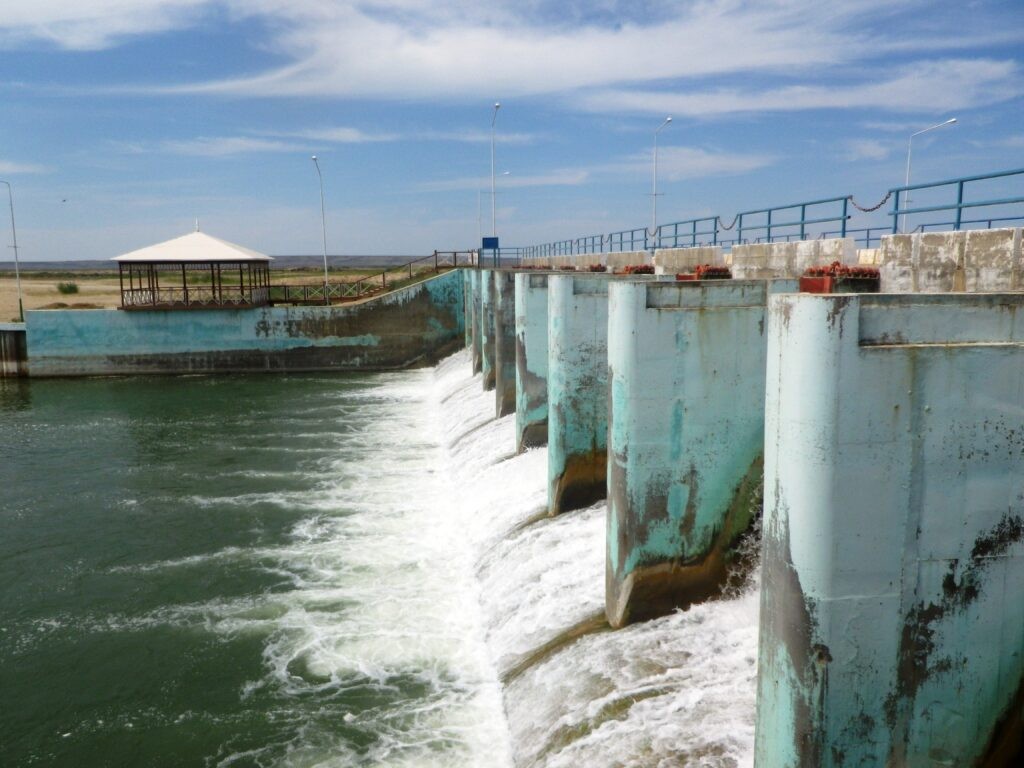
EDB Proposes Ten Steps to Preserve Irrigated Land Potential and Support Water Conservation in Central Asia

As outlined in a press release on the EDB website, in the summer of 2023, Central Asia was faced once again with water shortages, which have a significant impact on agriculture. The sector relies on irrigation, which consumes up to 80% of available water, and has a poor track record with regard to the efficient use of water resources. The irrigation infrastructure is over 50 years old. More than half of all irrigated land has become salinized, and 40% of water is lost through irrigation canals. A new Eurasian Development Bank (EDB) study entitled “Efficient Irrigation and Water Conservation in Central Asia” outlines ten practical steps for preserving irrigated land potential and promoting water conservation. The list includes four recommendations for adoption at a regional level and six at a national level. The measures are designed to save enough water each year to support sustainable development. Implementing the measures will require collaboration between governments, farmers and multilateral development institutions. The need for urgent action is intensified by the anticipated reduction in the flow of the Amu Darya River. Water deficit is a key structural constraint to socio-economic development in Central Asia. This region is among the most vulnerable to climate change, with temperatures rising at a faster rate than the global average. Periods of drought and low water are becoming more frequent, and the hydrological patterns of rivers and groundwater supplies are undergoing change. Glacier areas have been diminishing rapidly, with a 30% decrease over the last 50 years. Climate change is leading to reduced river flows at a time when the region’s demand for water is growing rapidly. The primary solution to the water deficit lies in improving irrigation practices. Agriculture in Central Asia is the largest consumer of water, with irrigation accounting for 100.4 km3 of the total 127.3 km3 (80%) of water used in the region in 2020. Historically, irrigation has played a vital role in developing agriculture and ensuring food security in the region. Central Asia boasts 10.1 million hectares of irrigated land, representing approximately 2.9% of the world’s total. This irrigated land generates nearly 66% of the region’s gross agricultural output in terms of value. However, Central Asia’s irrigation infrastructure is highly degraded and technically inadequate. It lacks the equipment needed for metering and distributing water for irrigation and controlling its use in the field. The average age of the irrigation infrastructure is over 50 years. Up to half of irrigated land is salinized. Water use in agriculture is inefficient, with 40% of water lost in the irrigation canal system. A commitment to conserving water appears to be the only solution to protecting the potential of irrigated land and food security in Central Asia. This shift in approach is imperative not only because of climate change and escalating water demand, but also to mitigate the anticipated decrease in the flow of the Amu Darya River from Afghanistan. By 2028, the combined effects of climate change, low-water periods and the commissioning of the Kosh-Tepa Canal in...

Tajikistan to Connect with China’s Telecommunications Network

According to RFE/RL's report on November 17th, Tajikistan unveiled intentions to integrate with China's telecommunications network as part of efforts to enhance internet accessibility in the country, which is ensconced in mountainous terrain and lacks direct access to the sea. This move aligns with the expanding influence of Beijing in Central Asia. Despite recent progress, Tajikistan still grapples with one of the world's slowest internet services, routing all traffic through a government-controlled center. As disclosed by the state news agency Khovar, the initiative coincides with the construction of a highway linking Dushanbe, the nation's capital situated in the western region, to a town bordering China.

Leaders of Tajikistan and Iran Deliberate on Bilateral Relations in Dushanbe

The November 8th meeting between the presidents of Tajikistan and Iran marks a significant stride toward repairing the previously strained relationship between the two nations. Held in Dushanbe, Tajikistan's capital, the talks between President Emomali Rahmon and President Ebrahim Raisi covered crucial areas of mutual interest and cooperation. Among the agreements reached during this encounter, a standout is the agreement on visa-free travel for citizens of both countries, underscoring the deep linguistic and cultural bonds that unite them. Moreover, both leaders signed memorandums of understanding focusing on transportation, the establishment of free economic zones, and collaborative efforts to combat drug trafficking. This joint approach in tackling shared challenges underscores a shared dedication to bolstering the security and prosperity of both nations. President Raisi's visit is widely seen as an effort to thaw the previously frosty relations between Tajikistan and Iran. Strains emerged after Tajikistan's 2015 decision to outlaw the Islamic Renaissance Party of Tajikistan, an action that Iran did not endorse. Nonetheless, the recent discussions and agreements suggest a potential pivot in diplomatic ties between the two nations. As highlighted by by RFE/RL's Tajik Service, this development could herald the beginning of a new phase in Tajik-Iranian relations.

Promoting Sustainable Development in Central Asia: Key Highlights from the Eurasian Development Bank’s Roundtable

According to a press release issued by the Eurasian Development Bank (EDB), on November 16th, 2023, Almaty, Kazakhstan, served as the venue for a critical roundtable hosted by the EDB, titled "Promoting Sustainable Development in Central Asia". This gathering saw the participation of representatives from a wide range of international organizations and multilateral development banks. Attendees included the likes of the World Bank, the Asian Development Bank, the Asian Infrastructure Investment Bank, the Islamic Development Bank, FAO, UNIDO, UNEP, ESCAP, UNDP, the World Health Organisation, the International Fund for Saving the Aral Sea, and CICA. The agenda was packed with discussions revolving around irrigation, water challenges, environmental and social standards of international financial institutions, and case studies that showcased collaborations in project implementation12. The EDB's latest report, "Efficient Irrigation and Water Conservation in Central Asia", was introduced during the roundtable's first session. Nikolai Podguzov, Chairman of the EDB Management Board, underscored the essential interrelationship between water, food, and energy in Central Asia. He declared the development of the region’s water and energy resources as a strategic priority for the EDB. He also expressed concerns over an impending water deficit in Central Asia within the next five years, urging for collective action supported by multilateral development banks3. Tatiana Proskuryakova, the Regional Director for Central Asia at the World Bank, also spoke at the event. She emphasized the importance of sustainable development in Central Asia to international organizations and multilateral financial institutions. She revealed that the World Bank has allocated approximately a quarter of its $12 billion investment portfolio in Central Asia to water, energy, and environmental sectors. This proportion is expected to rise to almost half in the near future4. Following this, Evgeny Vinokurov, EDB Chief Economist, presented the study "Efficient Irrigation and Water Conservation in Central Asia". He proposed a ten-step solution to address the prevalent issues. The steps include establishing an International Water and Energy Consortium; fostering collaboration among multilateral banks; creating a regional cluster to produce irrigation equipment; consolidating efforts to strengthen cooperation with Afghanistan; using PPP instruments; instituting proper water accounting; gradually integrating investment charges into the tariff structure; improving land conditions; implementing digital technology, and leveraging state-of-the-art irrigation technology and laser levelling.

Tajik Political Activist Sentenced to 8 ½ Years in Prison

A court in Dushanbe has sentenced Nizomiddin Nasriddinov, a former activist of the Group 24 opposition movement, to 8 1/2 years in prison on a charge of making public calls to forcibly change Tajikistan's constitutional order, RFE/RL's Tajik Service reported. According to an anonymous source involved in the trial, RFE/RL was informed on October 5th that the Ismoili Somoni district court delivered Nasriddinov's verdict and sentence on September 29th. The source added that the former activist pleaded not guilty. Court officials and Nasriddinov’s relatives declined to comment on the matter. The court requested RFE/RL to submit an official letter for comment. Recently, the Norwegian Helsinki Committee, Human Rights Watch, Freedom for Eurasia, and Freedom Now jointly urged Tajik authorities to drop what they deemed as "fabricated" charges against Nasriddinov and release him immediately. Nasriddinov was detained by Belarusian authorities in January at the request of Dushanbe when he entered Belarus from Lithuania. Subsequently, he was extradited to Tajikistan in July. Notably, Nasriddinov holds refugee status in Germany. His affiliation with Group 24, which was designated as a terrorist and extremist organization and banned in the tightly governed former Soviet republic in 2014, has been highlighted. In March 2015, the movement's founder, businessman Umarali Quvatov, was assassinated in Istanbul. Tajik President Emomali Rahmon, known for his nearly 30-year firm grip on the Central Asian nation, has faced criticism from international human rights groups. They accuse his administration of disregarding independent media, religious freedoms, civil society, and political diversity. In the past year, Tajik courts sentenced seven journalists and bloggers to prison terms ranging from seven to 21 years. They were charged with spreading false information, involvement in extremist activities, and association with banned groups. Both the accused and their supporters, alongside human rights organizations, have labeled these charges as baseless and politically motivated