• KGS/USD = 0.01144 0%
  • KZT/USD = 0.00208 0%
  • TJS/USD = 0.10516 0.77%
  • UZS/USD = 0.00008 0%
  • TMT/USD = 0.28571 0%
  • KGS/USD = 0.01144 0%
  • KZT/USD = 0.00208 0%
  • TJS/USD = 0.10516 0.77%
  • UZS/USD = 0.00008 0%
  • TMT/USD = 0.28571 0%
  • KGS/USD = 0.01144 0%
  • KZT/USD = 0.00208 0%
  • TJS/USD = 0.10516 0.77%
  • UZS/USD = 0.00008 0%
  • TMT/USD = 0.28571 0%
  • KGS/USD = 0.01144 0%
  • KZT/USD = 0.00208 0%
  • TJS/USD = 0.10516 0.77%
  • UZS/USD = 0.00008 0%
  • TMT/USD = 0.28571 0%
  • KGS/USD = 0.01144 0%
  • KZT/USD = 0.00208 0%
  • TJS/USD = 0.10516 0.77%
  • UZS/USD = 0.00008 0%
  • TMT/USD = 0.28571 0%
  • KGS/USD = 0.01144 0%
  • KZT/USD = 0.00208 0%
  • TJS/USD = 0.10516 0.77%
  • UZS/USD = 0.00008 0%
  • TMT/USD = 0.28571 0%
  • KGS/USD = 0.01144 0%
  • KZT/USD = 0.00208 0%
  • TJS/USD = 0.10516 0.77%
  • UZS/USD = 0.00008 0%
  • TMT/USD = 0.28571 0%
  • KGS/USD = 0.01144 0%
  • KZT/USD = 0.00208 0%
  • TJS/USD = 0.10516 0.77%
  • UZS/USD = 0.00008 0%
  • TMT/USD = 0.28571 0%

Viewing results 235 - 240 of 390

USAID Launches $18 Million Program to Boost Economic Growth in Tajikistan

On 18 April, the United States Agency for International Development (USAID) launched a new initiative to support long-term economic opportunities in Tajikistan. Running for five years at a cost of $18 million, Employment and Enterprise Development Activity (EEDA) will partner local firms to improve productivity in the fields of textiles, food processing and IT through the adoption of innovative, green technologies, increased investment, and market linkages. According to a report from the U.S. Embassy in Tajikistan, the project will create 5,000 permanent jobs, assist 200 business start-ups in accessing finance, and leverage $10 million in private sector investment. In his address at the launch, USAID Tajikistan Mission Director Peter Riley stated, “It is crucial to foster innovation, drive economic growth, and create sustainable employment opportunities within the public and private entities. These partnerships underscore the shared goal of advancing Tajikistan’s economic landscape and ensuring prosperity for all stakeholders.”

Tajikistan and Uzbekistan Sign Allied Relations Treaty

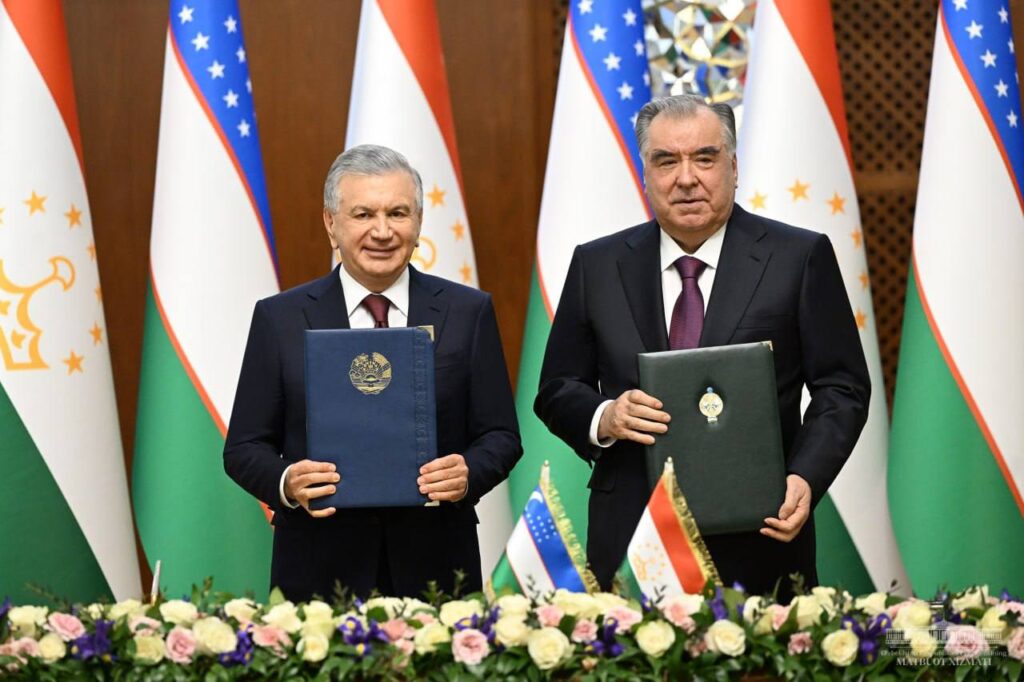
On April 18, Shavkat Mirziyoyev, President of Uzbekistan met Emomali Rahmon, President of Tajikistan in Dushanbe, where the two leaders signed a Treaty on Allied Relations between their countries. Referring to Tajikistan as Uzbekistan’s closest, most reliable, and time-tested strategic partner, Mirziyoyev announced, “The fraternal Uzbek and Tajik peoples are inextricably linked by strong bonds of centuries-old friendship. We are brought together by common history, cultural and spiritual values, traditions, and customs.” He went on to emphasize the enormous significance of the Treaty on Allied Relations saying, “With this step, we confirmed our strong mutual commitment to an irreversible course towards deepening the multifaceted Uzbek-Tajik strategic partnership and alliance. Without any exaggeration, this important document will mark a new historical milestone in bilateral relations.” Adding that the Treaty takes Tajik-Uzbek relations to a qualitatively new level, President Rahmon stated, “This document will also become an important factor in strengthening peace and stability in our region – Central Asia” On the eve of Mirziyoyev’s visit, a Tajik-Uzbek business forum resulted in a solid portfolio of new cooperation projects and trade contracts in mechanical engineering, electrical engineering, energy, mining, agricultural, textile and pharmaceuticals industries. During the Tajik-Uzbek talks it was reported that in recent years, bilateral trade turnover has increased 40-fold and the number of joint ventures has grown 15-fold. Tajikistan and Uzbekistan have now raised the bar by setting a target to increase trade turnover to $2 billion by expanding the exchange of supplies and launching cross-border trade zones.

Air Travel Between Tajikistan and Russia Rebounding After Terrorist Attack

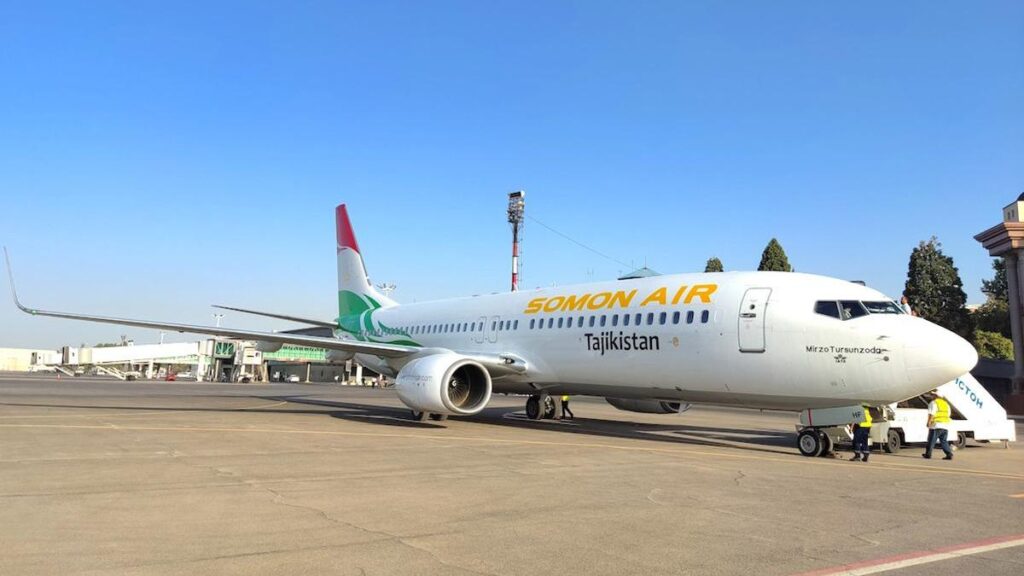
Passenger traffic on flights between Tajikistan and Russia decreased after the terrorist attack at Crocus City Hall near Moscow on March 22, which Tajik members of the Islamic State (IS) are suspected of perpetrating. But the news site Avesta reports that the flow of passengers between the two countries is increasing again. Tajikistan's national airline Somon Air has commented: “Currently, we are observing an increase in the flow of passengers to and from the Russian Federation compared to two weeks ago. We hope that by the end of the month, the flow of passengers will be fully restored to the previous level.” Representatives of Somon Air mentioned that they didn't reduce the number of flights to Russian cities in the wake of the terrorist attack and subsequent political friction, and that the frequency of flights on some routes actually increased. The airline operates approximately 130–140 flights between Tajikistan and Russian cities per month.

Migrant Laborers in Russia Deprived of Free Medical Care

Citizens of Tajikistan and Uzbekistan working in Russia will not be able to count on free medical care until 2026 within the framework of compulsory medical insurance (CMI), according to a report by the Ministry of Health of Russia. Based on agreements with the republics, citizens can be employed only if they acquire voluntary medical insurance (VMI) policies or with the employer's guarantee to pay for medical care at his or her own expense. Migrants can only receive free emergency medical care. The Crocus City Hall terrorist attack prompted the Russian Interior Ministry to take a number of restrictive measures relating to migrants. Among the planned changes are a reduction in the term of temporary stays by foreigners to 90 days per calendar year, introduction of mandatory biometric identification at entry, and the creation of digital profiles for foreigners. There are also more radical proposals. For example, Sergei Mironov, chairman of the Just Russia - For Truth political party, said that he believes it's necessary to introduce a visa regime between Russia and Central Asian countries. Labor migrants remain one of the most vulnerable parts of the population, and Uzbekistan has in recent years taken a number of measures to protect their interests both inside and outside the country. A recent decree by President Shavkat Mirziyoyev provides for reimbursement of expenses for taking qualification exams in foreign languages and professional trades of up to $80, for applying for a work visa of up to $134, and for buying travel tickets of up to $53. In addition, migrants are provided with subsidies for insurance for the migrant laborer and his or her family members, as well as guaranteed free medical examinations for them. Workers abroad whose rights may have been violated can count on free legal counsel. They can also contact 24-hour migrant support call centers in case of difficult situations. The Ministry of Employment of Uzbekistan is currently negotiating the opening of representative offices or centers in Great Britain (London), Germany (Berlin), Turkey (Istanbul) and Saudi Arabia (Riyadh) to provide legal assistance to migrant workers. The state employs workers returning from labor migration or provides subsidies to start their own businesses.

Robust Economic Growth in EDB Member States

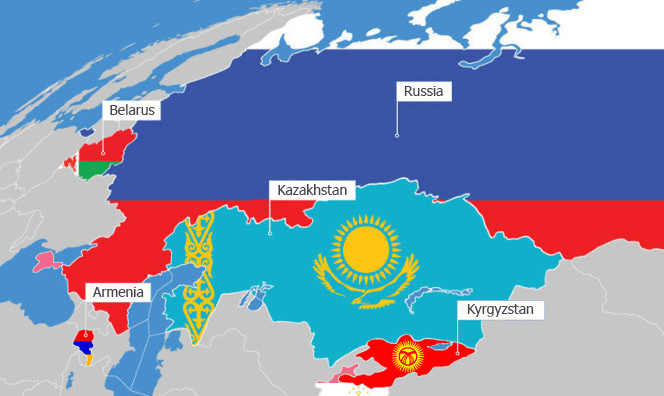
The latest Macroeconomic Review for the EDB’s six member states — Armenia, Belarus, Kazakhstan, Kyrgyzstan, Russia, and Tajikistan – was released by the Eurasian Development Bank on April 12th. Despite the challenging external economic environment, the report illustrates robust economic growth amongst all its members in January-February this year and according to short-term economic activity indicators, high GDP growth is set to continue. Fuelled by capital investment, Kazakhstan’s economy expanded by 4.2%, and Kyrgyzstan experienced a GDP surge of 8.6%, largely due to intensified investment activity, which spiked to 55%. Propelled by a dynamic increase in industrial output, economic activity in Armenia rose by 13.6%, and Belarus’s economy grew by 4% during the same period, boosted by manufacturing and retailing industries. In Russia, industrial production remains the prime driver of economic growth, raising the nation’s GDP by 6.0%, and Tajikistan’s high growth rates are maintained by consumption and investment sectors. In conclusion, the EDB reports that domestic demand within its represented countries is propelled by national projects, including increased public investment in Armenia, import substitution programs in Belarus and Russia, and the development of mechanical engineering in Kazakhstan and energy sectors in Kyrgyzstan and Tajikistan.

ADB Forecasts Faltering Economic Growth

The People's Republic of China (PRC) will remain the engine of growth for the world economy, even despite some slowdown. That forecast has been made by the Asian Development Bank (ADB) specialists in their report, Asian Development Outlook. Inflation is expected to decline in 2024 and 2025 after the increase in food prices in many countries over the past two years - and developing economies in the Asia-Pacific region will grow by an average of 4.9%, according to the ADB. Experts predict the highest economic growth for India: where the economy will grow by 7% this year and 7.2% next year. As for China, experts are more reserved in their forecasts: China's growth will slow to 4.8% this year and 4.5% next year. "Obviously, China will play an important role for some time to come. It still accounts for almost half of the GDP [gross domestic product] in the Asia-Pacific region," said ADB chief economist ,Albert Park. At the same time, economists also warned of possible risks: supply chain disruptions, uncertainty over U.S. monetary policy, the effects of extreme weather, and volatility in the PRC's real estate market. Inflation in developing Asia-Pacific economies is expected to fall to 3.2% this year and 3% next year as global price pressures ease and monetary policy remains tight in many countries. However, inflation in the region, with the exception of China, is still higher than before the COVID-19 pandemic. According to the bank's forecasts, economic growth in Uzbekistan will slow this year and grow slightly next year. This is because higher state-regulated prices will limit the growth of real household incomes, thus reducing demand. Economists expect a lower growth in services and agriculture. Lower remittances, fiscal space constraints, and lower global demand for Tajikistan's main exports will cause Tajikistan's economic growth to slow slightly in 2024 and 2025, the ADB said. "Tajikistan faces serious climate challenges and risks that could lead to irreversible economic, social, and environmental damage," said the ADB 's resident representative in Tajikistan, Shanny Campbell. The ADB says developing a green economy is key to the country's sustainable growth. As for its nearest neighbor, Kazakhstan, the ADB has lowered its GDP growth forecast for 2024 to 3.8%, down from 4.3% in the previous review. In 2025, the figure is expected to be 5.3%. Actual GDP growth at the end of 2023 was at 5.1%. "The growth rate of Kazakhstan's economy in 2024 will decrease against the background of slowdown in industrial growth due to stagnation in oil production and then recover in 2025 due to the growth of resource extraction at the Tengiz field and investments. Prospects for Kazakhstan's economic growth in the medium term look positive," ADB analysts said. As for developed economies globally, their growth will slow down this year: GDP growth in the U.S. will fall to 1.9% from last year's 2.5%, and in Japan, GDP will grow by 0.6% compared to 1.9% in 2023.