• KGS/USD = 0.01144 0%
  • KZT/USD = 0.00207 0%
  • TJS/USD = 0.10440 -0.19%
  • UZS/USD = 0.00008 0%
  • TMT/USD = 0.28490 0%
  • KGS/USD = 0.01144 0%
  • KZT/USD = 0.00207 0%
  • TJS/USD = 0.10440 -0.19%
  • UZS/USD = 0.00008 0%
  • TMT/USD = 0.28490 0%
  • KGS/USD = 0.01144 0%
  • KZT/USD = 0.00207 0%
  • TJS/USD = 0.10440 -0.19%
  • UZS/USD = 0.00008 0%
  • TMT/USD = 0.28490 0%
  • KGS/USD = 0.01144 0%
  • KZT/USD = 0.00207 0%
  • TJS/USD = 0.10440 -0.19%
  • UZS/USD = 0.00008 0%
  • TMT/USD = 0.28490 0%
  • KGS/USD = 0.01144 0%
  • KZT/USD = 0.00207 0%
  • TJS/USD = 0.10440 -0.19%
  • UZS/USD = 0.00008 0%
  • TMT/USD = 0.28490 0%
  • KGS/USD = 0.01144 0%
  • KZT/USD = 0.00207 0%
  • TJS/USD = 0.10440 -0.19%
  • UZS/USD = 0.00008 0%
  • TMT/USD = 0.28490 0%
  • KGS/USD = 0.01144 0%
  • KZT/USD = 0.00207 0%
  • TJS/USD = 0.10440 -0.19%
  • UZS/USD = 0.00008 0%
  • TMT/USD = 0.28490 0%
  • KGS/USD = 0.01144 0%
  • KZT/USD = 0.00207 0%
  • TJS/USD = 0.10440 -0.19%
  • UZS/USD = 0.00008 0%
  • TMT/USD = 0.28490 0%

Viewing results 397 - 402 of 674

Tajikistan and Kyrgyzstan Agree on Another Border Section

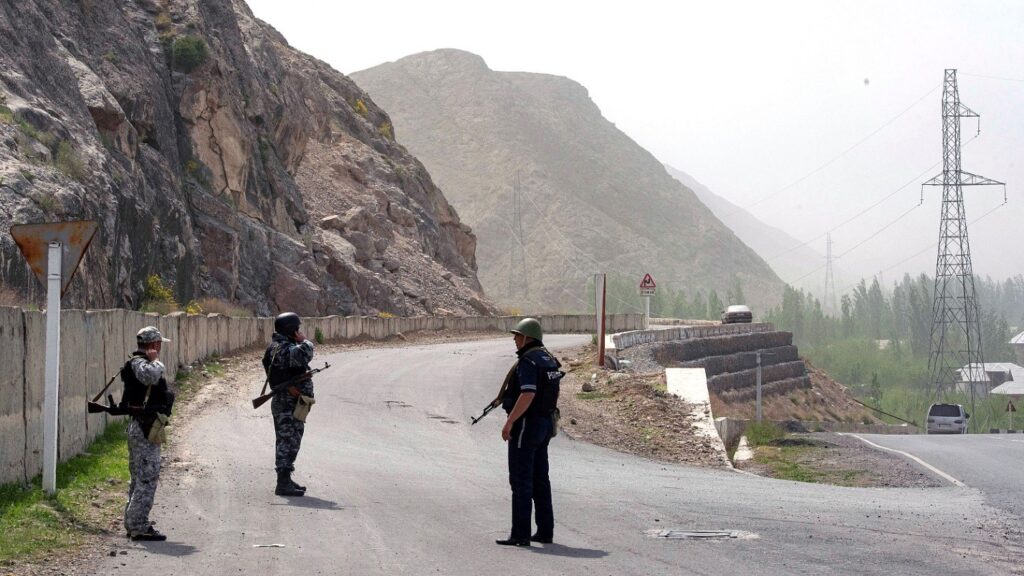
Delegations from Tajikistan and Kyrgyzstan have conducted more work on the definition and designation of the state border, agreeing on the divination of another 11.88 km at a meeting in Buston held between the 17th and 23rd of December. The two parties also agreed to continue determining the remaining sections oat the next meeting to be held in Kyrgyzstan. A long-standing source of conflict between the two nations, it is emblematic of the problem that even the length of the border - sometimes cited as being 975-kilomtres long, and at others times 972-kilomteres - is rarely agreed upon. In January 2023, Tajikistan’s President Rahmon stated that 614-kilometres have been agreed upon, backtracking on a previously stated figure of 664. With its scant natural resources and dwindling water supplies, the border between Kyrgyzstan and Tajikistan has been the scene of numerous skirmishes for many years. In 2014, all borders between Kyrgyzstan and Tajikistan were closed indefinitely to Kyrgyz and Tajik citizens following clashes over a bypass road in disputed territory; mortars were fired and both armies suffered casualties. In 2021 and 2022, troubles flared up again. Several hundred kilometers of the border have not yet been defined. This situation developed after the collapse of the USSR, leaving the parties unable to agree on dozens of disputed areas. The non-delimited territories become a conflict zone between the local population, and the border guards of the two countries became involved. The last major conflict occurred on September 16th 2022, as a result of which hundreds of people were killed and injured on both sides, and massive damage was caused to the infrastructure in Sughd and Batken. The Presidents of Tajikistan and Kyrgyzstan, Emomali Rahmon and Sadyr Japarov, have repeatedly discussed delimitation of the border. The situation in the disputed areas is also closely monitored by the Collective Security Treaty Organization (CSTO). In recent years, the authorities of the two countries have been actively negotiating to resolve this issue. Meetings have been held alternately on the territory of the two republics. Currently, more than 90%, or about 885 km of the border has been mutually recognized by States.
WFP to Help Tajikistan Strengthen Food Security

The United Nations World Food Programme (WFP) and the Government of Tajikistan on December 14th signed a Memorandum of Understanding (MoU) to deepen their cooperation on addressing food and nutrition security for 2023 to 2026, the UNDP website stated. The MoU was signed by Adham Musallam, the WFP Representative and Country Director in Tajikistan, and Sirojiddin Muhriddin, the Minister of Foreign Affairs of the Republic of Tajikistan. “The new CSP, valued at U$ 91 million, is designed to support the government’s priorities for achieving food security and broadening access to high-quality nutrition by 2030,” said WFP Representative Musallam. “Under the new CSP, the emphasis will be on supporting livelihoods, improving agricultural production, enhancing health, education, and nutrition, as well as strengthening national institutions and systems.” This MoU sets the foundation for the WFP Tajikistan Country Strategic Plan (CSP) 2023–2026, which harmonizes with the nation’s objectives in enhancing food and nutrition security, bolstering capacities, and offering technical aid to the government’s social protection initiatives.

Kyrgyzstan and Tajikistan Demarcate More Than 90% of Border

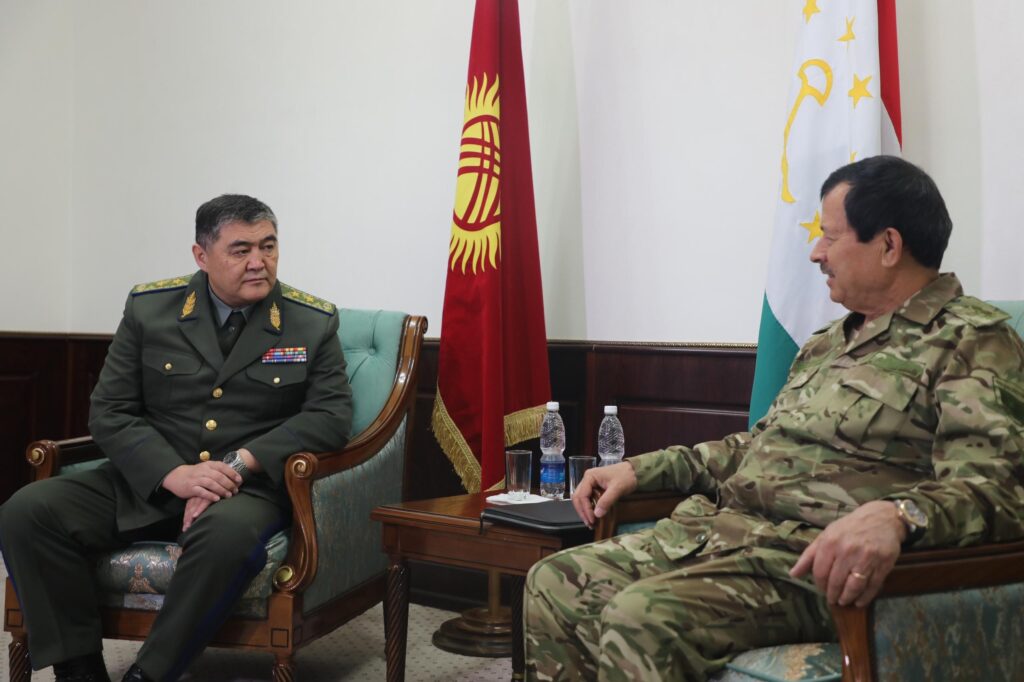
Following a meeting between government delegations, Chairmen of the National Security Committee of Kyrgyzstan, Kamchybek Tashiyev, and Tajikistan, Saimumin Yatimov, released a statement announcing that over 90% of the border between the two countries has now been agreed upon. “As a result of the work of the intergovernmental commission, agreements were reached on the harmonization of most of the state border - more than 90%,” Tashiyev said. “Work on the remaining sections will be completed soon, starting with Kayragach, Kulundu, Maksat, Arka, Arka-1, Arka-2, Zhany-Zher and up to Zhiydelik. The Working Group has fully completed the coordination. At the moment, we have almost completed work on the disputed areas about which there were questions." According to Tashiyev, several more meetings will be necessary to complete the demarcation and delimitation of the state border. In turn, Yatimov noted that vital issues were discussed at the meeting of the delegations. “There is a common interest, common goals, and common causes between the two states,” he said. “This is the security and socio-economic development of our states. A lot of work has been done today - we have advanced more than 120 kilometers, and have agreed on these issues in principle. If we take the total length of the state border between Tajikistan and Kyrgyzstan, Kamchybek Kydyrshayevich and I can confirm that over 90% of the state border has been agreed. We are really close to solving these issues.”

ADB $40 Million Grant to Strengthen STEM Secondary Education in Tajikistan

The Asian Development Bank (ADB) on December 8th approved a $40 million grant to help the Government of Tajikistan strengthen science, technology, engineering, and mathematics (STEM) subjects in secondary education, including developing climate change awareness and promoting girls’ participation in STEM studies, the ABD announced in a news release on its website. “Enhancing STEM education is vital for preparing students for sectors such as transport, manufacturing, construction, and information and communication technology, which will contribute significantly to poverty reduction and sustainable development in Tajikistan,” said ADB Director General for Central and West Asia Yevgeniy Zhukov. “As Tajikistan is highly vulnerable to climate impacts, it is also essential to integrate climate change knowledge and best practices into general education to strengthen the country’s resilience against climate-induced hazards.” The project will improve STEM teaching and learning methods in Grades 5–11 by adopting a skills-based approach that will help students develop abilities such as critical analysis and collaboration to enable them to solve real-world problems. It will train STEM teachers and modernize learning materials. The project will upgrade the facilities of 20 selected schools in four regions and improve school management. It will also support the inclusion of climate change-related topics into the STEM curricula and learning materials. The project will directly benefit 11,500 students—including 5,600 girls—in targeted schools, as well as about 4,000 STEM teachers and college students training to become STEM teachers, education officials, school management staff, and communities in project areas. “We are the first development partner to help Tajikistan tackle its STEM teachers’ shortage, integrate climate change into secondary education, and shape an enabling environment for girls and women to pursue STEM fields,” said ADB Principal Social Sector Specialist Xin Long. “To expand girls’ participation in STEM studies and help steer more women’s careers towards high-productivity sectors, the project will offer stipends and scholarships to girls studying at the schools and higher education institutions targeted by the project. It will also prioritize women STEM teachers and teacher candidates for information and communication technology courses.”

Tajikistan: Atlas and Adras Weaving Included in UNESCO List of Intangible Cultural Heritage

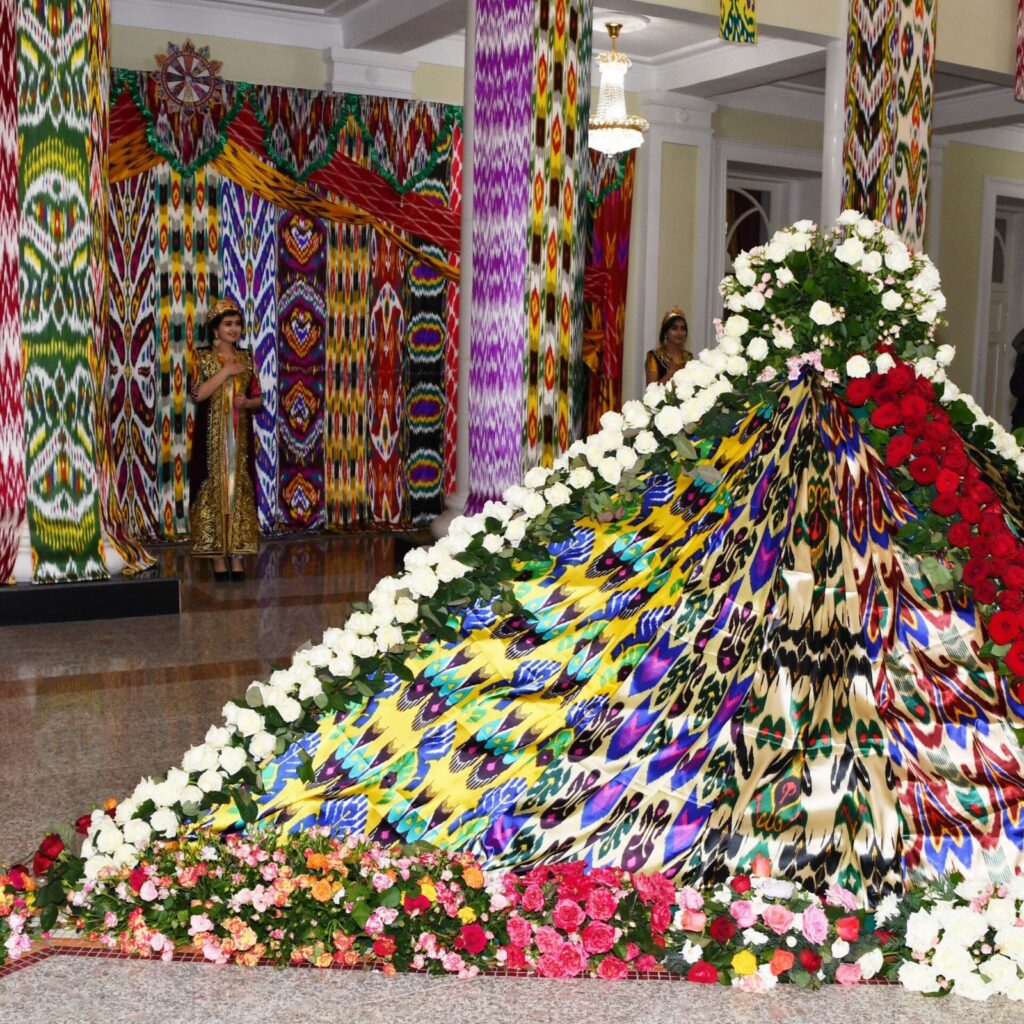
A nomination from Tajikistan for the art of atlas and adras weaving was included in the UNESCO list of Intangible Cultural Heritage, the press service of the Ministry of Foreign Affairs of Tajikistan reported. This decision was made within the framework of the 18th session of the Interstate Committee on the Intangible Cultural Heritage of UNESCO, which began on December 4th in the city of Kasane (Botswana), where representatives of the countries for the Convention for the Safeguarding of the Intangible Cultural Heritage are taking part. Meetings will continue until December 9th. Tajikistan has a particularly proud history of national clothing culture, and the secrets of weavers are passed down from generation to generation. In the Sughd region, the Atlas Khujand enterprise operates and enjoys benefits and constant support from President Emomali Rahmon. The company's silks, satin and adras - which combines both silk and cotton - are in great demand globally. Their production, which comprises many stages, requires special skills and training. Traditionally, national costumes for performances and wedding dresses are made of satin. The republic annually celebrates the holiday, “Tajik Atlas and Adras."

Reserve Fund of the President of Tajikistan set to Exceed US$50 Million

The amount held in the reserve fund of the President of Tajikistan, which is spent at the discretion of the head of the country, will increase by 68-million somoni (US$6.25-million) next year, bringing the total set to be held by 2024 to over 563-million somoni (US$51.73-million). This figure was revealed in the law on the state budget of Tajikistan for the next year, which will come into force on January 1st. The volume of the fund has increased year on year from 404-million somoni in 2021 and 438.5-million somoni in 2022. The volume of the fund is used as an indicator on accounts, and will be used in the calculation of taxes and fines in Tajikistan. The funds are used at the discretion of President Emomali Rahmon for charity, social work, and emergency situations. In particular, in recent years, republican Olympiads in the field of education and culture have been held using the reserve funds. In 2020, additional allowances were paid from the fund to doctors who worked under the conditions of the coronavirus pandemic. At the same time, prizes were paid from the President's fund to athletes who won medals in international competitions. The allocation of scholarships for the education of Tajik citizens in higher educational institutions abroad is estimated from other sections of the fund's expenses.