• KGS/USD = 0.01144 0%
  • KZT/USD = 0.00216 0%
  • TJS/USD = 0.10659 0%
  • UZS/USD = 0.00008 0%
  • TMT/USD = 0.28530 0%
  • KGS/USD = 0.01144 0%
  • KZT/USD = 0.00216 0%
  • TJS/USD = 0.10659 0%
  • UZS/USD = 0.00008 0%
  • TMT/USD = 0.28530 0%
  • KGS/USD = 0.01144 0%
  • KZT/USD = 0.00216 0%
  • TJS/USD = 0.10659 0%
  • UZS/USD = 0.00008 0%
  • TMT/USD = 0.28530 0%
  • KGS/USD = 0.01144 0%
  • KZT/USD = 0.00216 0%
  • TJS/USD = 0.10659 0%
  • UZS/USD = 0.00008 0%
  • TMT/USD = 0.28530 0%
  • KGS/USD = 0.01144 0%
  • KZT/USD = 0.00216 0%
  • TJS/USD = 0.10659 0%
  • UZS/USD = 0.00008 0%
  • TMT/USD = 0.28530 0%
  • KGS/USD = 0.01144 0%
  • KZT/USD = 0.00216 0%
  • TJS/USD = 0.10659 0%
  • UZS/USD = 0.00008 0%
  • TMT/USD = 0.28530 0%
  • KGS/USD = 0.01144 0%
  • KZT/USD = 0.00216 0%
  • TJS/USD = 0.10659 0%
  • UZS/USD = 0.00008 0%
  • TMT/USD = 0.28530 0%
  • KGS/USD = 0.01144 0%
  • KZT/USD = 0.00216 0%
  • TJS/USD = 0.10659 0%
  • UZS/USD = 0.00008 0%
  • TMT/USD = 0.28530 0%

Viewing results 427 - 432 of 776

Tajikistan Seeking to Become Key International Transit Hub

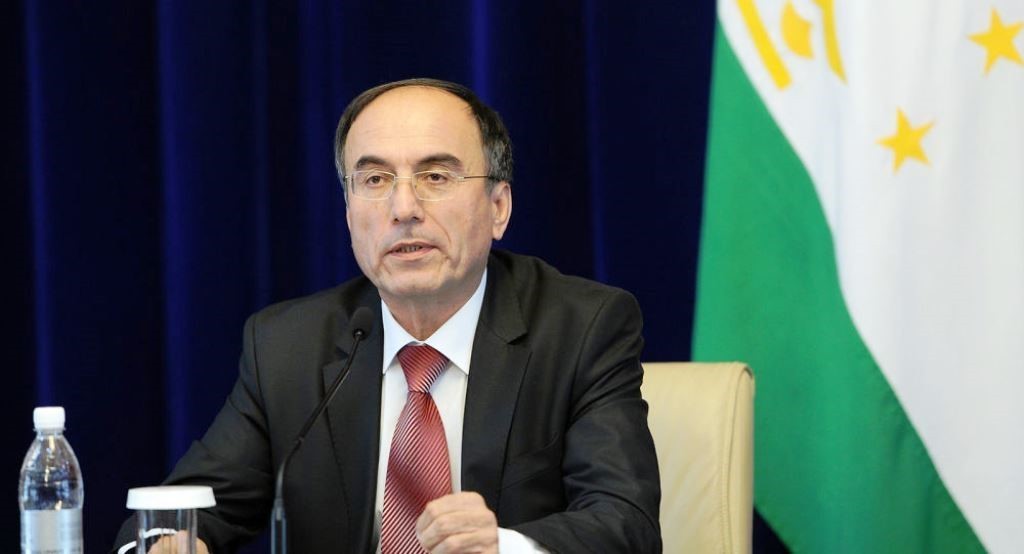
Over the next two years, 317 kilometers of international highways will be put into operation in Tajikistan, confirmed representatives of the Ministry of Transport. In 2024, Tajikistan will continue implementing projects for the reconstruction of highways, with the construction of 32 bridges, 5 tunnels with a length of 11.2 km and 7 avalanche corridors aiming to turn the country into an international transit route. "Special attention will be paid to the reconstruction of the Guliston-Kulyab (32.5 km), Dangara-Guliston (49.2 km), Guliston-Farkhor (40 km), and Bokhtar-Levakant-Dangara (40 km) highways," the ministry stressed. Earlier, at a meeting of the heads of transport departments of Central Asia, it was agreed to create the conditions for the development of the transport industry, Transport Minister of Tajikistan, Azim Ibrohim stated. The improvement of transport and logistics is aimed at strengthening trade between the countries of the region. The parties also approved a draft agreement on improving the connectivity of land transport to create new transport corridors in Central Asia, which will be signed during the meeting of the heads of the state.
Independent Media Facing Repression in Tajikistan, Says Watchdog

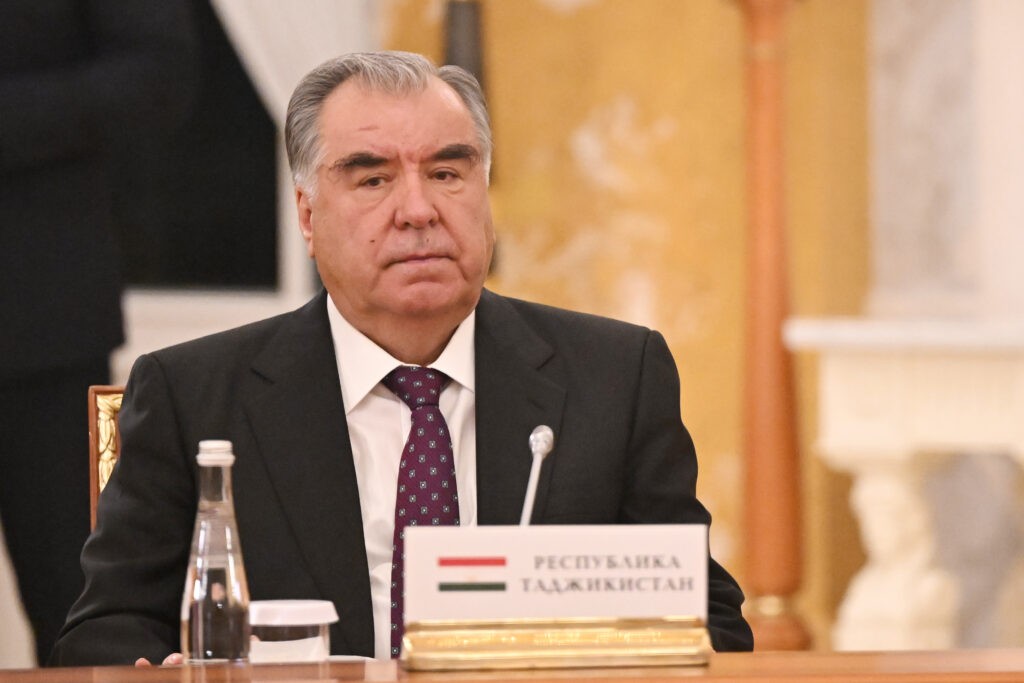
In Tajikistan, President Emomali Rahmon’s bid to centralize control includes efforts to silence political opponents, human rights activists, and independent voices. Now, Tajikistan’s media is in its “worst state” since the years of the civil war, the Committee to Protect Journalists (CPJ) said in a report released on January 4th. In the report, entitled “In Tajikistan, independent media throttled by state repression,” the media watchdog said that seven journalists were sentenced to lengthy prison terms in retaliation for their work in 2022 and 2023. Four journalists - Abdullo Ghurbati, Zavqibek Saidamini, Abdusattor Pirmuhammadzoda, and Khurshed Fozilov - received sentences of seven or seven-and-a-half years, whilst Khushom Gulyam received eight years, Daler Imomali ten years, and Ulfatkhonim Mamadshoeva twenty years. The harsh sentences are seen by many as a deeply chilling escalation in the years-long constriction of independent media, the report states. Only two significant independent media voices now remain in Tajikistan: privately-owned news agency, Asia-Plus, and the U.S. Congress-funded Radio Free Europe/Radio Liberty’s local service, the Czechia-based Radio Ozodi. Both regularly face harassment and threats. Their websites have long been subjected to partial shutdowns by local internet service providers, the CPJ report said. Asia-Plus has been forced to moderate its content, reducing its political coverage following a May 2022 threat from the authorities to shutter its operations. A handful of other outlets either avoid political topics entirely, or barely function due to lack of funding. Several local journalists told CPJ that they were forced to self-censor their reporting, and pointed to a “dramatic fall” in the number of critical articles and an increasing tendency for local media to avoid domestic politics in favor of “safe” topics such as culture, sport, and limited international news. Another big problem the media in Tajikistan faces is its finances. Lacking domestic sources of funding amid a limited advertising market, independent media has been reliant on international donors for years, local journalists told CPJ. Yet in recent times, this source of support has declined significantly, particularly since the start of Russia’s war in Ukraine.

Russian Military to Train Specialists in Tajikistan’s Army

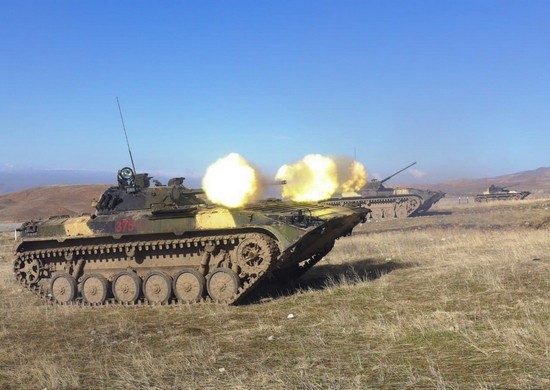
Russian military instructors from the Central Military District of the Russian 201st base in Tajikistan will train 1,000 specialists in the Armed Forces of Tajikistan in 2024, the Russian Ministry of Defense has stated. Training will take place in the Lyaur and Sambuli bases in 14 military specialties: driver mechanic and gunner operator of the T-72 tank, crew commander of the BM-21 Grad multiple launch rocket system, gunner of the 2S1 Gvozdika self-propelled artillery gun, gunner of the BTR-80 armored personnel carrier, gunner-operator of the BMP-2 infantry fighting vehicle, reconnaissance officer, grenade launcher, and others, the ministry said. The 201st military base stationed in Tajikistan is Russia’s largest military facility outside its borders. Located in two cities, Dushanbe and Bokhtar, the bases include motorized rifle, tank, artillery, reconnaissance, and air defense units. Russian President Vladimir Putin had earlier stated during President Rahmon’s visit to Moscow in November 2023 that Russia and Tajikistan would continue deepening cooperation in defense, military-technical, counterterrorism and antidrug trafficking operations. “We will continue working to maintain peace and stability in Central Asia. We intend to continue actively using the potential of the 201st Russian military base in Tajikistan,” Putin said at the time.

Tajikistan to Achieve Energy Independence and Become Green Country

In 2023, Tajikistan’s GDP increased by 8.3% compared to the previous year, and over the past seven years the country’s GDP has grown 1.5-fold while the national economy has developed at an average pace of 7.5%, the President of Tajikistan, Emomali Rahmon stated addressing parliament on December 28th. The President said that prioritizing the prevention of potential risks to the national economy, making efficient use of available resources, industrialization and creating jobs have been the main priorities of the government in recent years. Among Tajikistan’s main concerns, the President said, are the establishment of a “green economy,” accelerating the economy’s digitization, developing human resources, raising the competitiveness of domestically produced goods, bolstering exports, and enhancing the standards of social services. Rahmon said that given the abundance of hydropower resources in Tajikistan, the high production capacity of "green energy" and its export, the Government is making confident steps towards achieving its strategic goal of energy independence. In 2023, Tajikistan’s energy capacity exceeded 6,000 megawatts, and electricity production amounted 22 billion kilowatt-hours, which is 4.8 billion kilowatt-hours or 28% more than in 2017. Rahmon said that Tajikistan will take urgent measures over the next seven years to increase energy exports up to 10 billion kilowatt-hours taking into account the implementation of CAЅA-1000 power transmission line project and re-connection to the Central Asia energy system. The country will also construct power plants using renewable energy sources and increase the "green energy" production capacity up to 1,000 megawatts by 2030. With the implementation of these measures, the President said, by 2032 electricity production in the country will be entirely from renewable sources, that is, 100% will be provided by “green energy, and Tajikistan will truly become a green country,” President Rahmon said.

Tajikistan and Kyrgyzstan Agree on Another Border Section

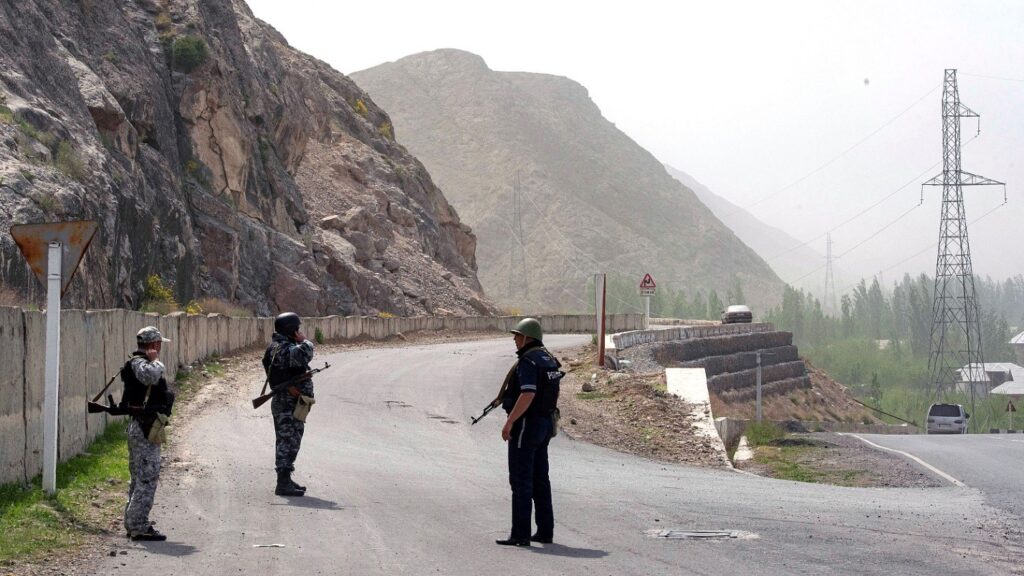
Delegations from Tajikistan and Kyrgyzstan have conducted more work on the definition and designation of the state border, agreeing on the divination of another 11.88 km at a meeting in Buston held between the 17th and 23rd of December. The two parties also agreed to continue determining the remaining sections oat the next meeting to be held in Kyrgyzstan. A long-standing source of conflict between the two nations, it is emblematic of the problem that even the length of the border - sometimes cited as being 975-kilomtres long, and at others times 972-kilomteres - is rarely agreed upon. In January 2023, Tajikistan’s President Rahmon stated that 614-kilometres have been agreed upon, backtracking on a previously stated figure of 664. With its scant natural resources and dwindling water supplies, the border between Kyrgyzstan and Tajikistan has been the scene of numerous skirmishes for many years. In 2014, all borders between Kyrgyzstan and Tajikistan were closed indefinitely to Kyrgyz and Tajik citizens following clashes over a bypass road in disputed territory; mortars were fired and both armies suffered casualties. In 2021 and 2022, troubles flared up again. Several hundred kilometers of the border have not yet been defined. This situation developed after the collapse of the USSR, leaving the parties unable to agree on dozens of disputed areas. The non-delimited territories become a conflict zone between the local population, and the border guards of the two countries became involved. The last major conflict occurred on September 16th 2022, as a result of which hundreds of people were killed and injured on both sides, and massive damage was caused to the infrastructure in Sughd and Batken. The Presidents of Tajikistan and Kyrgyzstan, Emomali Rahmon and Sadyr Japarov, have repeatedly discussed delimitation of the border. The situation in the disputed areas is also closely monitored by the Collective Security Treaty Organization (CSTO). In recent years, the authorities of the two countries have been actively negotiating to resolve this issue. Meetings have been held alternately on the territory of the two republics. Currently, more than 90%, or about 885 km of the border has been mutually recognized by States.

WFP to Help Tajikistan Strengthen Food Security

The United Nations World Food Programme (WFP) and the Government of Tajikistan on December 14th signed a Memorandum of Understanding (MoU) to deepen their cooperation on addressing food and nutrition security for 2023 to 2026, the UNDP website stated. The MoU was signed by Adham Musallam, the WFP Representative and Country Director in Tajikistan, and Sirojiddin Muhriddin, the Minister of Foreign Affairs of the Republic of Tajikistan. “The new CSP, valued at U$ 91 million, is designed to support the government’s priorities for achieving food security and broadening access to high-quality nutrition by 2030,” said WFP Representative Musallam. “Under the new CSP, the emphasis will be on supporting livelihoods, improving agricultural production, enhancing health, education, and nutrition, as well as strengthening national institutions and systems.” This MoU sets the foundation for the WFP Tajikistan Country Strategic Plan (CSP) 2023–2026, which harmonizes with the nation’s objectives in enhancing food and nutrition security, bolstering capacities, and offering technical aid to the government’s social protection initiatives.