• KGS/USD = 0.01143 -0%
  • KZT/USD = 0.00193 -0%
  • TJS/USD = 0.10881 0%
  • UZS/USD = 0.00008 0%
  • TMT/USD = 0.28575 0%
  • KGS/USD = 0.01143 -0%
  • KZT/USD = 0.00193 -0%
  • TJS/USD = 0.10881 0%
  • UZS/USD = 0.00008 0%
  • TMT/USD = 0.28575 0%
  • KGS/USD = 0.01143 -0%
  • KZT/USD = 0.00193 -0%
  • TJS/USD = 0.10881 0%
  • UZS/USD = 0.00008 0%
  • TMT/USD = 0.28575 0%
  • KGS/USD = 0.01143 -0%
  • KZT/USD = 0.00193 -0%
  • TJS/USD = 0.10881 0%
  • UZS/USD = 0.00008 0%
  • TMT/USD = 0.28575 0%
  • KGS/USD = 0.01143 -0%
  • KZT/USD = 0.00193 -0%
  • TJS/USD = 0.10881 0%
  • UZS/USD = 0.00008 0%
  • TMT/USD = 0.28575 0%
  • KGS/USD = 0.01143 -0%
  • KZT/USD = 0.00193 -0%
  • TJS/USD = 0.10881 0%
  • UZS/USD = 0.00008 0%
  • TMT/USD = 0.28575 0%
  • KGS/USD = 0.01143 -0%
  • KZT/USD = 0.00193 -0%
  • TJS/USD = 0.10881 0%
  • UZS/USD = 0.00008 0%
  • TMT/USD = 0.28575 0%
  • KGS/USD = 0.01143 -0%
  • KZT/USD = 0.00193 -0%
  • TJS/USD = 0.10881 0%
  • UZS/USD = 0.00008 0%
  • TMT/USD = 0.28575 0%
21 December 2025

Viewing results 289 - 294 of 482

U.S. State Department Criticizes Tajikistan for Religious Restrictions

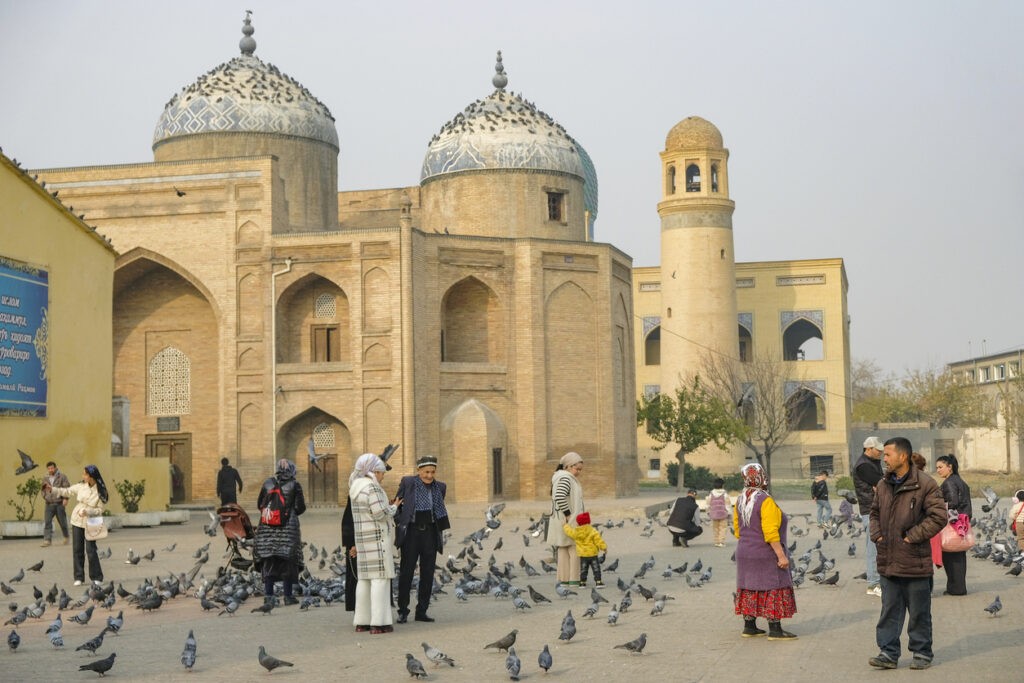
The U.S. State Department's 2023 World Religious Freedom Report lists Tajikistan as a country of "particular concern" due to "gross violations of religious freedoms." The report cited evidence of religious restrictions by the state, including a ban on the hijab, restrictions on minors and women performing namaz in mosques, and the harassment of Jehovah's Witnesses. The authors of the report also noted that residents of  Tajikistan refrain from freely discussing religion for fear of persecution by the authorities. This is not the first time the Tajik government has been criticized for restricting religious freedoms, including religious observance, but President Emomali Rahmon continues to support his government's policy on these issues. In Tajikistan, 90% of the population is Muslim, predominantly followers of the Hanafi madhhab, whilst 4% are Ismailis. The central part of the Christian community are followers of the Orthodox Church. There are 4,058 religious organizations and associations officially registered in the country, including 66 which are non-Muslim. The authors of the report noted that the activities of these organizations were under strict control. According to the Tajik Interior Minister, Ramazon Rakhimzoda, 195 alleged members of "extremist" and "terrorist" organizations were detained in Tajikistan in the first half of 2023. The Norwegian human rights NGO for religious freedom, Forum-18, reported that at least 19 people were convicted last year for exercising the right to freedom of worship.
Tajikistan and OSCE Discuss Cooperation

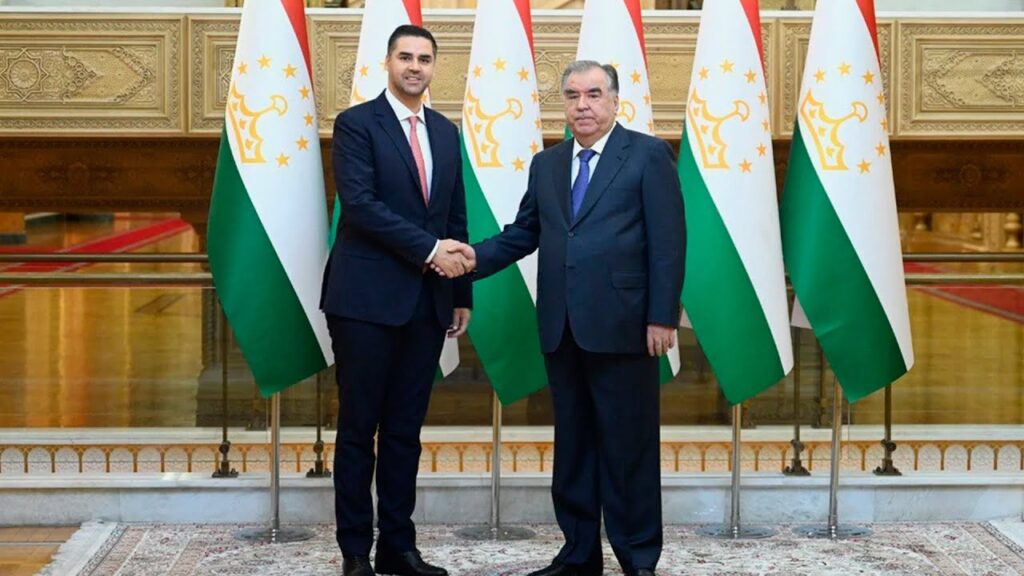
Tajikistan's president Emomali Rahmon has received the OSCE chairperson-in-office, Maltese foreign minister Ian Borg, in Dushanbe. The meeting discussed cooperation issues in various spheres, Rahmon's press service is reporting. "From the first days of establishing relations with the Organization, we have expressed readiness to expand mutually beneficial cooperation," Rahmon stressed. The parties discussed regional and global problems and the expansion of military-political, economic, and environmental ties within the Organization for Security and Cooperation in Europe (OSCE) framework. The need for close cooperation among the Organization's member states in preventing and mitigating the negative consequences of climate change, such as unprecedented warming, floods, prolonged droughts, fires, and other natural disasters, was recognized. During the conversation, the sides exchanged views on security, combating cybercrime, and preventing the misuse of the internet to promote and agitate extremism, radicalism, and violence. In bilateral relations, there was satisfaction with the cooperation within international organizations, particularly the OSCE and the European Union. In addition, ways to expand bilateral relations between Tajikistan and Malta in areas such as inter-parliamentary ties, trade, investment, entrepreneurship, tourism, and cultural and humanitarian cooperation were discussed.

Central Asian Leaders Offer Support, Condolences to Putin After Dagestan Attack

Several leaders in Central Asia have spoken by telephone with Russian President Vladimir Putin and expressed their condolences after attacks by alleged Islamic militants in the Russian area of Dagestan killed about 20 people.  The quick expressions of support on Monday reflect longstanding security ties between Russia and Central Asian countries, as well as growing concerns about extremist attacks in the region, particularly following the March 22 assault on the Crocus City concert hall in the Moscow area that killed more than 140 people. The violence in Russia on Sunday happened in two cities in a mostly Muslim region of the North Caucasus and targeted police and places of worship.  Uzbek President Shavkat Mirziyoyev said in his conversation with Putin that Uzbekistan was ready “to continue active cooperation between the relevant structures in the fight against common threats in the field of security,” according to a statement by Mirziyoyev. The two leaders also discussed implementation of agreements reached during a visit by Putin to Uzbekistan on May 26-28.  Kazakh President Kassym-Jomart Tokayev made similar remarks in a call with Putin, saying Kazakhstan “condemns any assassination and evil attempt on the lives of civilians and regards it as a great threat to international and regional security,” Tokayev’s office reported. It said the two presidents talked about strengthening their “strategic partnership” and discussed the agenda of the Shanghai Cooperation Organization summit, to be held in the Kazakh capital of Astana on July 3-4.  Tajikistan’s leader Emomali Rahmon sent a message expressing “a feeling of deep sadness” and pledges of collaboration on security issues to Putin, saying his country had been fighting terrorism for decades. “Tajikistan, which has been fighting against all forms of terrorism for more than 30 years, strongly condemns this inhuman act of violence in Dagestan and advocates active cooperation in the fight against terrorism,” Rahmon said.  Kyrgyzstan’s leader, Sadyr Japarov, who left Bishkek on Monday on an official trip to Belgium, also expressed solidarity with Russia.  The Islamic State group claimed responsibility for the March 22 attack in suburban Moscow and several Tajik suspects were arrested, leading to some harassment and increased scrutiny of many Central Asian migrants who travel to Russia in hopes of finding work. The situation fueled diplomatic tension between Russia and some Central Asian countries, though their leaders have worked to stabilize relations.  Putin blamed battlefield adversary Ukraine for the March 22 attack, but he didn’t offer evidence and Kyiv denied the allegation.

Tajikistan to Export 70% of Rogun Electricity to Central Asia

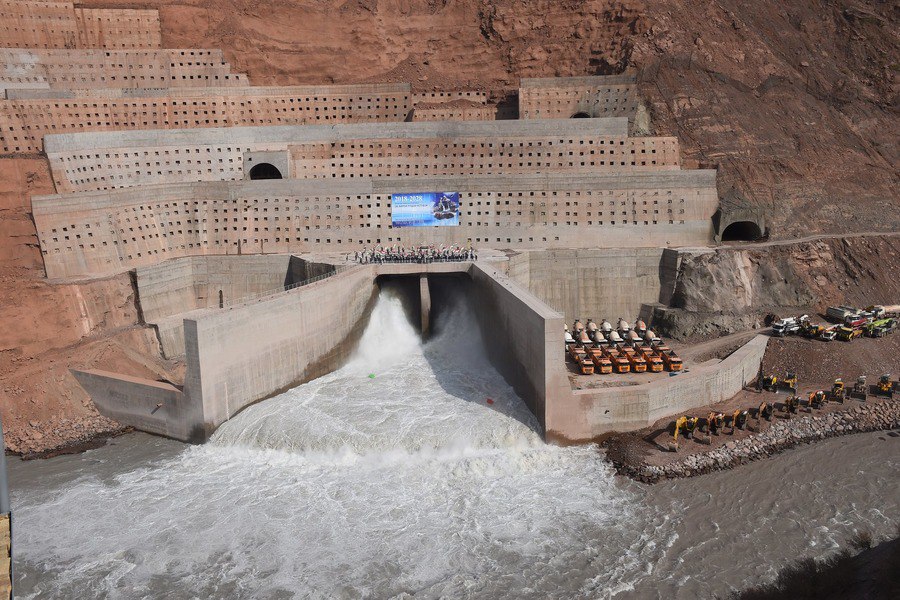
About 70% of the electricity generated after the Rogun hydroelectric power plant (HPP) in Tajikistan reaches full capacity will be exported to other Central Asian countries. This is according to agreements signed with Uzbekistan and Kazakhstan, which Tajikistan's minister for energy and water resources, Daler Juma, announced at a recent meeting of the energy ministers of Shanghai Cooperation Organization (SCO) member states in Astana. “The Republic of Tajikistan, which has a huge hydropower potential, continues the construction of the Rogun HPP with a capacity of 3,780 MW. The Rogun HPP ensures the energy security of the Republic of Tajikistan and contributes to increasing the volume of exports to neighboring countries. It should be noted that 70 percent of the produced products are exported to cover the growing demand in the region's countries,” said Juma. Construction of Rogun the HPP began in 1976, but it was suspended in 1991 after the collapse of the USSR. Subsequently, Tajikistan continued constructing 600 MW hydroelectric power stations, as outlined in the project, using its resources and support from international funds and organizations. Two of the six aggregates have already been operational, and the third is planned to be operational in 2025. Juma reported that the two hydraulic units produced more than 7 billion kWh of electricity.

Border Dispute No More: Are Bishkek and Dushanbe Ready to Make Peace?

Kyrgyzstan and Tajikistan have long been restless neighbors from Tashkent and Astana's point of view. In many respects, Kazakhstan and Uzbekistan forced the current rapprochement of the Central Asian republics, as expressed on the outer perimeter in the C5+1 format, where the region strives to put forward a consolidated position. After all, investment does not come to problematic areas. The problem border The main sticking point in relations between Bishkek and Dushanbe stretches for almost a thousand kilometers - the border between the two states - the demarcation of which, following the collapse of the USSR, neither the government of Kyrgyzstan or Tajikistan was concerned about. There were enough problems to deal with: falling living standards, civil war in Tajikistan, and endless revolutions in Kyrgyzstan. To date, the border has still not been fully demarcated, causing problems for residents of both states over access to water, pastures, and roads. Disputed territories accounted for about 30% of the border between the two countries. The first alarm bells sounded back in 2014 - in January and May of that year there were armed incidents on the border between northern Tajikistan's in Sughd Province and Kyrgyzstan's Batken Province. Tajiks and Kyrgyz have lived compactly in this densely populated area for centuries. Tajik villages neighbor Kyrgyz villages, there are exclaves such as Vorukh, and the border can crisscross roads, presenting difficulties for traveling. "In Soviet times, people moved around quietly when the borders were conditional. Residents on both sides had free access to pastures and arable land. There were no problems along the watershed. If lands were given by the republics to each other for some purpose, local authorities knew where and whose land was located. With the collapse of the Union, the whole system ceased to function. And the problems of open unmarked borders became more acute," political observer Negmatullo Mirsaidov explained in a commentary for the BBC Russian Service after the January 2014 clash. Time passed, but the situation did not change, and a new aggravation occurred in the first year of the COVID-19 pandemic. Then, clashes were repeated with depressing regularity, and in 2022 came a military incursion by Tajik soldiers into a Kyrgyz border village with the seizure of administrative buildings. Armed clashes broke out all along the border and Russia intervened, forcing the parties to negotiate. Central Asia then picked up the baton, trying to melt the ice of hostility between the skirmishing neighbors. In early February, Tajik President Emomali Rahmon met with Kyrgyz Foreign Minister, Zheenbek Kulubaev, in Dushanbe. According to the press service of the head of Tajikistan, "Over the past four months, the parties have agreed on the design and working description of about 196 kilometers of the state border and to date have determined about 90% of the line of its passage." Considering that the Tajik-Kyrgyz border is about 980 kilometers long, about 100 kilometers remain to be agreed upon. Before the clash in 2022, more than 300 kilometers of the border were considered disputed....

Sogd-2024 International Trade Fair Marks First Decade

The international trade fair, Sogd-2024 officially opened at the sports palace in Khojand, Tajikistan, on June 18th. This year marks a decade of the Sogd—Valley of Opportunities fair, which will run from June 18th-19th. More than 500 guests from Tajikistan and abroad have gathered, Andar Rahmani, the head of the press service of the Sogd regional administration informed Sputnik Tajikistan, adding that regional ambassadors are also participating in this important economic event. “Ambassadors and representatives of the diplomatic corps of Russia, Turkey, Uzbekistan, Saudi Arabia, Azerbaijan, Japan, Iran, Belarus, Turkmenistan, Slovakia, Poland, Pakistan, Kyrgyzstan and Kazakhstan visited the region,” Rahmani said. Representatives from the Tashkent, Namangan, Ferghana, Samarkand, Bukhara, and Syr Darya regions of Uzbekistan, and business- people from China’s Shaanxi province and representatives of international financial organizations also participated.