Viewing results 391 - 396 of 642
The government in Tajikistan must support journalists’ rights to free speech, according to a statement by U.S. Ambassador, Manuel P. Micaller Jr. in honor of Tajikistan’s Press Day, which is observed on March 11th. He said in a Facebook post commemorating the holiday that he was speaking on behalf of the U.S. Embassy in Tajikistan. The statement was first reported by the ASIA-Plus news portal. “Mass media that is free and independent enables society to hear various viewpoints, make just and reasonable decisions, and stay informed about events,” he wrote in the post. He called independent mass media the foundation of democracy in Tajikistan and around the world. The United States supports Tajikistan’s efforts to train journalists, the post reminded readers, stating that "this is accomplished through study tours, English language classes, exchange programs, and technical assistance for the media.” Additionally, Micaller asked the U.S. Government to uphold journalists’ freedom of speech and defend their rights.
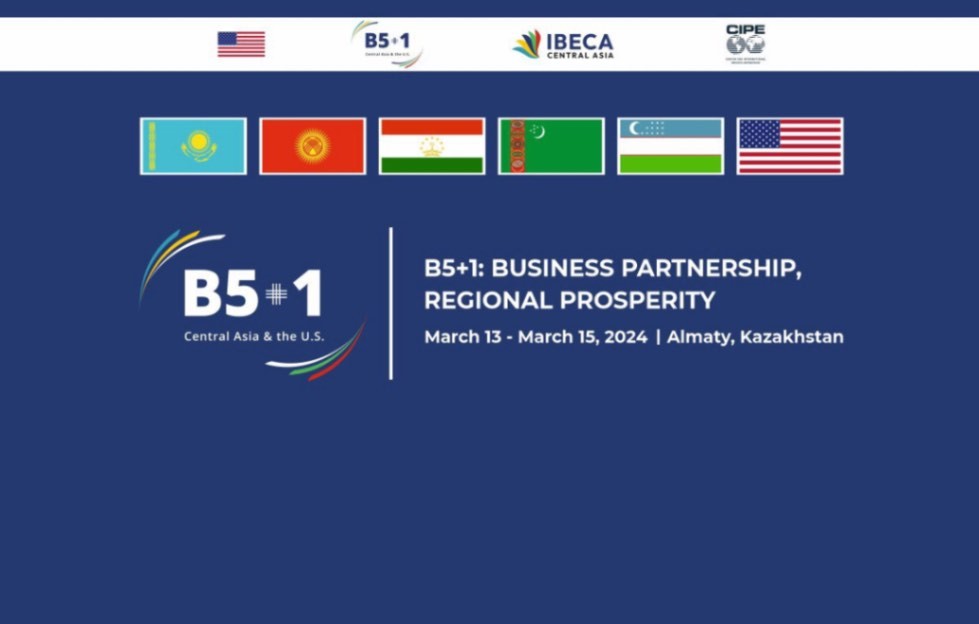
Recognizing that the Central Asia region could benefit more from initiatives in global security, business and trade if its countries strengthened their cooperation in key areas, the Center for International Private Enterprise (CIPE) created the ‘C5+1’ platform last year for just this purpose. The Center’s 5+1 group features the governments of the five Central Asian republics – Kazakhstan, Uzbekistan, Kyrgyzstan, Tajikistan and Turkmenistan – plus the United States, whose State Department and international chambers of commerce are central to the platform’s work. An inaugural C5+1 Summit was held in September 2023, on the sidelines of the 78th session of the UN General Assembly in New York. At this high-level meeting, the presidents of each of the Central Asian nations joined US president Joe Biden in dialog on enhancing the region’s stability and prosperity through economic, energy, and security partnerships within the C5+1 framework. Building on this start made by C5+1, CIPE is now launching the ‘B5+1’ format, focused on cooperation in the global business context. The inaugural B5+1 Forum will take place this week in Kazakhstan’s business capital of Almaty, and will include presentations and panel discussions with policy makers from the United States, Central Asia and several other countries. On 14 and 15 March leaders from the public sector will discuss Central Asia’s economic integration, international trade and investment alongside dozens of influential private companies. The B5+1 Forum will pick up where the C5+1 Summit left off in exploring opportunities for American companies in Central Asia. This potential lies in key sectors such as critical minerals, renewable energy and manufacturing. The Almaty event will also continue the conversation on enhancing regional connectivity via the Trans-Caspian International Transport Route, also known as the Trans-Caspian Corridor. At a time of geopolitical upheaval and disruption of existing supply chains, international investment in this trade route is being sought through the Partnership for Global Infrastructure and Investment. The B5+1 Forum forms part of CIPE’s program called “Improving the Business Environment in Central Asia” (IBECA). CIPE themselves are affiliated to the US Chamber of Commerce – the catalyst behind the B7 and B20 platforms – and receive funding from the US Department of State. The establishment of B5+1 is closely aligned with commitments made during the C5+1 Summit last September, and outlined in a document called the New York Declaration. The upcoming Forum aims to deliver on two key commitments in the declaration. The Times of Central Asia will be in attendance at the B5+1 Forum on 14-15 March, and will be publishing insight and analysis from the event.
Cooperation and trade with Central Asia still holds much unrealized potential. The region is developing fast and offers opportunities for companies and agencies, both international and local. As the global geopolitical landscape changes and supply chains are disrupted, the importance of Central Asia as a business and transit hub, through initiatives such as the Trans-Caspian Corridor, is growing. There are therefore great incentives for the five countries of the region – Kazakhstan, Uzbekistan, Kyrgyzstan, Tajikistan and Turkmenistan – to find ways to function as a single integrated market, in order to capitalize on opportunities for foreign and local companies, and attract more international investment and business. For this reason the Center for International Private Enterprise (CIPE) is inviting policymakers from Central Asia, the United States and other countries to its B5+1 Forum this week. On 14 and 15 March in Kazakhstan’s business capital of Almaty, leading minds from the public sector will discuss Central Asia’s economic integration, international trade and investment, alongside dozens of high-profile private companies. An event on 14 March entitled “Looking within Central Asia” will introduce the objectives and expected outcomes of the B5+1 format. Presentations by representatives of Kazakhstan’s Ministry of National Economy, the Caspian Policy Center, the US Department of State and Kyrgyzstan’s Ministry of Economy and Commerce will give business-focused perspectives on improving economic integration and the investment climate. The discussion on 15 March will center on the theme of “Central Asia’s place in the world economy”. Talks from representatives of the US-Kazakhstan Business Council, the American-Uzbekistan Chamber of Commerce and the European Bank for Reconstruction and Development (EBRD) will give an international perspective on promoting trade and investment flows in Central Asia. The B5+1 Forum forms part of CIPE’s program “Improving the Business Environment in Central Asia” (IBECA). CIPE themselves are affiliated to the US Chamber of Commerce – the catalyst behind the B7 and B20 platforms – and receive funding from the US Department of State. The establishment of B5+1 is closely aligned with commitments outlined in a document called the New York Declaration to strengthen the republics' economic relations, and improve the business environment for regional economic integration and investments. The upcoming Forum aims to deliver on two key commitments in the declaration. The Times of Central Asia will be in attendance at the B5+1 Forum on 14-15 March, and will be publishing insight and analysis from the event.
Tajikistan believes that the European Union (EU) will encourage energy projects that are being implemented in the country and throughout Central Asia to mitigate climate change. That's the view held by Sirojiddin Mukhriddin, the head of Tajikistan’s Ministry of Foreign Affairs, expressed during a speech at the diplomatic forum “New Dynamics of Cooperation in Eurasia” in Antalya, Turkey. “Just five percent of the nation’s current hydropower potential has been utilized up to this point. Our projects are wonderful. Among them is the Rogun HPP, one of the world's biggest hydroelectric power stations. Of course, we also invited all of our partners to help us build these initiatives, [and] the European Union is one of them,” said Mukhriddin. The minister mentioned that the United States and the EU are funding the construction of a hydroelectric power plant in the republic's mountainous Badakhshan autonomous region. Mukhriddin claimed that this would contribute to the energy supply for both this area and Afghanistan, a neighboring country with its own pressing electricity needs. Mukhriddin mentioned the Sustainable Energy Connections in Central Asia project, which is being managed by the EU. “We believe that the program will fortify the institutional, legal, and regulatory framework for the region’s shift to a sustainable energy system,” the minister said. “With the help of our partners, especially the European Bank for Reconstruction and Development (EBRD) and others, we anticipate that this project will be implemented successfully,” he added.
Japan has long been a "steadfast supporter of Tajikistan, contributing tens of millions of dollars to the country’s development through the United Nations Development Programme (UNDP)." The Japanese government, through its Japan International Cooperation Agency (JICA), is also funding the “Border Management Project” – an initiative to support the Tajik Government in controlling its national border with Afghanistan, UNDP Tajikistan reports. The project aims to both secure the length of the Tajik-Afghan border and facilitate cross-border trade. It was initially launched in 2015, and will run until 2025. Since its launch the parties have constructed a new border checkpoint at Langar, and modernized the old checkpoints at Khumrogi and Shogun. Toshihiro Aiki, Japan’s ambassador to Tajikistan, recently commented: “We have had favorable relationships with the government of Tajikistan since its first steps of independence. Japan supports Tajikistan in many ways, considering strategic aspects, especially in light of the changed political landscape involving the whole Eurasian continent. There are some challenges that not only Tajikistan but most of the countries face.” Given the problem of drug trafficking at the Tajik-Afghan border, the initiative is also supporting Tajikistan in disrupting illicit activities, protecting border communities from the harmful effects of the drug trade.
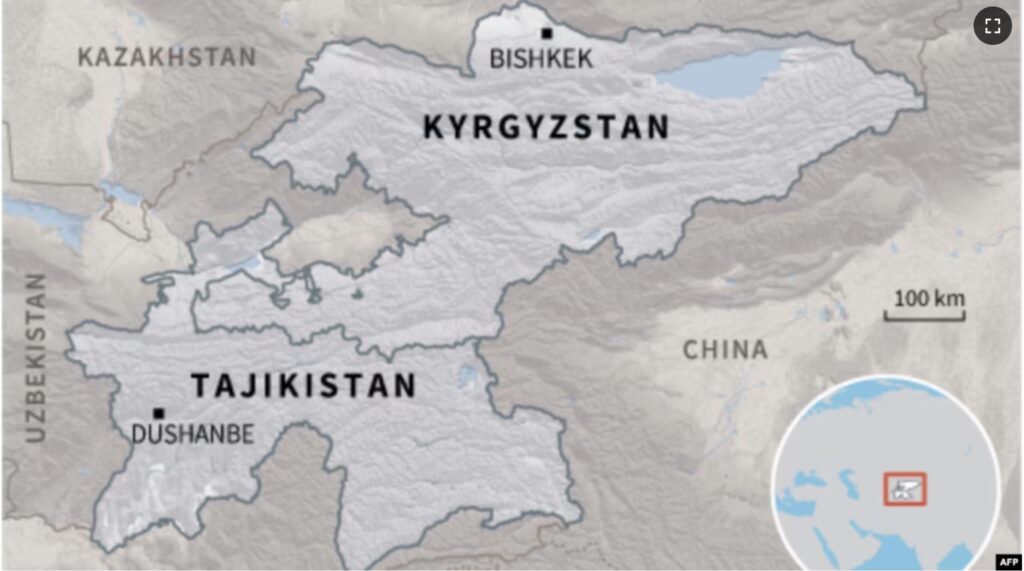
The ongoing process of delimiting the state border between Kyrgyzstan and Tajikistan was discussed during a February 5th meeting between Tajikistan’s president Emomali Rahmon and Kyrgyzstan’s minister of foreign affairs Jeenbek Kulubaev in Dushanbe. The parties announced that over the past four months the Kyrgyz and Tajik sides have reached an agreement on 196km of the state border, and to date almost 90% of their 975km border has been prepared for demarcation, the Tajik president’s press service said. Mr Rahmon and Mr Kulubaev also discussed the joint use of water resources of transboundary rivers, and the expansion of commercial and economic relations between the two countries. The delimitation and demarcation of the Kyrgyz-Tajik border has been an issue since the collapse of the Soviet Union. The issue has turned into an urgent problem in recent years after several deadly clashes took place along disputed segments of the border. Many border areas in Central Asian republics have been disputed since 1991. The situation is particularly complicated around the numerous exclaves in the Ferghana Valley, where the borders of Tajikistan, Uzbekistan, and Kyrgyzstan meet.