• KGS/USD = 0.01143 0%
  • KZT/USD = 0.00213 0%
  • TJS/USD = 0.10593 0.47%
  • UZS/USD = 0.00008 0%
  • TMT/USD = 0.28571 0%
  • KGS/USD = 0.01143 0%
  • KZT/USD = 0.00213 0%
  • TJS/USD = 0.10593 0.47%
  • UZS/USD = 0.00008 0%
  • TMT/USD = 0.28571 0%
  • KGS/USD = 0.01143 0%
  • KZT/USD = 0.00213 0%
  • TJS/USD = 0.10593 0.47%
  • UZS/USD = 0.00008 0%
  • TMT/USD = 0.28571 0%
  • KGS/USD = 0.01143 0%
  • KZT/USD = 0.00213 0%
  • TJS/USD = 0.10593 0.47%
  • UZS/USD = 0.00008 0%
  • TMT/USD = 0.28571 0%
  • KGS/USD = 0.01143 0%
  • KZT/USD = 0.00213 0%
  • TJS/USD = 0.10593 0.47%
  • UZS/USD = 0.00008 0%
  • TMT/USD = 0.28571 0%
  • KGS/USD = 0.01143 0%
  • KZT/USD = 0.00213 0%
  • TJS/USD = 0.10593 0.47%
  • UZS/USD = 0.00008 0%
  • TMT/USD = 0.28571 0%
  • KGS/USD = 0.01143 0%
  • KZT/USD = 0.00213 0%
  • TJS/USD = 0.10593 0.47%
  • UZS/USD = 0.00008 0%
  • TMT/USD = 0.28571 0%
  • KGS/USD = 0.01143 0%
  • KZT/USD = 0.00213 0%
  • TJS/USD = 0.10593 0.47%
  • UZS/USD = 0.00008 0%
  • TMT/USD = 0.28571 0%

Viewing results 775 - 780 of 1207

Turkmenistan-Iraq Natural Gas Deal: A Complex Balancing Act

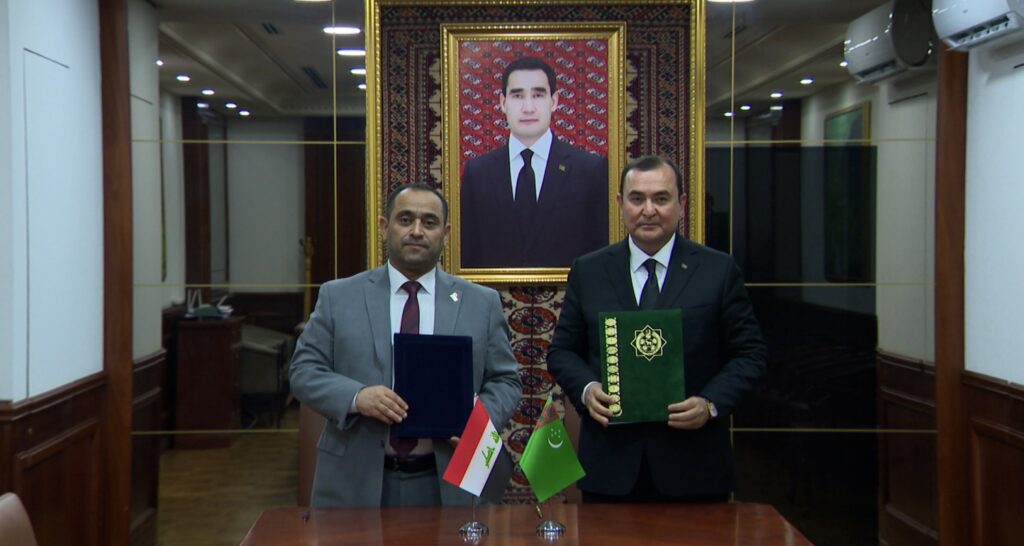
The recent natural gas deal between Turkmenistan and Iraq has sparked both excitement and concern in the energy world. On November 8, representatives from the State Concern Türkmengaz met with a delegation from Iraq, led by the Minister of Electricity Ziad Ali Fadel, to discuss the export of natural gas from Turkmenistan to Iraq. As with any major energy agreement, this deal carries significant implications for both countries and the region as a whole. This opinion piece explores the positive aspects, potential challenges, and wider implications of the Turkmenistan-Iraq natural gas deal. The Turkmenistan-Iraq natural gas deal presents several positive aspects for both countries. Economically, the agreement opens up new opportunities for trade and investment, providing a boost to the economies of both nations. Additionally, it strengthens diplomatic relations between Turkmenistan and Iraq, fostering closer ties and collaboration in other areas. Moreover, the deal has the potential to enhance energy security in Iraq, diversifying its energy sources and reducing dependence on a single supplier. For Turkmenistan, this agreement represents an opportunity to tap into new markets and expand its natural gas exports. While the deal offers numerous benefits, it also comes with potential challenges and drawbacks. From Iraq's perspective, one concern is the possibility that it becomes overly dependent on Turkmenistan for its energy needs. This could create vulnerabilities and limit Iraq's flexibility in the energy market. Disputes over pricing and payment terms may also arise as aligning the expectations of both parties can be a complex process. Additionally, the agreement may face infrastructure and logistical challenges, such as ensuring efficient transportation and distribution of the natural gas. The influence of regional politics on the deal is another factor to consider, as geopolitical dynamics may impact its implementation. The Turkmenistan-Iraq natural gas agreement has the potential to significantly impact the regional energy market. It may alter the dynamics of gas supply and demand in the region, affecting other players and stakeholders. The agreement could prompt neighboring countries to evaluate their own energy strategies and explore new partnerships. Additionally, the deal could contribute to greater energy cooperation and integration in the region, paving the way for future collaborations and joint projects. As we consider the implications of this gas deal, it is crucial to examine its environmental impact and public opinion. The environmental consequences of increased natural gas extraction and consumption should be carefully assessed to ensure sustainable practices. Additionally, public opinion in both countries will play a significant role in shaping the perceptions and outcomes of the deal. Public engagement and transparency are vital to ensure that the interests and concerns of the citizens are taken into account. The Turkmenistan-Iraq natural gas deal represents a complex balancing act.  It ultimately offers economic benefits, strengthens diplomatic relations, and enhances energy security while also raising concerns about energy dependency, pricing disputes, and logistical hurdles. The agreement will have implications for the regional energy market, influencing the strategies of neighboring countries and reshaping energy dynamics. As the process unfolds, it is crucial to...


Turkmen-U.S. Business Forum Held in Ashgabat

On December 5th, the tenth Turkmen-American business forum was held in Ashgabat, which was attended by the heads and representatives of relevant government and business structures of Turkmenistan and the United States, Turkmenistan’s Government website stated. According to the post, the forum demonstrated the focus of Turkmenistan and the United States on the further progressive development of mutually beneficial cooperation which meets common interests, the Turkmen Foreign Ministry said. The US delegation, headed by Executive Director of the Turkmenistan-US Business Council, Eric Stewart, included executives and representatives of well-known companies, including Case New Holland Industrial, Climate Compass LLC, Honeywell, John Deere, Palo Alto Networks, Visa, and Westport Trading Europe Ltd. The participants noted that the foreign policy course implemented by Turkmenistan under the leadership of President Serdar Berdimuhamedov, based on the principles of positive neutrality, increases the attractiveness of the Turkmen market for foreign investors. The priority areas of the Turkmen-US partnership include the energy sector, transport and communications, the agro-industrial sector, high technology, and the investment sector. At the same time, approaches to realizing the potential of trade and economic partnership were reviewed and identified, and plans for joint work in key areas were outlined. Special emphasis was placed on intensifying business ties. One of the results of the forum was the signing of a Memorandum of Understanding between Case New Holland Industrial and Turkmen entrepreneurs.

Turkmenistan Preparing for Accession to Global Methane Pledge Program

The upcoming Climate Change Conference to be held in Dubai became the main topic of a recent cabinet meeting held by President Serdar Berdimuhamedov. At the meeting, Foreign Minister Rashid Meredov reported on preparations for participation in the 28th Conference of the Parties to the UN Framework Convention on Climate Change (COP-28) to be held from November 30th to December 12th. Turkmenistan's accession to the Global Methane Pledge (GMP) program will be announced at the meeting as one of the main steps in countering climate change. At the meeting, Meredov proposed that Turkmenistan “continue cooperation with international organizations and partner countries in the framework of joint projects and programs aimed at fulfilling GMP conditions at a national level.” In other words, in order to meet GMP quotas, Turkmenistan is counting on the support of and joint projects with international organizations and partner countries. Advisor to the President on Oil and Gas Issues, Ashyrguly Begliyev reported on the work of the Natural Gas Research Institute of the State Concern, Turkmengaz and the Institute Nebitgazylmytaslama of the State Concern, Turkmenneft. Their work is related to the fulfillment of the conditions of the GMP. Begliyev also spoke about taking “concrete steps to reduce methane emissions into the atmosphere, including through the use of modern technologies in the fields of energy, industry and transport.” Precisely what actions will be taken remain unclear, however. Deputy Prime Minister Batyr Amanov, who oversees the oil and gas industry, also reported on cooperation with German partners to increase the volume of hydrocarbon production. In particular, the importance of modernizing gas compressor stations subordinated to Turkmengaz was emphasized.

Turkmenistan and Russia Discuss Cooperation

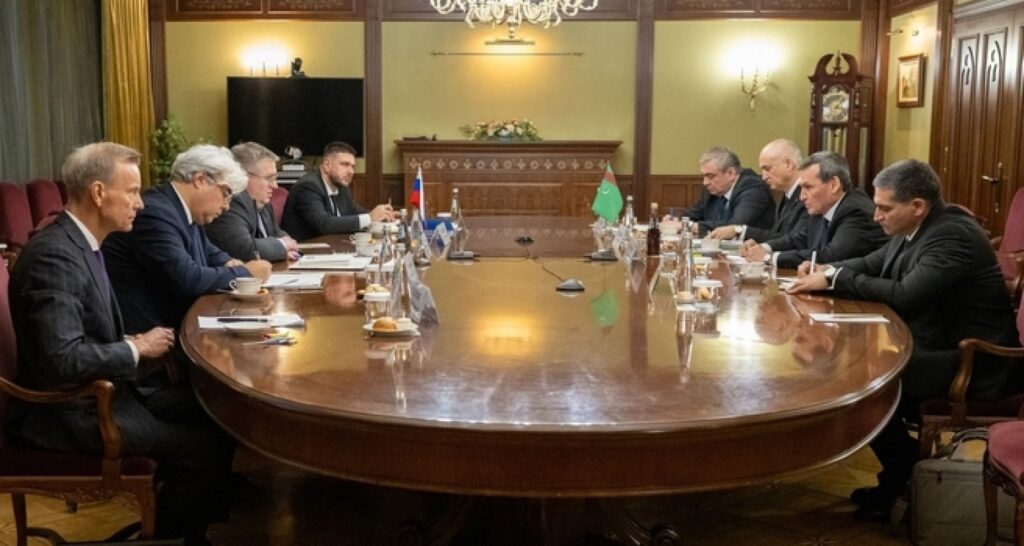
On December 4th in Moscow, the Deputy Chairman of the Cabinet of Ministers and Minister of Foreign Affairs of Turkmenistan, Rashid Meredov met with Deputy Prime Minister of the Russian Federation, Alexey Overchuk. The main topic of the talks was preparations for the upcoming 13th meeting of the Intergovernmental Turkmen-Russian Commission on Economic Cooperation, which will be held in Ashgabat early next year. It was emphasized that the upcoming meeting will be an important stage in the development of mutually beneficial trade and economic partnership between the two countries. Both sides noted that today, Turkmenistan and Russia are searching for new forms and areas of cooperation that meet modern realities, the needs and mutual potential of the two countries. In this context, the importance of improving the legal framework of bilateral economic and commercial relations was stated. The parties also discussed cooperation in the cultural and humanitarian sphere. In this regard, Overchuk noted the agreements reached on the construction of a new joint Turkmen-Russian secondary school named after Pushkin in Ashgabat, the new Russian Drama Theater, and the creation of a Turkmen-Russian university in Ashgabat.

CAREC Countries Endorse New Vision to Fight Climate Change Together

Member countries of the Central Asia Regional Economic Cooperation (CAREC) program committed to working together to cut greenhouse gas emissions and build resilience to climate change. “We endorse the Regional Action on Climate Change: A Vision for CAREC to help countries implement their commitments under the Paris Agreement”, said a joint ministerial statement issued at the 22nd CAREC Ministerial Conference held on November 30th in Tbilisi. The statement was endorsed by ministers and high-level officials from Azerbaijan, the People’s Republic of China, Georgia, Kazakhstan, the Kyrgyz Republic, Mongolia, Pakistan, Tajikistan, Turkmenistan, and Uzbekistan. “I am confident this shared Vision will enhance the CAREC program’s impact on this most critical climate challenge facing the subregion”, said Asian Development Bank (ADB) President, Masatsugu Asakawa. “I look forward to concrete progress on bringing forward more climate projects - including in renewable energy, sustainable agriculture, efficient water use, economic diversification, and strengthening supply chains - to improve the region’s climate resilience and adaptation”. The Vision emphasizes the importance of energy transition and the improved use of renewable energy sources, strengthening the regional electricity trade, deploying innovative financing solutions, and investing in climate-resilient infrastructure and policies. It calls for strengthened collaboration and coordination with the program’s development partners in supporting the region’s climate agenda. A scoping study published earlier this year showed climate change is expected to have severe impacts in the CAREC region, including higher-than-average temperature rises, water scarcity, expanded desertification, and glacial melting. To address water issues in the region, CAREC will support countries to improve their expertise and capacities in transboundary water management, water productivity, and to invest in more efficient irrigation systems to boost agricultural productivity. CAREC will also support efforts to decarbonize transport and continue deepening regional connectivity with efficient transport technologies and infrastructure. Other priority areas include developing climate-smart cities with electrified mass transit systems and promoting climate and disaster resilience through regional risk management and financing initiatives. The CAREC program is a partnership of countries and development partners working together to promote sustainable development, accelerate economic growth, and reduce poverty. The ADB hosts the CAREC secretariat.

Police in Turkmenistan Apprehend Former RFE/RL Correspondent

The police in Koneurgench, northern Turkmenistan, have apprehended Hudaiberdy Allashov, a former correspondent for RFE/RL, on undisclosed charges. Family members informed RFE/RL that Allashov was taken into custody on December 1st following a summons from the police. They allege that during this encounter, he was subjected to physical abuse and electric shocks. His current location and the rationale behind his arrest remain unknown. Allashov's association with RFE/RL dates back to a brief three-month stint in 2016. However, his tenure ended abruptly when he and his mother were arrested on accusations of using chewing tobacco, an offense deemed unlawful in the tightly-governed former Soviet nation. Both Allashov and his mother, Kurbantach Arazmedova, refuted these charges at the time. Their initial arrest drew international attention, leading to their release in mid-February 2017, albeit with a court conviction for possession of chewing tobacco, each receiving a three-year suspended prison sentence. Following his release, Allashov chose to cease his work with RFE/RL, expressing concerns for his safety. Nevertheless, in October 2019, he was detained once again, enduring hours of questioning allegedly accompanied by physical assault. The situation took a toll on his mother, who fell ill and passed away in the hospital two days later. In a separate incident in May 2022, Allashov and his wife, Ejesh Arazgylyjeva, were allegedly subjected to violent treatment by an official in Koneurgench, resulting in Arazgylyjeva's hospitalization and necessitating medical attention for Allashov himself. Turkmenistan's government maintains a tight grip over media outlets, including newspapers, radio, television, and online platforms.