• KGS/USD = 0.01143 -0%
  • KZT/USD = 0.00193 -0%
  • TJS/USD = 0.10881 0%
  • UZS/USD = 0.00008 0%
  • TMT/USD = 0.28575 0%
  • KGS/USD = 0.01143 -0%
  • KZT/USD = 0.00193 -0%
  • TJS/USD = 0.10881 0%
  • UZS/USD = 0.00008 0%
  • TMT/USD = 0.28575 0%
  • KGS/USD = 0.01143 -0%
  • KZT/USD = 0.00193 -0%
  • TJS/USD = 0.10881 0%
  • UZS/USD = 0.00008 0%
  • TMT/USD = 0.28575 0%
  • KGS/USD = 0.01143 -0%
  • KZT/USD = 0.00193 -0%
  • TJS/USD = 0.10881 0%
  • UZS/USD = 0.00008 0%
  • TMT/USD = 0.28575 0%
  • KGS/USD = 0.01143 -0%
  • KZT/USD = 0.00193 -0%
  • TJS/USD = 0.10881 0%
  • UZS/USD = 0.00008 0%
  • TMT/USD = 0.28575 0%
  • KGS/USD = 0.01143 -0%
  • KZT/USD = 0.00193 -0%
  • TJS/USD = 0.10881 0%
  • UZS/USD = 0.00008 0%
  • TMT/USD = 0.28575 0%
  • KGS/USD = 0.01143 -0%
  • KZT/USD = 0.00193 -0%
  • TJS/USD = 0.10881 0%
  • UZS/USD = 0.00008 0%
  • TMT/USD = 0.28575 0%
  • KGS/USD = 0.01143 -0%
  • KZT/USD = 0.00193 -0%
  • TJS/USD = 0.10881 0%
  • UZS/USD = 0.00008 0%
  • TMT/USD = 0.28575 0%
21 December 2025

Viewing results 553 - 558 of 819

IMF Forecasts 2.3% Growth in Turkmenistan’s Economy

In her report on the International Monetary Fund (IMF) mission to Turkmenistan, from 27 March – 9 April, Ms. Anna Bordon announced that Turkmenistan’s economy is set to expand by around at 2.3% in the coming year. According to the IMF mission’s assessment of the economic outlook and risks of Turkmenistan’s macroeconomic and financial developments, the country’s economic activity moderated in 2023 and inflation is on the rise. IMF staff estimate that post-pandemic growth surged to 5.3% in 2022 before falling to 2% in early 2023 as world commodity prices subsided, monetary policy tightened, and pressures on exchange rates abated. A temporary situation, inflation began to pick up later in 2023 and is projected to gradually rise to 8% mainly due to the country’s policy to increase public sector wages and pensions by 10% per year. “To improve spending efficiency, Turkmenistan should enhance its targeting of social spending, move toward public wage increases based on performance, and enhance public investment management,” said Ms Borden. The IMF estimates that growth of hydrocarbon production will stabilize at around 2%. In contrast, non-hydrocarbon growth is expected to remain subdued, given the challenging geopolitical and business environment, investment inefficiencies, the significant overvaluation of real exchange rates, and burdensome standards imposed by international regulations. The end of mission statement concluded: “The authorities are adequately focused on economic diversification. A more market-based economic diversification strategy would be preferable. Sustained macroeconomic stability is a pre-requisite for diversification, which importantly requires adjusting the exchange rate and eliminating exchange restrictions.” It was also recommended that Turkmenistan “gradually phase out administrative controls and reduce the footprint of the state in the economy”.

Turkmenistan and USA Set to Strengthen Partnership

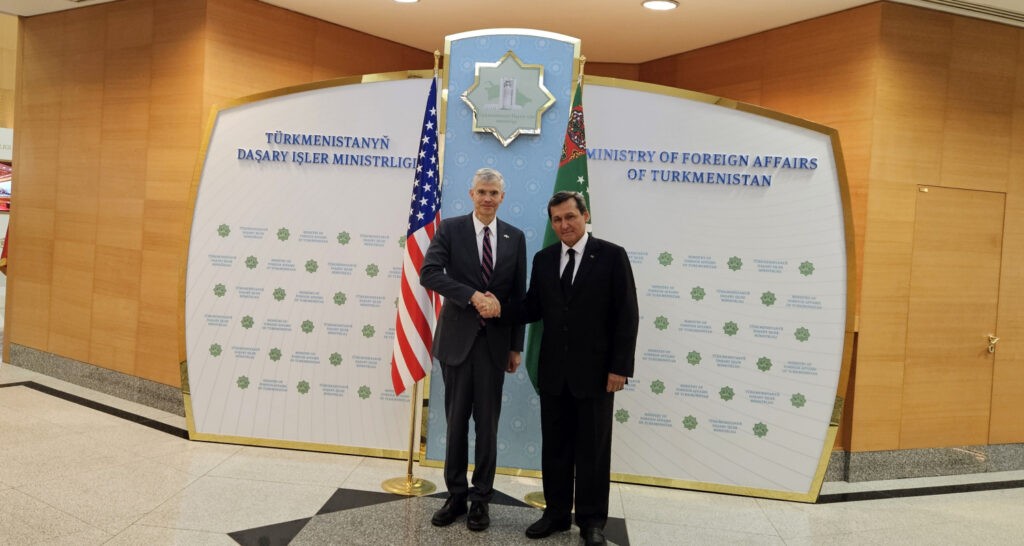
On 14 April, delegations led by Rashid Meredov, Minister of Foreign Affairs of Turkmenistan and John Pommersheim, US Deputy Assistant Secretary of State for South and Central Asian Affairs, attended an annual political consultation in Ashgabat. The meeting focused on the current state and prospects for the development of Turkmen-American relations in political, trade, economic, ecology, culture, education, and humanitarian sectors. According to the Turkmen Foreign Ministry, both parties confirmed their commitment to cultural and educational programs, through monthly meetings, and approved a joint road map in the field of education. The American delegation welcomed Turkmenistan's accession to the Global Methane Commitment which underlines both countries’ determination to resolve environmental problems and create sustainable socio-economic development. The parties welcomed the establishment of inter-parliamentary cooperation as essential for maintaining contacts and coordinated approaches to resolving pressing issues.

As Bishimbayev Case Continues, Kazakhstan Toughens Domestic Violence Laws

While a court in Astana tries former economy minister Kuandyk Bishimbayev for murdering his wife Saltanat Nukenova, the Kazakhstani Senate has passed a law strengthening protections for women and children against domestic violence. The new law, if properly implemented, can hand out much harsher punishments to those who abuse those closest to them. In particular, a term of life imprisonment has been introduced for the murder of a minor child.   In the Face of Widespread Indifference The trial of Bishimbayev – and his relative Bakhytzhan Baizhanov, who is accused of failing to report the murder - has uncovered an uncomfortable truth. Many people already knew that Bishimbayev beat his wife, who died last November. Relatives and close acquaintances of the victim recounted details in court about bruises on Nukenova's face. On the day of her death, a number of witnesses saw Bishimbayev arguing with, and possibly beating, Nukenova. Many of these witnesses are employees of the restaurant where the alleged murder took place. Baizhanov admitted under interrogation that he saw blood as Nukenova was laying motionless, but, on the orders of Bishimbayev, had the restaurant's surveillance tapes deleted, and then drove Nukenova's phone around the city, so that it would seem later that she was still alive at the time. According to Baizhanov, he "did not know and did not realize" that Nukenova was dying. However, a forensics expert testified in court that the nature of Nukenova's injuries indicated serious beatings, not "light slaps and falls," as Bishimbayev had previously claimed. Examinations confirmed that Nukenova died of multiple brain injuries and a lack of oxygen, likely as a result of asphyxiation.   Will the New Law Help Stop Violence?  Kazakhstanis are closely following the legal proceedings that have resulted from Nukenova's death, and are organizing viral online actions and rallies in her memory in cities across Europe. Human rights activists and ordinary Kazakhstanis fought long and hard for domestic violence to be criminalized. Under the new law, criminal liability will be applied to any intentional infliction of harm to health, however minor. The Code "On marriage (matrimony) and family" establishes the legal status of family support centers and the functions they perform, and establishes helplines for information and psychological assistance relating to women's and children's rights. The law also contains many measures aimed at protecting children in public and online. Activists are still cautious about the new law, and argue that much will depend on its practical application and the amount of funds allocated to it. Support centers for victims of violence receive many calls per day, and physically cannot provide assistance to all those in need.   Central Asia's Changing Attitudes to Domestic Violence The other countries in Central Asia face a similar, and perhaps more difficult, situation. Uzbekistan, for example, adopted a law last year to give women and children more protection against domestic violence. Domestic violence in Uzbekistan is subject to administrative and criminal liability, and harassment has been made a crime. The sentences for sexual...

People in Turkmenistan Losing Money Due to Bank Glitches

According to news portal Turkmen.news, clients of a number of banks in Turkmenistan are inexplicably losing money from their accounts due to technical problems. On April 8-9, Dayhanbank customers discovered deficits of several hundred manat in their accounts. The amounts ranged from about 150 ($88.24) to 800 manat ($470.59). and in some cases their accounts were left in the red. When customers complained to the bank, they said it was a technical glitch and everything would be back to normal by the evening. In most cases, the amounts withdrawn was refunded to the customer’s account later that same day. According to the report, only by obtaining a bank statement and carefully checking all expenses would one be able to identify the discrepancy.

Turkmenistan Using Almost All Available Water Resources With No Additions in Sight

Meteojournal has reported that Turkmenistan's State Statistics Committee has published a voluntary national review of its progress in implementing the global agenda for sustainable development until 2023 on its website. According to MeteoJournal, in 2021, almost all water resources in the country – 92% – went to agricultural needs. Another 5% was used by industry, and only 3% went to household needs. At the same time, Turkmenistan used almost all available fresh water resources, and due to increasing consumption, the country has no additional water sources. In 2016, the utilization rate of water resources reached 97.5%; in 2018, it had dropped to 89.9%, then in 2020 it reached 85.2%, and in 2021 -- 87.1 percent. Meteojournal stated that the increase in demand for fresh water can be met only through its rational use. According to the review, 95% of the population has access to clean and safe water, whilst 99.9% of the population uses water supply services organized in compliance with safety requirements. The share of safely treated wastewater in 2022 was 57.4%. Meteojournal, which familiarized itself with the review, noted that Turkmenistan - which possesses huge potential for using renewable energy sources such as solar and wind energy - is currently not harnessing its potential. The review mentioned the construction of a 10-megawatt (MW) hybrid power plant using solar and wind energy in Kyzil-Arvat. The project was planned to be completed in January 2024, but has yet to open, and local media haven't reported any updates on the pace and status of the work.

No Central Asian Country Can Cope With Floods, Droughts On Its Own, Expert Tells TCA

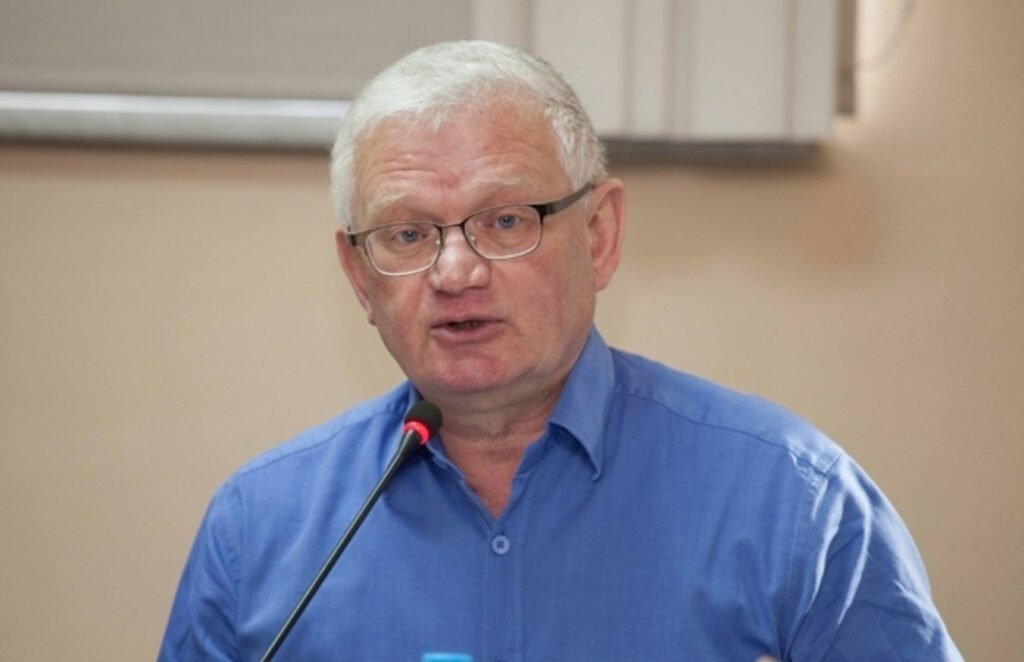
Lack of funds, the predominantly commodity-based nature of their economies, and the inability to reach agreement at a national level make the Central Asian republics vulnerable to natural disasters, Dr. Petr Svoik, Ph.D, a Kazakhstani economist and former head of the Anti=monopoly Policy Committee has told the Times of Central Asia.   Between Low Water and Flood Last year was marked by a drought in Kazakhstan, and at a critical moment for farmers, neighboring Kyrgyzstan stopped supplying water from the Kirov reservoir to the Zhambyl region, with the Kyrgyz authorities explaining that they were forced to cut off the water supply because of a severe shortage of water resources in the Chu and Talas Rivers for their own agricultural producers. Additionally in 2023, experts stated that the entire Eurasian region is entering a period of low water levels, which means agricultural and livestock sectors are threatened with permanent damage from drought. For Kazakhstan, the water problem is particularly acute, as many of the main water arteries are trans-boundary. This is true not only of the southern regions, but also along the Caspian Sea, which is supplied by Russia's Volga River, and the regions dependent on the Ural River in northwest Kazakhstan, which are at risk of drying up. However, the spring of 2024 has been marked by historic flooding. As of today, according to Kazakhstan's Ministry of Emergency Situations, ten regions of Kazakhstan are subject to flooding, with even multi-story buildings flooded in the regional centers of Kostanay, Aktobe and Atyrau. In a few days, according to the Ministry of Emergency Situations, a "wave" from Russia, where the major cities of Orsk and Orenburg are in danger, will come to Kazakhstan. Such a natural disaster hasn't happened in about 80 years, President Tokayev said. Drought and floods carry extraordinary costs, not to mention social damage. Every year, Kazakhstani villagers claim they are on the brink of ruin, and the state budget allocates significant funds to support them. As for floods, according to the World Bank, more than 1.1 million people have been affected in the five Central Asian states alone since the collapse of the Soviet Union. Each year, natural disasters in the region cause more than $10 billion in losses and affect the lives of nearly 3 million people. In Kazakhstan alone, 1.5 million people are at risk from river overflows, according to the Ministry of Emergency Situations. The country has allocated 7 billion tenge ($15.653 billion) for flood control in 2024 - but these funds are inadequate.   Political and Economic Losses  According to Petr Svoik, floods represent reputational losses for the authorities. The population loses property and faith in the authorities' ability to do something. Moreover, floods by definition have a high degree of predictability because of meteorological forecasts. "What is the problem of predicting the volume of water discharge in a couple of weeks, taking into account which reservoirs will overflow, and which ones need to be strengthened? For some reason, the authorities do not use...