• KGS/USD = 0.01144 0%
  • KZT/USD = 0.00212 0%
  • TJS/USD = 0.10456 0.19%
  • UZS/USD = 0.00008 0%
  • TMT/USD = 0.28490 0%
  • KGS/USD = 0.01144 0%
  • KZT/USD = 0.00212 0%
  • TJS/USD = 0.10456 0.19%
  • UZS/USD = 0.00008 0%
  • TMT/USD = 0.28490 0%
  • KGS/USD = 0.01144 0%
  • KZT/USD = 0.00212 0%
  • TJS/USD = 0.10456 0.19%
  • UZS/USD = 0.00008 0%
  • TMT/USD = 0.28490 0%
  • KGS/USD = 0.01144 0%
  • KZT/USD = 0.00212 0%
  • TJS/USD = 0.10456 0.19%
  • UZS/USD = 0.00008 0%
  • TMT/USD = 0.28490 0%
  • KGS/USD = 0.01144 0%
  • KZT/USD = 0.00212 0%
  • TJS/USD = 0.10456 0.19%
  • UZS/USD = 0.00008 0%
  • TMT/USD = 0.28490 0%
  • KGS/USD = 0.01144 0%
  • KZT/USD = 0.00212 0%
  • TJS/USD = 0.10456 0.19%
  • UZS/USD = 0.00008 0%
  • TMT/USD = 0.28490 0%
  • KGS/USD = 0.01144 0%
  • KZT/USD = 0.00212 0%
  • TJS/USD = 0.10456 0.19%
  • UZS/USD = 0.00008 0%
  • TMT/USD = 0.28490 0%
  • KGS/USD = 0.01144 0%
  • KZT/USD = 0.00212 0%
  • TJS/USD = 0.10456 0.19%
  • UZS/USD = 0.00008 0%
  • TMT/USD = 0.28490 0%

Viewing results 313 - 318 of 578

Labor Migration – Making Money At Any Cost

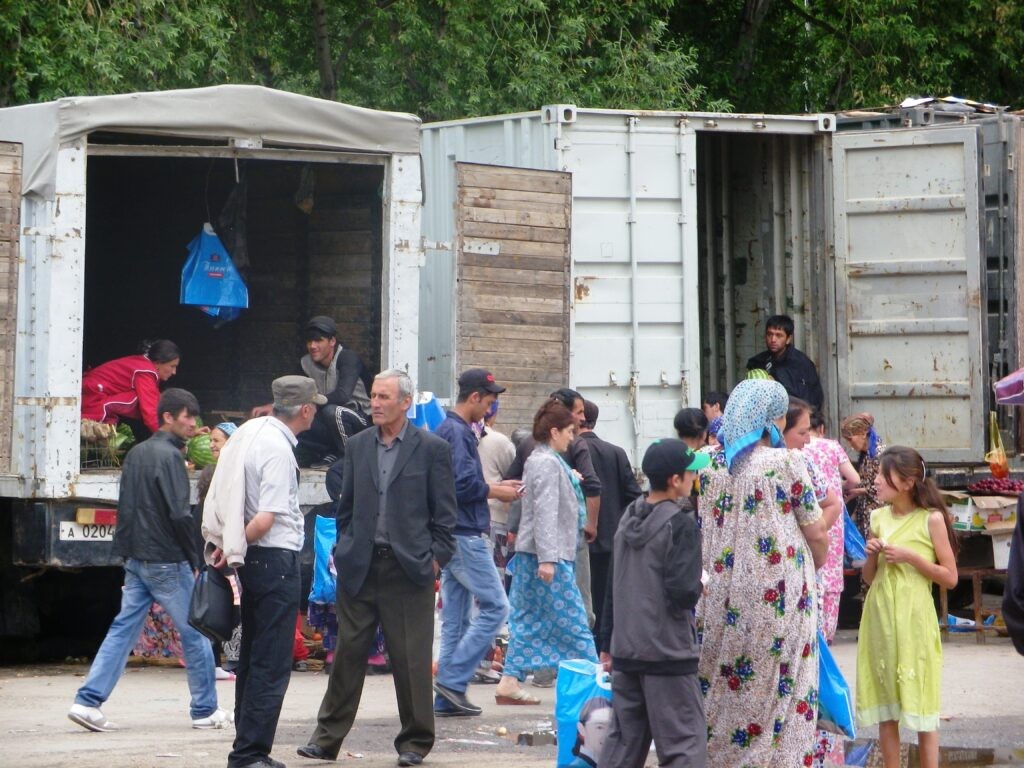
The number of labor migrants from Tajikistan continues to grow steadily, officially reaching the highest figure seen in the last decade. According to the Ministry of Labor, Migration and Employment, in 2023, 652,014 people left the country to work abroad. Despite the fact that the Government of Tajikistan claims the poverty level in the country has decreased (the poverty threshold is not specified), in reality a huge swathe of the male population is working abroad in an attempt to feed their families. Up to 40% of households in Tajikistan have at least one member working abroad. Remittances from migrants therefore account for a significant part of the country's GDP, but the authorities claim they cannot say exactly how much is sent by migrants because these remittances are funneled through different channels (accounts, banks, cards or through compatriots). However, various international organizations have stated that the figure stands in the realm of billions of dollars. Thus, according to the World Bank-KNOMAD, migrants' remittances to Tajikistan in 2022 amounted to 5.346 billion dollars (39.6% of the country's GDP). This makes Tajikistan one of the most remittance-based economies in the world, which serves as both a boon and a curse for the authorities, for whilst this mass migration removes those often viewed as unemployed malcontents, it’s also a source of embarrassment. Against the background of military conflict, the number of Tajik workers in Russia has slightly decreased, from 775,000 in 2022 to just over 652,000 in 2023, according to the Minister of Labor, Migration and Employment, Gulnora Hasanzoda. However, official statistics from the Russian migration services, number citizens of Tajikistan who are labor migrants in Russia at 1.5 million, whilst several hundred thousand more have obtained Russian citizenship. Renowned for being humiliated and extorted by border guards, these ex-pats are easy targets for the Russian police and are the subject of attacks by Neo-fascist groups. Often living in dormitory blocks overseen by gang-masters on the plains of Siberia, many die on the job, but they couldn’t survive back home. The poorest of the post-Soviet Republics, in September 2020, the World Food Program estimated that 47% of people in Tajikistan live on less than $1.33 a day, whilst an estimated 30% suffer from malnutrition. A relatively new trend of leaving the country to work abroad has also been observed in Turkmenistan, where those serving in the police and in military units rank among the highest in terms of expats. Though salaries in these professions are considered quite high by Turkmen standards - police officers receive $142-157 and servicemen $160-185 a month, it is possible to earn several times more on a construction site, as a waiter or a cab driver in Russia. Thus, in April 2023 alone, around 200 officers from the Department of Internal Affairs of the Dashoguz Province of Turkmenistan submitted their resignations with the aim of going to work in Russia. Konye-Urgench Bazaar, Dashoguz Province, Turkmenistan. Photo: TCA. Against the background of aggravated labor migration, the authorities of Turkmenistan continue to...
Children in the Fields, Not at Their Desks: Turkmenistan Continues to Use Child Labor in Cotton Harvest

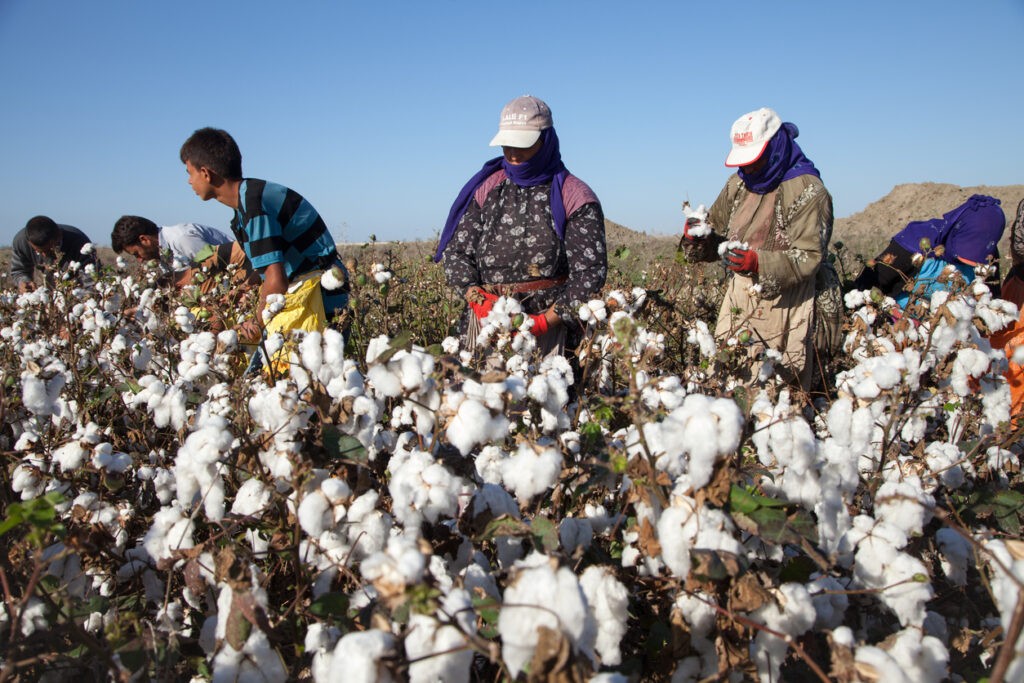
Turkmenistan continues to use forced labor of adults and children during the cotton harvest, according to experts from the Committee on the Application of Standards of the International Labor Organization (ILO). "The preliminary findings of this observation mission indicate direct or indirect evidence of mobilization of public servants in all regions visited, with the exception of the city of Ashgabat," the report by the committee states. Another report by independent Turkmen human rights groups published last year documented widespread systematic forced labor in Turkmenistan - alongside widespread corruption. Under its ILO commitments, Turkmenistan has pledged for years to eradicate this practice, but the reality is different. The Business and Human Rights Resource Center notes that the Turkmen Government obliges farmers to submit a certain quota of cotton each year. Failure to meet these quotas can result in the land being taken away from the dekhkans (smallholder farmers) and given to others, or the issuance of a fine. At the same time, the government maintains a monopoly on the purchase and sale of cotton, sets an artificially low purchase price, and does not disclose information about either the income from cotton or the use of that income. Employees of government organizations are systematically forced to harvest cotton. They are not provided with proper working or living conditions, and are often forced to find housing and food at their own expense. In addition, they face such problems as unfavorable weather conditions - cotton harvesting starts in the summer heat and continues well into winter's sub-zero temperatures - contact with chemicals used to treat the fields, and travel costs. Despite this, human rights advocates haven't received any complaints about the authorities' misconduct. This is likely due to the fact that workers are afraid of losing their jobs in the public sector, where the majority of Turkmenistan's population is employed. Despite local laws prohibiting the use of child labor - and a ban on the use of child labor in the cotton sector has been in place since 2008 - the practice is widespread during the cotton harvest. The Cotton Campaign, an international coalition of labor groups, human rights organizations, investors and business organizations, has repeatedly spoken out against this practice. Schoolchildren in Turkmenistan often go to the cotton fields themselves to earn money for clothing and food, as well as to help their parents, who are obliged to pick cotton. Turkmenistan is the tenth largest cotton producer in the world and has a vertically integrated cotton industry. Despite the boycott of cotton picked using forced labor, the U.S., Canada and EU countries cannot always control the supply chain of cotton from third countries. Thus, Turkmen cotton harvested by forced and child labor filters into global cotton supply chains at all stages of production. The Cotton Campaign has called on governments, companies and workers' organizations to take action and pressure Turkmenistan to end forced labor and protect the basic rights of its citizens. Uzbekistan is a successful case study in the effort to eliminate...

Visit of a Delegation from Turkmenistan to Japan: Prospects for Cooperation

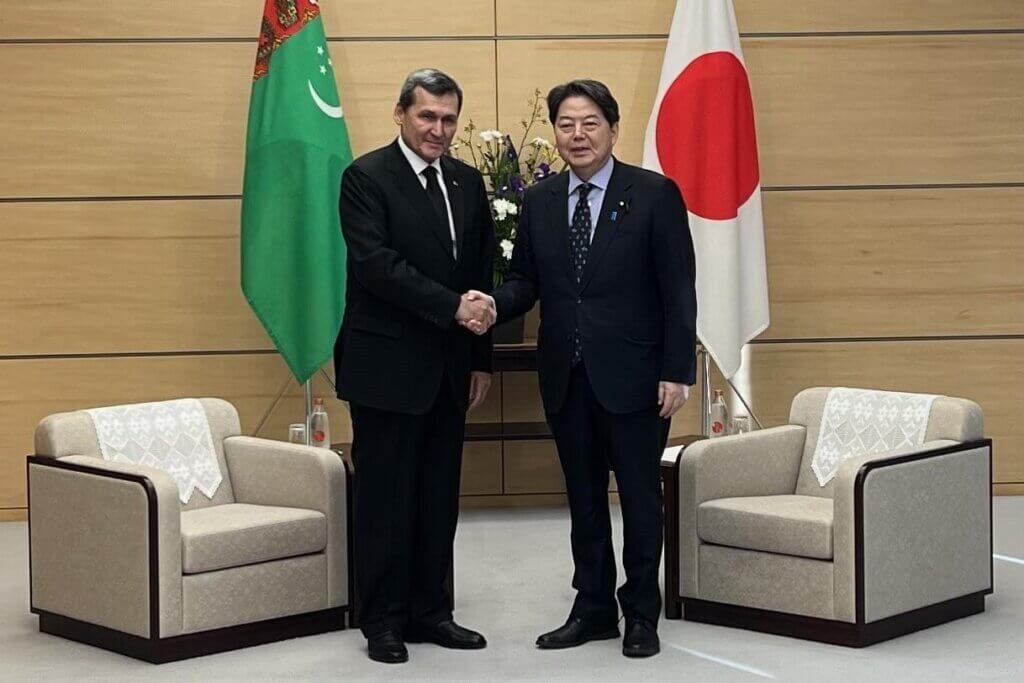
Turkmen Foreign Minister Rashid Meredov led a delegation from Turkmenistan, which visited Japan from January 22nd to 23rd. During the visit, the development of bilateral cooperation and the organization of the first Summit of Heads of State of the Central Asia-Japan Dialogue were discussed. According to information received from the Ministry of Foreign Affairs of Turkmenistan, the diplomats met with Yoshimashi Hayashi, Secretary General of the Japanese Cabinet of Ministers During the visit, they discussed the involvement of Japanese companies in the export of high value-added products, diversification of project financing, study of experience in "green" and hydrogen energy, as well as the creation of modern high-tech industries. According to the Ministry of Foreign Affairs of Turkmenistan, Japanese companies showed great interest in cooperation in infrastructure and energy transition. Meredov also met with Ken Saito, the Minister of Economy, Trade and Industry of Japan. A number of important issues related to cooperation between Central Asia and Japan were discussed. A proposal was made to hold the next Ministerial Dialogue on Energy Economy within the framework of the Dialogue "CA+Japan". The topic of developing a Roadmap on decarbonization, which will be aimed at reducing greenhouse gas emissions and transition to cleaner energy sources, was also touched upon. One of the key topics of discussion was the possibility of introducing the Joint Crediting Mechanism (JCM). This mechanism will allow the countries of Central Asia and Japan to share knowledge, technologies and resources in the field of reducing greenhouse gas emissions and transition to sustainable development. The topic of developing cooperation in the field of e-commerce was also touched upon. The idea is to create an electronic platform to improve trade relations between CA and Japan. This will reduce trade barriers and simplify procedures for importing and exporting goods. Finally, joint work in the field of hydrogen development and transportation technologies was discussed. Hydrogen is one of the promising sources of energy, and its efficient utilization can have a significant impact on addressing climate change. This meeting was an important step in strengthening cooperation between Turkmenistan and Japan in the fields of economy, trade and industry. It opens new perspectives for the development of the energy sector, industry, trade and technology.

Central Asia’s Untapped Potential: Key to Green Transition, Food Security, and Digital Economy Growth

Central Asia, with its rich history as a crossroads of civilizations and a gateway between East and West, finds itself at a crucial juncture in its economic development. The region is showing signs of moving towards becoming a more cohesive economic group, an evolution that could have far-reaching implications for renewable energy development, food security, global commerce and geopolitics. Central Asian states are better positioned than ever to capitalize on their strengths and resources to help the rest of the world deal with climate change, security challenges associated with geopolitical shifts and the ongoing digital transformation of the global economy. Realizing this vast potential will require continued focus, commitment and cooperation from the region’s leaders, as well as long-overdue support from Western leaders for some of the most progressive reforms Central Asia has seen in recent years. Green energy potential Rich in natural resources, Central Asia is fast becoming pivotal for the global green energy transition. Leveraging vast reserves of rare earth elements (REEs) and other crucial minerals combined with its significant potential for renewable energy production, the region is increasingly recognized as a key contributor to realizing a more sustainable future. Kazakhstan, one of the region's major players, boasts over 56 identified deposits of REEs, with reserves and resources surpassing 450,000 tons. These elements, including lithium and cobalt production, are crucial for battery technologies powering renewable energy applications. This positions Kazakhstan as a significant supplier for the burgeoning green technology industry. Kyrgyzstan and Tajikistan also show promise. Inventory reviews of REE-bearing mineral occurrences and delineation of areas-of-interest suggest these countries could be home to considerable undiscovered resources, further boosting their contribution to green energy transitions. In addition to its abundant natural resources, Central Asia is an ideal candidate for green hydrogen production. Uzbekistan, with  PowerChina and the Saudi company ACWA Power is constructing the  country's first green hydrogen plant. Meanwhile, Kyrgyzstan and Tajikistan, with their surplus hydropower electricity, are well-positioned for hydrogen production. Once again, however, Kazakhstan boasts the most ambitious goal: The country aims to produce two million tons of green hydrogen annually by 2032, marking its intent to become a major player in the global green hydrogen market. In 2022, it inked a $50 billion deal with the German energy grou Svevind to build one of the world's largest green hydrogen plants supplying Europe. Kazakhstan, which holds 13% of the world’s uranium reserves, also leads the pack in uranium mining, meeting a significant portion of annual demand from  Europe and the U.S.. As nuclear power plays a crucial role in the green energy transition, Kazakhstan's role is set to grow. The country is exploring new avenues to access the international market. On the other hand, Kyrgyzstan, Uzbekistan and Tajikistan are also known for their uranium deposits but they are currently prioritizing the remediation of past mining sites over active uranium production. This responsible approach underscores the region's commitment to sustainable development. Central Asia's commitment to a greener future extends beyond resource development.. Several states, including Kazakhstan, Turkmenistan,...

President’s First Book Presented in Turkmenistan

A presentation of the first book by President of Turkmenistan, Serdar Berdimuhamedov, entitled “Youth is the support of the Motherland,” took place on January 6th at the Institute of International Relations of the Ministry of Foreign Affairs. The Chairman of the Central Council of the Youth Organization of Turkmenistan, Yazpolat Keriev, and the Minister of Foreign Affairs, Rashid Meredov, delivered speeches at the event. As was emphasized in the speeches, as part of the national youth policy of the President, the necessary opportunities and conditions are being created for the fruition of a worthy generation based on traditions inherited from their ancestors, and comprehensive support is being provided to the youth, who represent the future of the country. It was also stated that the literary work of the head of state, dedicated to the activities and achievements of Turkmen youth in socioeconomic, cultural, humanitarian and other spheres, is intended to become a reference book for the current and future generation of young Turkmen citizens, the Foreign Ministry reported. At the same time, special emphasis was placed on the implementation of the “Strategy for International Youth Cooperation for 2023-2030,” which aims to contribute to the active involvement of Turkmen youth in international events. From the first years of Turkmenistan's independence, each of the country's leaders has published books they claimed as coming from their pen. The father of the current president, former President Gurbanguly Berdimuhamedov, is the most prolific author. Since coming to power in 2007, a government portal claims that the “esteemed” Gurbanguly Berdimuhamedov senior has written over 60 books, including a novel about his father. During the reign of the Berdimuhamedovs, the books of the first President of Turkmenistan, Saparmurat Niyazov, were removed from educational curricula and state propaganda, Radio Azadliq reported.[/vc_column_text][vc_single_image image="13432" img_size="full" el_class="scond-image" parallax_scroll="no" woodmart_inline="no"][vc_column_text woodmart_inline="no" text_larger="no"]Winning the Presidential election of 1992 unopposed, Niyazov declared himself “Turkmenbashi,” meaning Father of the Turkmen. Eager to foster a cult of personality despite his reclusive nature, statues of Niyazov began to sprout across the country. Atop a rocket-shaped monument called the Arch of Neutrality, his twelve-meter-tall golden likeness rotated to face the sun, or as a Turkmen saying had it, the sun revolved to face him. “My countrymen worshiped Lenin, then Stalin,” Niyazov ruminated at the time. “Now it’ll either be Allah or myself. It had better be me.” Despite 58% of his people living below the poverty line, by the time of Niyazov’s death there were 10,000 new statues in Turkmenistan, largely of him and his family. Now, dumped in the outskirts, the Arch of Neutrality stands with the lift upon its marble frame long since out of commission and its ticket booth closed.

UN General Assembly Adopts Resolutions Initiated by Turkmenistan

On December 19th, 2023, the UN General Assembly adopted two resolutions initiated by Turkmenistan: “Strengthening connections between all modes of transport to achieve sustainable development goals,” and “The key role of reliable and stable energy connectivity in ensuring sustainable development." The resolution on transport was co-sponsored by 47 states, and the resolution on energy connectivity by 38 countries, the Turkmen Foreign Ministry stated. The document on cooperation in the transport sector proclaims 2026-2035 as the Decade of Sustainable Transport. The authors of the resolution invited the UN Secretary-General to continue international dialogue in this area and consider convening the Third UN Global Conference on Sustainable Transport. According to the document, the main events within the framework of the World Sustainable Transport Day in November 2024 will take place in Turkmenistan. The document on energy connectivity, meanwhile, provides for the consolidation of efforts by the international community to overcome the energy crisis facing the world, and calls for efforts to ensure the reliability and stability of cross-border supplies of energy resources. According to this document, it was proposed that the forum, “Sustainable Energy for All,” aimed at achieving Sustainable Development Goals to ensure access to reliable, sustainable and modern energy for all, be held in Turkmenistan in 2026.