• KGS/USD = 0.01144 0%
  • KZT/USD = 0.00210 0%
  • TJS/USD = 0.10438 0.19%
  • UZS/USD = 0.00008 0%
  • TMT/USD = 0.28571 0%
  • KGS/USD = 0.01144 0%
  • KZT/USD = 0.00210 0%
  • TJS/USD = 0.10438 0.19%
  • UZS/USD = 0.00008 0%
  • TMT/USD = 0.28571 0%
  • KGS/USD = 0.01144 0%
  • KZT/USD = 0.00210 0%
  • TJS/USD = 0.10438 0.19%
  • UZS/USD = 0.00008 0%
  • TMT/USD = 0.28571 0%
  • KGS/USD = 0.01144 0%
  • KZT/USD = 0.00210 0%
  • TJS/USD = 0.10438 0.19%
  • UZS/USD = 0.00008 0%
  • TMT/USD = 0.28571 0%
  • KGS/USD = 0.01144 0%
  • KZT/USD = 0.00210 0%
  • TJS/USD = 0.10438 0.19%
  • UZS/USD = 0.00008 0%
  • TMT/USD = 0.28571 0%
  • KGS/USD = 0.01144 0%
  • KZT/USD = 0.00210 0%
  • TJS/USD = 0.10438 0.19%
  • UZS/USD = 0.00008 0%
  • TMT/USD = 0.28571 0%
  • KGS/USD = 0.01144 0%
  • KZT/USD = 0.00210 0%
  • TJS/USD = 0.10438 0.19%
  • UZS/USD = 0.00008 0%
  • TMT/USD = 0.28571 0%
  • KGS/USD = 0.01144 0%
  • KZT/USD = 0.00210 0%
  • TJS/USD = 0.10438 0.19%
  • UZS/USD = 0.00008 0%
  • TMT/USD = 0.28571 0%

Viewing results 7 - 12 of 168

The Language Nobody Wants to Speak About: Russian’s Uneasy Place in Central Asia’s Cultural Conversation

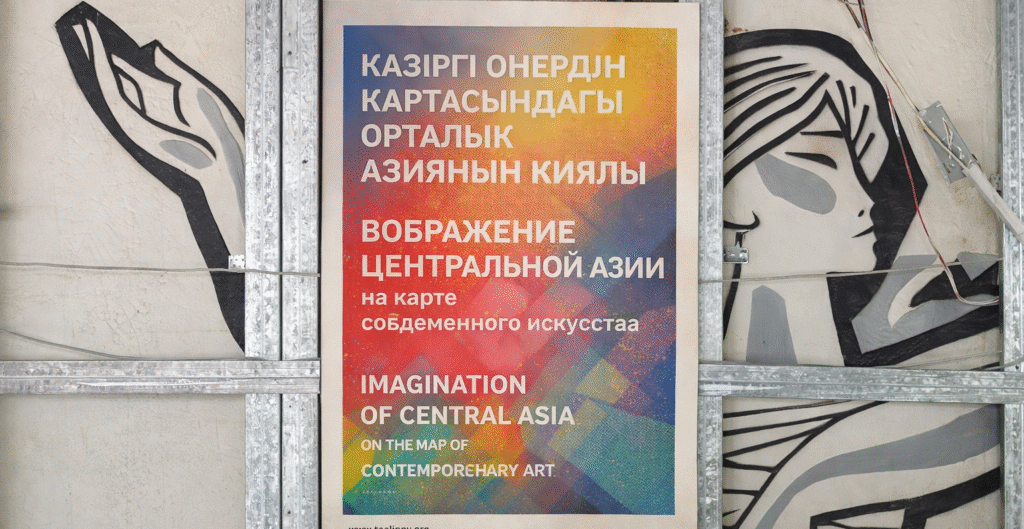
Rhetoric in segments of the Russian media has sharpened debates over sovereignty and influence across Central Asia, pushing these concerns beyond policy circles and into everyday conversations. The region is reassessing not only pipelines and alliances, but language itself. In politics, this shift is visible and symbolic. In culture, it is more difficult to discern. The Russian language still shapes how Central Asian art is funded, circulated, and institutionally processed, even as institutions distance themselves from Moscow’s influence. This contradiction sits at the heart of contemporary cultural life in the region. Artists produce work rooted in Kazakh, Uzbek, Kyrgyz, Tajik, or Turkmen histories. They title exhibitions in local languages. They speak passionately about decolonial futures and cultural sovereignty. But when the catalogue is written, the grant application submitted, or the curatorial text sent abroad, the language quietly shifts. First to Russian, sometimes to English, and only occasionally does it remain in the local language. This is not nostalgia, but a structural inheritance. Russian remains the shared professional language of much of the urban cultural sector. Edward Lemon, President of the Oxus Society for Central Asian Affairs, argues that the language’s endurance reflects both ideology and pragmatism. “While local languages have become much more widespread as the Central Asian republics have strengthened their nationhood and as there has been an increase in anti-Russian sentiments since the invasion of Ukraine, Russian language use remains widespread,” Lemon told TCA. “Despite the ideological imperative to reduce reliance on Russian, there are some pragmatic reasons why it remains prominent. High levels of migration to Russia, particularly from Uzbekistan, Kyrgyzstan, and Kazakhstan, mean that a basic competence in the language is essential to survival for many Central Asians. Russian remains a language of interethnic communication, particularly in Kazakhstan, where ethnic Russians, for the most part, are reluctant to speak Kazakh. While English has become more widespread and some of the Central Asian languages are mutually intelligible, Russian retains a status as a diplomatic, business, and civil society language for those working in multiple countries. Russia also remains a language of education. Over 200,000 Central Asians study in Russia, by far the largest destination in the world. Russian-language schools remain prominent at every level in Central Asia, from kindergarten to graduate schools. In short, while the usage of Russian is in slow decline, its position is relatively entrenched.” For cultural institutions, this reality means that distancing from Moscow politically does not automatically sever the linguistic infrastructure through which grants are written, exhibitions travel, and contracts are signed. Naima Morelli, an arts writer focused on contemporary art across Asia-Pacific and the Middle East, argues that the issue is less about elimination than coexistence. “For me, it makes sense that Russian continues to function as a practical operating language across Central Asia’s cultural infrastructure, as an inherited connective tissue of sorts. In the hypothesis of getting rid of it, the most obvious alternative for a shared language for exchanges across countries in Central Asia is English, which the global...
On the Eve of Valentine’s Day: Customs of Love and Marriage in Central Asia

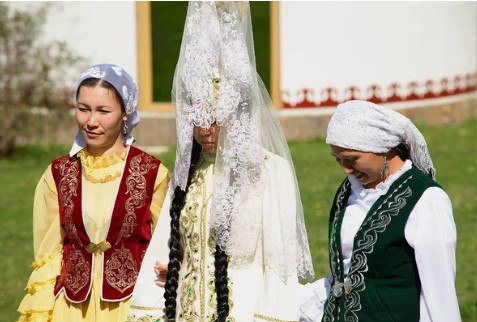
On the eve of Valentine’s Day, Central Asia is once again debating whether to celebrate the holiday or regard it as a symbol of foreign influence. Yet the region has its own rich and diverse customs related to love, matchmaking, and marriage. Accusations of Alien Influence and “Corruption” Valentine’s Day, like Halloween, spread to the former Soviet republics after the collapse of the USSR. In the first decades, young people embraced the new holidays. In recent years, however, critics have increasingly argued that commemorating a Catholic saint in a format centered on romantic love contradicts the traditions of the region’s peoples. For example, in Kazakhstan last year, deputies of the Mazhilis, the lower house of parliament, sharply criticized Valentine’s Day. Some deputies argued that it corrupts young people, promotes “free love,” and even carries “homosexual overtones.”  It is worth noting that Kazakhstan recently adopted legislation prohibiting so-called “propaganda of non-traditional sexual relations.” The Spiritual Administration of Muslims of Kazakhstan has also stated that Valentine’s Day promotes alien values and encourages promiscuity. Gratitude for Raising a Daughter Many matchmaking and marriage customs remain common across Central Asia, particularly the significant role of the bride’s and groom’s parents in ceremonies and celebrations. While traditions have evolved, many are still practiced in modern engagements and weddings. The well-known custom of paying bride price, kalym, has been preserved, though it has undergone significant change. Today, kalym varies depending on the wealth of the families. It may include apartments or cars, or it may amount to several hundred dollars. Importantly, kalym is now generally regarded as financial support for the young family and, as a rule, remains at the disposal of the bride and groom. Historically, in Kazakhstan and Kyrgyzstan, kalym was paid in livestock, and wedding celebrations could last more than a month.  One of the main Kazakh wedding rituals is the groom’s visit to the bride’s village or, in modern practice, her home. Before his first visit, the groom sends gifts to the bride’s family, known as Ilu,  an expression of gratitude for raising their daughter. In some regions of Kazakhstan, this ritual is called ana suty (“mother’s milk payment”). In the past, it included horses, camels, sheep, and riding equipment for the bride’s father. Today, it may consist of any valuable gift, and jewelry is often presented to the women in the bride’s family. The bride traditionally gives the groom a scarf as a symbol of her purity. Festivities then begin, with singing and dancing. Kazakh traditions often involve two weddings: one at the bride’s home and one at the groom’s. The bride’s farewell from her family home remains especially significant, reflecting her relatives’ wishes for her future life. Today, this ceremony is often held in a restaurant. The bride does not wear a white wedding dress at the farewell celebration but appears in an elegant outfit and a traditional headdress known as a saukele. During the farewell, the groom and his friends are subjected to playful pranks, for which they must...

Turkmen Football Fans Moved to Worse Seats for Match with Cristiano Ronaldo’s Al-Nassr

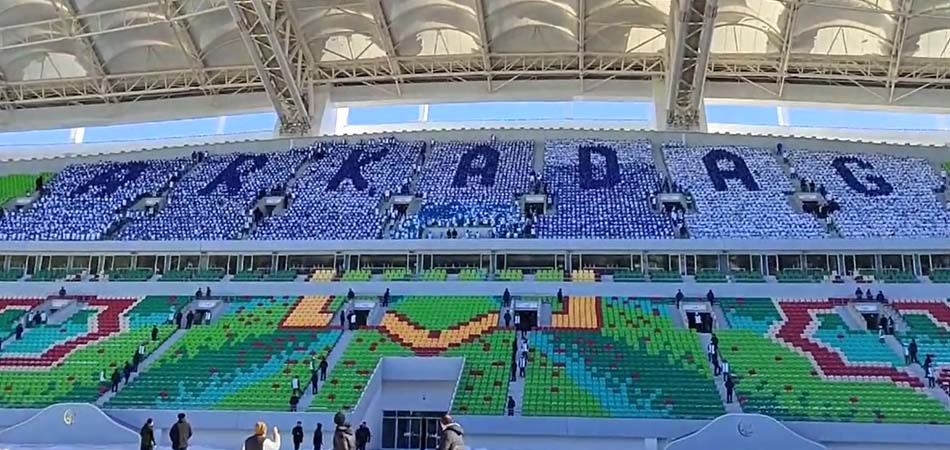
Fans who have bought tickets to the upcoming Asian Champions League match between Turkmenistan's Arkadag and Saudi Arabia’s Al-Nassr on February 11 have been informed, sometimes repeatedly, that their seats are being changed to make room for “organized support” groups. According to a source in Ashgabat, notifications are being sent via users’ personal accounts on ticketing platforms. The vacated sections, the source said, are being allocated to students who are reportedly being trained in advance to provide choreographed support for the home team. Affected spectators are often offered seats with worse visibility, and in many cases, fans, especially families and groups, are being split across different sectors of the stadium, making it nearly impossible to watch the match together. Public frustration has grown as a result. “A 45,000-seat stadium was specifically allocated for this match. If officials had plans for some sections, they could have decided in advance and sold tickets accordingly. If they can’t even organize one match properly, how can we expect them to handle more serious events?” the source said. Some fans have opted not to attend the match at all, despite having already paid for tickets. Others are seeking to resell their tickets, though doing so is complicated. Ticket purchases required passport details, and it is believed that ID checks may be enforced at the gates, making resale risky. Adding to the discontent is the asymmetry in ticketing policy: the Ashgabat city administration’s ticket regulations prohibit buyers from exchanging or returning tickets, while allowing organizers to unilaterally reassign seats. According to reports, the most prominent seating sections will not be occupied by club supporters, but by students compelled to rehearse chants and routines for the game. Arkadag will host Al-Nassr in the last 32 round of the AFC Champions League. The Saudi club’s lineup includes global football star Cristiano Ronaldo. The return leg is scheduled to take place in Saudi Arabia on February 17 or 18.

Between Statistics and Reality: What the UNICEF Report Reveals About Children in Turkmenistan

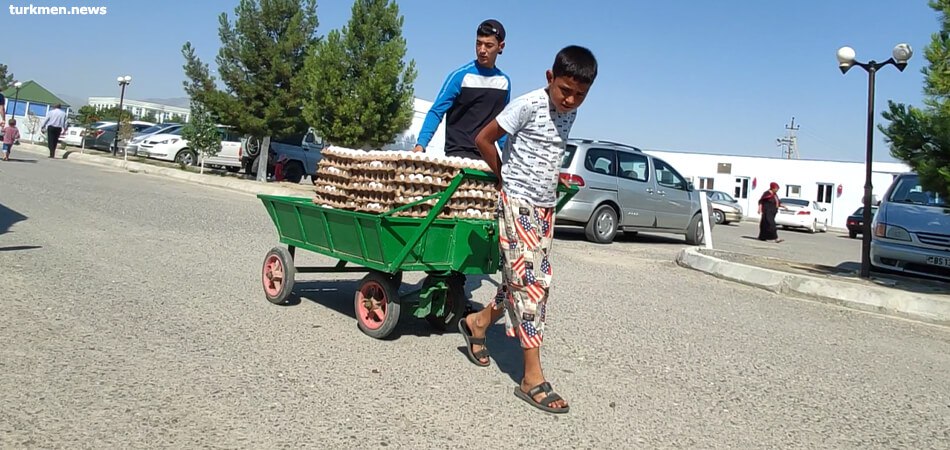
The State Committee on Statistics of Turkmenistan, in partnership with UNICEF, has released the report “Census 2022 - The Situation of Children in Turkmenistan”. However, as noted by independent outlet turkmen.news, the report is based on official census data that many experts consider unreliable or inflated, potentially skewing the findings. Despite these concerns, the report offers insight into the country’s demographic and social trends. According to the report, Turkmenistan has a notably “young” population: children aged 0-14 make up 30.7% of the total. In total, 2,463,258 individuals under the age of 17 account for more than one-third of the population. However, a decline in the birth rate is evident: there are 1.2 times fewer children in the 0-4 age group compared to those aged 5-9. Household composition data reveals that families with three or more children are the most common, comprising 43% of all households nationally and 48.9% in rural areas. Families with two children account for 31.1%, and those with one child, 25.9%. This distribution correlates with a broader demographic pattern, 57.8% of all children in Turkmenistan live in rural areas. The demographic dependency ratio remains high: there are 755 dependents per 1,000 working-age individuals. Notably, the child dependency rate is 4.3 times higher than that of the elderly, suggesting a sizable future labor force. The urban-rural divide is also apparent here: in rural areas, the child dependency ratio is 698, compared to 525 in urban centers. The report addresses early marriage and childbirth: among 15-17-year-olds, 1,349 boys (0.9%) and 1,770 girls (1.2%) were in either registered or de facto marriages. Within the same age group, 339 girls had already given birth. The highest rate of teenage births was recorded in Akhal region (4.2 per 1,000), while Ashgabat reported the lowest (1.2 per 1,000). Childhood disability statistics show mobility and stair-climbing difficulties are the most prevalent, affecting 3,106 children aged 5-17. Other reported issues include concentration and memory problems (1,989 cases), hearing impairments (1,791), and visual impairments (1,784). In all categories, boys outnumber girls. One of the most striking disparities is in preschool access. Only 23.8% of children in rural areas attend preschool, compared to 64.7% in urban areas, a rural-urban equity index of just 0.37. Given that the majority of children live in rural areas, the gap reflects systemic challenges, including insufficient infrastructure, transportation issues, and household dynamics where caregiving typically falls to women. Enrollment rates improve significantly for older children. Nearly all children aged 6-15 are in school, with only 0.3-0.4% not attending. However, the dropout rate increases in older age groups, with 5.4% of adolescents not enrolled in school or vocational institutions. No significant gender disparities were observed in this regard. Despite the insights the report offers, it is underpinned by 2022 census data that many independent experts argue is inflated. While Turkmenistan's official population stands at around 7 million, alternative estimates range between 2.7 and 5.7 million. Nevertheless, the release of this report marks a step toward a more open dialogue about the country’s social...

Disability Inclusion Is Emerging as Central Asia’s Next Social Frontier

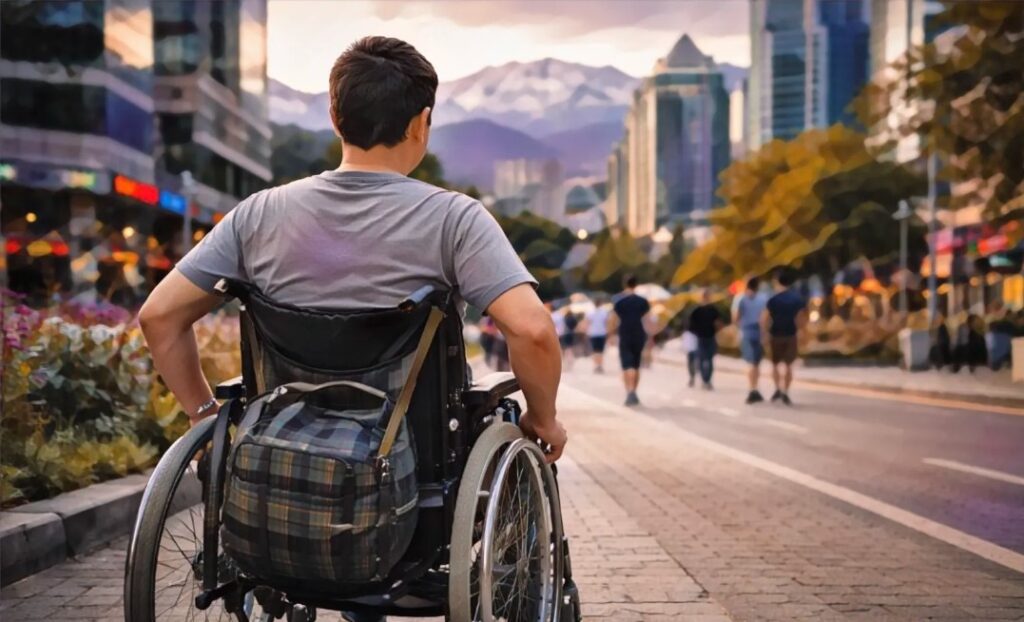
More than 1.3 billion people worldwide live with some form of disability, yet disability remains one of the least visible dimensions of social and economic life. In Central Asia, that invisibility is especially pronounced. As governments focus on infrastructure, growth, and modernization, far less attention is paid to whether people with disabilities are becoming more present in schools, workplaces, and public life, or whether they remain largely confined to families and institutions beyond the reach of public discussion. Across the region, cities are expanding, labor mobility is increasing, and younger generations are more connected to global ideas through study and migration. These shifts are often treated as shorthand for progress. At the same time, people with disabilities consistently face lower educational attainment and weaker labor market outcomes, making inclusion a practical test of whether development reaches beyond headline indicators into everyday life. Disability policy across much of Central Asia has long centered on legal classification, benefit eligibility, and institutional care. Long-term institutionalization is associated with reduced autonomy and poorer social outcomes, yet institutions remain a common default, reinforcing the idea that disability is primarily an administrative or medical issue rather than a social one shaped by access and expectations. In practice, families remain the primary providers of care throughout the region. In Kyrgyzstan, around 200,000 people are officially registered as living with disabilities, and outside major cities, most daily support is provided by family members due to limited community-based services. In Turkmenistan, public disability data remain sparse, and undercounting is widely acknowledged, leaving extended families as the central source of long-term care. In Tajikistan, official estimates place the number of people living with disabilities between 150,000 and 200,000, with caregiving overwhelmingly home-based due to constrained public resources. Family-based care provides continuity and belonging, but it also carries an economic cost. Caregivers are more likely to reduce paid employment and experience long-term income loss, a burden that falls disproportionately on women and shapes household economic outcomes. This reliance on family support is often contrasted unfavorably with wealthier countries, but the comparison is more complicated. In the United States, more than one in four adults lives with a disability, and people with disabilities report significantly higher rates of loneliness and depression despite extensive legal protections and formal services. By contrast, strong family networks are associated with lower levels of severe social isolation, even in settings with fewer public resources. In recent years, small but notable shifts have begun to appear. Local organizations across the region are experimenting with community-based rehabilitation, inclusive education, and supported employment models that move beyond institutional care. These efforts remain fragmented and under-resourced, but they reflect a growing recognition that disability policy is about protection and participation. As Central Asian governments seek to retain talent, expand their labor force, and project social modernization, inclusion is increasingly intersecting with economic and demographic realities rather than remaining a niche social issue. Institutional care remains common across Central Asia, yet community-based rehabilitation is consistently linked to better social participation and quality...

Turkmen Pensioners Endure Long Queues to Prove They Are Alive

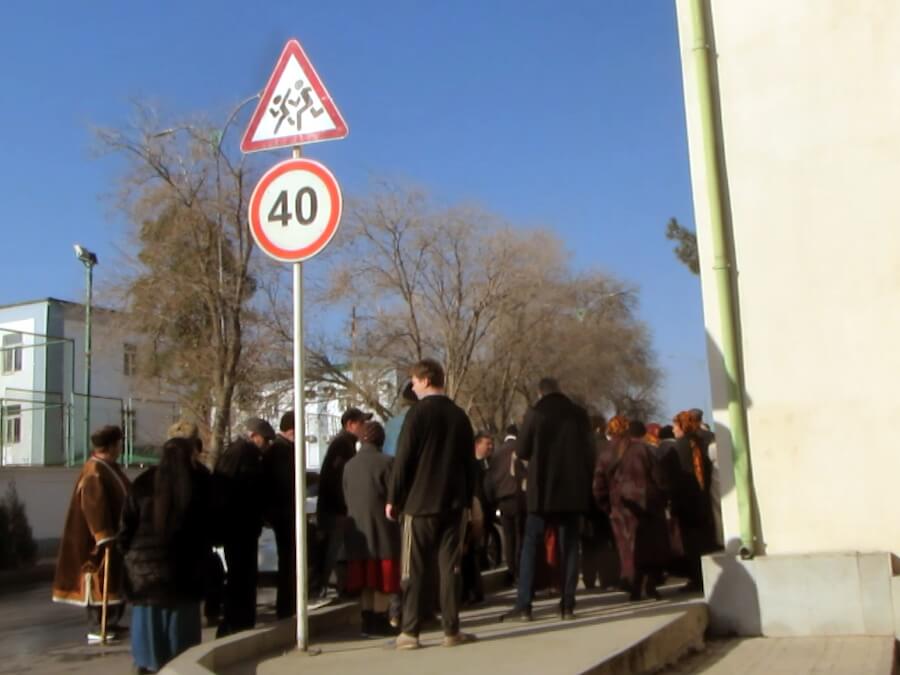
At the start of each year, elderly citizens and benefit recipients across Turkmenistan are forced to endure long hours in line at social security offices, as part of a biannual process requiring them to prove they are still alive. This routine formality has become a grueling ordeal, especially amid growing discontent over the government’s refusal to adjust payments as it had in previous years. Twice annually, in January and July, pensioners and beneficiaries must appear in person at local offices to receive a stamp in their pension books, confirming eligibility and the amount of payment for the next six months. Failure to do so results in an immediate suspension of payments. While retroactive disbursements are promised upon eventual reappearance, surviving without income for six months is an impossible burden for many. Reports of queues have emerged from across the country. Beneficiaries point out that the process could be easily streamlined with scheduled appointments or structured lists. However, no such measures are being implemented. Instead, in freezing cold or scorching heat, elderly people, women with young children, and individuals with disabilities must wait for hours. In the city of Turkmenbashi, residents expressed particular frustration. Many pensioners reportedly held out hope until the last moment for the traditional 10% increase in payments and were shocked to find it canceled this year. For those in rural areas, even an extra $2.50 to $3 per month can make a significant difference. The Times of Central Asia previously reported that the cancellation of the 2026 pension and benefit indexation triggered sharp discontent among older residents. Many only learned of the decision during their January visits and openly expressed their anger. The move stems from a position voiced in the fall of 2025 at a parliamentary session. Honorary elder Yazmyrat Atamyradov proposed a complete freeze on wage, pension, benefit, and scholarship growth, claiming the standard of living for Turkmenistan’s “happy people” was rising sufficiently.