• KGS/USD = 0.01143 0%
  • KZT/USD = 0.00213 0%
  • TJS/USD = 0.10593 0.47%
  • UZS/USD = 0.00008 0%
  • TMT/USD = 0.28571 0%
  • KGS/USD = 0.01143 0%
  • KZT/USD = 0.00213 0%
  • TJS/USD = 0.10593 0.47%
  • UZS/USD = 0.00008 0%
  • TMT/USD = 0.28571 0%
  • KGS/USD = 0.01143 0%
  • KZT/USD = 0.00213 0%
  • TJS/USD = 0.10593 0.47%
  • UZS/USD = 0.00008 0%
  • TMT/USD = 0.28571 0%
  • KGS/USD = 0.01143 0%
  • KZT/USD = 0.00213 0%
  • TJS/USD = 0.10593 0.47%
  • UZS/USD = 0.00008 0%
  • TMT/USD = 0.28571 0%
  • KGS/USD = 0.01143 0%
  • KZT/USD = 0.00213 0%
  • TJS/USD = 0.10593 0.47%
  • UZS/USD = 0.00008 0%
  • TMT/USD = 0.28571 0%
  • KGS/USD = 0.01143 0%
  • KZT/USD = 0.00213 0%
  • TJS/USD = 0.10593 0.47%
  • UZS/USD = 0.00008 0%
  • TMT/USD = 0.28571 0%
  • KGS/USD = 0.01143 0%
  • KZT/USD = 0.00213 0%
  • TJS/USD = 0.10593 0.47%
  • UZS/USD = 0.00008 0%
  • TMT/USD = 0.28571 0%
  • KGS/USD = 0.01143 0%
  • KZT/USD = 0.00213 0%
  • TJS/USD = 0.10593 0.47%
  • UZS/USD = 0.00008 0%
  • TMT/USD = 0.28571 0%

Viewing results 4591 - 4596 of 6033

Samarkand to Host International Music Festival “Sharq Taronalari”

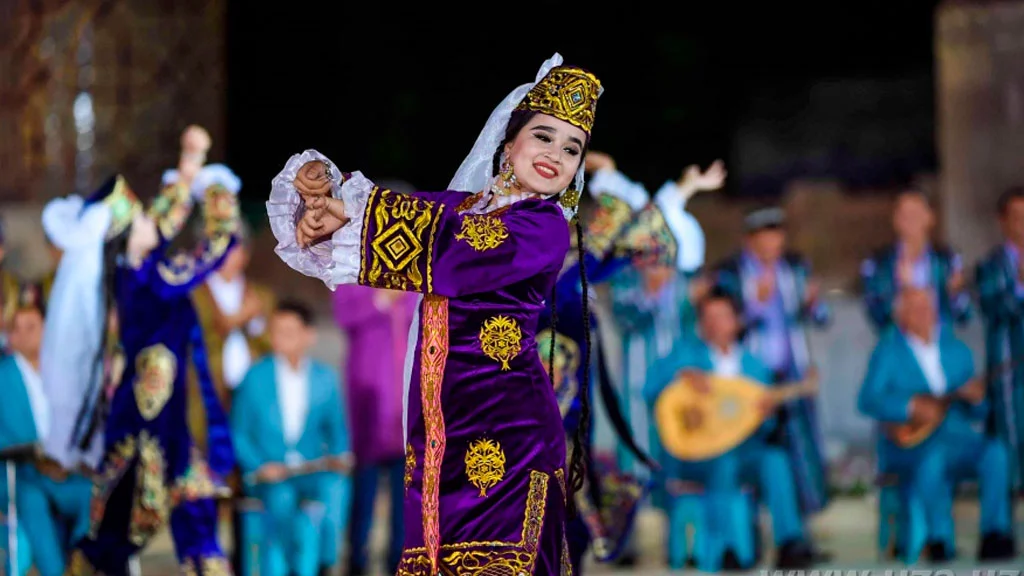
The XIII International Music Festival “Sharq Taronalari” will be held in Samarkand from August 26 to 30 under the auspices of UNESCO, the Ministry of Culture in Uzbekistan reported. “‘Sharq Taronalari’ is considered one of the largest festivals in Central Asia. The main objectives of the festival are to promote achievements in national musical art to the wider public, to preserve and develop the cultures and traditions of nations, to support talented youth in the fields of music and singing, and to expand international creative ties while promoting the ideals of peace, friendship, and mutual tolerance,” according to the festival's press release. More than 300 delegates from 70 countries are expected to participate in the festival this year. As of August 1, delegates from 62 countries have expressed their desire to participate, and applications for the festival are still being accepted. The festival’s opening ceremony will be held on August 26. On August 27-28, an international scientific and practical conference on “Music Culture of Eastern Peoples: Principles of Creative Convergence in the Processes of Globalization” is scheduled. On August 27-29, a competition will be held, and an international jury will evaluate the participants' performances. The closing ceremony will be held on August 30, and the winners will be announced. The “Grand Prix” of $10,000 will not be awarded, however, if a worthy candidate is not found according to the decision of jury.

Tajikistan Proposes Afghan Border Logistics Zone to Enhance Trade

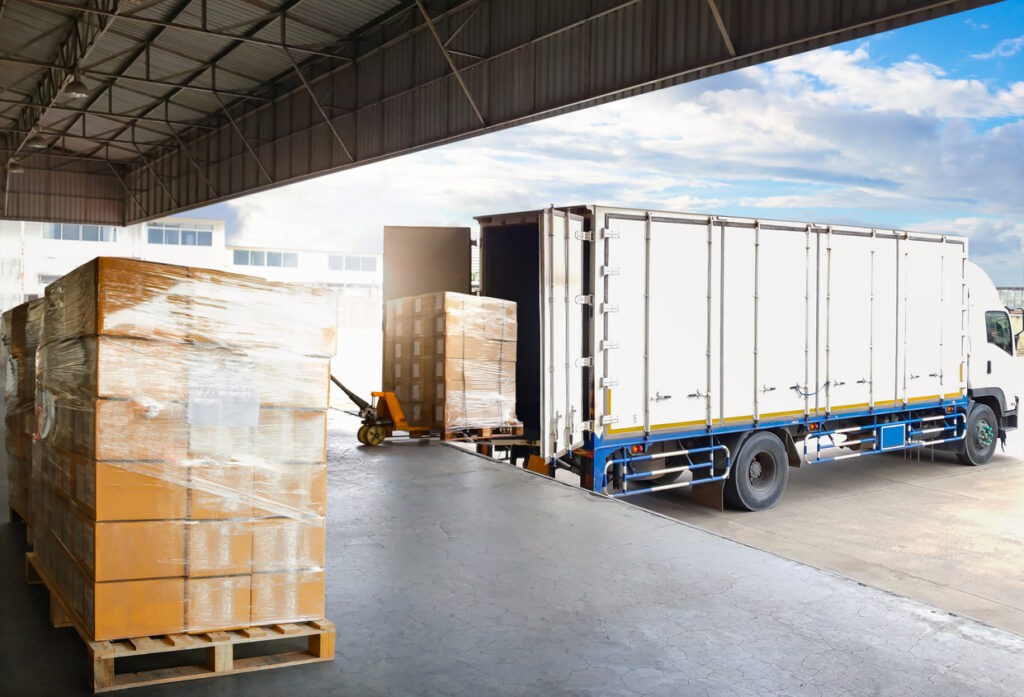
According to Bakhriddin Sirojiddinzoda, Head of the Tajikistan Export Agency, Tajikistan has plans to establish a large logistics zone on the border with Afghanistan. Based on national interests in using existing production and export opportunities, the aim of the export zone is to increase trade turnover, create a modern infrastructure for transporting goods and products, and regulate transportation costs. Referencing the proposal submitted to the government of Tajikistan for consideration, Sirojiddinzoda stated that the  large logistics centre should be established in the neutral zone or near the Pyanj-Sher Khan Bandar border crossing and explained, “Experience shows that drivers need a visa to pay road taxes and other fees in Afghanistan to cross only 500 meters of road when exporting products to Afghanistan." He also stressed that establishing such a centre and developing business was unconnected to the country's official relations with the Taliban, stating: “No country has officially recognized the Taliban government, but their trade cooperation with the country continues. Some have even opened a ‘Trading House’ and a commercial representative office in Kabul. Tajik goods are transported through Afghanistan to Pakistan, and goods are also transported from there to us, the security of which is still ensured by Afghanistan." In the first half of 2024, the volume of sales of Tajikistan's agricultural products to Afghanistan amounted to $82.7 thousand; an 85% increase compared to the same period in 2023 when it barely reached $22.7 thousand. According to the Tajikistan Export Agency, nothing was imported from Afghanistan, and goods leaked into the republic from its territory were in transit from Pakistan and other countries.

Kazakhstan Deepens Caspian Ports to Boost Middle Corridor Potential

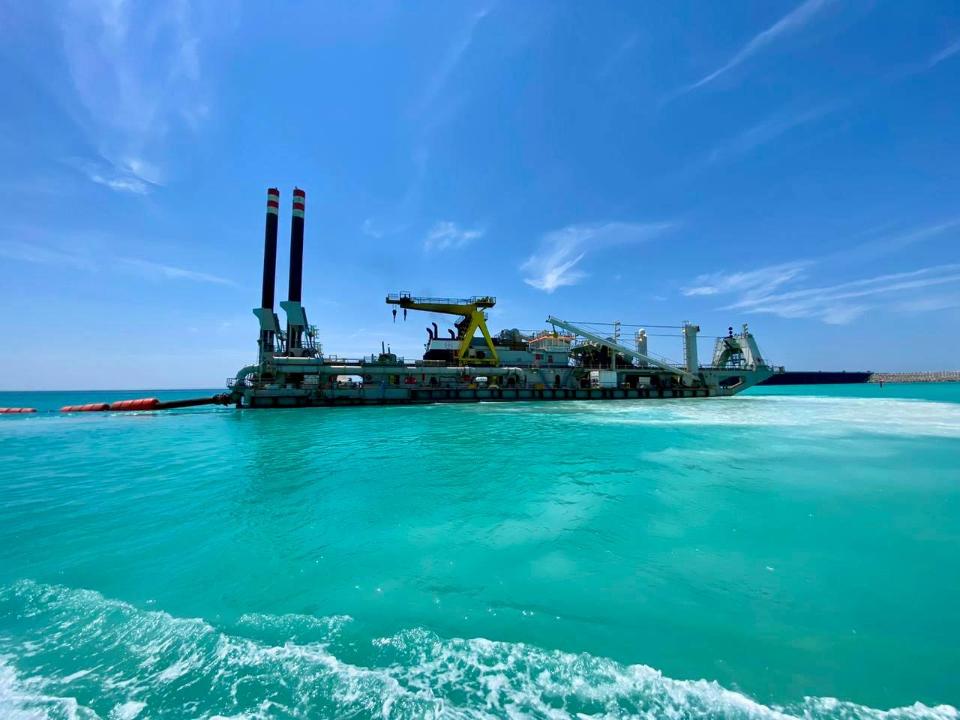
To further increase the potential of the Trans-Caspian International Transport Route (TITR), the Kazakh Ministry of Transport has begun dredging the port of Kuryk to provide sufficient depth for ships to enter the harbour. Specialized equipment to deepen the port by approximately 1.5-2 meters, has been supplied by Jan de Nul, a European company contracted to complete dredging works on a turnkey basis. Dredging Kuryk's port will allow for the further expansion of its terminal capacity which currently has provision for  6 million tons of cargo (railway terminal—4 million tons, automobile terminal—2 million tons). The port can also simultaneously accommodate 250 trucks. Similar dredging works will also be carried out in the port of Aktau. The project is part of the comprehensive measures to develop the Trans-Caspian International Transport Route, also known as the Middle Corridor, which will connect China and Europe via Central Asia and the Caucasus. According to the Kazakh Ministry of Transport, the volume of cargo transportation through Kazakhstan along the TITR for the  first seven months this year increased by 62%; amounting to 2.5 million tons, compared to 1.6 million tons in the same period in 2023.

Central Asia to Forecast Energy Risks

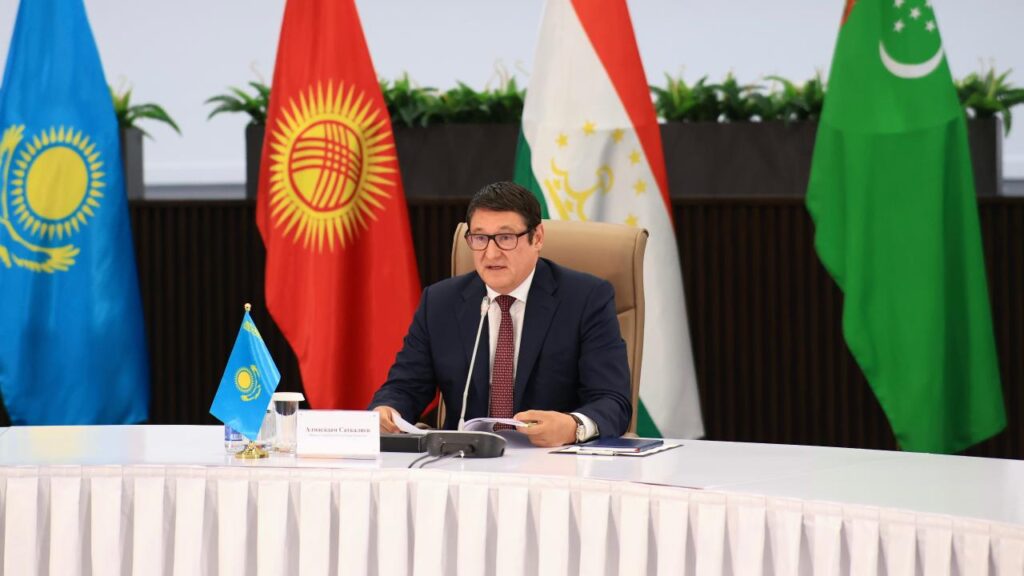
On August 6, Astana hosted the first meeting of energy ministers of Central Asian states, chaired by Kazakhstan’s Minister of Energy Almasadam Satkaliyev. Noting the considerable potential for developing energy cooperation between the five Central Asian countries, Minister Satkaliyev stated that today, the challenges faced by the Central Asian countries include global disruptions of the stability of energy supplies and fluctuations in oil and gas prices. "To ensure the reliability of energy supplies, it is necessary to develop mechanisms for forecasting and managing these challenges and to strengthen cooperation between our countries," ventured Satkaliyev. Calling on his colleagues to strengthen cooperation in energy trade, speed up low-carbon development, and move towards achieving carbon neutrality, the minister stressed, "An important factor in the development of regional cooperation is the comprehensive attraction of investments and the implementation of large joint technological projects in the energy sector to stimulate the development of modern energy infrastructure in Central Asian countries." Satkaliyev added that Kazakhstan is currently progressing the implementation of a large-scale project in the development and transmission of green energy with Azerbaijan and Uzbekistan, as well as continuing discussions on the planned construction of a central hydroelectric power plant, Kambarata HPP-1, with Kyrgyzstan and Uzbekistan. Following the meeting, the Central Asian energy ministers signed a communiqué, laying the foundation for further cooperation in all key energy areas between the countries.

Steel Highways: The State of Central Asia’s Railways

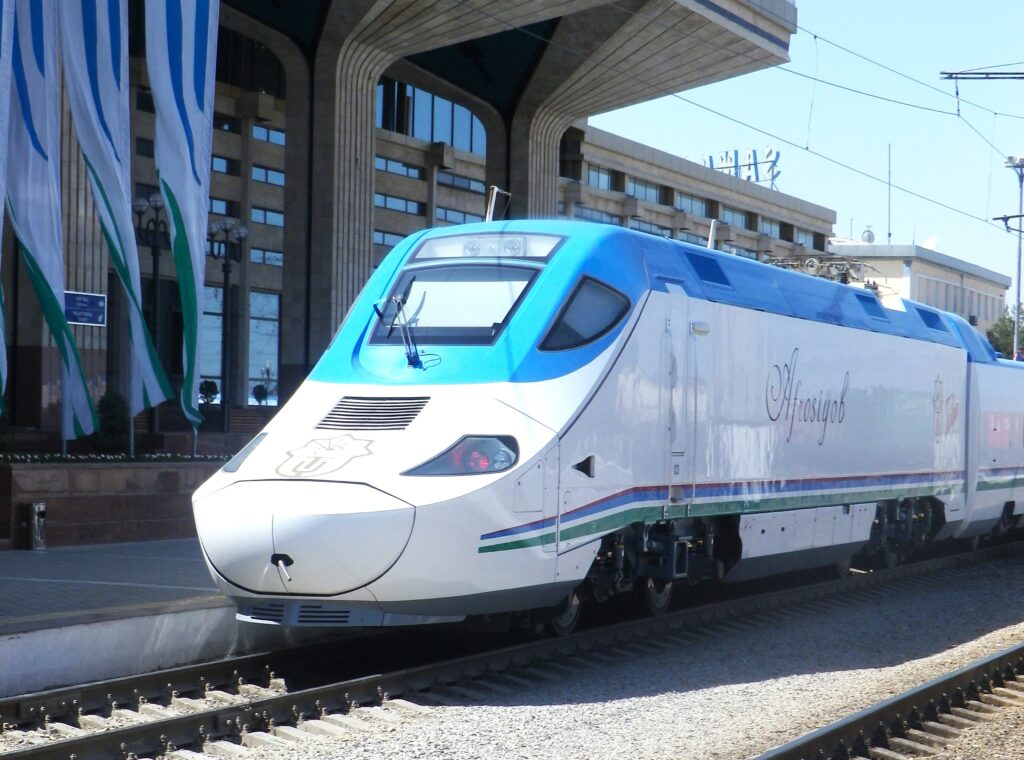
Railways in Central Asia have always played an important political and economic role, but amid the current geopolitical turbulence, they have become a crucial means of  transporting  goods from China to Europe and the Middle East, bypassing sanctioned Russia. But what is the state of  Central Asia's railway industry, and is it up to the new challenges? The history of rail transport in Central Asia dates back to the end of the 19th century. In 1874, a special commission of the Russian Empire recognized the need to construct a line from Orenburg to Tashkent. Later, however, strategic considerations forced a change of plan and to ensure a stable connection between the Turkestan and Caucasus regions, the first steel highway in Central Asia would be built to connect Tashkent with the eastern coast of the Caspian Sea. This was an active period of the so-called Great Game, when Russia and Great Britain competed in Central Asia. Since then, the geopolitical importance of railways in the region, which lacks access to oceans, has not decreased whatsoever. Indeed, amid armed conflicts in the Middle East and between Russia and Ukraine, railways have become even more important given their role in ensuring the movement of goods along the Trans-Caspian International Transport Route (TITR) and the International North-South Transport Corridor (INSTC). Against this backdrop, Kazakhstan's President Kassym-Jomart Tokayev has tasked the national railway company Kazakhstan Temir Zholy (KTZ) with leading the transformation of the country into a transport and logistics hub.   Kazakhstan: A story of steady development The length of Kazakhstan's mainline rail network is over 16,000 km, with over 800 stations and crossing points. The freight car fleet exceeds 120,000 units, while locomotives number more than 1,700. Kazakhstan’s railways account for 70% of freight traffic, and 60% of passenger traffic in the country. Just under 1% of the country’s population is employed in the rail industry. According to the KTZ's annual report in 2023, container transit rose 14% year-over-year to 1.282 million TEU (twenty-foot equivalent units), which drove a 30.6% year-on-year rise in operating income to KZT1.934 trillion, while net profit came in at KZT136.8 billion ($286.8 million). The volume of freight transported between Kazakhstan and China was also up 22% to 28 million tons. In addition, KTZ reported the completion of large-scale track repairs in 2023, with 1,443 km of railway track repaired, double the figure achieved in 2022. The start of large infrastructure projects was also noted. In particular, construction was launched of the Darbaza–Maktaaral and Bakhty–Ayagoz lines (with a third border crossing with China set to be opened in 2027), while construction of the bypass line around Almaty also commenced. Over 300 km of the second track was laid on the Dostyk-Moyynty railway section. Finally, a Kazakh transport and logistics terminal was opened in the Chinese dry port of Xi'an.   Uzbekistan: First high-speed rail in Central Asia O’zbekiston Temir Yo’llari (UTY), Uzbekistan's national rail carrier, was founded on November 7, 1994, taking over the lines of the Soviet-era Middle...

Taliban Announces Revision of Borders With Central Asian Countries

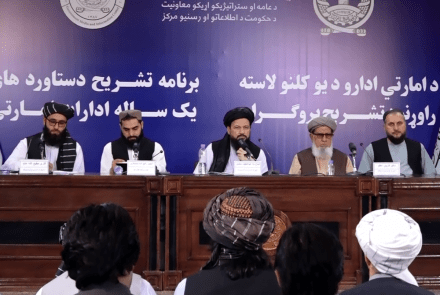
According to the acting Afghan Minister of Energy and Water Resources, Abdul Latif Mansour, Afghanistan's borders with Central Asian countries, which have been eroded, will be revised. "Due to floods, our borders with Tajikistan, Uzbekistan, and Turkmenistan were eroded. We are working to restore these borders and have already discussed this issue with our supreme leader," Mansour said. However, it is still unclear whether the neighboring states have been notified. Mansour stressed that the plan to revise the borders, developed on the instructions of the Islamic Emirati leader, Haibatullah Akhundzad, will be implemented jointly with the ministries of the Interior, Foreign Affairs, Defense, and the General Intelligence Directorate. Mansour did not disclose the details of the strategy, but the ministry spokesman assured those assembled that Afghanistan's actions on water resources management will not harm neighboring countries. It should be noted that the borders of Tajikistan, Uzbekistan, and partially Turkmenistan, along with Afghanistan, run along the Amu Darya River. When the Taliban returned to power in Afghanistan, construction of the Qosh-Tepa irrigation canal, which originates from the Amu Darya, began. Once completed, the canal will supply water to the agricultural northern provinces of Faryab and Balkh. Additionally, land for three projects will be allocated, including provisions for Jawzjan. These plans have raised concerns in neighboring Central Asian countries, especially Uzbekistan and Turkmenistan, which depend on water from the Amu Darya. However, the Afghan authorities argue they have a legal right to their share of the river's flow, which they have not yet utilized.