• KGS/USD = 0.01144 0%
  • KZT/USD = 0.00215 0%
  • TJS/USD = 0.10680 0.19%
  • UZS/USD = 0.00008 0%
  • TMT/USD = 0.28530 0%
  • KGS/USD = 0.01144 0%
  • KZT/USD = 0.00215 0%
  • TJS/USD = 0.10680 0.19%
  • UZS/USD = 0.00008 0%
  • TMT/USD = 0.28530 0%
  • KGS/USD = 0.01144 0%
  • KZT/USD = 0.00215 0%
  • TJS/USD = 0.10680 0.19%
  • UZS/USD = 0.00008 0%
  • TMT/USD = 0.28530 0%
  • KGS/USD = 0.01144 0%
  • KZT/USD = 0.00215 0%
  • TJS/USD = 0.10680 0.19%
  • UZS/USD = 0.00008 0%
  • TMT/USD = 0.28530 0%
  • KGS/USD = 0.01144 0%
  • KZT/USD = 0.00215 0%
  • TJS/USD = 0.10680 0.19%
  • UZS/USD = 0.00008 0%
  • TMT/USD = 0.28530 0%
  • KGS/USD = 0.01144 0%
  • KZT/USD = 0.00215 0%
  • TJS/USD = 0.10680 0.19%
  • UZS/USD = 0.00008 0%
  • TMT/USD = 0.28530 0%
  • KGS/USD = 0.01144 0%
  • KZT/USD = 0.00215 0%
  • TJS/USD = 0.10680 0.19%
  • UZS/USD = 0.00008 0%
  • TMT/USD = 0.28530 0%
  • KGS/USD = 0.01144 0%
  • KZT/USD = 0.00215 0%
  • TJS/USD = 0.10680 0.19%
  • UZS/USD = 0.00008 0%
  • TMT/USD = 0.28530 0%

Viewing results 1 - 6 of 6374

Michael Daniel Appointed Head of Kazakhstan’s Aviation Administration

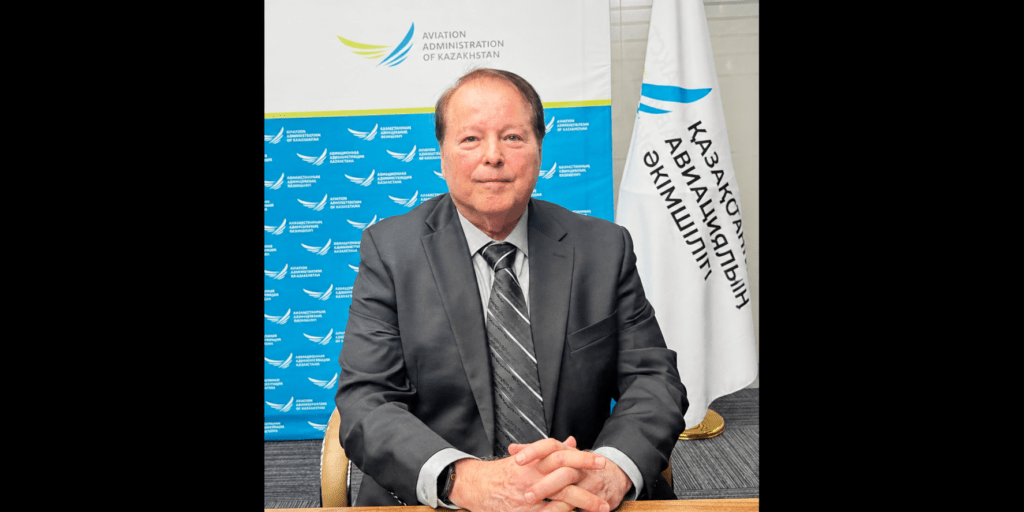
Kazakhstan has appointed U.S. aviation veteran Michael Daniel as chief executive officer of the Aviation Administration of Kazakhstan, a step that officials say is linked to plans for direct flights to the United States. Daniel took up the post on May 4. He has more than 40 years of experience in civil aviation and holds a degree in aeronautics from Embry-Riddle Aeronautical University. He began his career at the U.S. Federal Aviation Administration (FAA), where he served as a flight operations inspector, aircraft certification specialist, and head of flight safety. He later worked on international programs and policy and held posts in Frankfurt, New York, and Washington. From 2006 to 2009, Daniel led the FAA’s international office in Singapore and Beijing, overseeing foreign repair stations and international safety assessments. During his career, he also took part in international initiatives, including work within Asia-Pacific Economic Cooperation (APEC), and cooperated with the International Civil Aviation Organization on safety oversight and evaluation. Kazakhstan’s Civil Aviation Committee said one of Daniel’s main priorities will be the launch of direct flights to the U.S. Aviation expert Abul Kekilbayev said the appointment appeared to be tied to that objective. “The aircraft have already been bought, you need to pass an audit for compliance,” he said. Before direct flights can begin, airlines from Kazakhstan will need to complete several stages of approval with U.S. regulators. Those steps include obtaining authorization from the U.S. Department of Transportation and then applying to the FAA, which will assess whether Kazakhstan meets international aviation safety standards.
Austria to Use Uzbekistan as Transit Route for Afghan Deportations Under New Agreement

Austria’s Foreign Minister Beate Meinl-Reisinger and Interior Minister Gerhard Karner are expected to visit Uzbekistan on May 7 to sign a mobility agreement aimed at strengthening cooperation on migration, according to Die Presse. The agreement is intended to improve coordination between the two countries, particularly on deportations and the return of migrants. Austrian officials say it will create a more structured framework for handling individuals required to leave the country. A key provision involves the use of Uzbekistan as a transit route for deportations to Afghanistan. Afghan nationals facing removal from Austria could be escorted through Uzbekistan to Kabul. Until now, deportations to Afghanistan have largely taken place via Istanbul, meaning the new arrangement would open what officials describe as a “second route.” Karner said the deal would establish “the conditions for the consistent implementation of deportations as part of a firm and fair asylum policy.” The agreement also covers the readmission of nationals, third-country citizens, and stateless individuals who entered the European Union through Uzbekistan. In return, the document includes provisions to support legal migration from Uzbekistan to Austria. Despite its growing economy, Uzbekistan is heavily reliant on remittances from abroad, with Uzbek migrants sending home $4.8 billion in Q2 of 2025. Over the past few years, Tashkent has been seeking out alternative destinations than traditional routes dominated by Russia. To that effect, both Uzbekistan and Austria have committed to promoting “safe, orderly, and regular mobility of qualified workers” in line with national legislation. Austrian authorities note that Uzbek professionals already have multiple pathways to access the country’s labor market. The agreement does not provide for the establishment of return centers for rejected asylum seekers, an idea Austria has been pursuing with several EU partners, including Germany, Greece, the Netherlands, and Denmark. The visit to Uzbekistan is part of a broader regional trip that will also include Kazakhstan, which Austrian officials consider an important partner, particularly in the energy sector. The planned agreement comes amid continued migration pressures linked to Afghanistan’s humanitarian situation. According to the United Nations Development Programme, in 2024 around 85% of Afghanistan’s population was living on less than $1 a day. In June 2025, the World Food Programme reported that approximately 15 million people in the country were facing severe hunger. At the same time, large-scale deportations from neighboring countries have added to the strain. In July last year, Tajikistan launched a campaign to detain and deport Afghan refugees, giving them 15 days to leave the country.

Pannier and Hillard’s Spotlight on Central Asia: New Episode Out Now

As Managing Editor of The Times of Central Asia, I’m delighted that, in partnership with the Oxus Society for Central Asian Affairs, from October 19, we are the home of the Spotlight on Central Asia podcast. Chaired by seasoned broadcasters Bruce Pannier of RFE/RL’s long-running Majlis podcast and Michael Hillard of The Red Line, each fortnightly instalment will take you on a deep dive into the latest news, developments, security issues, and social trends across an increasingly pivotal region. This week, the team will be tracking the culmination of Bishkek's power struggle as charges are formally brought against Tashiyev, alongside a fresh wave of EU sanctions that look designed to make an example of one Central Asian state. We'll also break down the shutdown of a key Kazakh pipeline carrying oil to Europe, Russia's increasingly blunt statements on foreign military deployments across the region, Ashgabat's crackdown on Starlink connections in Turkmenistan, and the EU's push to turn Central Asia into a transit point for Afghans being deported back to Afghanistan. We'll also cover the spread of a new strain of foot-and-mouth disease tearing through the region. And for our main story, we turn to the mounting ecological crisis in the Caspian Sea, where falling water levels and worsening environmental pressures are becoming impossible for the region to ignore. On the show this week: Vadim Ni, co-founder of the Save the Caspian Sea movement.

Czech Prime Minister Says Foreign Ministry Urged Pressure on Kazakhstan Over Russia Ties

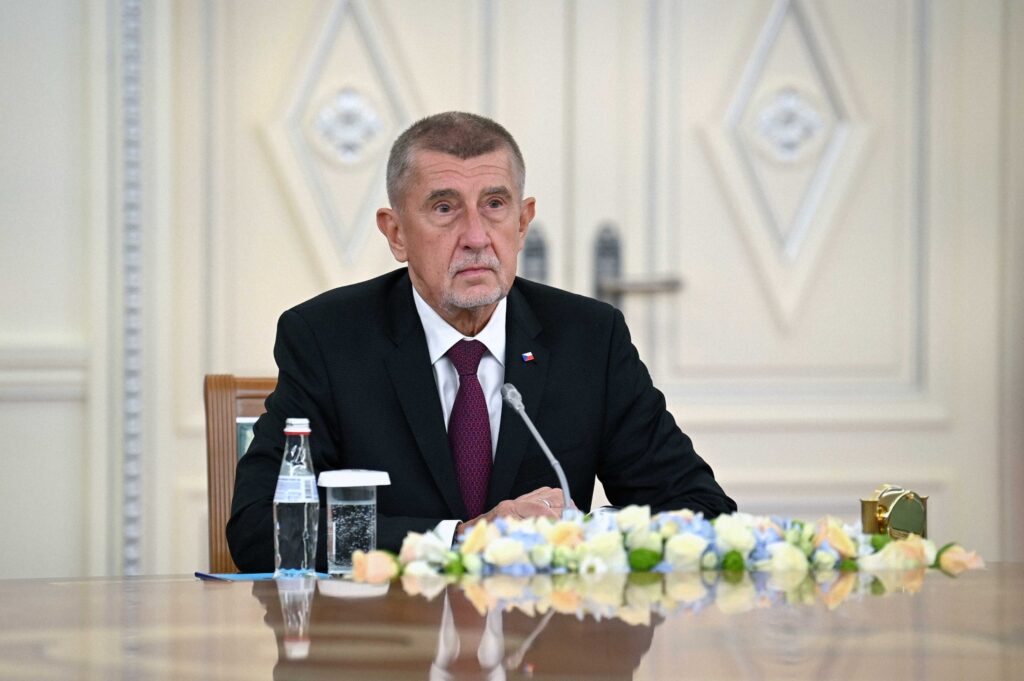
On May 2, Czech Prime Minister Andrej Babiš has claimed that officials at the country’s Foreign Ministry advised him to push Kazakhstan to scale back its ties with Russia and China. Speaking to Czech broadcaster TV Nova, Babiš criticized the recommendation, warning it could harm the Czech Republic’s economic interests. Babiš, a billionaire businessman and populist politician, returned to power in December 2025 after his ANO movement won 35% of the vote in the October 2025 parliamentary election and formed a governing coalition. The prime minister said he received a briefing note prepared by the diplomatic service. “They handed me a memo saying I should call on Kazakhstan to limit its relations with Russia and China,” he said. Babiš was vague about the provenance of the memo, describing it as having been drafted by “some officials,” but he suggested that former Foreign Minister Jan Lipavský, a figure associated with the previous pro-Western coalition government (2021–2025), may have been involved in its preparation. Babiš criticized the foreign policy of the previous administration, arguing that it had damaged the Czech Republic’s economic interests. Relations with several major countries, including China, had deteriorated, negatively affecting business activity, he said. The remarks followed Babiš’s visit to Kazakhstan on April 28-29, during which the two sides discussed expanding economic cooperation, including supplies of Kazakh oil and uranium. The Czech Republic views Kazakhstan as an important strategic partner, he added. According to the Kazakh government, bilateral trade between the Czech Republic and Kazakhstan reached approximately $705 million in 2025, a 13% increase on the previous year.

Epstein “Mosque” on Private Island Linked to Tiles from Uzbekistan

A report by The New York Times has revealed new details about how financier Jeffrey Epstein sourced materials from several countries, including Uzbekistan, for a controversial building he described as a “mosque” on his private Caribbean island. According to the newspaper, Epstein pursued Islamic architectural elements for years for a personal project on Little Saint James. Among the materials he sought were tiles from Uzbekistan, which he intended to use in the structure’s interior. In a 2011 email cited in the report, Epstein contacted an associate in Uzbekistan requesting “authentic tiles,” noting that “it will be for the inside walls, like a mosque.” The request was one of several attempts to obtain architectural and decorative elements associated with Islamic heritage. The building itself, described as a blue-and-white structure topped with a golden dome, has long drawn speculation about its purpose. Documents reviewed by the newspaper, including correspondence and design references, indicate that Epstein repeatedly referred to it as a “mosque,” although it remains unclear whether it was ever intended for religious use. The report says Epstein drew on design influences from across the Islamic world. In addition to tiles from Uzbekistan, he obtained tapestries connected to the Kaaba in Mecca and commissioned architectural elements modeled on historic sites in Syria. An artist involved in the project, Ion Nicola, told the newspaper that Epstein consistently described the structure in religious terms. However, some design instructions departed from traditional norms. In one instance, Epstein suggested replacing Arabic religious inscriptions with his own initials. The materials from Uzbekistan were part of an effort to create what the report describes as an “island shrine,” combining elements from different regions. The sourcing of the tiles points to the geographic reach of Epstein’s network and his attempts to obtain culturally specific materials for the project. The documents cited by the newspaper were released by the U.S. Department of Justice earlier this year and shed new light on Epstein’s activities and connections before his death in 2019.

China Energy Begins Construction of Major Wind Power Plant in Kazakhstan

Construction has begun on a 500 MW wind power plant in Kazakhstan, with the project being developed by a Kazakh–Chinese joint venture, Karaganda Wind Power LLP. The investment agreement was signed in April 2026, and construction of the facility in the Osakarov district was officially launched later last month, according to regional authorities. The project involves the development of a 500 MW wind farm, with total investment estimated at $645 million. Annual electricity generation is expected to reach around 1.6 billion kWh of green energy, with some earlier estimates placing the figure higher. Commissioning is scheduled for 2029, and the project is projected to reduce carbon dioxide emissions by approximately 1.3 million tons per year. “Construction of the station is one of the key strategic initiatives, reflecting the development of green energy, which President Kassym-Jomart Tokayev has identified as a priority. This is an important event for the region: new capacity, technologies, and jobs,” said Karaganda region governor Yermaganbet Bulekpayev at the launch ceremony. The project includes the installation of around 60–65 wind turbines near the village of Saryozek, although final technical specifications have not been consistently confirmed. These are expected to be among the largest turbines deployed in Kazakhstan. Around 600 jobs are expected to be created during the construction phase, with permanent positions to follow once the plant becomes operational. “Next-generation wind turbines will be used in this project, and operational processes will be managed using artificial intelligence,” said Kairat Maksutov. The site was selected due to its strong and consistent wind conditions, particularly along the Osakarovka-Saryozek-Telman corridor, where a 150 MW wind project is already in operation. The project forms part of Kazakhstan’s broader push to expand renewable energy capacity, which currently stands at just 7% of its energy mixed. In December last year, China Energy Engineering Group also began construction of a 300 MW solar power plant in the Sauran district of the Turkestan region in southern Kazakhstan. The project, with an investment of about $320 million, is expected to be completed by the end of this year. As previously reported by The Times of Central Asia, China Energy International Group is also active in the Uzbekistan energy market.