• KGS/USD = 0.01144 0%
  • KZT/USD = 0.00209 0%
  • TJS/USD = 0.10617 1.05%
  • UZS/USD = 0.00008 0%
  • TMT/USD = 0.28490 0%
  • KGS/USD = 0.01144 0%
  • KZT/USD = 0.00209 0%
  • TJS/USD = 0.10617 1.05%
  • UZS/USD = 0.00008 0%
  • TMT/USD = 0.28490 0%
  • KGS/USD = 0.01144 0%
  • KZT/USD = 0.00209 0%
  • TJS/USD = 0.10617 1.05%
  • UZS/USD = 0.00008 0%
  • TMT/USD = 0.28490 0%
  • KGS/USD = 0.01144 0%
  • KZT/USD = 0.00209 0%
  • TJS/USD = 0.10617 1.05%
  • UZS/USD = 0.00008 0%
  • TMT/USD = 0.28490 0%
  • KGS/USD = 0.01144 0%
  • KZT/USD = 0.00209 0%
  • TJS/USD = 0.10617 1.05%
  • UZS/USD = 0.00008 0%
  • TMT/USD = 0.28490 0%
  • KGS/USD = 0.01144 0%
  • KZT/USD = 0.00209 0%
  • TJS/USD = 0.10617 1.05%
  • UZS/USD = 0.00008 0%
  • TMT/USD = 0.28490 0%
  • KGS/USD = 0.01144 0%
  • KZT/USD = 0.00209 0%
  • TJS/USD = 0.10617 1.05%
  • UZS/USD = 0.00008 0%
  • TMT/USD = 0.28490 0%
  • KGS/USD = 0.01144 0%
  • KZT/USD = 0.00209 0%
  • TJS/USD = 0.10617 1.05%
  • UZS/USD = 0.00008 0%
  • TMT/USD = 0.28490 0%

Viewing results 1417 - 1422 of 2904

Uzbekistan Sends Almost 4 Billion Cubic Meters of Irrigation Water to Kazakhstan

Kazakhstan’s Ministry of Water Resources and Irrigation has announced that since the beginning of this year’s irrigation season on April 1, Uzbekistan has sent 3.9 billion cubic meters of water to Kazakhstan via the Syrdarya River. Earlier, the ministry came to an agreement with Uzbekistan that 3.7 billion cubic meters of water would be sent to Kazakhstan via the Syrdarya River over six months. It is expected that before the end of the irrigation season, Uzbekistan will send Kazakhstan an additional one billion cubic meters of water. This water is intended for farmers in the southern regions of Kazakhstan. Water from Uzbekistan is accumulated in the Shardara reservoir, which currently contains 2.6 billion cubic meters, 689 million cubic meters more than a year ago. A total of 3.6 billion cubic meters of water has been sent from the Shardara reservoir to the lower reaches of the Syrdarya River, 950 million cubic meters more than last year. More than 700 million cubic meters of that water was sent to the Kyzylkum canal and more than 400 million cubic meters to the North Aral Sea.

IMF: Uzbekistan’s Foreign Debt to Decrease by 10% in 2029

 According to a new  report issued by the International Monetary Fund,  in recent years and against uncertainties from the pandemic and Russia’s war in Ukraine, Uzbekistan's rapid growth in economy is set to continue in tandem with a significant decline in poverty. Despite a slowdown in the development of trade partners and the removal of the fiscal stimulus in 2023, a strong economic growth is predicted for this year and supported in the medium term, by the completion of budgetary consolidation, ongoing structural reforms, and continuing capital inflows, demonstrates the government’s commitment to promoting market-oriented reforms to further Uzbekistan’s economic development. Challenges still remain, however, in the large state footprint in the economy and last year’s expansionary fiscal policy, which the authorities determined to persevere in their reform efforts, must address to advance sustainable and inclusive growth. The monetary policy which has reduced inflation must continue until it reaches the Central Bank of Uzbekistan's target. Sustaining a high real policy rate, tight fiscal and macro-prudential policies, and supportive structural reforms would gradually reduce inflation to the target by the end of 2027 and the CBU should stand ready to increase its policy rate if the energy price reform leads to broader price pressures and raises inflation expectations. The government should continue efforts to accelerate the restructuring and privatization of state enterprises, eliminate preferences for state-owned enterprises and unbundle large enterprises to increase competition and improve the business environment. The authorities are accelerating efforts for WTO accession and undertaking measures to bolster external competitiveness and export diversification; opening markets and reducing monopolies would boost growth and help reduce inflation. According to the IMF’s analysis, it will reach 60.1% of GDP at the end of 2024, and the country's total external debt is expected to decrease to 51% of GDP by 2029. Similarly, from 33% of GDP at the end of 2024, government-guaranteed external debt is likely to decline to 27% by 2029. Several factors contribute to these positive statistics. The government of Uzbekistan aims to limit the budget deficit to 3% of GDP by introducing annual limits on the budget deficit and new debts. In addition, the 2023 public debt law limits state-guaranteed debt to 60% of GDP, with proposals for debt reduction if it reaches 50%. As stated in the report, the authorities emphasized their commitment to maintaining a moderate level of debt and noted that the government’s goal of reducing and maintaining the medium-term fiscal deficit at 3% of GDP would send purchasing power parity and external borrowing as a share of GDP downwards

A Eurasian Perspective on the Historic Conviction of U.S. Senator Bob Menendez

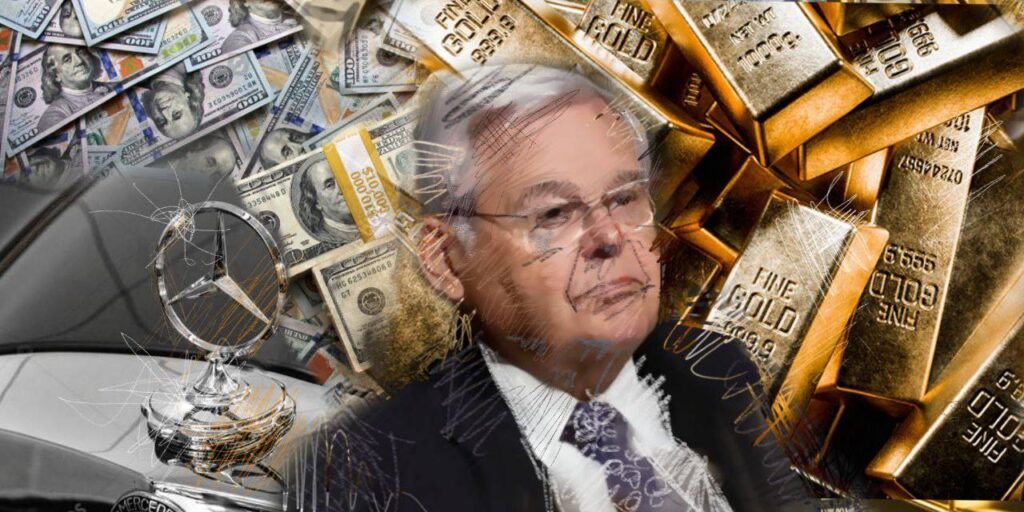
On July 16, a federal court in New York found United States Senator Robert "Bob" Menendez (D) guilty on 16 counts in a corruption trial, including charges of accepting bribes to benefit the governments of Egypt and Qatar, obstruction of justice and extortion. He is the first U.S. senator to be convicted as a foreign agent and the charges collectively carry a potential sentence of 222 years in prison. Bribery charges involved receiving gold bars worth over $100,000 and more than $480,000 in cash as well as a Mercedes-Benz for his wife. “This wasn't politics as usual. This was politics for profit,” summarized Damian Williams, an attorney for the Southern District of New York. According to federal prosecutors, among other things, Menendez helped secure millions of dollars of U.S. aid for Egypt and used his office to assist a multi-million-dollar deal with a Qatari fund. Egypt’s intelligence and military officials are said to have bribed him and his wife at a time when U.S. military aid to the country would have paused due to human rights concerns. Menendez also used his official position “to protect and enrich” individuals in exchange for payments, including helping a New Jersey businessman secure a halal certification monopoly with regards to U.S. meat exports to Egypt. Striking similarities to another recent “influence-for-sale” scandal For many Europeans, this U.S. case resembles the European Union’s own Qatargate scandal, which broke out in 2022 and unveiled how foreign governments (Qatar, Morocco and Mauritania) have been channeling hundreds of thousands of euros to a ring of elected European Parliament officials who, in turn, were leveraging their authority to benefit these clients. The services included “attempts to manipulate the Parliament” and “scheming to kill off six parliamentary resolutions condemning Qatar’s human rights record” as Politico reports. In his plea deal, Antonio Panzeri, the chief of the European Parliament's Subcommittee on Human Rights (DROI), admitted to receiving bribes as well as to leading and participating in a criminal organization. This criminal organization reportedly doled out bribes to EU officials through two NGOs named Fight Impunity and No Peace Without Justice, which were allegedly set up to launder money and help fund the scheme. In Menendez’s case, the money ran through his wife’s consultancy. Qatargate allegations extended beyond the Middle East and North Africa. For instance, Atlantico.fr reported that Panzeri and his associates may have been corrupted by at least two Kazakh criminal figures. Europeans appeared lenient on corruption as Panzeri only received a five-year prison sentence, of which four would be suspended and the one year he’d serve would be under house arrest with an electronic bracelet. Momentum behind investigations of key suspects has since waned, leading the EU Observer to call Qatargate “a missed opportunity to bring Europe to justice”. Foreign policy priorities pushed by Senator Menendez need to be re-examined When public officials are found to have used their office to promote external interests, their past policy activities should be closely examined. Bob Menendez has been a member of...

Kazakhstan, Iran, Turkmenistan and Russia to Develop North-South Transport Corridor

On July 19 - 20, the Ministry of Transport of Kazakhstan organized its first meeting on the North-South transit and trade corridor in Aktau attended by delegations from Azerbaijan, Armenia, Afghanistan, Kazakhstan, Russia, Belarus, Turkmenistan, UAE, Iran, Iraq, Oman, and Uzbekistan. By connecting Russia and Belarus to ports in the Persian Gulf, with further access to India, the North-South transport corridor will broaden prospects for trade and become a key engine for Kazakhstan's economic development. During the meeting,  Kazakhstan, Iran, Turkmenistan, and Russia signed a roadmap for the development of the eastern route of the North-South transport corridor from 2024 to 2025, aimed to increase the corridor's throughput to 15 million tons of cargo annually by 2027 and 20 million tons by 2030. Kazakh Minister of Transport Marat Karabaev commented: “Kazakhstan intends to continue its active participation in the development of the Eastern branch of the North-South corridor, which has the highest potential for growth in cargo flows until 2030 and appears to be the safest and shortest transit route to the Indian Ocean. Therefore, it is necessary to begin the practical implementation of the Roadmap signed today for the synchronous development of the eastern route of the North-South corridor passing through the territories of Kazakhstan, Russia, Turkmenistan, and Iran.”

Kyrgyzstan and Uzbekistan Launch Joint Projects, Seek to Increase Trade

On July 18, Kyrgyzstan's president Sadyr Japarov arrived on a state visit to Uzbekistan and held talks with his compatriot Shavkat Mirziyoyev in Tashkent. Mirziyoyev immediately emphasized that the state visit of the Kyrgyz president opens a new chapter in multifaceted Uzbek-Kyrgyz cooperation. The negotiations centered on measures to increase bilateral trade turnover, primarily through import substitution programs and industrial cooperation projects. The parties agreed to establish trading houses in Bishkek and Tashkent, form a portfolio of export-import contracts aiming to increase bilateral trade to $2 billion in the coming years, and launch a “green-light corridor” for the accelerated transportation of agricultural produce and livestock products. As the portfolio of ongoing industrial cooperation projects has already reached $300 million, the parties agreed to increase the authorized capital of the Uzbek-Kyrgyz Fund to $200 million to boost the financing of such projects. Identifying cooperation in the energy sector as strategically important, the two leaders spoke about an earlier signing of an agreement on joint construction of the Kambarata HPP-1 in Kyrgyzstan. This will allow for the construction of the hydropower plant to begin. Mirziyoyev commented: “We will take measures to speed up the signing of a trilateral [also with the participation of Kazakhstan] agreement on constructing the Kambarata-1 hydroelectric power plant. This megaproject will undoubtedly serve the sustainable development of our entire region.” Japarov emphasized that the key outcome of the negotiations was the signing of a Joint Statement on further deepening and expanding a comprehensive strategic partnership between Kyrgyzstan and Uzbekistan. Japarov also stressed the importance of an earlier start to the construction of the China-Kyrgyzstan-Uzbekistan railway, which will be strategically important for strengthening the transport connectivity between Kyrgyzstan and Uzbekistan, as well as for the entire Central Asia region. Japarov and Mirziyoyev also participated in a video conference ceremony to launch joint Kyrgyz-Uzbek projects. The leaders officially launched the work of a plant for the assembly of cars, trucks, and buses in the Chui region of northern Kyrgyzstan. Construction of the joint Kyrgyz-Uzbek automobile plant to manufacture Chevrolet and Isuzu vehicles began in May 2023, and the first car rolled off its assembly line in May 2024. During the first year of operation, Uzbekistan’s UzAuto Motors will invest $50 million to assemble 10,000 cars. These cars will be the Chevrolet Cobalt, Onix, and Tracker. The presidents also launched a joint factory in Kara-Balta, northern Kyrgyzstan, to produce linen and knitwear products. The factory will produce 17 thousand tons of knitted fabric annually and 7 million pieces of knitted products. Finally, the presidents launched the construction of two photovoltaic power plants, each with a capacity of 200 MW, in Uzbekistan’s Fergana and Namangan regions. The electricity generated by the plants will be supplied to Kyrgyzstan.

Saudi Islamic Development Bank Increasing Its Presence in Central Asia

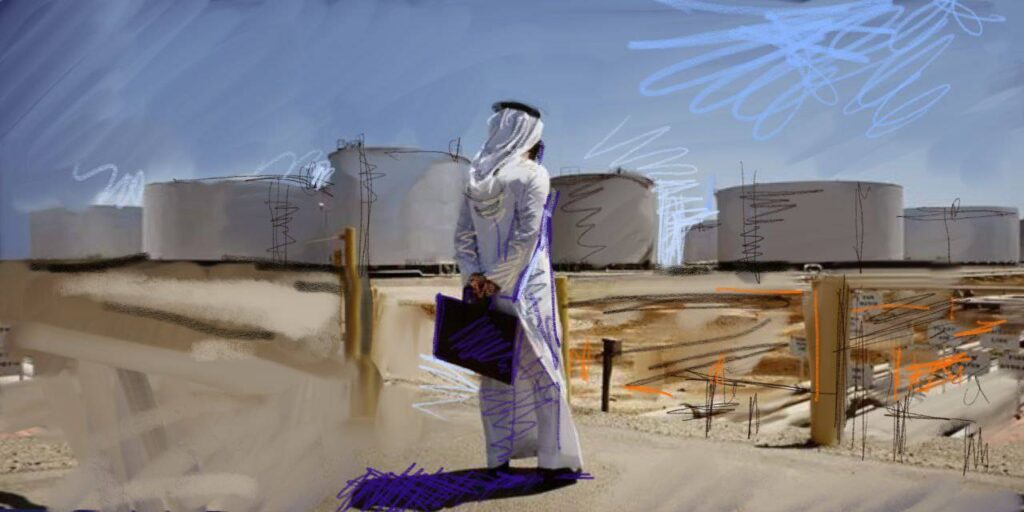
The Saudi-based Islamic Development Bank (IDB) has been particularly active in Central Asia so far in 2024. The growing IDB role is part of Central Asian region’s foreign policy shift toward the Arab world as financial backers to replace Russia, which is devoting huge attention and resources to its war in Ukraine, and China, which is increasingly reluctant to spend large sums of money in Central Asia after pouring in tens of billions of dollars there during the last 25 years. Some of the Central Asian governments owe China substantial amounts of money that they are unlikely to be able to pay for possibly decades. The Central Asian states have been members of the IDB for many years. Kyrgyzstan was first, joining in 1993, followed by Turkmenistan in 1994, Kazakhstan in 1995, Tajikistan in 1996, and Uzbekistan in 2003. One of the IDB’s three regional offices is in Almaty, Kazakhstan (the other two are in Kuala Lumpur, Malaysia and Rabat, Morocco).  The IDB has been dealing individually with the five Central Asian countries on a wide range of projects and programs in recent months. Energy Resources In February, Tajik Minister of Economic Development and Trade Zavqi Zavqizoda announced a deal was reached for the IDB to provide $250 million to Tajikistan. Zavqizoda said $150 million of that would go toward construction of the Rogun hydropower plant (HPP).  The Rogun HPP was a Soviet-era project. Construction started in 1976 but was discontinued shortly after the Soviet Union collapsed. Tajikistan restarted work on the HPP in 2008. Tajik President Emomali Rahmon has repeatedly said that building the HPP with a planned 3600 MW capacity will make the country energy independent and even allow Tajikistan to bring in extra revenue exporting electricity to neighboring countries.  In its 28 years as an IDB member, Tajikistan had received some $620 million from the IDB, so the $250 million announced in February 2024 represents a significant jump in IDB financial help. Not surprisingly, when IDB President Muhammad Al-Jasser visited Kyrgyzstan in June, Kyrgyz President Sadyr Japarov sought IDB investment in the Kambar-Ata-1 HPP, another decades-old project with a multi-billion-dollar price tag that has barely made any progress in being realized during the 33 years Kyrgyzstan has been independent. Al-Jasser did not commit to IDB financing for the Kyrgyz HPP. However, less than a week after Al-Jasser was in Kyrgyzstan, the IDB was one of several international financial organizations that signed on at a conference in Vienna to be a members of a coordination donors’ committee for the Kambar-Ata-1 projects. At a meeting in Istanbul in February, the IDB reaffirmed its support for the Central Asia-South Asia-1000 (CASA-1000) project that aims to export electricity from HPPs in Kyrgyzstan and Tajikistan to Afghanistan and Pakistan. Kyrgyz Energy Minister Taalaybek Ibrayev met with Al-Jasser in June during the latter’s visit to Kyrgyzstan to discuss funding for Kyrgyzstan’s section of CASA-1000. Not Only Energy In June, the IDB pledged up to $2 billion in funding for improvements to water management...