• KGS/USD = 0.01144 0%
  • KZT/USD = 0.00210 0%
  • TJS/USD = 0.10438 0%
  • UZS/USD = 0.00008 0%
  • TMT/USD = 0.28490 0%
  • KGS/USD = 0.01144 0%
  • KZT/USD = 0.00210 0%
  • TJS/USD = 0.10438 0%
  • UZS/USD = 0.00008 0%
  • TMT/USD = 0.28490 0%
  • KGS/USD = 0.01144 0%
  • KZT/USD = 0.00210 0%
  • TJS/USD = 0.10438 0%
  • UZS/USD = 0.00008 0%
  • TMT/USD = 0.28490 0%
  • KGS/USD = 0.01144 0%
  • KZT/USD = 0.00210 0%
  • TJS/USD = 0.10438 0%
  • UZS/USD = 0.00008 0%
  • TMT/USD = 0.28490 0%
  • KGS/USD = 0.01144 0%
  • KZT/USD = 0.00210 0%
  • TJS/USD = 0.10438 0%
  • UZS/USD = 0.00008 0%
  • TMT/USD = 0.28490 0%
  • KGS/USD = 0.01144 0%
  • KZT/USD = 0.00210 0%
  • TJS/USD = 0.10438 0%
  • UZS/USD = 0.00008 0%
  • TMT/USD = 0.28490 0%
  • KGS/USD = 0.01144 0%
  • KZT/USD = 0.00210 0%
  • TJS/USD = 0.10438 0%
  • UZS/USD = 0.00008 0%
  • TMT/USD = 0.28490 0%
  • KGS/USD = 0.01144 0%
  • KZT/USD = 0.00210 0%
  • TJS/USD = 0.10438 0%
  • UZS/USD = 0.00008 0%
  • TMT/USD = 0.28490 0%

Viewing results 1591 - 1596 of 2835

Turkmenistan Ousts Uzbekistan from Tajikistan’s Market for Greenhouse Tomatoes

Turkmenistan has completely overtaken Uzbekistan in the market for greenhouse tomatoes in Tajikistan, according to a report by the EastFruit agricultural news portal. Analysis revealed that Turkmen tomatoes are winning due to competitive pricing and also, their attractive appearance and modern packaging. Despite problems related to the cultivation of tomatoes grown  in Tajikistan's greenhouses  this season, the price has remained at a record low for this time of the year. The average wholesale price for one kg is  currently just $1.46 -- and further price reductions are expected in the near future, notes EastFruit. In Tajikistan, which currently imports the majority of greenhouse tomatoes it consumes, the wholesale price is significantly lower ($1.9 per kg) than in Uzbekistan, which is still the main regional exporter. The EastFruit portal notes that today, greenhouse tomato prices in Central Asian countries are not much lower than  in Eastern European countries. It also reports that further development of energy-efficient greenhouse technologies will allow countries with colder climates to remain relatively highly competitive  and moreover,  local consumers are generally willing to pay more for the fresh taste of greenhouse-grown vegetables.  

Kyrgyzstan, Uzbekistan to Unite Their National Card Payment Systems

Kyrgyzstan's national payment system, Elkart, and Uzbekistan's Humo payments platform intend to launch a project on mutually acquiring, or guaranteeing payment security and authorizations according to Kyrgyzstan's Interbank Processing Center (IPC). The agreement was reached at a meeting in Tashkent. "We are going to develop payment systems and create an ecosystem in our countries. This project will open new horizons for the development of not only financial infrastructures of Kyrgyzstan and Uzbekistan, but will also give impetus to the development of many spheres of activity of the two states," said Kanykei Zhamangulova, Chair of the Board of the Kyrgyz IPC. Payment organizations of the two countries have been negotiating a mutual acquiring framework since last summer. At the last meeting in Bishkek, the parties agreed on money transfers and internet payments. "An agreement was reached to start a joint project for step-by-step realization of the set goals and mutual exchange of experience in acquiring, issuing and combating fraudulent transactions," Shukhratbek Kurbanov, director of the Humo payment system, said at the time. Citizens of Uzbekistan and Kyrgyzstan will be able to pay with their cards in the other of the two countries without additional commissions, he said. However, the exact launch date of mutual acquiring services wasn't announced. The cross-border payments plan is advancing as relations between Bishkek and Tashkent were further warmed by the demarcation of the two states' international border. This key step put an end to decades of border disputes that had persisted since the end of the Soviet period.

Uzbekistan’s Schoolchildren to Sit International PISA Tests

In 2025, Uzbekistan, with the support of the World Bank, will participate  in the Programme for International Student Assessment (PISA) administered by the Organization for Economic Cooperation and Development (OECD), with pilot testing starting this May. PISA testing assesses the ability of students from more than 80 countries in their knowledge and skills in reading, math and science. When allocating funding for PISA testing in 2019, World Bank experts noted the acute shortage of teachers and their low qualifications and in addition,  the absence of means to assess  both the quality of preschool education and a comfortable environment for learning. "Investing in children's early education is one of the most effective ways to develop human capital, which in turn will stimulate economic growth in the country," Hideki Mori, the head of the World Bank's representative office in Uzbekistan, said at the time. Last year's test results placed Uzbek schoolchildren in the bottom ten  of the 80 participant countries. The cause indicated significant problems within the domestic education system and subsequent data revealed a direct correlation between test results and  families' socioeconomic status. To address the issue,  officials plan to allocate more than $3.7 billion for schools and school education curricula this year.

EBRD Funds Upgrade of Major Highway in Uzbekistan

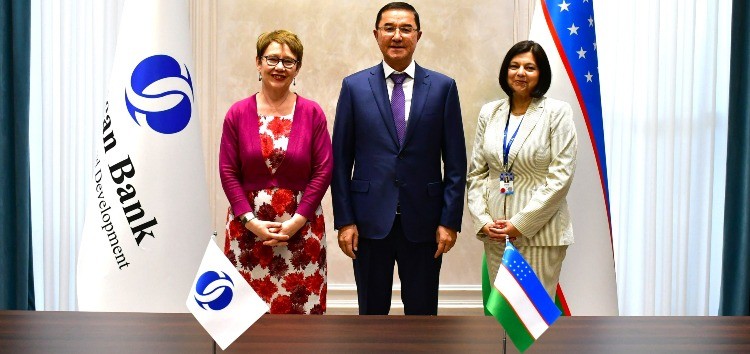
On 2 May, the European Bank for Reconstruction and Development (EBRD) announced the allocation of a loan of up to $238 million (€224 million) towards the renovation of around 81 km of the 4R156 road, as well as the construction of a bridge across the Amu Darya River in the Khorezm region of western Uzbekistan. The road is a strategically important section of the Central Asia Regional Economic Cooperation Corridor 2a, linking the region’s administrative centre, Urgench, with the A380 road to Kazakhstan. The loan will transform the current single-carriageway category-II road into a dual-carriageway category-I road, and in addition, help upgrade supporting infrastructure along the 4R156 road. Once completed, the new road with its much-improved throughput capacity, will stimulate both trade and tourism in  Khorezm. EBRD President Odile Renaud-Basso commented: “We are supporting this project because it meets our strategic objectives for Uzbekistan and Central Asia. It is also part of the global transport and logistics infrastructure solutions covered by the European Union’s (EU) Global Gateway initiative.” In January 2024, at the Investors Forum for EU-Central Asia Transport Connectivity in Brussels, the EBRD expressed its readiness to invest around €1.5 billion in Trans-Caspian Corridor-related infrastructure and associated transport solutions over the next 2-3 years.  

Tashkent Investment Forum Focus on Kyrgyzstan’s Kambarata HPP-1

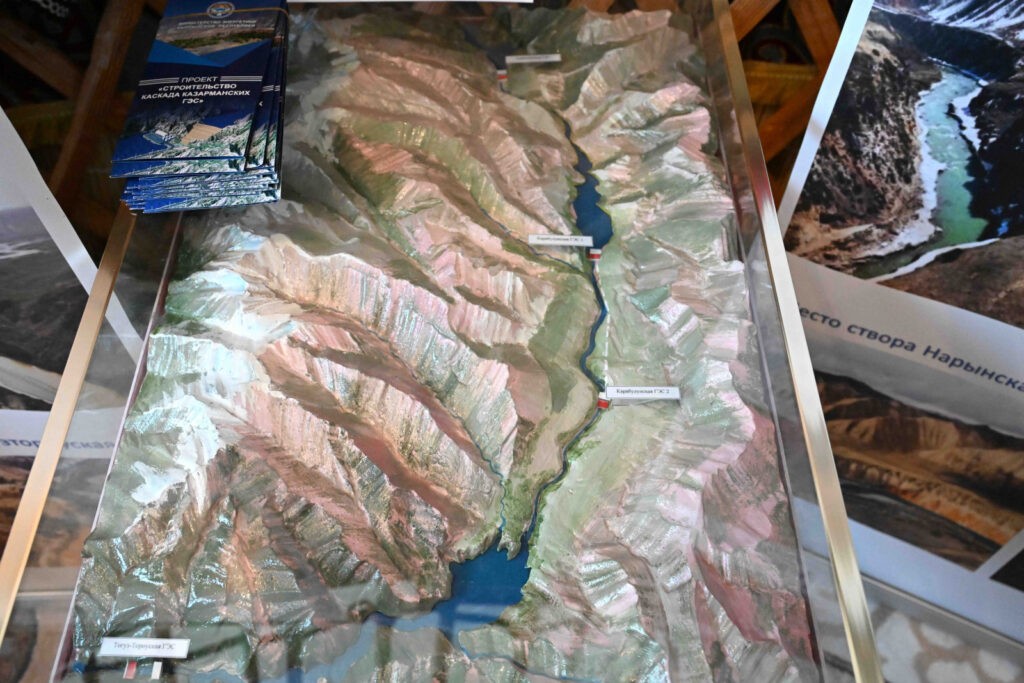
The construction of the Kambarata hydroelectric power plant (HPP)-1 on Kyrgyzstan’s Naryn River was at the forefront at the Third Tashkent International Investment Forum attended by Uzbekistan’s Prime Minister Abdulla Aripov and representatives of international organizations and financial institutions. At the panel session on energy, on 2 May, Chairman of the Cabinet of Ministers of the Kyrgyz Republic Akylbek Japarov, outlined the master plan behind Kambarata HPP-1, investment indicators,  and its potential benefits to water resources management and Central Asia’s electricity market. Japarov explained that generated by hydropower, almost all electricity in Kyrgyzstan is green, but stated, “We have so far used only about 13% of our existing potential. Taking into account global challenges and trends in the development of green energy, the Cabinet of Ministers of the Kyrgyz Republic has actively begun to implement infrastructure energy projects. The large-scale construction of Kambarata HPP-1, strategically important for the entire region, will up the pace of development in this field.” Kyrgyzstan, Kazakhstan, and Uzbekistan recently signed a Roadmap for joint construction of Kambarata HPP-1. If completed, Kambarata HPP-1 will have a capacity of 1860 MW and will generate 5.6 billion kWh of electricity per year. A forum for further discussions on foreign investment in the project is scheduled for early June in Vienna . Turning to plans for hydroelectric power plants elsewhere in the country, Kyrgyzstan’s Prime Minister, stated, “Work is underway to implement projects for the construction of a cascade of hydroelectric power plants on the Chatkal River, as well as a cascade of Kazarman hydroelectric power plants on the Naryn River. Our country needs foreign investment to develop energy, which is the main sector of the economy. We invite foreign companies to consider the possibility of participating in the construction of small and medium-sized hydroelectric power stations and renewable energy sources in Kyrgyzstan.”    

Uzbekistan’s President Guarantees Protection of Foreign Investors’ Rights

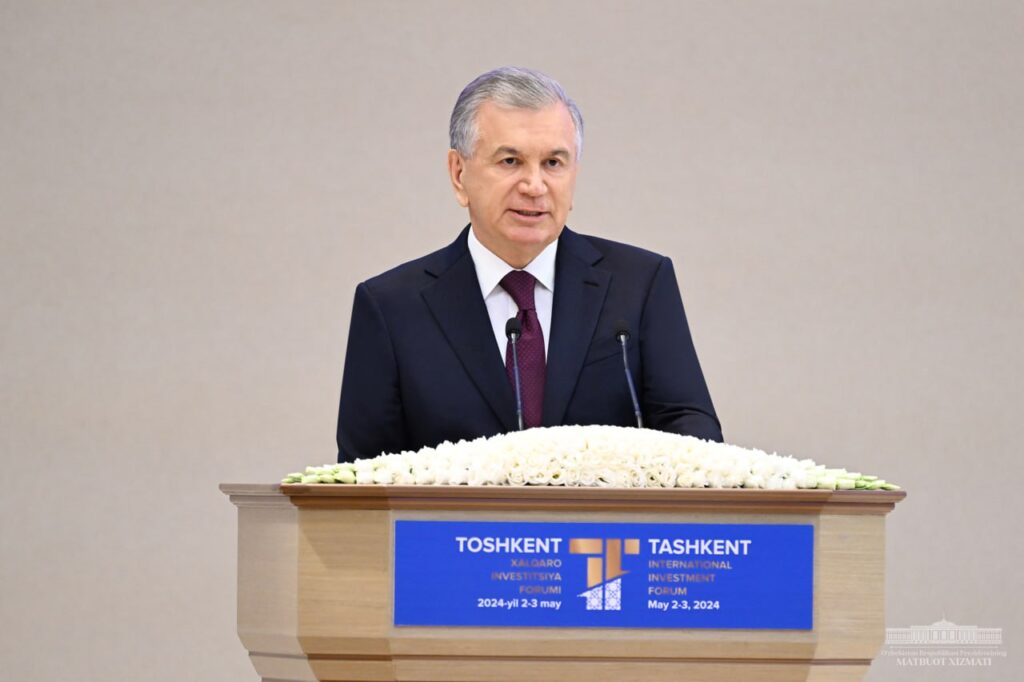
Addressing the Tashkent International Investment Forum, Uzbekistan President Shavkat Mirziyoyev remarked that in recent years, his country had attracted more than $60 billion in foreign investment, in over 300 joint industrial projects. Regarding the goal to attract further foreign partnerships, he continued, "Our state guarantees development of market relations, reliable protection of investors' rights, improvement of favorable investment and business environment, creation of wider opportunities and conditions for fair competition, ensuring inviolability of private property and independence of [our] judicial system." To achieve its aims, Uzbekistan has adopted a new version of the law "On Investments" in accordance with World Trade Organization (WTO) standards.  Despite not yet ratified by Uzbekistan, the International Commercial Court (ICC), is already operating in the country, and the terms of land lease for foreign investors have been increased from 25 to 49 years. Uzbekistan's head of state also announced plans to introduce  new approaches to the system of industrial zones,  the management of which will involve experienced foreign companies. Drawing attention to the country's wealth of natural reserves, the  president noted, " Our country has colossal resources of gold, copper, tungsten, silver and uranium. Along with rare and unique minerals, we have deposits of more than 30 rare earth metals such as lithium, magnesium, molybdenum, germanium, vanadium and indium. " He emphasized Uzbekistan's ongoing negotiations with the U.S. and the UK  on cooperation in the field of critical raw materials (CRMs) and extended an invitation to leading companies to develop projects concerning the deep processing of strategic raw materials and the creation of a value-added chain of refining and processing. Mirziyoyev mentioned  the forthcoming construction of the Trans-Afghan railroad and upgrades to existing international airports in Tashkent, Bukhara and Urgench  planned with the cooperation of foreign investors, and with reference to improved logistics, stated,  "These strategic projects will radically change the geo-economics situation in the region and turn Central Asia into a global transit centre connecting North and South, East and West." This year's Tashkent Investment Forum was attended by 2,500 delegates including government leaders, heads of major companies and representatives of the  United Nations (UN), European Bank for Reconstruction and Development (EBRD), the Organization of the Petroleum Exporting Countries (OPEC) and the Shanghai Cooperation Organization (SCO).