• KGS/USD = 0.01144 0%
  • KZT/USD = 0.00204 0%
  • TJS/USD = 0.10394 -0.38%
  • UZS/USD = 0.00008 0%
  • TMT/USD = 0.28571 0%
  • KGS/USD = 0.01144 0%
  • KZT/USD = 0.00204 0%
  • TJS/USD = 0.10394 -0.38%
  • UZS/USD = 0.00008 0%
  • TMT/USD = 0.28571 0%
  • KGS/USD = 0.01144 0%
  • KZT/USD = 0.00204 0%
  • TJS/USD = 0.10394 -0.38%
  • UZS/USD = 0.00008 0%
  • TMT/USD = 0.28571 0%
  • KGS/USD = 0.01144 0%
  • KZT/USD = 0.00204 0%
  • TJS/USD = 0.10394 -0.38%
  • UZS/USD = 0.00008 0%
  • TMT/USD = 0.28571 0%
  • KGS/USD = 0.01144 0%
  • KZT/USD = 0.00204 0%
  • TJS/USD = 0.10394 -0.38%
  • UZS/USD = 0.00008 0%
  • TMT/USD = 0.28571 0%
  • KGS/USD = 0.01144 0%
  • KZT/USD = 0.00204 0%
  • TJS/USD = 0.10394 -0.38%
  • UZS/USD = 0.00008 0%
  • TMT/USD = 0.28571 0%
  • KGS/USD = 0.01144 0%
  • KZT/USD = 0.00204 0%
  • TJS/USD = 0.10394 -0.38%
  • UZS/USD = 0.00008 0%
  • TMT/USD = 0.28571 0%
  • KGS/USD = 0.01144 0%
  • KZT/USD = 0.00204 0%
  • TJS/USD = 0.10394 -0.38%
  • UZS/USD = 0.00008 0%
  • TMT/USD = 0.28571 0%

Viewing results 1681 - 1686 of 2730

AIIB Allocates $670 Million for Uzbekistan’s Economic Transition

The Asian Infrastructure Investment Bank (AIIB) has approved the allocation of $670 million to Uzbekistan to support reforms and its ongoing transition to a market economy. The project is supported by the special fund for Covid-19 crisis recovery and is co-financed by the World Bank. The borrower will be Uzbekistan's Ministry of Economy and Finance, who will use the funds to finance reforms in such areas as improving fiscal risk management, supporting social inclusion, improving environmental sustainability, and market formation. The project will improve the energy, railroad and chemical sectors, as well as agriculture. In addition, funds will be used to create environmentally friendly markets, improve Uzbekistan's fiscal management and procurement system, and develop a more socially adapted economy. Planned reforms will serve to improve the efficiency of health care and public services. "We are pleased to continue to support Uzbekistan's journey towards a sustainable market economy. By strengthening social safety nets and helping to mitigate climate risks, we aim to improve the effectiveness of social assistance initiatives and facilitate Uzbekistan's transition to a green economy, which is in line with AIIB's mission to finance promising infrastructure," said Konstantin Limitovsky, Vice President for Investment Operations at AIIB. In late January 2024, Uzbek president Shavkat Mirziyoyev met with AIIB President Jin Liqiong in Beijing. During the meeting, the two sides signed a three-year investment program for further support of Uzbekistan's development in a number of sectors. To date, the bank has approved 14 projects in Uzbekistan worth $3.1 billion, making it the seventh-largest portfolio among its membership. The AIIB's annual meeting in Samarkand is scheduled for September 2024, which will be the bank's first such event in Central Asia.
Uzbek Environmentalists Propose Harnessing Rainwater to Combat Water Crisis

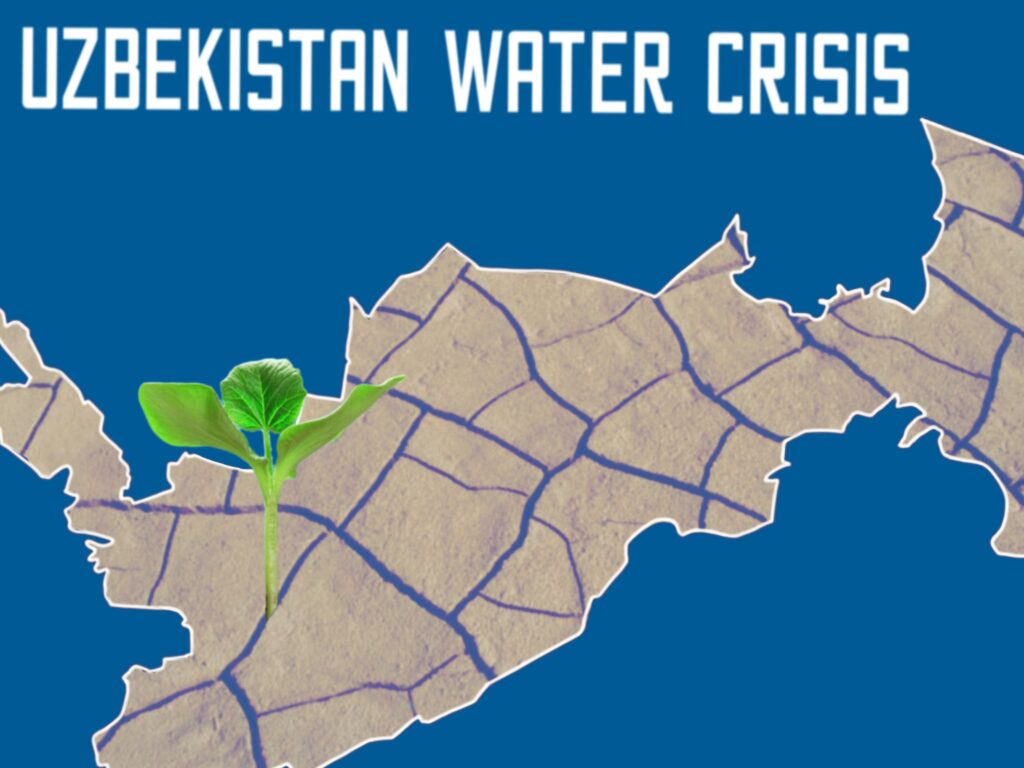
The Ecological Party of Uzbekistan has proposed using collected rainwater as a groundwater supply for the population. The activists plan to develop a corresponding program and submit it to the government for consideration. Rainwater, after appropriate treatment, can be reused for certain purposes. The average person uses about 150 liters of water per day for drinking, bathing, and cleaning, and the party claims that each person can save up to 71 liters of clean drinking water per day by this method. In the context of water scarcity in Central Asia, this sounds more than relevant. After all, over the past 50 years, glaciers in Central Asia have shrunk by about 30%, putting Uzbekistan in 25th place among the 164 countries suffering from "water stress." The population of the five countries in the Central Asian region totals more than 78 million, and by 2050 that number will have grown to 90-100 million people. Water shortages may rise to affect 25-30% of the population. At a meeting of the Uzbek government at the end of 2023, officials said that the country's economy loses $5 billion annually due to inefficient use of water resources. Climate change, shrinking water sources and growing water consumption could lead to a water deficit of 15 billion cubic meters by 2030.

South Korea to Supply Uzbekistan With High-Speed Trains

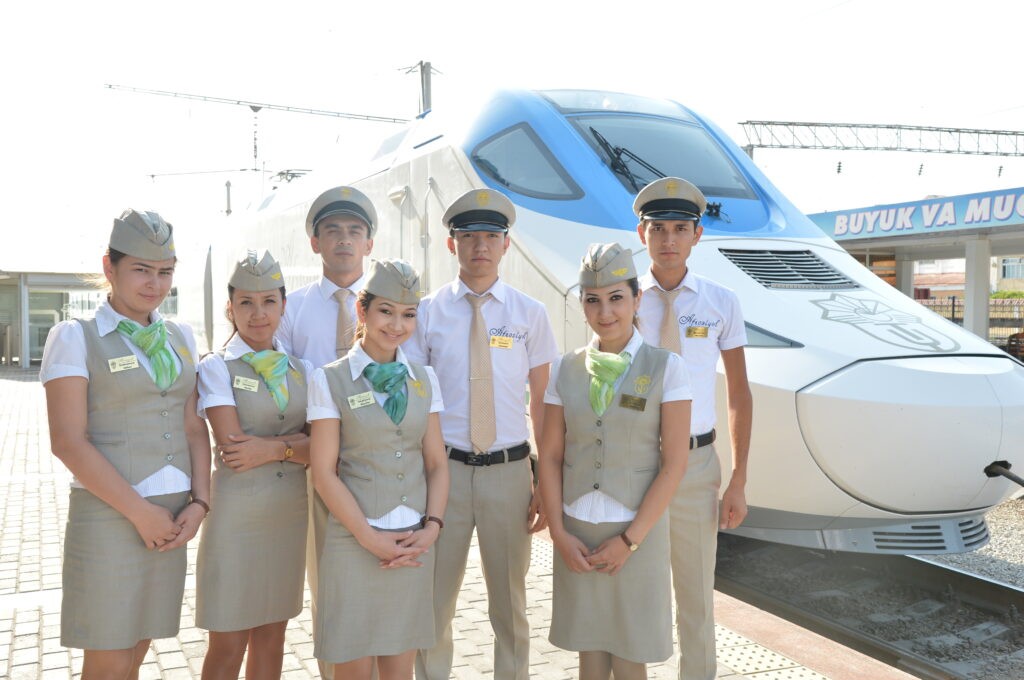
Six Hyundai Rotem high-speed trains made in South Korea will soon be launched between Tashkent and Khiva. The electric trains will have seven carriages, and will be able to carry 350 passengers at speeds of up to 250 kilometers per hour. To purchase the trains, Uzbekistan will use a $200 million, 35-year loan from the Economic Development and Cooperation Fund (EDCF) of the Republic of Korea. A feasibility study for the project is currently being drawn up. Uzbekistan had originally planned to purchase high-speed trains from Hyundai back in 2018, with the project estimated at $1 million. But the national rail company Uzbekistan Temir Yollari ended up instead signing a contract with the Spanish company Talgo, which manufactured the Afrosiyob trains currently in use in the country. A $162 million loan for electrification of the 465km Bukhara-Miskin-Urgench-Khiva railway line was approved by the Asian Development Bank (ADB) back in 2021. High-speed trains that will connect these cities will shorten the journey by two hours. The project was planned as part of the Central Asia Regional Economic Cooperation (CAREC) Corridor 2 program. It will link China and Europe through Central Asia and aims to boost the countries' cross-border trade. Uzbekistan is actively developing its tourism potential. Because of this, Uzbekistan Temir Yollari and the Italian company Arsenale Group are planning a luxury tourism train project. The train will have all the accoutrements for comfortable, five-star travel along the Silk Road along the Tashkent-Samarkand-Bukhara-Khiva-Tashkent route.

Tears and Laughter: An Evening at an Uzbek Theater

Tashkent, Uzbekistan - The action unfolds in the Soviet Union in the 1960s. An Uzbek man goes to Russia for compulsory military service and falls in love with a Russian woman. Back with her betrothed in his homeland, the Russian slowly wins over her recalcitrant mother-in-law and learns to love Uzbek culture. So goes the plot of “Uzbek Dance,” a play being performed in the colonnaded Uzbek National Academic Drama Theater in Tashkent, the capital. The tragicomedy made its debut in Uzbekistan in 2009 and has been re-staged several times, immersing audiences in Uzbek history and culture and making them laugh and cry. The Times of Central Asia attended a performance on March 9. So did hundreds of other people. Ticket prices in the Uzbek currency, the sum, cost the equivalent of about USD4 to USD5.60. Before the start, people in the atrium gazed at portraits of actors who helped to build the Uzbek theater scene over the last century. People mingle in the museum of the National Academic Drama Theater in Uzbekistan. Portraits of actors who contributed to the development of Uzbek theater in the past century are hung there. Photo: TCA   In the early days, the “Turon" troupe performed around Uzbekistan. The first performance of the theater group was held in 1913 in the garden of the 14th century Tashkent mausoleum of an Islamic leader, or sheikh. In 1918, the state took over the troupe. Written by Nurillo Abbaskhan, “Uzbek Dance” explores tension and reconciliation between the Russian woman and her Uzbek mother-in-law, whose verbal and cultural missteps make for mutual suspicion and comedy. The play invites reflection on the nuanced relationship between Russia and Uzbekistan today (at least 2% of Uzbekistan’s population are ethnic Russians, according to government data in 2021; the population is estimated today at nearly 37 million). There’s a dark side to the drama. The family saga happens against the backdrop of a real-life 1980s corruption scandal surrounding a campaign to supply more Uzbek cotton for the Soviet Union. Spectators await the performance of "Uzbek Dance," a play that has been staged in different productions several times since making its debut in 2009. Photo: TCA   The cotton campaign was marred by falsified production numbers and a backlash from Soviet officials who rounded up thousands of Uzbek people, prosecuting many on false charges. Additionally, pesticides took a devastating toll on the environment and workers’ health. In the play, the Uzbek man, Tursunboy, drives a tractor in the cotton fields. Eventually, he gets falsely accused in the purge and imprisoned. He eventually gets out of jail, but the harsh conditions and years of exposure to toxic chemicals have left him fatally ill. Then there is Panamaryova Maria Visilevna, who took the name Maryam after converting to Islam on the insistence of her Muslim mother-in-law, Kumri Aya. The two women don’t get along at first. But they get closer. Maryam, who gives birth to six children before Tursunboy’s decline, learns the Uzbek language, dances, hat-making...

Kazakhstan And Uzbekistan To Install Transboundary Water Meters

Since the use of transboundary water resources for irrigation remains a pressing issue in Central Asia, Kazakhstan and Uzbekistan have agreed to install meters to calculate the exact volume of water consumed by both countries. Kazakhstan will install meters on the territory of Uzbekistan, and the Uzbek side will install meters in Kazakhstan. Experts from both countries are currently determining the best locations of the meters. Negotiations are also underway for the involvement of international organizations in the project. Emphasizing the importance of the agreement for Kazakhstan, which is located downstream of the region’s rivers, the Minister of Water Resources and Irrigation of Kazakhstan, Nurzhan Nurzhigitov stated, “The installation of meters will make it possible to monitor the volumes of water consumed by both countries online. In April, we plan to begin negotiations on the implementation of similar projects with Kazakhstan’s other neighbours.”

Uzbekistan Plans to Increase Exports of Agricultural Products to $3.5 Billion Annually

President Shavkat Mirziyoyev visited the Uzbek Plant Quarantine and Protection Agency on March 18, the president’s official website says, where officials discussed the agency's mandate for managing the cultivation of exportable goods and identifying new markets for them. It's anticipated that projects like those managed by the agency will help increase agricultural product exports to $3.5 billion this year. The amount of agricultural exports in 2023 was close to $2 billion. Measures related to the production of fruits and vegetables date back to an agreement from January 18, 2019, when guidelines were adopted during online meetings on export and industrial matters. The Plant Quarantine and Protection Agency, in particular, was entrusted with executing the agreement. One of the projects is a mobile application called Agroko‘makchi, which provides services related to plant protection, helpful information, export advice, and deeper familiarity with agricultural subjects. Exporters in Uzbekistan can connect with buyers overseas through the Asiaexport.se platform. Information is posted on the platform about a wide range of products, including fruits, vegetables, dried fruits, juices, household goods, confectionery, textiles, leather goods, and pharmaceuticals. Additionally, officials shared details regarding the agency’s collaboration within the ePhyto global solution innovation system. With this system, phytosanitary certificates can be electronically exchanged with 119 nations. This year, eight more countries will receive phytosanitary permits for 25 types of products. Ten mobile labs will be set up around the regions this year. Over 3,000 vineyards, 6,000 gardens, 344 packaging businesses, and more will all be brought into compliance with foreign phytosanitary regulations. Digitalization of pesticide trade and inventories is aimed at ending the illicit import of low-quality pesticides into Uzbekistan.