• KGS/USD = 0.01144 0%
  • KZT/USD = 0.00216 0%
  • TJS/USD = 0.10456 0%
  • UZS/USD = 0.00008 0%
  • TMT/USD = 0.28490 0%
  • KGS/USD = 0.01144 0%
  • KZT/USD = 0.00216 0%
  • TJS/USD = 0.10456 0%
  • UZS/USD = 0.00008 0%
  • TMT/USD = 0.28490 0%
  • KGS/USD = 0.01144 0%
  • KZT/USD = 0.00216 0%
  • TJS/USD = 0.10456 0%
  • UZS/USD = 0.00008 0%
  • TMT/USD = 0.28490 0%
  • KGS/USD = 0.01144 0%
  • KZT/USD = 0.00216 0%
  • TJS/USD = 0.10456 0%
  • UZS/USD = 0.00008 0%
  • TMT/USD = 0.28490 0%
  • KGS/USD = 0.01144 0%
  • KZT/USD = 0.00216 0%
  • TJS/USD = 0.10456 0%
  • UZS/USD = 0.00008 0%
  • TMT/USD = 0.28490 0%
  • KGS/USD = 0.01144 0%
  • KZT/USD = 0.00216 0%
  • TJS/USD = 0.10456 0%
  • UZS/USD = 0.00008 0%
  • TMT/USD = 0.28490 0%
  • KGS/USD = 0.01144 0%
  • KZT/USD = 0.00216 0%
  • TJS/USD = 0.10456 0%
  • UZS/USD = 0.00008 0%
  • TMT/USD = 0.28490 0%
  • KGS/USD = 0.01144 0%
  • KZT/USD = 0.00216 0%
  • TJS/USD = 0.10456 0%
  • UZS/USD = 0.00008 0%
  • TMT/USD = 0.28490 0%

Viewing results 1879 - 1884 of 2886

President of Uzbekistan Sets Economic Tasks for 2024

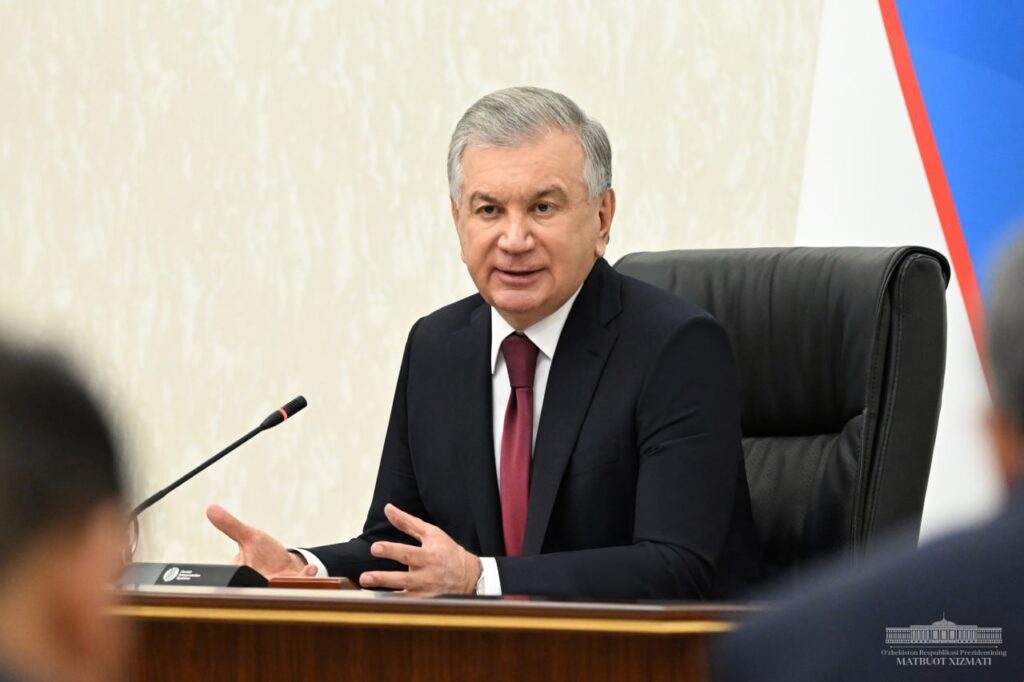
On January 16th, President Shavkat Mirziyoyev chaired a government meeting on priority tasks for the country’s economic development in 2024. It was stated that in 2023, economic growth was at 6%, and this year the plan is to maintain growth at the same level and bring gross domestic product to $100 billion. The head of state stated that with an increase in industrial production, the added value of products did not exceed 40%, which is mainly due to dependence on imports, high energy consumption, and excessive production costs. The President ordered that 2024 be a year of efficiency and production cost reduction for leaders of the economic sector and all state-owned enterprises. This year, the task is to increase the added value of domestic products to 45%, reduce production costs by 15%, and ensure industrial growth of 7%. Another source of budget revenue is privatization. However, 484 state assets included in the privatization program have yet to be put up for auction. Therefore, the President ordered the Cabinet of Ministers to prepare a new privatization program which aims to earn $1.6 billion in revenue this year. The meeting emphasized that a pressing issue today is the shadow economy, especially in the services sector, construction, and industry. Mirziyoyev stated that the shadow economy is an obstacle to fair competition, and outlined new measures to combat it. In particular, the powers of the Department for Combating Economic Crimes under the Prosecutor General's Office will be expanded, and a separate department to tackle the shadow economy will be created within the General Prosecutor's Office. Another important issue discussed at the meeting was inflation, which was at 8.77% last year, its lowest level since 2016. This year the plan is to keep inflation below 9%. Issues of lending were also discussed, with the task being set to develop a program to lower bank interest rates on loans by at least 2-3%.
Surveillance Cameras to be Installed in Samarkand Region to Combat Fly-Tipping

The Ministry of Ecology in the Samarkand region is taking measures to combat the problem of the illegal dumping of waste, with the Central Office of Dispatching and Online Monitoring developing a plan to install online surveillance cameras to help prevent fly-tipping. To begin with, 25 cameras will be installed in Samarkand in the most polluted and densely populated areas. Subsequently, it is planned to install 100 cameras throughout the region to ensure comprehensive control over the environmental situation. The surveillance system will be based on the database of the regional Department of Internal Affairs. A list of people and the registration plates of cars that disrespect the environment will be created. Inspectors from the Department of the Ecology will then contact the offenders and draw up appropriate administrative protocols. Such an online surveillance system is already successfully operating in other regions of Uzbekistan, such as Tashkent and its environs, as well as in Namangan, Andijan, Syr Darya and the Surkhandarya regions.

Uzbekistan to launch an entrepreneurship sustainability rating

As reported by the press service of the President of the Republic of Uzbekistan on its website, Uzbekistan plans to launch a rating of entrepreneurs' sustainability by March 1, 2024, which will constitute a new incentive for entrepreneurial activity in the country. The rating list is planned to have four main categories, which in turn will be based on 23 criteria, including such areas as the duration of activity, level of profitability, payment discipline, participation in providing employment and the level of wages. The list will be compiled on the basis of data from fundamental state services, such as tax, justice and judicial authorities, among others. The aim of the project is to motivate entrepreneurs to join the ranks of disciplined businessmen. Accordingly, benefits of securing a top spot on the list will include: Exemption from all types of tax audits; Value Added Tax will be returned to these entrepreneurs in full amount within 24 hours, and overpayment of other types of taxes in three days; Customs and tax authorities will be able to offset VAT on import and sale of goods; The term of payment for acquired state property or land plots purchased at auction will be extended from three to five years; Annual interest will not be charged on the remaining amount if the initial installment is not less than 15%. The press service also notes in regards to this rating that entrepreneurs will be evaluated not by the tax service, but by an electronic system, which in turn will increase the level of fairness of accrual of subsidies, benefits and preferences. In addition, the rating will give entrepreneurs reliable information about competitors as well as provide warnings about possible risks, dubious transactions and unfair competition. This is expected to reduce the level of "shadow economy", according to the report.

Increased Cooperation Between Uzbekistan and Singapore

On January 15, an online meeting was held with the participation of the Minister of Agriculture of the Republic of Uzbekistan, Ibrahim Abdurahmanov; the governor of the Tashkent region, Zoir Mirzayev, and the representative of Wilmar International Company of Singapore, Charles Cheau. During the meeting, the parties discussed issues of expanding areas of cooperation between the two countries in the field of agriculture, including possibilities of further acceleration of previously implemented projects and cooperation agreements. While many achievements have been made in bilateral relations, it was noted that there remain opportunities for expanding practical cooperation. Uzbekistan's Minister of Agriculture noted that a donation system was established with Singapore several years ago in the field of agriculture, and that the focus of the current cooperation meeting was on active reforms to be implemented in the future, development of the value chain in agriculture, and the importance of the agro-food system. Wilmar Company was founded on April 1, 1991 in Singapore and is the leading agro-industrial corporation in Asia. The company has a high market capitalization on the Singapore Stock Exchange. From an operational perspective, the company has a strong position as an integrated agribusiness model covering the entire agricultural value chain. An agreement was signed as a result of the meeting by Uzbekistan's Ministry of Agriculture, the administration of its Tashkent region and the Wilmar International Company.

Ministry Looks to Tackle Air Pollution in Tashkent Amid Flash Mob Protest

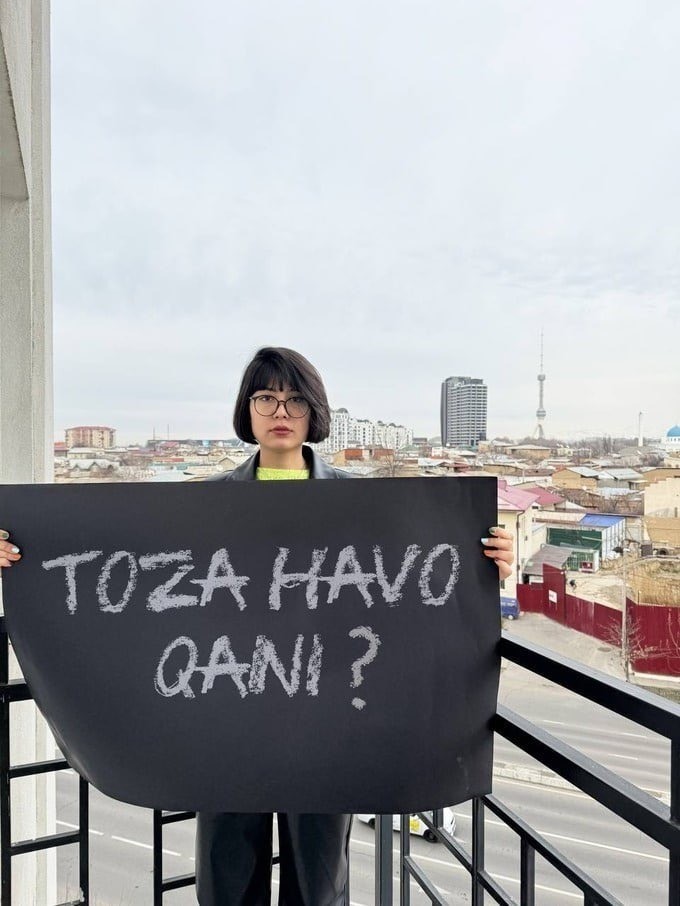
Uzbekistan’s capital, Tashkent, has long been ranked among the worst cities in the world with the highest levels of air pollution by the international service, IQAir. In 2022, the portal ranked Tashkent as the worst in the world in terms of air pollution based on data from Uzhydromet (State Hydrometeorological Service). Tashkent is particularly prone to fine particles of PM-2.5, which is the most dangerous indicator for health, according to the World Health Organization. On January 12th, the Ministry of Ecology, Environmental Protection and Climate Change of Uzbekistan stated that increasing levels of air pollution in Tashkent are caused by emissions from coal-burning heat and power plants, and from motor vehicles. The levels of air pollution are also due to the illegal felling of 49,000 trees and construction work being carried out without planning permission. Another contributing factor is an increase in the amount of pollutants being emitted by vehicles, the number of which is growing rapidly. In 2021, there were 3.14 million cars, but by 2023 there were 4.6 million, an increase of 32%. On average, 730,000 vehicles are on the move in Tashkent every day, with between 160,000 to 300,000 entering the capital from the regions. Cars using A-80 gasoline, which does not meet international standards, emit more harmful substances into the atmosphere. The burning of coal to generate electricity is also on the rise. In 2019, 3.9 million tons of coal were used; by 2022, this had increased to 5.3 million tons, and by the end of 2023 it was 6.7 million tons, the ministry stated. The levels of air pollution are also due to the fact that Tashkent is located is surrounded by mountains, meaning the wind cannot circulate, and the polluted air is not blown away. In order to reduce air pollution in Tashkent, the ministry proposed the following measures: – a ban on motor fuel below the Euro-4 standard (AI-80 gasoline); – a restriction on the movement of cargo vehicles in Tashkent weighing more than 3.5- and 12-tons during rush hour (from 07:00 to 10:00 and from 17:00 to 20:00); – a ban on vehicles manufactured before 2010; - providing preferential treatment and subsidies to owners of electric vehicles; – a scheme to reduce congestion wherein vehicles with odd number plates are allowed to drive on odd days, and those with even numbers on even days; – pedestrianized zones in the center of the city; – the transfer of public transport to the use of electric and gas-cylinder fuel; – a moratorium on construction except for facilities of social and state significance; – a ban in the Tashkent region on the use of coal for industrial purposes; – the creation of a “green belt” around the city. Meanwhile, on the same day, activists in Tashkent staged a flash mob to protest about the state of affairs. Among those fighting for the right to life and health were eco-blogger, Mutabar Khushvaktova (Urikguli), the singer, Konsta, stand-up comedian, Mirshakar Faizullaev, bloggers Umid Gafurov and Mirzayor Erkinov,...

Uzbekistan and Kazakhstan Among Nations Prepared to Invest in Afghanistan

Uzbekistan and Kazakhstan, as well as Turkey, Russia, and Iran are ready to invest in Afghanistan, Taliban press secretary, Zabihullah Mujahid has told TOLOnews. A number of companies from these countries could invest in the mining and energy sectors, and the construction of hydroelectric power stations in 2024, he stated. Mujahid said that in 2023, great work had been done to attract foreign investment, and this work will continue in 2024. This issue is currently in the negotiating stage with some companies, whilst others have already started work. The Ministry of Economy noted that foreign investors will be provided with all necessary assistance, adding that foreign parties are ready to invest in agriculture, trade, energy, railway and infrastructure projects. The Ministry of Industry and Trade spokesman, Okhundzoda Abdulsalam Javad also informed TOLOnews that Afghanistan’s trade turnover with Uzbekistan increased in 2023 to $266 million, up from $44 million in 2022.