• KGS/USD = 0.01144 0%
  • KZT/USD = 0.00214 0%
  • TJS/USD = 0.10562 0%
  • UZS/USD = 0.00008 0%
  • TMT/USD = 0.28530 0%
  • KGS/USD = 0.01144 0%
  • KZT/USD = 0.00214 0%
  • TJS/USD = 0.10562 0%
  • UZS/USD = 0.00008 0%
  • TMT/USD = 0.28530 0%
  • KGS/USD = 0.01144 0%
  • KZT/USD = 0.00214 0%
  • TJS/USD = 0.10562 0%
  • UZS/USD = 0.00008 0%
  • TMT/USD = 0.28530 0%
  • KGS/USD = 0.01144 0%
  • KZT/USD = 0.00214 0%
  • TJS/USD = 0.10562 0%
  • UZS/USD = 0.00008 0%
  • TMT/USD = 0.28530 0%
  • KGS/USD = 0.01144 0%
  • KZT/USD = 0.00214 0%
  • TJS/USD = 0.10562 0%
  • UZS/USD = 0.00008 0%
  • TMT/USD = 0.28530 0%
  • KGS/USD = 0.01144 0%
  • KZT/USD = 0.00214 0%
  • TJS/USD = 0.10562 0%
  • UZS/USD = 0.00008 0%
  • TMT/USD = 0.28530 0%
  • KGS/USD = 0.01144 0%
  • KZT/USD = 0.00214 0%
  • TJS/USD = 0.10562 0%
  • UZS/USD = 0.00008 0%
  • TMT/USD = 0.28530 0%
  • KGS/USD = 0.01144 0%
  • KZT/USD = 0.00214 0%
  • TJS/USD = 0.10562 0%
  • UZS/USD = 0.00008 0%
  • TMT/USD = 0.28530 0%

Viewing results 1975 - 1980 of 2991

UNDP Outlines Approach for Green Transition

As outlined in a press release on its website, the United Nations Development Programme (UNDP) has embarked on a mission to apply foresight to its programme activities, with an initial focus on the Green Transition. This approach seeks to envision alternative futures and explore their implications for policy development. UNDP aims to foster collaboration by engaging government agencies, think tanks, NGOs, and the private sector, incorporating diverse perspectives into the decision-making process, UNDP Uzbekistan said. Matilda Dimovska, UNDP Resident Representative in Uzbekistan highlighted that "We are proud to announce the first exercise on Green Transition Foresight in Uzbekistan as a groundbreaking milestone. By uniting various stakeholders, we have fostered a collaborative environment that has yielded thought-provoking outcomes in the form of drivers of change, scenarios, and potential implications. Our objective is not to predict specific outcomes, but rather to stimulate critical thinking, question prevailing assumptions, and uncover influential forces that can shape policies for a sustainable future in the world of uncertainties". Through a series of engaging online and in-person interactions from 2022 to 2023, futurologists, UNDP experts, and government partners utilized the University of Houston's Foresight Framework. This collaborative effort involved domain mapping, scanning for signals of change, generating drivers of change, modeling alternative future scenarios, and identifying actionable ideas to support ongoing government reforms. Among the identified ideas are the development of a national tariff system, prioritizing youth involvement in the green economy, focusing on internal capacity building, and fostering cross-government coordination. Building on the insights gained, UNDP plans to continue experimentation and prototyping, allowing for the development of adaptable strategies and policies. By employing narrative scenarios, UNDP aims to ensure resilience and responsiveness to unforeseen challenges. UNDP remains committed to providing necessary assistance in leveraging foresight and scenario-based approaches in policymaking to enable transformative change. Through these efforts, UNDP is dedicated to supporting Uzbekistan in navigating the complexities of the Green Transition and building a sustainable future.
Teen Jailed for Derogatory Post About President Mirziyoyev

A Samarkand regional court has sentenced a 19-year-old Uzbek individual to two-and-a-half years in prison for derogatory comments aimed at President Shavkat Mirziyoyev in an Instagram post featuring the presidential family, some of whom hold significant political and business positions, as per RFE/RL's Uzbek Service. Dilshod Iskandarov becomes the latest among at least three Uzbeks convicted within the last year under a criminal statute related to insulting or defaming the president. Iskandarov reportedly deleted the post following warnings from relatives about its potential consequences.

EDB Proposes Ten Steps to Preserve Irrigated Land Potential and Support Water Conservation in Central Asia

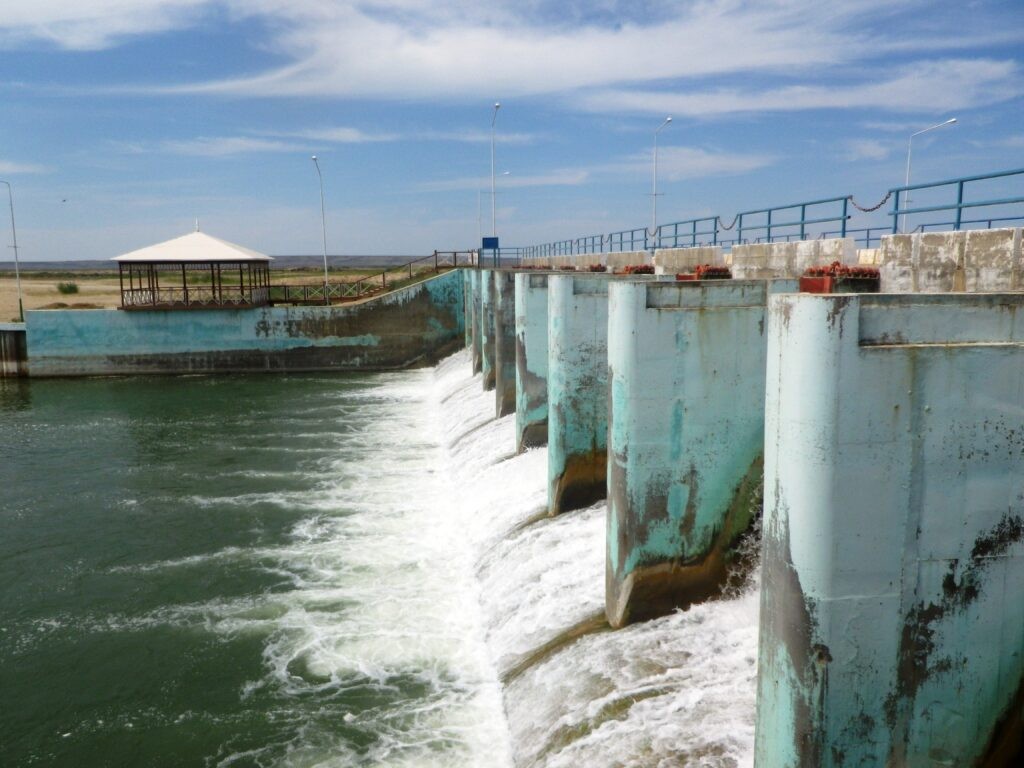
As outlined in a press release on the EDB website, in the summer of 2023, Central Asia was faced once again with water shortages, which have a significant impact on agriculture. The sector relies on irrigation, which consumes up to 80% of available water, and has a poor track record with regard to the efficient use of water resources. The irrigation infrastructure is over 50 years old. More than half of all irrigated land has become salinized, and 40% of water is lost through irrigation canals. A new Eurasian Development Bank (EDB) study entitled “Efficient Irrigation and Water Conservation in Central Asia” outlines ten practical steps for preserving irrigated land potential and promoting water conservation. The list includes four recommendations for adoption at a regional level and six at a national level. The measures are designed to save enough water each year to support sustainable development. Implementing the measures will require collaboration between governments, farmers and multilateral development institutions. The need for urgent action is intensified by the anticipated reduction in the flow of the Amu Darya River. Water deficit is a key structural constraint to socio-economic development in Central Asia. This region is among the most vulnerable to climate change, with temperatures rising at a faster rate than the global average. Periods of drought and low water are becoming more frequent, and the hydrological patterns of rivers and groundwater supplies are undergoing change. Glacier areas have been diminishing rapidly, with a 30% decrease over the last 50 years. Climate change is leading to reduced river flows at a time when the region’s demand for water is growing rapidly. The primary solution to the water deficit lies in improving irrigation practices. Agriculture in Central Asia is the largest consumer of water, with irrigation accounting for 100.4 km3 of the total 127.3 km3 (80%) of water used in the region in 2020. Historically, irrigation has played a vital role in developing agriculture and ensuring food security in the region. Central Asia boasts 10.1 million hectares of irrigated land, representing approximately 2.9% of the world’s total. This irrigated land generates nearly 66% of the region’s gross agricultural output in terms of value. However, Central Asia’s irrigation infrastructure is highly degraded and technically inadequate. It lacks the equipment needed for metering and distributing water for irrigation and controlling its use in the field. The average age of the irrigation infrastructure is over 50 years. Up to half of irrigated land is salinized. Water use in agriculture is inefficient, with 40% of water lost in the irrigation canal system. A commitment to conserving water appears to be the only solution to protecting the potential of irrigated land and food security in Central Asia. This shift in approach is imperative not only because of climate change and escalating water demand, but also to mitigate the anticipated decrease in the flow of the Amu Darya River from Afghanistan. By 2028, the combined effects of climate change, low-water periods and the commissioning of the Kosh-Tepa Canal in...

ACWA Power to Build Green Hydrogen Plant

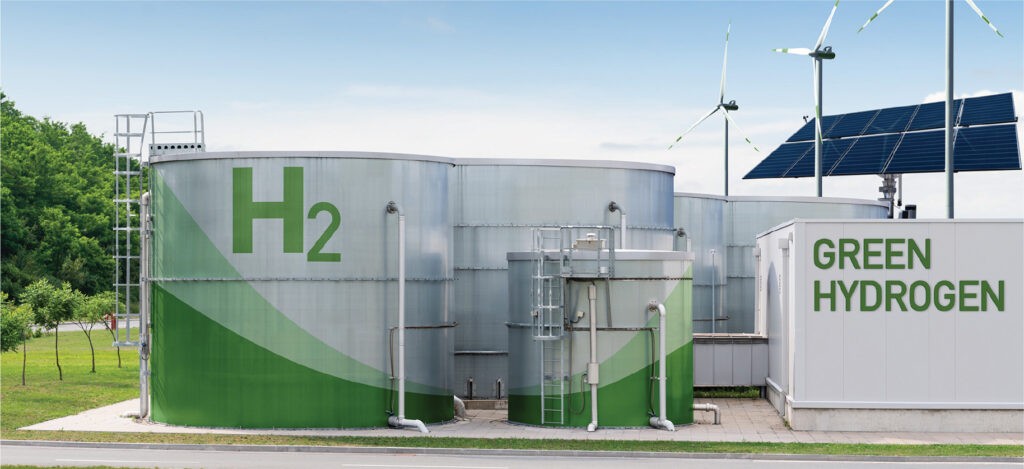
The Ministry of Investment, Industry and Trade of Uzbekistan on July 10 hosted negotiations between Minister Laziz Kudratov and Mohammad Abunayyan, Chairman of the Board of ACWA Power. The parties discussed implementation of the company’s current portfolio of projects in Uzbekistan and prospects for expansion of investment cooperation in energy and chemical industry, the Uzbek ministry said. Today the investment portfolio of the Saudi company in Uzbekistan includes 8 projects with a total cost of over 6.8 billion USD and design capacity of more than 5.5 GW. It was emphasized that the success of the company plays an important role in promoting Uzbekistan as a comfortable investment destination and a leading center for introduction of renewable energy sources in the Central Asian region. Constructive exchange of views was held on topical issues relating to implementation of current projects on construction of a combined cycle power plant in Syrdarya region with a capacity of 1.5 GW, wind power plants in Bukhara region and Republic of Karakalpakstan with a total capacity of 2.6 GW and solar power plants in Samarkand and Tashkent regions with a capacity of 1.4 GW. An agreement was reached to take a set of practical measures to ensure accelerated commissioning of the projects. A number of new initiatives were considered separately. Thus, the parties welcomed the completion of necessary procedures and reaching new agreements on the project of construction of a plant for the production of "green" hydrogen, with a capacity of 3 thousand tons per year. The start of construction works is scheduled for the fall of this year. In addition, a discussion was held on the prospects for accelerating the project of localization of equipment production for wind turbines. Each of the parties stressed that the implementation of this project in Uzbekistan will significantly expand the geography and volume of renewable energy sources and increase the availability of these technologies in the domestic market.

Kazakhstan and Uzbekistan to Bring Mutual Trade to $10 Billion

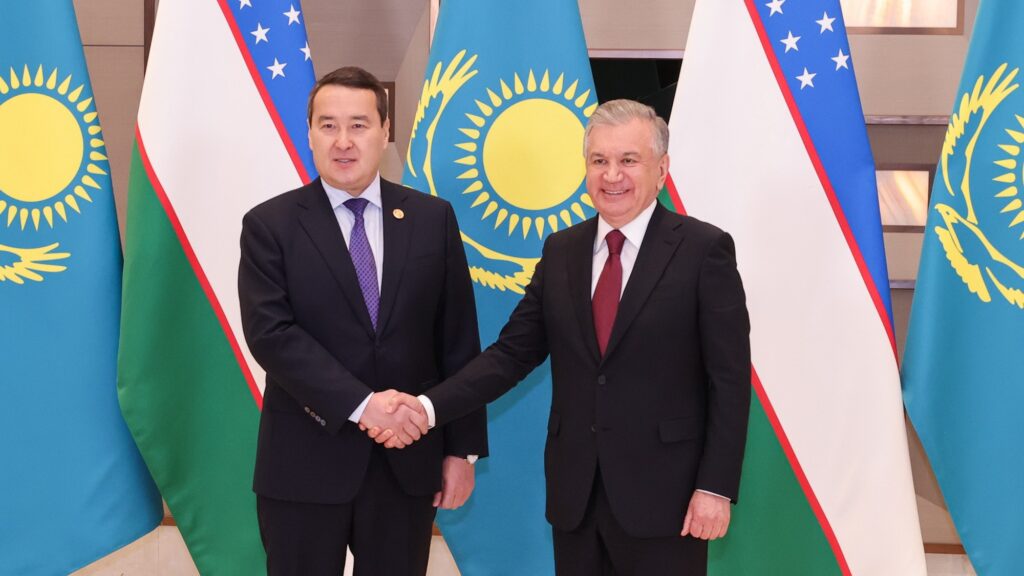
On November 9th, Alikhan Smailov, the Prime Minister of Kazakhstan, made an official visit to Tashkent, Uzbekistan, for the 16th summit of the Economic Cooperation Organization. Prior to the event, he met with the President of Uzbekistan, Shavkat Mirziyoyev. During their meeting, Smailov extended warm greetings from the President of Kazakhstan, Kassym-Jomart Tokayev, and highlighted the strong strategic partnership between the two nations, based on trust and mutual understanding3. Smailov pointed out that "Uzbekistan is one of the largest trade partners of Kazakhstan. Our countries account for about 70% of all trade in Central Asia. At the end of last year, trade turnover increased by 30%, and for the first time reached the milestone of $5 billion. We are actively working to bring mutual trade to $10 billion”. Mirziyoyev reciprocated the sentiment, noting that the strategic agreements between Kazakhstan and Uzbekistan were being systematically realized across various sectors, including trade, transportation, and water management5. He added, “All issues we have are moving forward; I think there is not a single unresolved issue. In terms of trade, the projects we have agreed on with the President of Kazakhstan will help us reach new frontiers”. In line with these discussions, Arman Shakkaliev, Kazakhstan’s Minister of Trade and Integration, and Laziz Kudratov, Uzbekistan’s Minister of Investment, Industry and Trade, signed an agreement to regulate the activities of the International Centre for Industrial Cooperation “Central Asia”7. This center, set to be established on the border of the two countries, will house production sites, warehouses for goods and equipment storage, and transport infrastructure. The aim is to expedite cargo delivery and reduce logistics costs. The Industrial Cooperation Centre is expected to stimulate the creation of new production facilities and jobs, aid in the processing of agricultural and industrial products, and provide logistics services for goods transportation. It's hoped that the centre will enhance transport efficiency and expedite customs clearance processes. The signing of this agreement is a practical step towards the realization of the project. The launch of the Industrial Cooperation Centre is poised to serve as a catalyst for the further development of international trade and economic integration between Kazakhstan and Uzbekistan. It's also projected to contribute to increasing bilateral trade turnover to up to $10 billion.

Uzbek Citizen Imprisoned for Enlisting with Russian Forces in Ukraine

According to RFE/RL's Uzbek Service, the first Uzbek national has been sentenced to prison for joining Russian forces in the conflict in Ukraine's Donetsk region between 2014 and 2015. Relatives of Ildar Khairulin informed RFE/RL on October 30th that the 38-year-old received a five-year prison sentence last week after a court found him guilty of serving as a mercenary. Khairulin's family refuted any claims of his presence in Ukraine, asserting that all accusations against him were based on erroneous information provided by the Kyiv-based NGO, Myrotvorets (Peacemaker). The NGO aims to inform local law enforcement about alleged crimes committed against Ukraine by foreign citizens.