• KGS/USD = 0.01144 0%
  • KZT/USD = 0.00216 0%
  • TJS/USD = 0.10456 0%
  • UZS/USD = 0.00008 0%
  • TMT/USD = 0.28571 0%
  • KGS/USD = 0.01144 0%
  • KZT/USD = 0.00216 0%
  • TJS/USD = 0.10456 0%
  • UZS/USD = 0.00008 0%
  • TMT/USD = 0.28571 0%
  • KGS/USD = 0.01144 0%
  • KZT/USD = 0.00216 0%
  • TJS/USD = 0.10456 0%
  • UZS/USD = 0.00008 0%
  • TMT/USD = 0.28571 0%
  • KGS/USD = 0.01144 0%
  • KZT/USD = 0.00216 0%
  • TJS/USD = 0.10456 0%
  • UZS/USD = 0.00008 0%
  • TMT/USD = 0.28571 0%
  • KGS/USD = 0.01144 0%
  • KZT/USD = 0.00216 0%
  • TJS/USD = 0.10456 0%
  • UZS/USD = 0.00008 0%
  • TMT/USD = 0.28571 0%
  • KGS/USD = 0.01144 0%
  • KZT/USD = 0.00216 0%
  • TJS/USD = 0.10456 0%
  • UZS/USD = 0.00008 0%
  • TMT/USD = 0.28571 0%
  • KGS/USD = 0.01144 0%
  • KZT/USD = 0.00216 0%
  • TJS/USD = 0.10456 0%
  • UZS/USD = 0.00008 0%
  • TMT/USD = 0.28571 0%
  • KGS/USD = 0.01144 0%
  • KZT/USD = 0.00216 0%
  • TJS/USD = 0.10456 0%
  • UZS/USD = 0.00008 0%
  • TMT/USD = 0.28571 0%

Viewing results 643 - 648 of 977

Perfectum, Nokia to Launch 5G Network in Uzbekistan

Last month a two-year deal to supply, install, and operate 5G standalone (SA) network equipment in Uzbekistan was agreed between Rubicon Wireless (a Perfectum trademark), Nokia and the Uzbek Ministry of Digital Development. The €100m ($110m) agreement was signed at the Mobile World Congress 2024 exposition in Barcelona, Spain. Under this agreement, radio access network (RAN) subsystems and core 5G SA hardware will be delivered and installed at the same time. In order to facilitate product management and billing for the 5G SA network, equipment from the Finnish provider Qvantel will be delivered, installed, and put into service concurrently with the delivery of Nokia equipment. The joint effort by Perfectum and Nokia is being funded by Western banks, with additional support from Uzbek lender Sanoatkurilishbank.

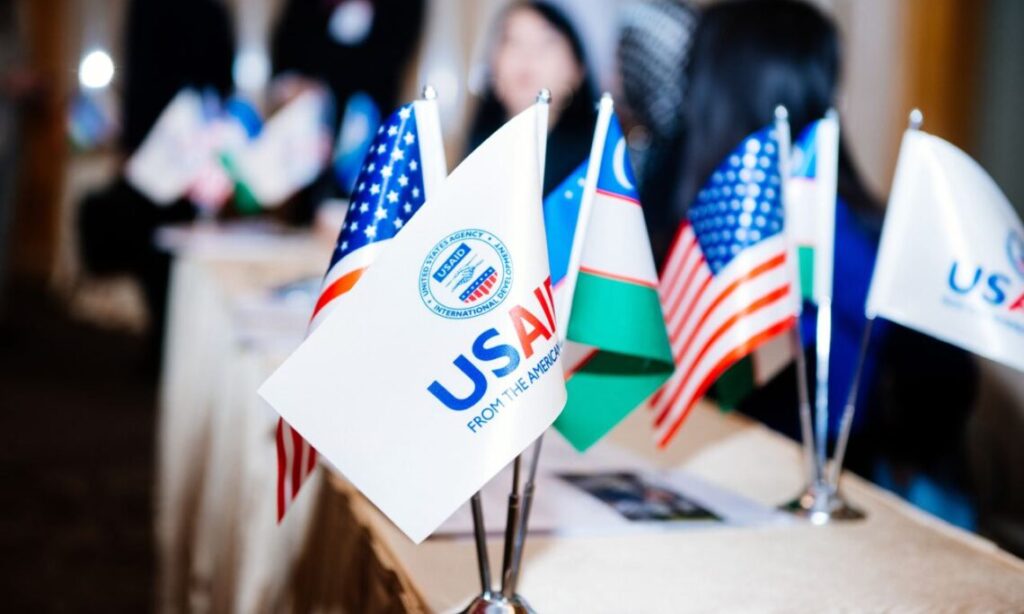
USAID Launches New Project to Support Businesses in Uzbekistan

The U.S. Agency for International Development (USAID) has announced an investment of $17.7 million in a five-year Business Support Project in Uzbekistan. The project aims to enhance competitiveness in small and medium enterprises across four key sectors: information and communications technology (ICT), tourism, textiles, and the green economy. Created in partnership with the government of Uzbekistan and the private sector, the project’s two primary goals are to break down barriers affecting growth and increase investment in the private sector. By focusing on these objectives, the project seeks to create a more enabling environment for business expansion and innovation, thereby contributing to the overall economic prosperity of Uzbekistan. Speaking at the launch on March 5th, USAID Mission Director to Uzbekistan David Hoffman declared, “Today, we embark on a transformative journey with the Business Support Project. This initiative represents a pivotal moment in our shared pursuit of a prosperous, inclusive, and sustainable future for Uzbekistan. By addressing critical barriers to growth and leveraging the dynamism of the private sector, we aim to unlock new opportunities for businesses, especially those led by women and youth. Our collective efforts through our Business Support Project will pave the way for a more resilient and competitive economy, benefiting not just Uzbekistan but the entire region.”

Global Environment Facility to Aid Ecosystem Restoration in Central Asian Countries

The Global Environment Facility (GEF) Trust Fund will provide almost $5.4m to Tajikistan, Turkmenistan and Uzbekistan to support their efforts to strengthen integrated water resources management in the Amu Darya, Zarafshan and Panj river basins. This funding is part of the Central Asia Water-Land Linkages (CAWLN) program, implemented by the United Nations (UN) Food and Agriculture Organization (FAO) and supported by the GEF Trust Fund. Under this initiative, GEF will provide financing for projects totaling over $26m across Central Asia. The project will run until August 2025. The financing will be used to restore 5,350 hectares of land and ecosystems, and also to introduce improved cultivation practices on 1.3 million hectares of land. It also aims to reduce greenhouse gas emissions by over 11 million tons, and improve co-management of shared ecosystems. The program is projected to improve the lives of 487,000 people. Central Asia's complex river systems are the main sources of water for the region's 60 million people, agriculture, and energy production. They also support diverse ecosystems and livelihoods in these countries. However, unsustainable water use and soil degradation have led to water scarcity and upset the ecological balance of the region. The program aimed at addressing these negative impacts consists of seven projects, including individual projects in Kazakhstan, Kyrgyzstan, Turkmenistan and Uzbekistan. They aim to improve agriculture and natural resource management by addressing issues such as tree felling, land degradation and loss of biodiversity. In addition, there is a regional project to coordinate efforts and share knowledge across basins. Although there is no separate program for Tajikistan, the country will be involved in projects on ecosystem restoration and sustainable agriculture. The Central Asia Water and Land Resources Complex Program, recently approved by the GEF council and overseen by FAO, will provide $26m (with co-financing from the World Bank of $335.5m) to restore the ecosystems of the Amu Darya and Syr Darya river basins. It will also aim to improve water security, resilience and livelihoods of rural communities in Kazakhstan, Kyrgyzstan, Tajikistan, Turkmenistan and Uzbekistan. Since 1994 Uzbekistan has participated in the implementation of more than 50 GEF projects at the national, regional and international level.

Cenomi Retail Expands its Presence in Tashkent

The largest shopping and entertainment complex in Uzbekistan, Tashkent City Mall, has partially opened. While the official opening is scheduled for later in the first quarter of 2024, part of the retail premises is already open to shoppers. Saudi-based Fawaz Alhokair Group, a retail-development company that operates under the Cenomi Retail brand in Uzbekistan and elsewhere, is already 11th in the world by revenue. Their entry onto the Uzbek market signifies that Uzbekistan has become an attractive enough retail center to bring in the world's fashion giants, including Inditex-owned brands Zara, Massimo Dutti, Oysho, Bershka, Stradivarius, and Pull&Bear. Tashkent City Mall will house an entertainment complex called Sky Park, which will include extreme sports, a virtual-reality zone, a children's science complex and playground. Given the increasing demand for global brands in Uzbekistan, the entry of Inditex brands to the market may create a platform for future foreign investments in the country's retail trade. According to the INFOLine consulting agency, Uzbekistan, Kyrgyzstan and Tajikistan are becoming increasingly attractive for global retailers. The main reason for this is the robust population growth rates found in the region. In addition, the population's income on a nationwide scale continues to increase, which, in turn, encourages consumers to spend more money. Urbanization holds another reason for the popularity of retail in Central Asia, as the population is increasingly more willing to shop online and in shopping malls.

UNDP Gives Boost to Fish Farming in Uzbekistan

The European Union delegation to Uzbekistan, along with the United Nations Development Program (UNDP), has delivered equipment to Uzbekistan's Scientific Research Institute of Fish Farming to support more sustainable fish-farming methods. The new equipment will help to save water and improve water quality. Wim Riepma, head of cooperation for the EU delegation to Uzbekistan, commented "healthy fish means healthy food and healthy people. Filters also help to improve the environment, as the fish farm will emit fewer pollutants. In addition, the use of solar water heaters, which will greatly improve fish growth in the early stages of development, contribute to energy savings." Uzbekistan, with its fish consumption of 3.5-4 kg per person per year, is far below the World Health Organization's (WHO) recommended norm of 16 kg. The reason for this is the country's lack of access to the sea -- and its outdated, river-based fish-farming methods. However, the country is trying to remedy the situation. This year, as part of a program called Every Family is an Entrepreneur, Uzbek entrepreneurs can access unsecured loans of up to $4,000 for fish-farming projects. The equipment donated by the EU -- under its Innovation in Agriculture (EU-AGRIN) project -- will contribute to the development of scientific research, and improve the work of the Fisheries Research Institute and the affiliated vocational school in Fergana province. In addition to the practical benefits of an increase in fish production, the project will also contribute to creating jobs in rural areas. The project, amounting to €4.15m ($4.5m), is financed by the EU and will last for four years. EU-AGRIN is a UNDP project aimed at promoting innovative solutions and cooperation in agriculture. So far the project has established partnerships with 18 different innovation groups. At the end of 2023, Uzbekistan had 5,775 fish farms where 24 species of fish are cultivated for human consumption. Last year the aquaculture industry supported 2,500 jobs in the country.

Kyrgyzstan Resumes Construction Work on Pakistan Electricity Export Project

As the process of normalizing relations continues between Kyrgyzstan and Tajikistan, representatives of both sides have met in Bishkek to discuss the CASA-1000 (Central Asia-South Asia) power export project. According to Kyrgyzstan's Ministry of Energy, Kyrgyzstan has signed a joint declaration with Pakistan and Tajikistan to resume construction of high-voltage transmission lines in Kyrgyzstan, Tajikistan, Afghanistan and Pakistan, to export electricity to Pakistan. It is reported that construction work on the CASA-1000 project has been resumed in Afghanistan, where it was frozen after the Taliban came to power in 2021.  "This declaration thanks the World Bank for its prompt approval of the resumption of construction work on the CASA-1000 project in Afghanistan. It also reaffirms its readiness to fully support the implementation of the preconditions agreed with the World Bank Board for the resumption of construction in [Afghanistan]. This is a serious step forward in the region's desire for energy cooperation", said the Kyrgyz Ministry of Energy's press service. "Tajikistan is expected to supply 70 percent of the CASA-1000 project [electricity], and Kyrgyzstan the remaining 30 percent. [They'll supply] a total of 1,000-1,300 MW of electricity per year," Elzada Sargashkayeva, head of the public relations department of NENK (National Electricity Networks of Kyrgyzstan), told the Times of Central Asia. In Afghanistan, construction of the power lines was 60% complete, the agency said. Late last year, the World Bank allocated an additional $18.3m for Kyrgyzstan under CASA-1000 -- on top of the $216m previously allocated for the project. "For the Kyrgyz Republic, the CASA-1000 project provides for the construction of A/C power transmission lines (500 kV), with a length of about 456 kilometers. Currently, the project implementation is proceeding at an active pace: 1,243 [transmission towers] have already been installed (100 percent), work on suspension of wires on 287 kilometers of power lines has been completed (63 percent)," said World Bank Senior Energy Specialist Dmitry Glazkov. Work on the project was suspended when the Taliban came to power in Afghanistan -- and also due to the armed border conflict between Kyrgyzstan and Tajikistan, the international institute said. But the scope of work remains the same. The World Bank is allocating the additional support to bridge the funding gap caused by rising prices for goods and transportation after the Covid-19 pandemic and its ensuing broad economic crisis. The money will be given to Kyrgyzstan in the form of an interest-free loan for 50 years, with a 10-year grace period. The project's target completion time is March 2025. According to the World Bank, Central Asia has many renewable energy sources, and is strategically positioned to develop regional trade in electricity, the exchange of which is still limited. "In Kyrgyzstan and Tajikistan, hydropower plants generate more than 80-90 percent of electricity, but these countries use less than five percent of their hydropower potential, which is several times the combined demand of the entire region. At the same time, 90 percent of the energy needs of Uzbekistan, Turkmenistan and Kazakhstan are met by fossil fuels,...