• KGS/USD = 0.01144 0%
  • KZT/USD = 0.00208 0%
  • TJS/USD = 0.10458 -0.1%
  • UZS/USD = 0.00008 0%
  • TMT/USD = 0.28490 0%
  • KGS/USD = 0.01144 0%
  • KZT/USD = 0.00208 0%
  • TJS/USD = 0.10458 -0.1%
  • UZS/USD = 0.00008 0%
  • TMT/USD = 0.28490 0%
  • KGS/USD = 0.01144 0%
  • KZT/USD = 0.00208 0%
  • TJS/USD = 0.10458 -0.1%
  • UZS/USD = 0.00008 0%
  • TMT/USD = 0.28490 0%
  • KGS/USD = 0.01144 0%
  • KZT/USD = 0.00208 0%
  • TJS/USD = 0.10458 -0.1%
  • UZS/USD = 0.00008 0%
  • TMT/USD = 0.28490 0%
  • KGS/USD = 0.01144 0%
  • KZT/USD = 0.00208 0%
  • TJS/USD = 0.10458 -0.1%
  • UZS/USD = 0.00008 0%
  • TMT/USD = 0.28490 0%
  • KGS/USD = 0.01144 0%
  • KZT/USD = 0.00208 0%
  • TJS/USD = 0.10458 -0.1%
  • UZS/USD = 0.00008 0%
  • TMT/USD = 0.28490 0%
  • KGS/USD = 0.01144 0%
  • KZT/USD = 0.00208 0%
  • TJS/USD = 0.10458 -0.1%
  • UZS/USD = 0.00008 0%
  • TMT/USD = 0.28490 0%
  • KGS/USD = 0.01144 0%
  • KZT/USD = 0.00208 0%
  • TJS/USD = 0.10458 -0.1%
  • UZS/USD = 0.00008 0%
  • TMT/USD = 0.28490 0%

Viewing results 673 - 678 of 941

Uzbekistan, AIIB Sign Three-Year Investment Program

As part of his state visit to China, on January 24th Uzbekistan president Shavkat Mirziyoyev visited the headquarters of the Asian Infrastructure Investment Bank (AIIB) in Beijing and held talks with the bank's president, Jin Liqun. The sides announced that cooperation between Uzbekistan and AIIB has reached unprecedented levels in recent years, with the portfolio of joint projects exceeding $3 billion. In 2023 alone the bank’s investments in Uzbek projects reached $1 billion, financing energy, water supply, reconstruction of roads and railway, and business development. Mr Mirziyoyev advocated increasing financing for projects involving strategic raw materials, and the implementation of socially important programs on the principles of public-private partnership, his press service reported. During the meeting, Mr Liqun reaffirmed his bank’s strategic commitment to supporting Uzbekistan's sustainable growth. The two leaders signed a three-year investment program, with the goal of further supporting Uzbekistan’s development in multiple sectors across the country, AIIB said.  In 2023, AIIB announced that it would hold its 2024 Annual Meeting in Samarkand, Uzbekistan, on September 25th-26th, marking the first time AIIB would hold its flagship event in Central Asia.  AIIB is a multilateral development bank which began operations in Beijing in January 2016 and has since grown to 109 approved members worldwide.

“At a Crossroads” – Atlantic Council Addresses Rare Earth Elements in Central Asia

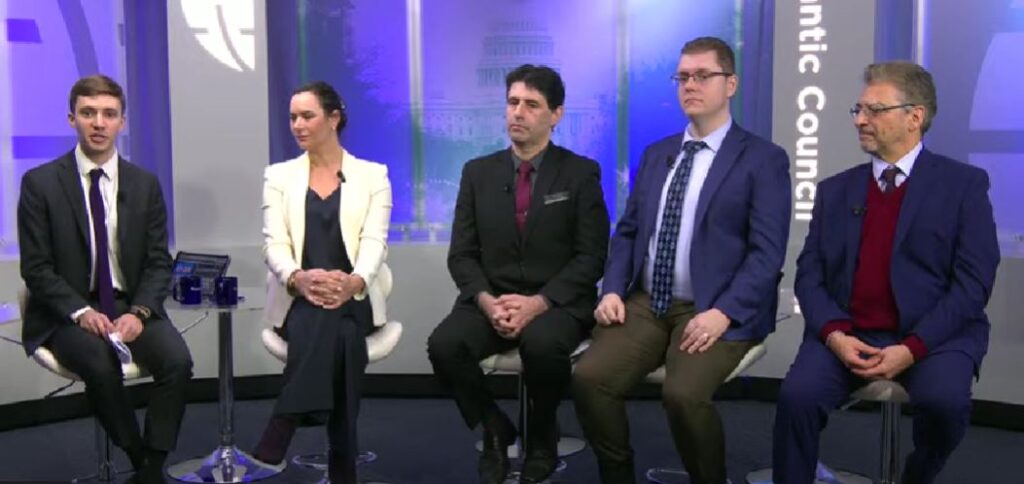
On January 23rd, the Atlantic Council’s Eurasia Center and the International Tax and Investment Center gathered together the authors of the report, “Leveraging Central Asia’s Rare Earth Elements for Economic Growth.” The report highlights the potential of Central Asia, which has remained underappreciated in terms of its rare earth elements (REE) resources, despite its increasing geopolitical significance. China currently dominates the global mining and refining of REEs, giving it a near-monopoly status. The report argues that this scenario calls for an urgent need to diversify global supply chains and suggests that Western investment could play a pivotal role in exploring and mining Central Asia's REEs, thereby contributing to the diversification of supply chains. Furthermore, such investment could have far-reaching implications for the region itself, bolstering regional integration and sovereignty, spurring economic growth, and enhancing economic freedom throughout Central Asia. Opening the discussion, Ariel Cohen, a Nonresident Senior Fellow at the Eurasia Center of the Atlantic Council, highlighted the critical geopolitical location of Central Asia, stating that REEs “may be the next big thing in Central Asia at the engine of economic growth.” Cohen praised the “visionary multi-vector policy pioneered” in Kazakhstan by President Tokayev, and characterized Kazakhstan’s relationship with Russia as “very fraught,” and defined by “multi-generational trauma. Nuclear energy is zero emission energy,” he said, but for the U.S. to capitalize on opportunities for mining REEs in Kazakhstan, “we need to do more and better.” The President of Second Floor Strategies, a public policy consulting company, Wilder Alejandro Sánchez emphasized that Kazakhstan and Uzbekistan are the most “forward-looking” nations in Central Asia in regard to REEs, whilst mining in Kyrgyzstan remains stuck in a “legal limbo,” and Tajikistan currently lacks the necessary critical infrastructure. Nether the less, he stated, REEs could become a driving factor behind regional “cooperation and integration.” Wesley Hill, an International Program Manager at the Energy, Growth, and Security Program of the International Tax and Investment Center, spoke about the international relations components of REEs. “In the same way we competed and continued to compete for other energy resources, most especially crude oil, we will be competing for REEs,” he stated. “It's happening already, this geopolitical clash [which is] primarily driven by competition between the United States and China. After the publication of this report, Beijing cut off all exports of rare earth element refining technologies to the United States. Central Asia is very much at a crossroads,” he stated. Addressing this geopolitical conflict with China over REEs, Ambassador John Herbst, a Senior Director at the Eurasia Center of the Atlantic Council, stated that Central Asia is a “critical region… rich in rare earth minerals [whilst] China is our principal adversary. They are not a friend of the United States.” Finally, Suriya Evans-Pritchard Jayanti, a Nonresident Senior Fellow at the Eurasia Center of the Atlantic Council, characterized REEs as an “extremely important development opportunity” for Central Asia, particularly given “geostrategic energy realignment after the Russian invasion of Ukraine. I think it's a geostrategic realignment opportunity for...

Uzbekistan’s energy production figures have fallen

According to the Agency of Industrial Production Statistics, Uzbekistan's gas production fell by 9.6% (4.97 billion cubic meters) last year compared to 2022, amounting to 46.7 billion cubic meters. Thus, the average monthly gas production is 3.89 billion cubic meters, while in 2022, 4.3 billion cubic meters of gas was produced per month. In December, however, production has already increased to 3.95 billion cubic meters. This was the highest since April. However, it could not even come close to the figure for December 2022 - 4.35 billion cubic meters, which is up by 9% (395.1 million cubic meters). However, thanks to gas supplies from Russia and Turkmenistan, the shortfall was bridged. In 2023, however, electricity production increased significantly - from 73.7 billion to 76.9 billion kWh, i.e. by 3.19 billion kWh (4.3%). In December alone, 7.27 billion kWh were generated. If we start counting from May, this is the limit. And this is despite the above-mentioned troubles with gas production, because about 80-85% of electricity in Uzbekistan is produced by thermal power plants, and they in turn operate on gas. However, their share in the country is decreasing due to the introduction of new capacities of photovoltaic power plants. Also, coal production exceeded its previous figures - up to 6.19 million tons (15.5%). In December, for example, 456.7 thousand tons of coal were produced, and from July to November the figure did not fall below 600 tons. And again to the bad: from 787.8 thousand to 770.1 thousand tons (-2.3%, or by 17.7 thousand tons) the oil production index decreased. And this decline was observed for the fifth month in a row - from 64.7 thousand tons in July to 60.8 thousand in December. This is the lowest figure for the last couple of years! Nevertheless, Uzbekistan produced 75.4 thousand tons (6%) more motor gasoline in 2023 than in 2022. Diesel fuel output also increased by 212.4 thousand tons (26.6%) to 1.01 million tons. At the same time, the indicator of heat energy production decreased from 26.5 to 24.4 million Gcal (by 8.1%), and gas condensate production decreased from 1.29 to 1.2 million tons (by 6.9%). Nevertheless, no matter what problems in the energy sector put sticks in the wheels, according to the Agency of Statistics Uzbekistan managed to achieve a 6% growth in industrial production

Forum Of Uzbek Regions And Chinese Provinces Held In Xinjiang

On January 22nd the first Uzbek-Chinese interregional forum was held in the city of Urumqi, in China’s Xinjiang Uyghur Autonomous Region. The forum was attended by heads of key ministries, industry associations, chambers of commerce and industry, companies and more than 1,200 representatives of the business communities of the two countries. The Uzbek delegation at the forum was headed by deputy prime minister Jamshid Khojaev. The Chinese delegation was led by Ma Xingrui, secretary of the Party Committee of the Xinjiang Uygur Autonomous Region. In their welcoming speeches, the heads of both delegations stated that Uzbek-Chinese relations have entered a qualitatively new stage, which became possible thanks to the far-sighted policies of the heads of the two states, the Uzbek Ministry of Investment, Industry and Trade reported. The officials emphasized the positive dynamics of trade and investment partnership, with bilateral trade turnover having doubled and exceeding $14 billion over the past six years. It was noted that all the necessary capabilities are available to increase this indicator up to $20 billion in the coming years. The volume of utilized Chinese investments in Uzbekistan amounted to almost $15 billion. More than 2,000 enterprises with the participation of Chinese capital operate in Uzbekistan. In 2023 more than 60 projects worth almost $2 billion were successfully launched with the participation of Chinese companies, which are becoming leading partners in modernizing the country's industrial sector. Mr Khojaev and Mr Xingrui outlined the further steps to increase cooperation between the two countries, including through direct interaction between regions, emphasizing the importance of regularly holding exhibitions of the industrial and agricultural potential of the regions of Uzbekistan and the provinces of China. The heads of delegations called on business leaders to step up efforts to create high-tech industries based on the competitive advantages of the economies of the two countries, develop industrial cooperation to produce in-demand products and jointly develop new markets, as well as increase the volume of mutual trade. As a result of the forum, 27 documents were signed on the establishment of economic, trade and cultural ties between the regions of Uzbekistan and the provinces of China. In addition, a solid package of 30 agreements and contracts was signed between the business communities of the two countries.

Uzbek President Mirziyoyev Lauds Strategic Partnership with China

The president of Uzbekistan Shavkat Mirziyoyev will make a state visit to China from January 23rd to 25th, at the invitation of the Chinese president, Xi Jinping. On the eve of the visit, the Chinese People's Daily Online published an article by Mirziyoyev, entitled “Uzbekistan and China: millennia-long friendship and cooperation,” in which the Uzbek leader says that Uzbekistan is a friendly neighbor and committed strategic partner to China, and that the development of multifaceted relations with China has always been one of the main priorities of Uzbekistan's foreign policy. Mirziyoyev wrote that Uzbek-Chinese relations are experiencing the best period in their history, with trade, economic and investment cooperation steadily growing. Last year bilateral trade turnover grew by 40 per cent, Mirziyoyev wrote, with China being Uzbekistan’s “top trade partner”. In recent years the volume of Chinese investments in Uzbekistan has increased five-fold, and the number of enterprises with Chinese capital in various sectors of the economy has tripled. A number of large joint investment projects are underway, spanning sectors including technology, alternative energy, chemicals, mechanical engineering, metallurgy, electrical engineering and infrastructure modernization. Mirziyoyev added that “thanks to our Chinese partners, we are taking important steps in developing green energy to create 27 gigawatts of renewable energy generation capacity by 2030”. Mirziyoyev emphasized that Uzbekistan is actively involved in implementing China's Belt and Road Initiative (BRI), which has become a global consolidating force. “In 10 years, this grandiose idea of the revival of the Great Silk Road has gained supporters in all corners of the planet, uniting two-thirds of the world's countries. Today, from an appealing concept, it is turning into a practical reality. For us, the BRI is not just an infrastructure project. Through the joint implementation of the initiative, the region is becoming an important link in global connectivity, overcoming transport remoteness.” “Today, we can firmly state that the earlier voiced predictions of skeptics about the predestined fate of the region's countries to become only a transit corridor for China's trade with Europe, South Asia and the Middle East failed to come true,” Mirziyoyev stressed. “Today, investments are increasing in Central Asia, with the number of joint high-technology industries growing, enhancing the economic potential of our countries. China's strategic role enables Central Asia to be open to broad cooperation with the rest of the world, turning the region's geographical disadvantages into advantages.” The Uzbek president also said that the first summit between the heads of state of the Central Asian countries and China, held in May 2023 in Xi'an, was a breakthrough in their relations and set out the future development of multilateral cooperation. “This format has huge potential for building a model of comprehensive development of the states of the region and the western provinces of China, opens the prospects for the transition to close industrial and technological cooperation, as well as the development of transport, digital and humanitarian connectivity of the Central Asian countries with China,” Mirziyoyev said.

Uzbekistan Aims to Attract More Foreign Investment, Increase Exports

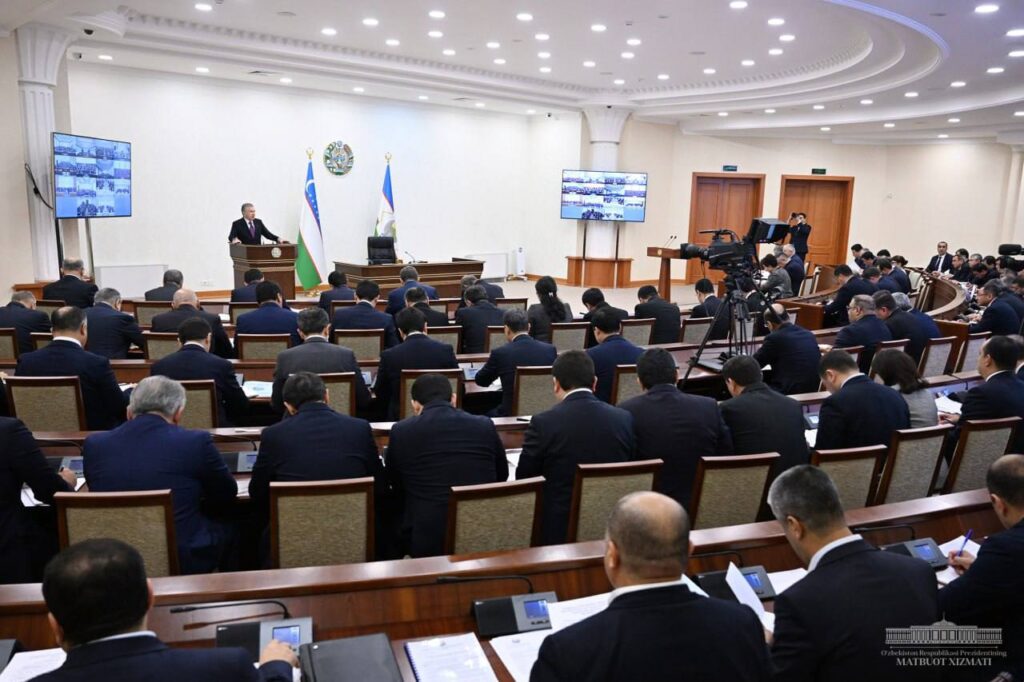
On January 18th, President Shavkat Mirziyoyev chaired a government meeting on priority tasks in the field of investment, export and industry for 2024, his press service has reported. It was stated at the meeting that the Uzbekistan 2030 strategy has set a goal of bringing the country's GDP to $160 billion and per capita income to $4,000 a year, which cannot be achieved solely through the domestic market; meaning there is a need to attract more foreign investment and increase exports. Over the past six years, the country has received almost $50 billion in foreign investment, with the economy growing by 6% last year. However, exports did not increase. It was stated that although Uzbekistan has enjoyed the EU’s GSP+ trade preference system and has the opportunity to export 6,200 types of goods to Europe duty-free, only 384 types of goods were exported under this system last year. To take the economy to a new level would require exports to be increased by at least 30% annually. A total of $200 million has been allocated for export lending, but that has not always translated into the production of value-added products and exports. From now on, subsidies and loans will be provided primarily to exporters entering new markets with products with high added value. Another issue discussed at the meeting was industrial production. Over the past six years, the volume of investments attracted to industry has increased seven-fold, with equipment worth $14 billion being imported over the past three years. Uzbekistan has created 24 special economic zones (SEZs), where land is allocated in a simplified manner and tax benefits are provided by the state. However, these opportunities are not being fully utilized. For instance, 800 hectares of land with ready-made infrastructure is still empty in the SEZs. Therefore, it was decided that 240 hectares of land in SEZs in the Bukhara, Navoi, and Tashkent regions will be outsourced to foreign companies.