• KGS/USD = 0.01144 0%
  • KZT/USD = 0.00209 0%
  • TJS/USD = 0.10438 0%
  • UZS/USD = 0.00008 0%
  • TMT/USD = 0.28490 0%
  • KGS/USD = 0.01144 0%
  • KZT/USD = 0.00209 0%
  • TJS/USD = 0.10438 0%
  • UZS/USD = 0.00008 0%
  • TMT/USD = 0.28490 0%
  • KGS/USD = 0.01144 0%
  • KZT/USD = 0.00209 0%
  • TJS/USD = 0.10438 0%
  • UZS/USD = 0.00008 0%
  • TMT/USD = 0.28490 0%
  • KGS/USD = 0.01144 0%
  • KZT/USD = 0.00209 0%
  • TJS/USD = 0.10438 0%
  • UZS/USD = 0.00008 0%
  • TMT/USD = 0.28490 0%
  • KGS/USD = 0.01144 0%
  • KZT/USD = 0.00209 0%
  • TJS/USD = 0.10438 0%
  • UZS/USD = 0.00008 0%
  • TMT/USD = 0.28490 0%
  • KGS/USD = 0.01144 0%
  • KZT/USD = 0.00209 0%
  • TJS/USD = 0.10438 0%
  • UZS/USD = 0.00008 0%
  • TMT/USD = 0.28490 0%
  • KGS/USD = 0.01144 0%
  • KZT/USD = 0.00209 0%
  • TJS/USD = 0.10438 0%
  • UZS/USD = 0.00008 0%
  • TMT/USD = 0.28490 0%
  • KGS/USD = 0.01144 0%
  • KZT/USD = 0.00209 0%
  • TJS/USD = 0.10438 0%
  • UZS/USD = 0.00008 0%
  • TMT/USD = 0.28490 0%

Viewing results 475 - 480 of 968

Eurasian Connectivity Comes One Step Closer at the 2024 CAMCA Forum in Bishkek

The wider Eurasia region took another step towards cooperation and connectivity last week, as the 10th annual CAMCA Regional Forum was held in Bishkek. CAMCA – standing for Central Asia, Mongolia, the Caucasus and Afghanistan – is an initiative to accelerate dialogue between governments, private enterprises and media figures from these ten nations. Organized by the Washington, D.C.-based Central Asia-Caucasus Institute and the Rumsfeld Foundation, this year’s Forum – the first such event to take place in Kyrgyzstan – featured over 300 delegates across its two days, and presented insights from over 70 speakers. Attendees came from 25 countries in total. Professor Frederick Starr, the Central Asia-Caucasus Institute’s chairman, used his opening address to call on the countries of the region to start preparing for a future within a cohesive international bloc. Dr Starr reasoned that Russia and China, imperial powers that have traditionally had a controlling presence in Central Asia, may see their global influence wane in the coming decade. This would give the countries of Central Asia, and their neighbors, more space to create projects that serve their economies directly. A leading CAMCA regional project is the ‘Middle Corridor’ trade route, which bypasses Russia to transport goods more efficiently between Europe and China. Discussions are also taking place concerning the creation of single business and tourist visas for the whole Central Asia region. The importance of collaboration between countries in the Caucasus and Central Asia to mitigate the impact of climate change has never been so great. Addresses by senior members of the Kyrgyz government highlighted the progress that Kyrgyzstan has made since the administration of president Sadyr Japarov began its work in 2021. The country’s deputy prime minister Edil Baisalov reported that Kyrgyzstan is on track to double its GDP to $30 billion by 2030, while the minister for digital development, Nuria Kutnaeva, spoke about the rapid digitalization of the country’s government services.  In a noticeably warm and collaborative atmosphere, the event nonetheless highlighted the barriers that prevent the ten countries from forming a tangible ‘CAMCA’ space in the present. A key goal is the harmonization of their legislation and policy directions; however, no delegates from Tajikistan could travel to Bishkek for the Forum, as otherwise solid relations between Tajikistan and Kyrgyzstan are still strained by a dispute over their common border. Likewise, Armenian voices were also absent this time, in light of several of the sessions featuring Azerbaijani speakers and talking points. The event featured only one guest from Turkmenistan.  Even in these conflicts, however, Central Asian diplomacy is at work. The conflict on the Kyrgyz-Tajik border, mainly in Tajikistan’s Vorukh district, is being resolved through negotiations between the two countries’ governments, which would have been unthinkable even five years ago. Meanwhile, Kazakhstan is acting as a mediator between Baku and Yerevan in the aftermath of the war in Nagorno-Karabakh. Other topics on the agenda included security priorities for Central Asia, digital innovation in business, cooperation with Afghanistan, transitions in global energy markets, and infrastructure projects...

World Bank: Uzbekistan Must Tackle Gender Inequality

The World Bank Uzbekistan has published a new “Country Gender Assessment Report: Uzbekistan” on gender assessment in the country. This report (CGA) was produced with financial support from Great Britain. This report examines gender equality in Uzbekistan in various areas such as education, health, economic activity, protection from gender-based violence, marriage, divorce, and participation in public life. CGA examines social norms, assessing cultural attitudes and practices that affect women’s rights and understandings in Uzbek society. The report makes recommendations to close the gender gap and promote inclusive prosperity. CGA notes that since 2017, significant progress has been made in terms of gender equality in Uzbekistan. Notable achievements include the 2022 Labor Code, which provides for equal pay for women and removes job restrictions. In addition, 2023 amendments to the Criminal Code criminalize domestic violence. Consequently, the “Women, business and Rights” index released annually by the World Bank recognized Uzbekistan as one of the top five countries in terms of gender equality in 2024. Women’s access to education and health services has improved significantly. For example, during the period 2017-2022, the number of admissions to higher education institutions increased significantly, the number of men increased by three times to 29%, and the number of women increased by four times – to 27.4%. Young women face higher unemployment rates than males (15.5% vs 10%), and the share of young women who were not in employment, education, or training (NEET) has reached 42%, compared to 8.8% for males. In addition, the gender pay gap is significant, with women earning 34% less than men, which is more than the global average of 20%. Women’s low wages and employment rates directly hinder economic growth and exacerbate poverty in Uzbekistan. If women participated in the country’s economy on an equal basis with men, the national income in Uzbekistan would increase by 29%. Simply equalizing men’s and women's wages would lift more than 700,000 people out of poverty. However, gender norms, which place women primarily in charge of caregiving and household tasks, hinder progress towards gender equality and inclusive economic growth. The report states that the authorities must address gender inequality to realize Uzbekistan’s full economic potential. These include entrenched social norms that limit women’s economic participation, disparities in access to higher education in STEM fields, health care limitations, deteriorating family planning options, incomplete protection from gender-based violence, and the disparity of women in leadership roles.

Decrease in Uzbek Labor Migrants to Russia Forecast to Continue

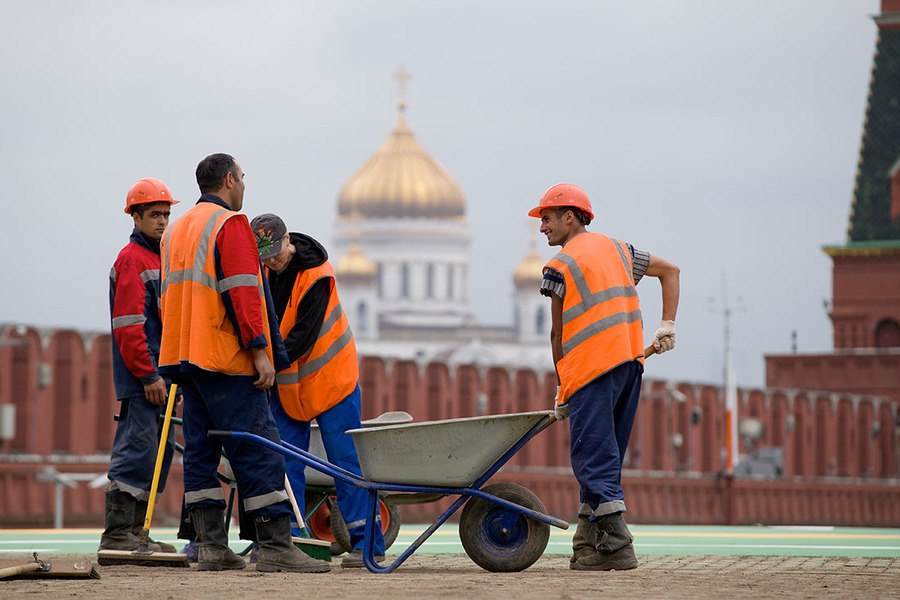
Alisher Ruziyev, head of the Department of the Foreign Labor Migration Agency of Uzbekistan, has stated that the flow of labor migrants from Uzbekistan to Russia may continue to decrease, noting that the construction industry is actively developing in Uzbekistan, and wages in some facilities can compete with those in Russia. “Today, there is a sharp growth in the construction industry in Uzbekistan, and naturally, our wages have become equal to those of some facilities in Russia. Therefore, in this situation, a decreasing trend in the flow of our citizens leaving for Russia can be observed,” said Ruziyev. According to Ruziev, at some large construction sites in Uzbekistan, construction workers earn around $500-600 a month. “Accordingly, it is no longer profitable to go to the Russian Federation for such a salary,” he added. The head of the Department of Foreign Labor Migration of Uzbekistan also noted that in the last two years, the agency has significantly expanded the geography of employment of citizens abroad, especially due to the demand for labor in Europe.

China to Invest $1 Billion in Andijan Province of Uzbekistan

China will invest $1 billion in the Andijan region of Uzbekistan to create an enterprise processing the hides and organs of domestic animals. It is reported that the Uzbek delegation, led by the khokim (head) of the Andijan region, visited China, where they familiarized themselves with the activities of Kaifeng Shengmeishun Leather Products company in Kaifeng City, Henan province. During the visit, the Uzbek delegation held talks with representatives of China's public and private sectors. The khokim of the Andijan region and the Chairman of the Veterinary Committee of Uzbekistan participated in the discussion. The main topic of the talks was investment in the hide and organ processing project and the establishment of contacts with leading Chinese institutions in veterinary medicine, cattle breeding, poultry farming, and fishing. They also discussed cooperation in scientific research and the training of Uzbek specialists. Following the meeting, the Chinese side fully supported investment projects and scientific research in Uzbekistan. A new project worth $1 billion will be developed in the Andijan region with direct Chinese investment. This year, it plans to invest $100 million and create 3,000 jobs.

IFAD Representative Office Opens in Uzbekistan

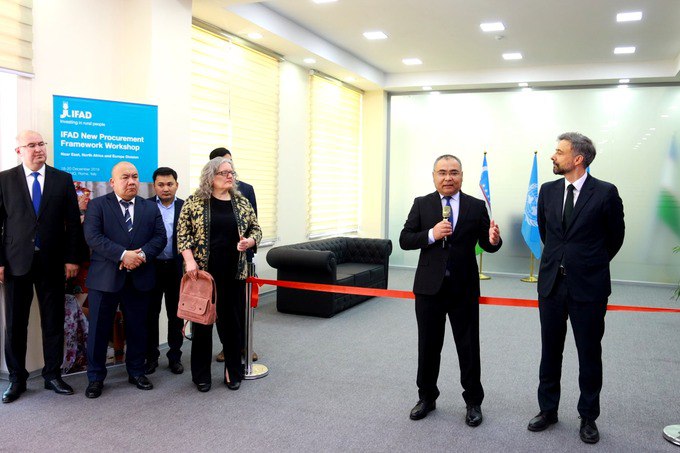
The International Fund for Agricultural Development (IFAD) has opened an office in Uzbekistan. The opening ceremony was attended by IFAD President, Alvaro Lario, and the Uzbek Minister of Agriculture, Ibrohim Abdurakhmonov. IFAD is an international financial institution and a specialized agency of the United Nations, established in 1978. "The opening of the Fund's office in Tashkent reflects our commitment to sustainable economic development in Uzbekistan and the region. Through partnerships with the government and the private sector, we can support more ambitious investments in climate change adaptation and rural prosperity," said Lario. "Uzbekistan has been cooperating with the fund since joining it as a member state in 2011. Having a representative office in the country will allow to better address specific needs and problems of the agricultural sector," the fund said in a statement. Over the past decade, IFAD's portfolio of projects in the region has grown significantly, with a total investment of $435.3 million covering more than 550,000 rural residents.

USAID Supports Central Asian Women Working in Hospitality

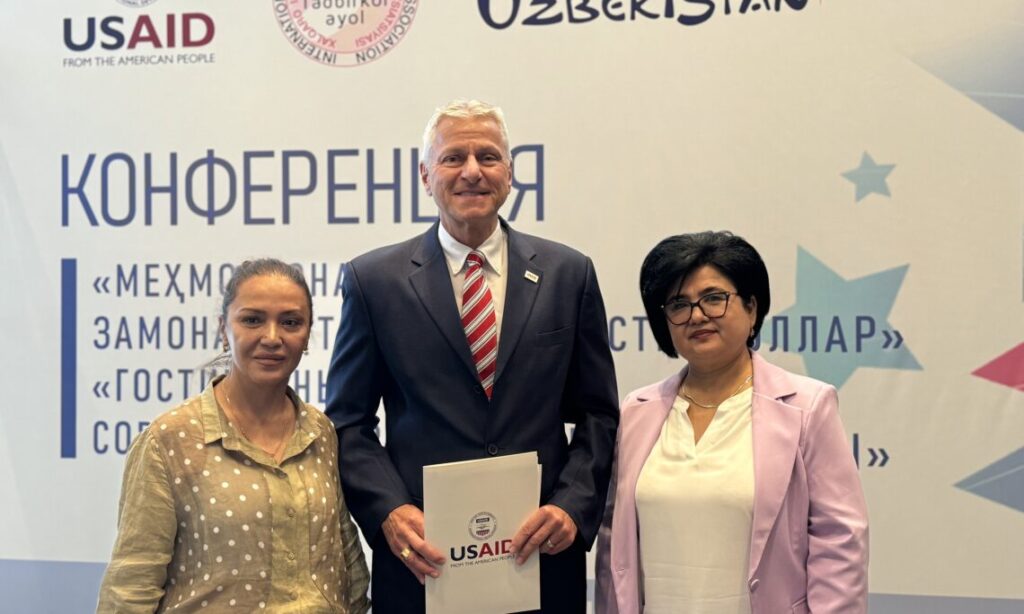
The U.S. Agency for International Development (USAID) and the International Association of Businesswomen “Tadbirkor Ayol” last week hosted a Central Asian Conference on “Women of Central Asia in the Hospitality Business: Current Challenges and Opportunities”. The event in Tashkent attracted some 200 women entrepreneurs, professionals, and industry experts from Uzbekistan, Tajikistan, and Kyrgyzstan to discuss achievements, trends, and challenges in the region’s hospitality sector. As reported by the U.S. Embassy in Uzbekistan, the conference focused on service quality, digitalization, and modern standards in tourism, culminating in recommendations to enhance regional cooperation in tourism and hospitality. Praising the resilience and creativity of women in the hospitality industry and emphasizing their role in the sector’s future, Edward Michalski, USAID Deputy Mission Director in Uzbekistan, commented: “Investing in women and girls is essential to transforming communities. When women do better, families do better, communities do better, and countries do better.” Gulnora Makhmudova, Chairwoman of “Tadbirkor Ayol,” noted that the growing importance of the region’s hotel business and the increasing involvement of women, had spurred the association into launching “Women in the Hotel Business: Hospitality from the Future;” a project aimed to introduce innovation and digitalization in the hospitality sector. Since its launch in April 2024, with support from USAID, the project has provided training for 115 women in modern hotel management in Tashkent, Andijan, and Samarkand.