• KGS/USD = 0.01144 0%
  • KZT/USD = 0.00193 -0%
  • TJS/USD = 0.10858 0.09%
  • UZS/USD = 0.00008 0%
  • TMT/USD = 0.28571 0%
  • KGS/USD = 0.01144 0%
  • KZT/USD = 0.00193 -0%
  • TJS/USD = 0.10858 0.09%
  • UZS/USD = 0.00008 0%
  • TMT/USD = 0.28571 0%
  • KGS/USD = 0.01144 0%
  • KZT/USD = 0.00193 -0%
  • TJS/USD = 0.10858 0.09%
  • UZS/USD = 0.00008 0%
  • TMT/USD = 0.28571 0%
  • KGS/USD = 0.01144 0%
  • KZT/USD = 0.00193 -0%
  • TJS/USD = 0.10858 0.09%
  • UZS/USD = 0.00008 0%
  • TMT/USD = 0.28571 0%
  • KGS/USD = 0.01144 0%
  • KZT/USD = 0.00193 -0%
  • TJS/USD = 0.10858 0.09%
  • UZS/USD = 0.00008 0%
  • TMT/USD = 0.28571 0%
  • KGS/USD = 0.01144 0%
  • KZT/USD = 0.00193 -0%
  • TJS/USD = 0.10858 0.09%
  • UZS/USD = 0.00008 0%
  • TMT/USD = 0.28571 0%
  • KGS/USD = 0.01144 0%
  • KZT/USD = 0.00193 -0%
  • TJS/USD = 0.10858 0.09%
  • UZS/USD = 0.00008 0%
  • TMT/USD = 0.28571 0%
  • KGS/USD = 0.01144 0%
  • KZT/USD = 0.00193 -0%
  • TJS/USD = 0.10858 0.09%
  • UZS/USD = 0.00008 0%
  • TMT/USD = 0.28571 0%
22 December 2025

Viewing results 583 - 588 of 812

The C5+1 Concept: The Idea Behind This Week’s B5+1 Forum in Almaty

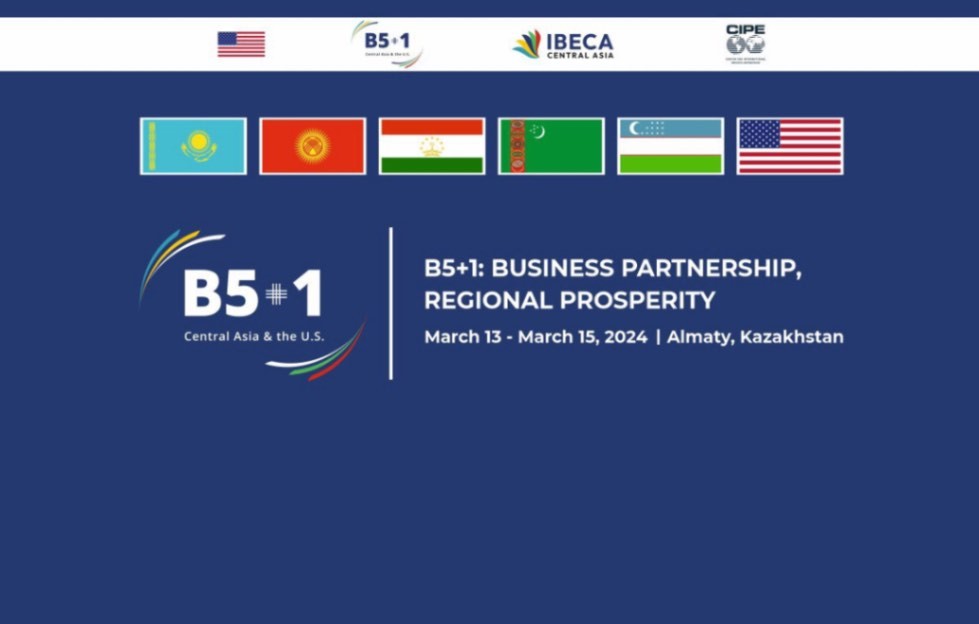
Recognizing that the Central Asia region could benefit more from initiatives in global security, business and trade if its countries strengthened their cooperation in key areas, the Center for International Private Enterprise (CIPE) created the ‘C5+1’ platform last year for just this purpose. The Center’s 5+1 group features the governments of the five Central Asian republics – Kazakhstan, Uzbekistan, Kyrgyzstan, Tajikistan and Turkmenistan – plus the United States, whose State Department and international chambers of commerce are central to the platform’s work. An inaugural C5+1 Summit was held in September 2023, on the sidelines of the 78th session of the UN General Assembly in New York. At this high-level meeting, the presidents of each of the Central Asian nations joined US president Joe Biden in dialog on enhancing the region’s stability and prosperity through economic, energy, and security partnerships within the C5+1 framework.  Building on this start made by C5+1, CIPE is now launching the ‘B5+1’ format, focused on cooperation in the global business context. The inaugural B5+1 Forum will take place this week in Kazakhstan’s business capital of Almaty, and will include presentations and panel discussions with policy makers from the United States, Central Asia and several other countries. On 14 and 15 March leaders from the public sector will discuss Central Asia’s economic integration, international trade and investment alongside dozens of influential private companies.  The B5+1 Forum will pick up where the C5+1 Summit left off in exploring opportunities for American companies in Central Asia. This potential lies in key sectors such as critical minerals, renewable energy and manufacturing. The Almaty event will also continue the conversation on enhancing regional connectivity via the Trans-Caspian International Transport Route, also known as the Trans-Caspian Corridor. At a time of geopolitical upheaval and disruption of existing supply chains, international investment in this trade route is being sought through the Partnership for Global Infrastructure and Investment. The B5+1 Forum forms part of CIPE’s program called “Improving the Business Environment in Central Asia” (IBECA). CIPE themselves are affiliated to the US Chamber of Commerce – the catalyst behind the B7 and B20 platforms – and receive funding from the US Department of State.  The establishment of B5+1 is closely aligned with commitments made during the C5+1 Summit last September, and outlined in a document called the New York Declaration. The upcoming Forum aims to deliver on two key commitments in the declaration.   The Times of Central Asia will be in attendance at the B5+1 Forum on 14-15 March, and will be publishing insight and analysis from the event.

Uzbekistan to Get Two More Wind Farms to Support Domestic Energy Sector

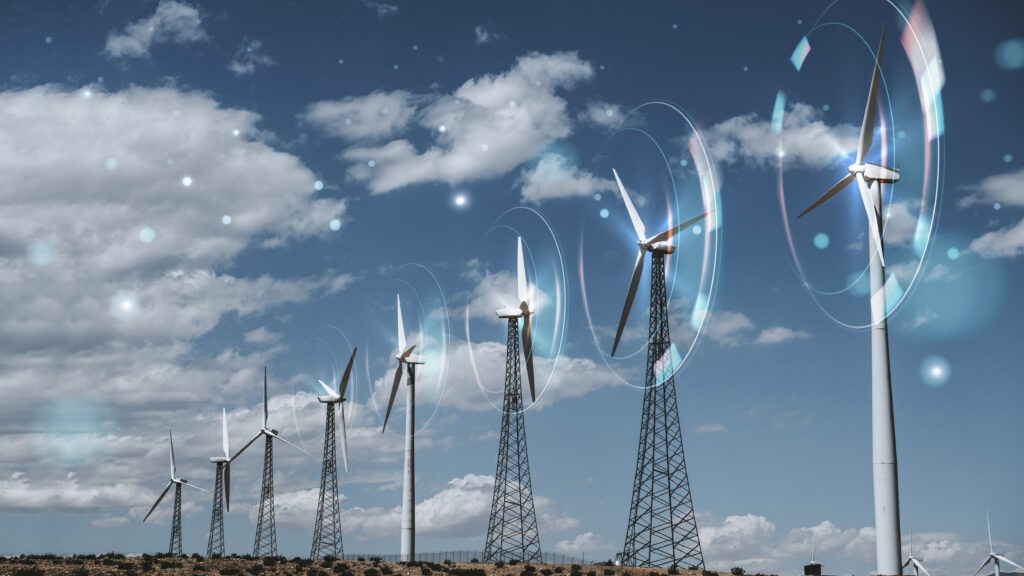
Saudi company ACWA Power will build two more wind farms in Uzbekistan with a total capacity of 800 MW. One of them will be located in the Kungrad district of Karakalpakstan, and the second in the Gijduvan district of Bukhara region. The agreement, signed back in November 2023, envisages an investment of almost $1.1 billion. Under the agreement, ACWA Power will sell electricity generated by these power plants to JSC National Electric Networks of Uzbekistan for 25 years. The Saudi company considers Uzbekistan promising in terms of energy investments. According to the republic's national strategy, it plans to increase its share of green energy up to 25% nationally by 2030. ACWA has already invested $7.5 billion in the republic's energy sector. The largest of its projects are the construction of a combined cycle heat-power plant (CCHP) with a capacity of 1.5 GW in the Syrdarya region, a wind farm with a capacity of 1.5 GW in Karakalpakstan, and two CCHPs with a total capacity of 1 GW in Bukhara region. The company also plans to produce green hydrogen in Uzbekistan. This project, which was finalized and launched in November of last year, will be realized in two stages. To start, a 2.4 GW power plant will produce 500 thousand tons/year of green hydrogen, which will then be used for the production of nitrogen fertilizers. According to experts' calculations, this will save 33 million tons of natural gas. The company has launched the first such project in its home country, and the second oneis scheduled for the end of this year. In recent years, the republic has embraced green energy, which now accounts for only 10% of the country's total electricity output. By comparison, in Germany in 2023, renewable energy sources provided up to 60% of the total electricity generated in the country. The President of Uzbekistan has repeatedly emphasized in his speeches that the country's green energy capacity exceeds its needs by 10-12 times. For Uzbekistan, decarbonization of the energy sector is becoming a priority not only from an economic point of view. It's also required by pressing environmental conditions in hot, dry Central Asia - conditions which are deteriorating by the day. According to a World Bank report titled Country Report on Climate and Development, by 2030 at least eight million people across the country will live in areas threatened by very high climate risks. According to the authors of the report, abandoning traditional energy sources will enable Uzbekistan not only to strengthen the country's energy security, but also to rid itself of one of the main causes of high mortality - air pollution.

US Policymakers and Central Asian Business Leaders Gather in Almaty for the CIPE B5+1 Forum

Cooperation and trade with Central Asia still holds much unrealized potential. The region is developing fast and offers opportunities for companies and agencies, both international and local. As the global geopolitical landscape changes and supply chains are disrupted, the importance of Central Asia as a business and transit hub, through initiatives such as the Trans-Caspian Corridor, is growing.  There are therefore great incentives for the five countries of the region – Kazakhstan, Uzbekistan, Kyrgyzstan, Tajikistan and Turkmenistan – to find ways to function as a single integrated market, in order to capitalize on opportunities for foreign and local companies, and attract more international investment and business.  For this reason the Center for International Private Enterprise (CIPE) is inviting policymakers from Central Asia, the United States and other countries to its B5+1 Forum this week. On 14 and 15 March in Kazakhstan’s business capital of Almaty, leading minds from the public sector will discuss Central Asia’s economic integration, international trade and investment, alongside dozens of high-profile private companies.  An event on 14 March entitled “Looking within Central Asia” will introduce the objectives and expected outcomes of the B5+1 format. Presentations by representatives of Kazakhstan’s Ministry of National Economy, the Caspian Policy Center, the US Department of State and Kyrgyzstan’s Ministry of Economy and Commerce will give business-focused perspectives on improving economic integration and the investment climate.  The discussion on 15 March will center on the theme of “Central Asia’s place in the world economy”. Talks from representatives of the US-Kazakhstan Business Council, the American-Uzbekistan Chamber of Commerce and the European Bank for Reconstruction and Development (EBRD) will give an international perspective on promoting trade and investment flows in Central Asia. The B5+1 Forum forms part of CIPE’s program “Improving the Business Environment in Central Asia” (IBECA). CIPE themselves are affiliated to the US Chamber of Commerce – the catalyst behind the B7 and B20 platforms – and receive funding from the US Department of State.  The establishment of B5+1 is closely aligned with commitments outlined in a document called the New York Declaration to strengthen the republics' economic relations, and improve the business environment for regional economic integration and investments. The upcoming Forum aims to deliver on two key commitments in the declaration.   The Times of Central Asia will be in attendance at the B5+1 Forum on 14-15 March, and will be publishing insight and analysis from the event.
Expansion of Transport Connections between Kazakhstan and Uzbekistan

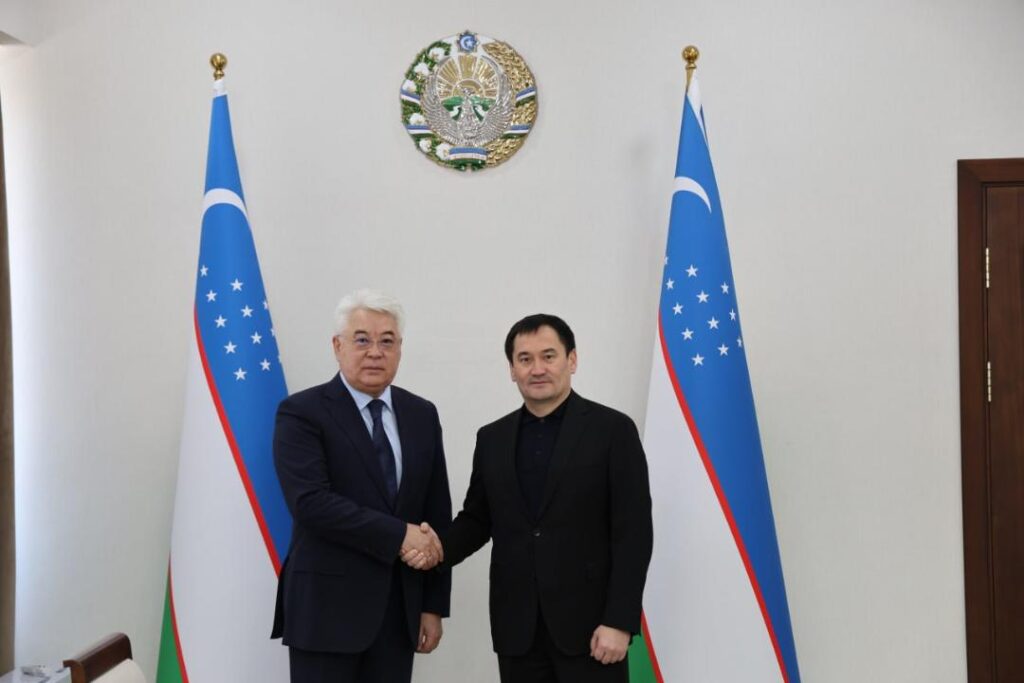
On March 8th, the Ambassador of Kazakhstan to Uzbekistan Beibut Atamkulov and the Minister of Transport of Uzbekistan Ilhom Makhkamov met in Tashkent to discuss the expansion of transit, transport and logistics links between Kazakhstan and Uzbekistan. The implementation of a collaborative project to improve the road and rail infrastructure between the two countries is essential for the realization of a plan to increase bilateral trade to $10 billion per annum. Kazakh-Uzbek rail and road freight is growing. In 2023, the volume of rail freight alone, between Kazakhstan and Uzbekistan, increased by 17.2% to 31.4 million tons, compared to 26.8 million tons in 2022. The resumption of air services between the Kazakh cities of Almaty and Aktobe and Uzbekistan’s Nukus, as well as new connections between the countries’ tourist centres including Turkestan-Samarkand, Turkestan-Bukhara, and Turkestan-Urgench, was also discussed. The current number of weekly flights between cities in Kazakhstan and Uzbekistan is 25; between Astana and Tashkent, 8, and between Almaty and Tashkent, 17.

Central Asian Energy Trading May Soon Include Iran

According to the Iran.ru news agency, Iranian Minister of Energy Ali-Akbar Mehrabian has said that his country is open to trading electricity with Turkmenistan, Tajikistan and Uzbekistan. Iran currently exchanges electricity with the majority of its neighbors, according to Mehrabian, who made the statement in Tehran during a meeting with Uzbek Minister of Energy Zhorabek Mirzamakhmudov on March 4. Mehrabian paid particular attention to the growth of cooperation between Iran, Turkmenistan, Uzbekistan and Tajikistan in the area of electricity markets and trading. As part of the Unified Energy System of Central Asia (UESCA), which was established during the Soviet era, the energy systems of Kyrgyzstan, Kazakhstan, and Uzbekistan currently operate separately. Turkmenistan exited the system in 2003, which was a direct result of Uzbekistan’s refusal to allow electricity from Turkmenistan to transit across Uzbek grid infrastructure. Tajikistan was automatically disqualified from the UESCA when Uzbekistan unilaterally withdrew following a significant accident in Tajikistan’s energy system in November 2009 -- a catastrophe that also led Kazakhstan to accuse Tajikistan in that same month of stealing power from the grid. In 2018, the regional system was rebooted with the return of Uzbekistan to UESCA. In 2019 Tajikistan began work to rejoin the unified energy grid ring of Central Asia, with financial assistance from the Asian Development Bank. Tajikistan’s Ministry of Energy declared last summer that the country would like to become a member of the regional system by the end of 2023, but little progress has been made up to the present. One positive sign of note is that since 2018, Tajikistan has been supplying electricity to some districts of Uzbekistan's Surkhandarya region -- because those districts aren't connected to the Uzbek central power distribution grid.

Uzbekistan-China Trade on the Rise

Uzbekistan and China are poised to increase bilateral trade to $20 billion a year. The statement, quoted by the news portal Novosti Uzbekistana (nuz.uz) was given by given by Obid Khakimov, director of Uzbekistan’s Center for Economic Research and Reforms (CERR) at the conference ‘Uzbekistan and China: promoting mutually beneficial cooperation for the benefit of the two countries’ peoples.’ In 2023, China ranked top amongst Uzbekistan's partners in trade, with a share of 22%. Over the past 7 years, Uzbekistan’s trade turnover with China has increased almost threefold from $4.8 billion to $13.7 billion; exports have risen from $2 billion to $2.5 billion, and imports from $2.7 billion to $11.3 billion. The analysis by the CERR illustrates Uzbekistan’s potential to increase its exports to China by substituting products currently sourced in large volumes from third world countries. In the main, these comprise fruit, vegetables and other foods, textiles, copper, and chemicals. Uzbekistan is especially interested in collaborative projects with China for the deep processing of locally mined strategic raw materials, and the implementation of socially important programs based on partnerships between public and private sectors. The early construction of the China-Kyrgyzstan-Uzbekistan railway, which by cutting the distance travelled by 900km, will reduce the delivery time of cargo by 7-8 days, is another area of key importance to Uzbekistan. According to Uzbekistan’s Statistics Agency, in 2023, China’s contribution of 25.6% was the largest of the total sum of foreign investments and loans in Uzbekistan. In comparison, the contribution from Russia was 13.4%; Saudi Arabia, 7.9%; Turkey, 6.4%; the United Arab Emirates, 5.8%, and Germany, 4.3%.