• KGS/USD = 0.01144 0%
  • KZT/USD = 0.00215 0%
  • TJS/USD = 0.10599 -0.28%
  • UZS/USD = 0.00008 0%
  • TMT/USD = 0.28571 0%
  • KGS/USD = 0.01144 0%
  • KZT/USD = 0.00215 0%
  • TJS/USD = 0.10599 -0.28%
  • UZS/USD = 0.00008 0%
  • TMT/USD = 0.28571 0%
  • KGS/USD = 0.01144 0%
  • KZT/USD = 0.00215 0%
  • TJS/USD = 0.10599 -0.28%
  • UZS/USD = 0.00008 0%
  • TMT/USD = 0.28571 0%
  • KGS/USD = 0.01144 0%
  • KZT/USD = 0.00215 0%
  • TJS/USD = 0.10599 -0.28%
  • UZS/USD = 0.00008 0%
  • TMT/USD = 0.28571 0%
  • KGS/USD = 0.01144 0%
  • KZT/USD = 0.00215 0%
  • TJS/USD = 0.10599 -0.28%
  • UZS/USD = 0.00008 0%
  • TMT/USD = 0.28571 0%
  • KGS/USD = 0.01144 0%
  • KZT/USD = 0.00215 0%
  • TJS/USD = 0.10599 -0.28%
  • UZS/USD = 0.00008 0%
  • TMT/USD = 0.28571 0%
  • KGS/USD = 0.01144 0%
  • KZT/USD = 0.00215 0%
  • TJS/USD = 0.10599 -0.28%
  • UZS/USD = 0.00008 0%
  • TMT/USD = 0.28571 0%
  • KGS/USD = 0.01144 0%
  • KZT/USD = 0.00215 0%
  • TJS/USD = 0.10599 -0.28%
  • UZS/USD = 0.00008 0%
  • TMT/USD = 0.28571 0%

Viewing results 703 - 708 of 1234

President Reiterates Resolve to Combat Crime and Corruption

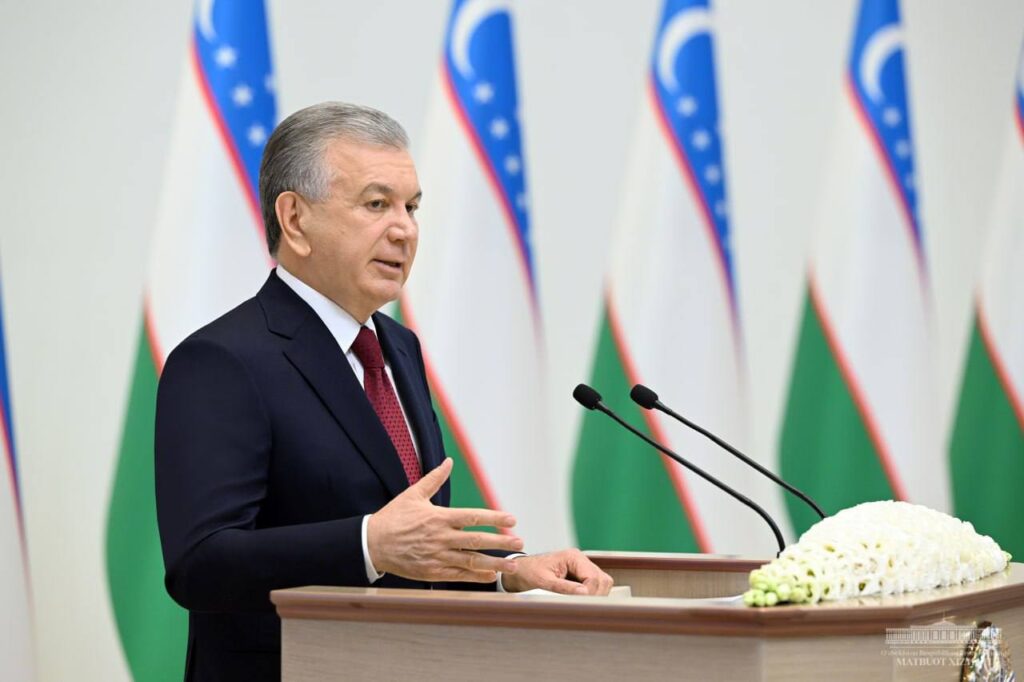
The authorities have taken firm measures to crack down on organized crime in Uzbekistan, President Shavkat Mirziyoyev said, commenting on a drive to combat corruption and crime in the country. Mirziyoyev made the remarks on December 22nd, at an extended meeting of the National Council on Spirituality and Education. In his speech, President Mirziyoyev said, “We can never remain on the sidelines. Be it criminal gangs calling themselves ‘street gangs,’ corrupt officials, or those who break the law and cause harm to the state and society. Our streets, our neighborhoods, our lives should literally be peaceful and clean, free of crime. In the new Uzbekistan, the law must prevail, and punishment for crimes must be inevitable. And, of course, it will be so.” On December 22nd, Uzbek media reported that the former governor of the Izboskan District in the eastern region of Andijon, Serobiddin Ismoilov, was arrested two days earlier on charges of abuse of power. The reports come days after officials announced the arrest on corruption charges of former Agriculture Minister, Aziz Voitov; former Bekobod District chief, Shuhrat Mirzaev; the deputy governor of the Namangan region, Saidahmad Sultonov; the former governor of the Bukhara district, Khairullo Joraev; and several top Customs Committee officials.

Window to Europe for Uzbekistan to Remain Open Until December 2027

The European Union has decided to extend the validity of the General System of Preferences Plus (GSP+) for beneficiary countries, including Uzbekistan, for the next four years until December 31st 2027. This decision gives serious impetus to the development of Uzbekistan's private sector, providing easier access to the European market, stimulating closer cooperation between European and Uzbek companies, and leading to significant savings at borders. As a result of the measures taken to strengthen trade relations with the EU and expand the global geography of Uzbekistan's exports by the end of 2022, 628 enterprises (an increase of 116 on the corresponding period in 2021) were exporting local products to European markets in the amount of U$647-million. This is more than double the $292-million figure recorded in 2020. In particular, within the framework of the GSP+ textile industry products worth $177.4-million were exported to the EU markets (an increase of 126.4% compared to 2021), agriculture and food industry products totaled $19.7-million (a 103% increase), the electrical industry recorded $9-million (a 117% increase), whilst the chemical industry totaled $138.3-million (a 4.7-times expansion). In 2022, thanks to GSP+, Uzbek exporters saved $30.65-million in duties, thus signaling a major contribution by the EU to the development of the private sector in Uzbekistan. Over the period from 2019 to 2022, EU investment in the private sector in Uzbekistan has grown more than tenfold.

Uzbekistan to Take Measures for Rational Use of Water Resources in Agriculture

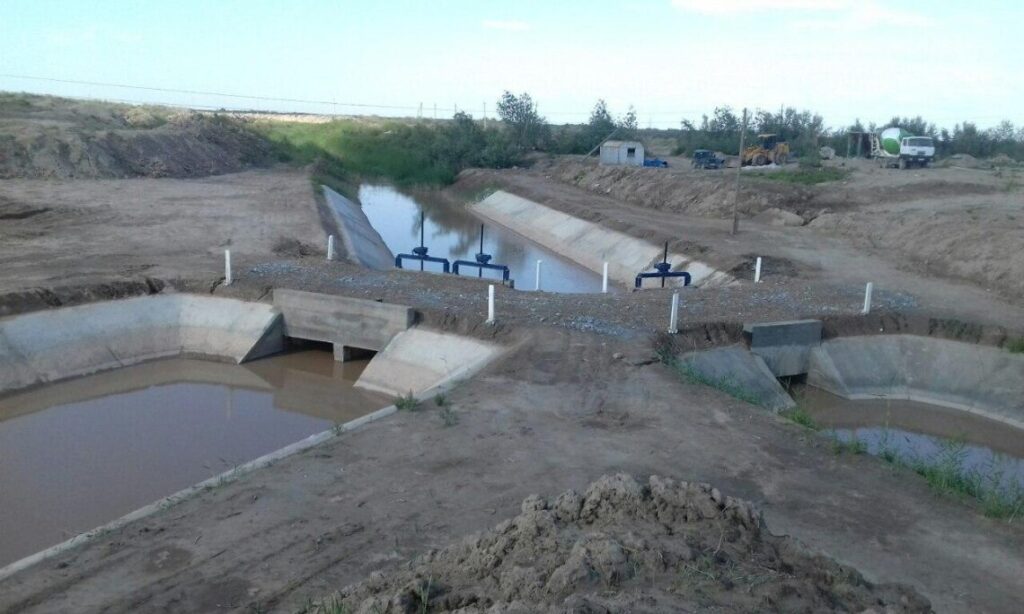
Uzbekistan's President, Shavkat Mirziyoyev, led a government session last week focused on strategies for the efficient utilization of water resources. Discussions highlighted that 20% of Uzbekistan's water resources originate within the country, while the rest is sourced from neighboring territories. Ongoing climate shifts are progressively diminishing these water sources, with forecasts projecting potential water deficits of up to 15 billion cubic meters in Uzbekistan by 2030. Despite these challenges, there's notable inefficiency in water usage. A staggering 90% of Uzbekistan's water resources are allocated to agricultural purposes. For instance, irrigating a single hectare of cotton fields consumes 10-11 thousand cubic meters of water yearly, whereas countries with similar climates and soil profiles use 2-3 times less water. The annual expenditure on water management in Uzbekistan amounts to approximately $1 billion, making it the fourth-largest recipient of budget allocations following education, healthcare, and agriculture. Regrettably, due to flawed calculations and persisting outdated methodologies in water resource management, the desired efficacy isn't realized. The president emphasized that the upcoming year will be a transitional phase, shifting toward an emergency mode to conserve water. A primary goal is the concrete lining of canals and ditches. It's estimated that about 14 billion cubic meters, or 36%, are lost annually in natural irrigation systems without yielding any economic benefit. Most significant losses are observed in regions like the Republic of Karakalpakstan, Namangan, Navoi, Khorezm, and Bukhara. The water sector has declared a pivotal year for canal concreting, aiming to concrete 1,500 kilometers next year—four times more than in 2023. By 2025, the target is to concrete at least 2,000 kilometers of canals. Another crucial objective is the adoption of water-saving technologies. Uzbekistan, with 4.3 million hectares under irrigation, has introduced water-saving technologies in 30% of these areas. In these clusters and farms, efficiency gains of 30-40% in water usage alongside increased productivity have been achieved.

ADB Helps Support Privatization, Expand Lending to MSMEs in Uzbekistan

According to a press release by the Asian Development Bank (ADB), the bank, in partnership with Sanoat Qurilish Bank (SQB) have signed a $50 million senior convertible loan to support Uzbekistan’s privatization of state-owned banks, which will strengthen the banking sector, and contribute to economic growth and job creation. The International Finance Corporation (IFC) and the European Bank for Reconstruction and Development (EBRD) are parallel lenders. The loan will be used to help SQB expand its financing to underserved micro, small, and medium-sized enterprises (MSMEs), including those owned or led by women (WMSMEs). Portfolio diversification will contribute to SQB's transition into a fully universal commercial bank by serving a broader customer segment. ADB will also provide technical assistance to help SQB implement its transformation roadmap. “ADB fully supports the Government of Uzbekistan in its transformation to a vibrant and inclusive market economy and its implementation of banking sector reforms”, said ADB’s Director General of the Private Sector Operations Department, Suzanne Gaboury. “This project will support the stability of the country’s banking system, capitalization and deposit levels, while strengthening resilience and lending to climate projects and underserved MSMEs and WMSMEs”. According to ADB’s Uzbekistan Country Director, Kanokpan Lao-Araya, “MSMEs continue to struggle to secure commercial financing to fund their growth, with women-owned enterprises being the most affected. ADB is supporting an enabling environment in Uzbekistan for MSMEs gain easier access to markets, as well as providing much needed financing to close the financing gap for MSMEs. ADB’s partnership with SQB builds on those two objectives”. MSMEs play a significant role in Uzbekistan’s economy, comprising the majority of registered businesses and employing 74% of the workforce. However, access to financing remains a challenge, with only 13% of the sector having access to commercial loans. Women-led businesses face an even greater financing gap, estimated at $2.7 billion, with loans to women-owned businesses making up just 2.5% of total bank loans.

Kazakhstan and Uzbekistan to Bring Mutual Trade to $10 Billion

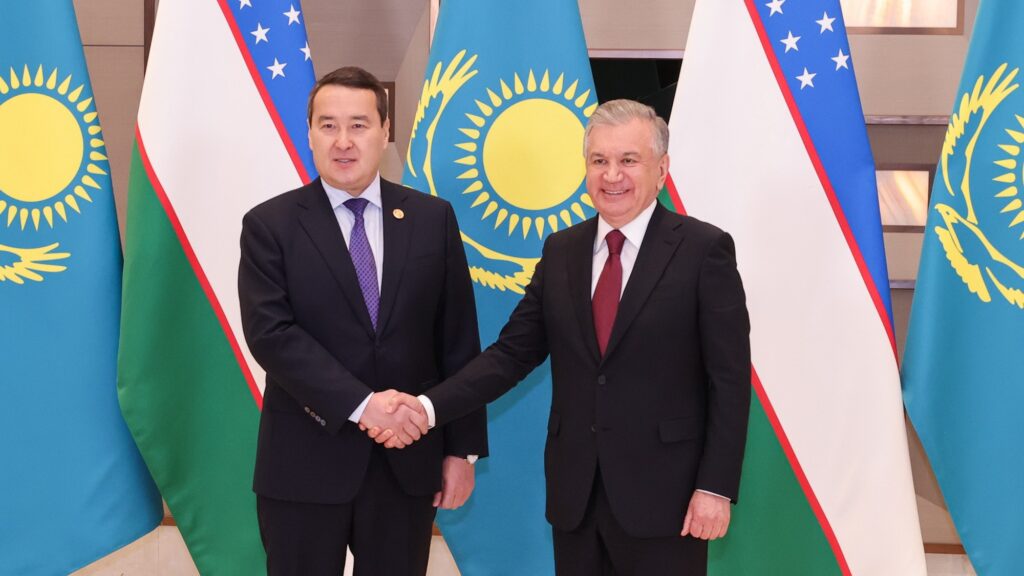
On November 9th, Alikhan Smailov, the Prime Minister of Kazakhstan, made an official visit to Tashkent, Uzbekistan, for the 16th summit of the Economic Cooperation Organization. Prior to the event, he met with the President of Uzbekistan, Shavkat Mirziyoyev. During their meeting, Smailov extended warm greetings from the President of Kazakhstan, Kassym-Jomart Tokayev, and highlighted the strong strategic partnership between the two nations, based on trust and mutual understanding3. Smailov pointed out that "Uzbekistan is one of the largest trade partners of Kazakhstan. Our countries account for about 70% of all trade in Central Asia. At the end of last year, trade turnover increased by 30%, and for the first time reached the milestone of $5 billion. We are actively working to bring mutual trade to $10 billion”. Mirziyoyev reciprocated the sentiment, noting that the strategic agreements between Kazakhstan and Uzbekistan were being systematically realized across various sectors, including trade, transportation, and water management5. He added, “All issues we have are moving forward; I think there is not a single unresolved issue. In terms of trade, the projects we have agreed on with the President of Kazakhstan will help us reach new frontiers”. In line with these discussions, Arman Shakkaliev, Kazakhstan’s Minister of Trade and Integration, and Laziz Kudratov, Uzbekistan’s Minister of Investment, Industry and Trade, signed an agreement to regulate the activities of the International Centre for Industrial Cooperation “Central Asia”7. This center, set to be established on the border of the two countries, will house production sites, warehouses for goods and equipment storage, and transport infrastructure. The aim is to expedite cargo delivery and reduce logistics costs. The Industrial Cooperation Centre is expected to stimulate the creation of new production facilities and jobs, aid in the processing of agricultural and industrial products, and provide logistics services for goods transportation. It's hoped that the centre will enhance transport efficiency and expedite customs clearance processes. The signing of this agreement is a practical step towards the realization of the project. The launch of the Industrial Cooperation Centre is poised to serve as a catalyst for the further development of international trade and economic integration between Kazakhstan and Uzbekistan. It's also projected to contribute to increasing bilateral trade turnover to up to $10 billion.

Promoting Sustainable Development in Central Asia: Key Highlights from the Eurasian Development Bank’s Roundtable

According to a press release issued by the Eurasian Development Bank (EDB), on November 16th, 2023, Almaty, Kazakhstan, served as the venue for a critical roundtable hosted by the EDB, titled "Promoting Sustainable Development in Central Asia". This gathering saw the participation of representatives from a wide range of international organizations and multilateral development banks. Attendees included the likes of the World Bank, the Asian Development Bank, the Asian Infrastructure Investment Bank, the Islamic Development Bank, FAO, UNIDO, UNEP, ESCAP, UNDP, the World Health Organisation, the International Fund for Saving the Aral Sea, and CICA. The agenda was packed with discussions revolving around irrigation, water challenges, environmental and social standards of international financial institutions, and case studies that showcased collaborations in project implementation12. The EDB's latest report, "Efficient Irrigation and Water Conservation in Central Asia", was introduced during the roundtable's first session. Nikolai Podguzov, Chairman of the EDB Management Board, underscored the essential interrelationship between water, food, and energy in Central Asia. He declared the development of the region’s water and energy resources as a strategic priority for the EDB. He also expressed concerns over an impending water deficit in Central Asia within the next five years, urging for collective action supported by multilateral development banks3. Tatiana Proskuryakova, the Regional Director for Central Asia at the World Bank, also spoke at the event. She emphasized the importance of sustainable development in Central Asia to international organizations and multilateral financial institutions. She revealed that the World Bank has allocated approximately a quarter of its $12 billion investment portfolio in Central Asia to water, energy, and environmental sectors. This proportion is expected to rise to almost half in the near future4. Following this, Evgeny Vinokurov, EDB Chief Economist, presented the study "Efficient Irrigation and Water Conservation in Central Asia". He proposed a ten-step solution to address the prevalent issues. The steps include establishing an International Water and Energy Consortium; fostering collaboration among multilateral banks; creating a regional cluster to produce irrigation equipment; consolidating efforts to strengthen cooperation with Afghanistan; using PPP instruments; instituting proper water accounting; gradually integrating investment charges into the tariff structure; improving land conditions; implementing digital technology, and leveraging state-of-the-art irrigation technology and laser levelling.