• KGS/USD = 0.01144 0%
  • KZT/USD = 0.00216 0%
  • TJS/USD = 0.10663 0%
  • UZS/USD = 0.00008 0%
  • TMT/USD = 0.28530 0%
  • KGS/USD = 0.01144 0%
  • KZT/USD = 0.00216 0%
  • TJS/USD = 0.10663 0%
  • UZS/USD = 0.00008 0%
  • TMT/USD = 0.28530 0%
  • KGS/USD = 0.01144 0%
  • KZT/USD = 0.00216 0%
  • TJS/USD = 0.10663 0%
  • UZS/USD = 0.00008 0%
  • TMT/USD = 0.28530 0%
  • KGS/USD = 0.01144 0%
  • KZT/USD = 0.00216 0%
  • TJS/USD = 0.10663 0%
  • UZS/USD = 0.00008 0%
  • TMT/USD = 0.28530 0%
  • KGS/USD = 0.01144 0%
  • KZT/USD = 0.00216 0%
  • TJS/USD = 0.10663 0%
  • UZS/USD = 0.00008 0%
  • TMT/USD = 0.28530 0%
  • KGS/USD = 0.01144 0%
  • KZT/USD = 0.00216 0%
  • TJS/USD = 0.10663 0%
  • UZS/USD = 0.00008 0%
  • TMT/USD = 0.28530 0%
  • KGS/USD = 0.01144 0%
  • KZT/USD = 0.00216 0%
  • TJS/USD = 0.10663 0%
  • UZS/USD = 0.00008 0%
  • TMT/USD = 0.28530 0%
  • KGS/USD = 0.01144 0%
  • KZT/USD = 0.00216 0%
  • TJS/USD = 0.10663 0%
  • UZS/USD = 0.00008 0%
  • TMT/USD = 0.28530 0%

Viewing results 409 - 414 of 921

Uzbek Businesswoman Diora Usmanova Recounts Own History of Marital Violence

Diora Usmanova, the owner of two restaurants and some clothing brands in Uzbekistan, has spoken on her Instagram page about the beatings she suffered from her first husband, Babur Usmanov, who was the nephew of the billionaire Alisher Usmanov. Usmanova herself is related to Ziroatkhon Mirziyoyeva, the wife of Uzbek president Shavkat Mirziyoyev. Usmanova wrote that the story could cause her harm, but that she believes the benefits will "outweigh the risks a hundredfold" and will "change perceptions or somehow affect women who endure domestic violence and abuse," Gazeta.uz reported. "We loved each other and fought very hard for our marriage. Subsequently, when he started to raise his hand against me and when these beatings went on, and the beatings continued for four years, there were concussions, and a lot of blood, and bruises, and [my] whole body in bruises, and a lot of broken furniture, doors, everything," she said. Domestic violence is not only the man's fault, but also the woman's, Usmanova said. "We don't value ourselves enough, we're not brave enough, we're not strong enough, we're afraid to give a backhand, we're afraid to tell our parents, we're afraid to go back to our parents, we're afraid to start everything again. For the fact that we hope that it will change, that it will [bear] some good fruits in the future, that it will survive -- this is all our problem," Usmanova said. In her opinion, women should terminate harmful relationships and find the strength to leave -- and most importantly, learn to respect themselves. "You have to leave such relationships. [That's] because of the fact that you forgive once, forgive the second time, and then it becomes a habit, a person realizes that it is forgiven, it can end very badly, [a] whole life just poisoned. I did not find the strength then, and now after 10 years, I look back and realize how many mistakes were made on my part and how much is my fault. Just like [it was] his," she stated. On May 8, 2013, Babur Usmanov was involved in a fatal car accident in Tashkent. In 2016, Usmanova married businessman Batyr Rakhimov.

EU and FAO Aid Uzbekistan’s Management of Hazardous Chemicals

On 1 May, the Food and Agriculture Organization of the United Nations (FAO) and the Ministry of Ecology, Environmental Protection and Climate Change of Uzbekistan held an inception workshop in Tashkent on technical assistance for the sound management of hazardous chemicals. The joint venture, implemented with financial support from the European Union, is designed to enhance the effectiveness of mechanisms and tools for the management of hazardous chemicals and related waste. A key goal cited by the EU Delegation to Uzbekistan, is to reduce the use of dangerous pesticides in agriculture, through the introduction and promotion of alternative methodologies amongst farmers. Aziz Abdukhakimov, Minister of Ecology, Environmental Protection and Climate Change, stressed that by actively striving to reduce the use of highly hazardous pesticides, Uzbekistan aims to lower their adverse impact on the nation’s health and environment, in addition to making a significant contribution to  UN Sustainable Development Goals. Regarding plans to address the issue, he  announced, “We need to revise our inventory of contaminated areas of former agricultural airfields and other sites, the last of which, was carried out in the ‘90s when more than 450 former agricultural airfields were identified.” Praising the move, Wim Riepma, Head of Cooperation Section, EU Delegation to Uzbekistan, stated: "Our partnership with the Government of Uzbekistan and FAO exemplifies a collective commitment to protecting the environment and public health, by cleaning up legacy waste, by improving waste management, and by reducing pesticide waste production. Integrated pest management and awareness of health and environmental risks are key to a healthier, environment- friendly and economically viable agriculture sector.” Sherzod Umarov, Assistant FAO Representative in Uzbekistan, likewise emphasized, "The project implementation will enable an improved institutional capacity for sound pesticide management and better data on hazardous wastes in agriculture allowing development of a national waste management strategy. The project also aims to scale up green practices in the agricultural sector leading to reduced risks to farmers and consumers from the use of pesticides and to food production relying on less toxic pesticides and biological protection tools.”  

Uzbekistan Opens New  Museum Commemorating WW2 Japanese POWs

On 30 April, Uzbekistan Minister of Ecology, Environmental Protection and Climate Change Aziz Abdukhakimov  joined by Ambassador of Japan to Uzbekistan Hatori Takashi, founder and director of the museum, Jalil Sultanov, and representatives of the Japan Society in Uzbekistan to celebrate the opening of a new museum in Tashkent commemorating Japanese prisoners of war. Over 20,000 Japanese POWs captured by the Soviet Union during the second world war, were interned in Uzbekistan between 1945-1950. During this period, the prisoners were dispersed across the country to construct buildings, dams, and roads in regions including Angren, Bekabad, and Kokand, and in Tashkent, built the Alisher Navoi Opera Theatre, the Mukini Theatre, the Central Telegraph and Ministry of Culture, as well as barracks still in use today. According to estimates, 817 died in the process. The new premises, under construction since 2023, replace the original museum founded in May 1998. Housing photographs, documents, and artefacts, such as prisoners’ workwear and a wooden crib made for the local market, the collections testify to the lives of Japanese POWs in Uzbekistan, and given a new lease of life, are expected to become a major draw for Japanese tourists visiting the country.

EU Gives Uzbekistan’s Agriculture Another Boost

On April 25 the European Union presented €6 million ($6.4 million) to the Uzbek government to support the country's National Food Security and Healthy Nutrition Strategy. Alongside the grant the EU has also provided funds to help the Ministry of Agriculture to carry out its planning reforms. Further funding of €20 million ($21.4 million) will be issued later this year and next, in support of Uzbekistan's National Agriculture Development Strategy for 2020-2030. The overall objective is the establishment of more market-orientated and sustainable agriculture and food sectors, and subsequently, the creation of more jobs and better access to safe and nutritious food for people in Uzbekistan. “The agri-food sector is critical for Uzbekistan’s economy and is a major source of employment,” commented the EU's ambassador to Uzbekistan Charlotte Adriaen. “Family-run or ‘dekhan’ farms produce most of the meat and vegetables consumed by Uzbek citizens. Our focus is therefore on those reforms that enable these farms to prosper, adapt to a changing climate, protect the environment, produce healthy food, and become part of local and global value chains. The grant funding together with other European Union initiatives such as GSP+ will also help to boost exports to the EU.” The European Union is Uzbekistan’s main funder of developments in the agriculture and food sectors. Between 2020-2023 it provided grants totaling €32.5 million ($35 million).

US Helps Train 18,000 English Teachers in Uzbekistan

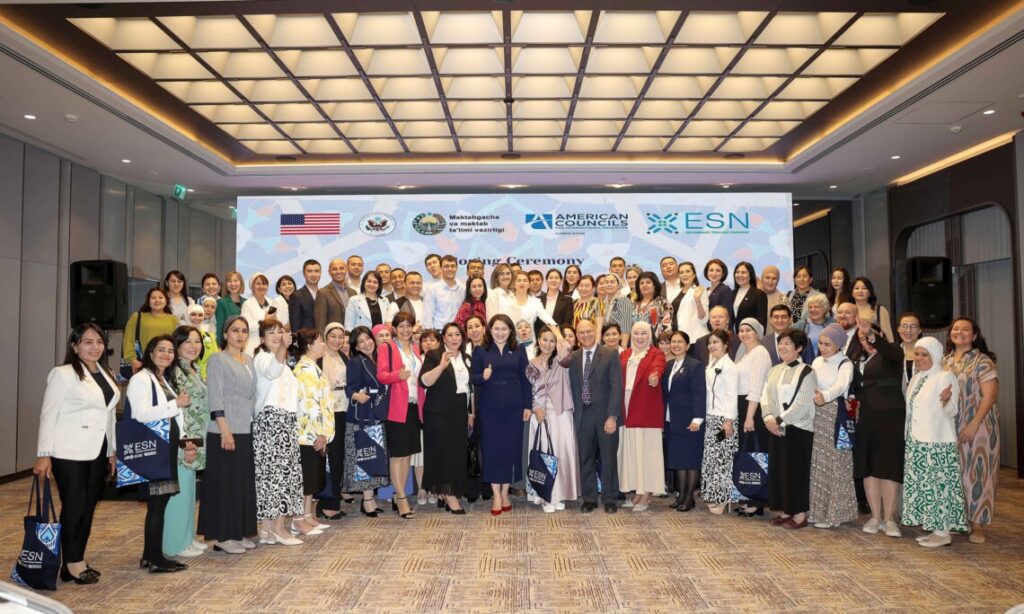
In an announcement made by the U.S. Embassy in Uzbekistan on 20 April, Tashkent, it was stated that a four-year programme conducted by the U.S.-supported English-Speaking Nation (ESN) has trained over 18,000 English teachers to work in secondary schools across Uzbekistan. Costing $7 million, the joint initiative of the U.S. Embassy in Tashkent and the Uzbekistan Ministry of Preschool and School Education, implemented by American Councils for International Education, offered intensive professional development and advanced teaching methodologies to enhance Uzbekistan’s English teachers’ provision of language proficiency. As a result of the project, 452 teachers attained internationally- recognized certificates through the 140-hour, TESOL Program. A further 693 English teachers participated in a specialized 60-hour course to become trainers and mentors, forming a network of expert teacher trainers across the country to support their colleagues. Celebrating the project’s success, U.S. Ambassador Jonathan Henick said, “Teachers report the program improved their lesson planning and supported their efforts to become leaders in their school communities. Principals praise teachers’ innovative teaching methods. Students are speaking more English and developing stronger language skills.”

EU Project Grants to Empower Civil Society in Uzbekistan

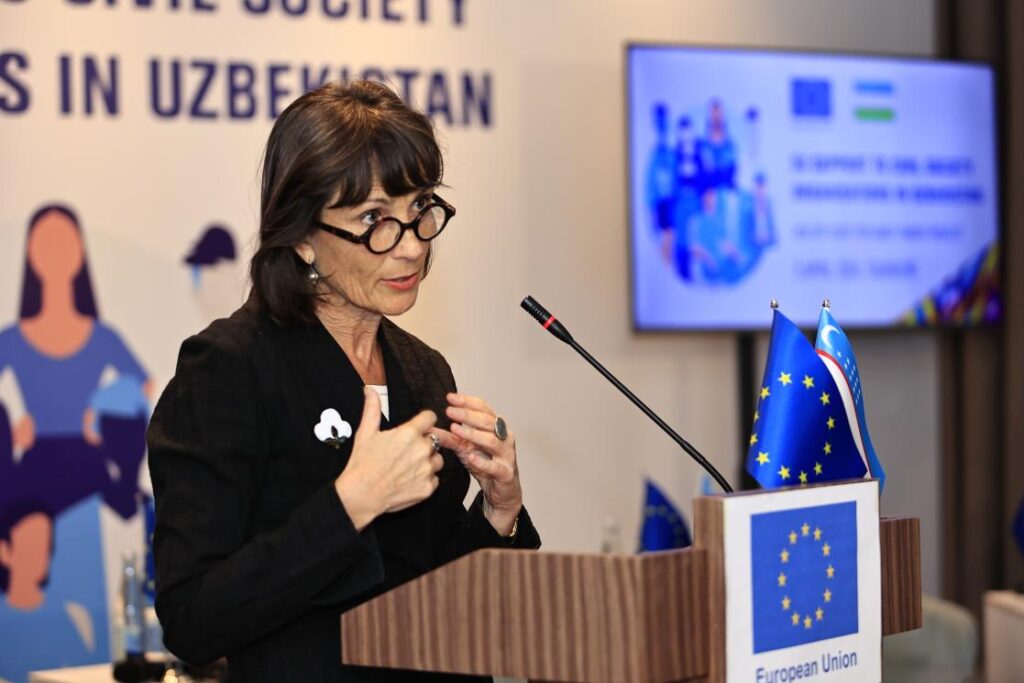
The European Union Delegation to Uzbekistan has announced a new wave of project grants. Aimed at empowering civil society in Uzbekistan, particularly women and marginalized groups, funds of over EUR 3.5 million will be allocated to the development of eight initiatives. In her report on April 3rd, Charlotte Adriaen, EU Ambassador to Uzbekistan, stated: “Today's EU-funded project launch is just a glimpse into our ongoing commitment to bolster civil society organizations in Uzbekistan. Our yearly efforts are dedicated to empowering these vital entities, fostering inclusivity, vibrancy, and democracy. Prioritizing projects for women, children, and marginalized groups, we amplify voices, promote inclusive development, and drive or support Uzbekistan’s reform agenda. Together with civil society and state partners, we contribute to the pluralism and inclusivity crucial for a thriving democracy and a peaceful society.” Scheduled to operate from 2024 to 2026, the projects will focus on enhancing work undertaken by organizations concerning inclusion, gender equality and gender-responsiveness, and advances in the Green Agenda.