• KGS/USD = 0.01144 0%
  • KZT/USD = 0.00210 0%
  • TJS/USD = 0.10438 0.19%
  • UZS/USD = 0.00008 0%
  • TMT/USD = 0.28571 0%
  • KGS/USD = 0.01144 0%
  • KZT/USD = 0.00210 0%
  • TJS/USD = 0.10438 0.19%
  • UZS/USD = 0.00008 0%
  • TMT/USD = 0.28571 0%
  • KGS/USD = 0.01144 0%
  • KZT/USD = 0.00210 0%
  • TJS/USD = 0.10438 0.19%
  • UZS/USD = 0.00008 0%
  • TMT/USD = 0.28571 0%
  • KGS/USD = 0.01144 0%
  • KZT/USD = 0.00210 0%
  • TJS/USD = 0.10438 0.19%
  • UZS/USD = 0.00008 0%
  • TMT/USD = 0.28571 0%
  • KGS/USD = 0.01144 0%
  • KZT/USD = 0.00210 0%
  • TJS/USD = 0.10438 0.19%
  • UZS/USD = 0.00008 0%
  • TMT/USD = 0.28571 0%
  • KGS/USD = 0.01144 0%
  • KZT/USD = 0.00210 0%
  • TJS/USD = 0.10438 0.19%
  • UZS/USD = 0.00008 0%
  • TMT/USD = 0.28571 0%
  • KGS/USD = 0.01144 0%
  • KZT/USD = 0.00210 0%
  • TJS/USD = 0.10438 0.19%
  • UZS/USD = 0.00008 0%
  • TMT/USD = 0.28571 0%
  • KGS/USD = 0.01144 0%
  • KZT/USD = 0.00210 0%
  • TJS/USD = 0.10438 0.19%
  • UZS/USD = 0.00008 0%
  • TMT/USD = 0.28571 0%

Viewing results 721 - 726 of 1136

Canada Joins List of Developed Countries Seeking Uzbek Migrant Labor

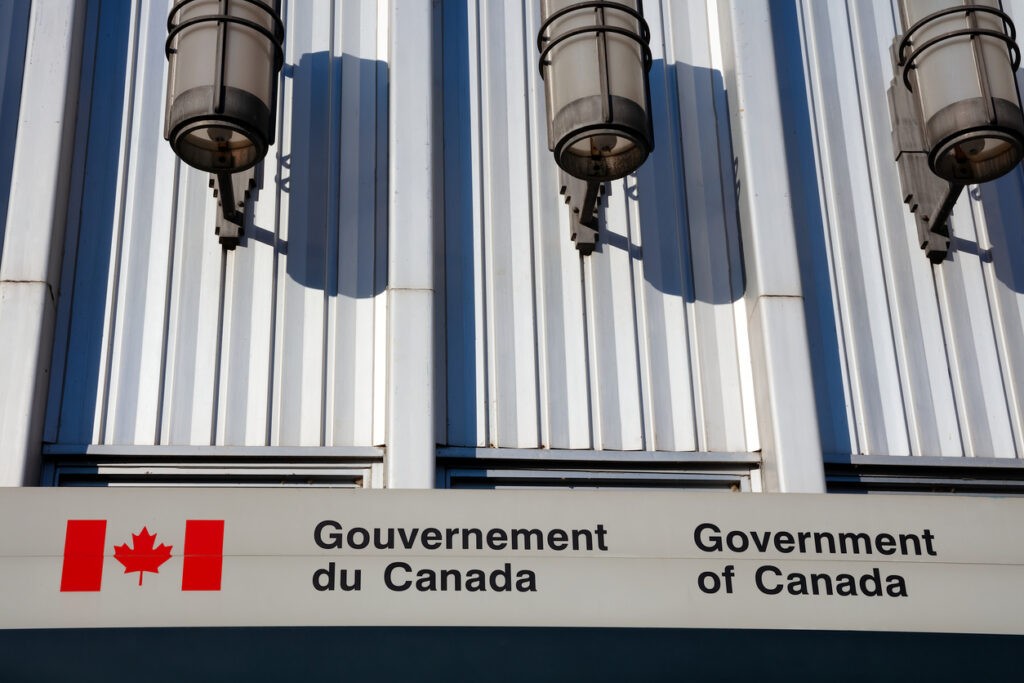
Following a meeting in February between Uzbek Minister of Employment and Labor Relations Bekhzod Musayev and Canadian Ambassador to Uzbekistan Alan Hamson, the Agency for External Labour Migration has reported that North American construction companies are to invite 5,000 citizens of Uzbekistan to work in Canada. The recruitment is part of the Canadian authorities' plan to attract 500,000 immigrants annually until the end of 2025. Through an unprecedented wave of newcomers, the government expects to compensate for Canada's acute labour shortage aggravated by the country's aging population. The country is currently seeking carpenters, welders, electricians, plumbers, concrete workers, glaziers, roofers and flooring assistants, and depending on qualifications, will offer wages of $12.50 to $30 per hour. Applicants must be aged between 18-45, should be proficient in English, French or Spanish, and have a local credential, certificate or diploma of vocational training in a professional trade. Uzbekistan has been actively developing legal labour-migration pathways to developed countries and for several consecutive years, Germany has hired Uzbek workers in 330 sectors under the Ausbildung (work and study) program. In 2022, some 2,000 Uzbek seasonal labour workers were hired in the United Kingdom; a number topped only by those from Ukraine. Against the backdrop of the escalating Arab-Israeli conflict and the departure of Palestinian workers en masse, Israel has now decided to hire Uzbek workers for construction projects. Japan has also been actively recruiting Uzbek labour migrants in construction, as well as in medical services. Qualified Uzbek specialists with an appropriate level of Japanese language can earn $1,000-1,500 per month in Japan. According to statistics, in 2023, 38,400 Uzbek labour migrants were officially employed in jobs outside Uzbekistan and to date, the Agency for External Labour Migration has trained over 58,00 citizens in foreign languages and professions to prepare for work abroad. The remittances of labour migrants to their home country account for 17.8 percent of Uzbekistan's GDP.

Demolitions in Bukhara Continue Despite UNESCO Demands for a Halt

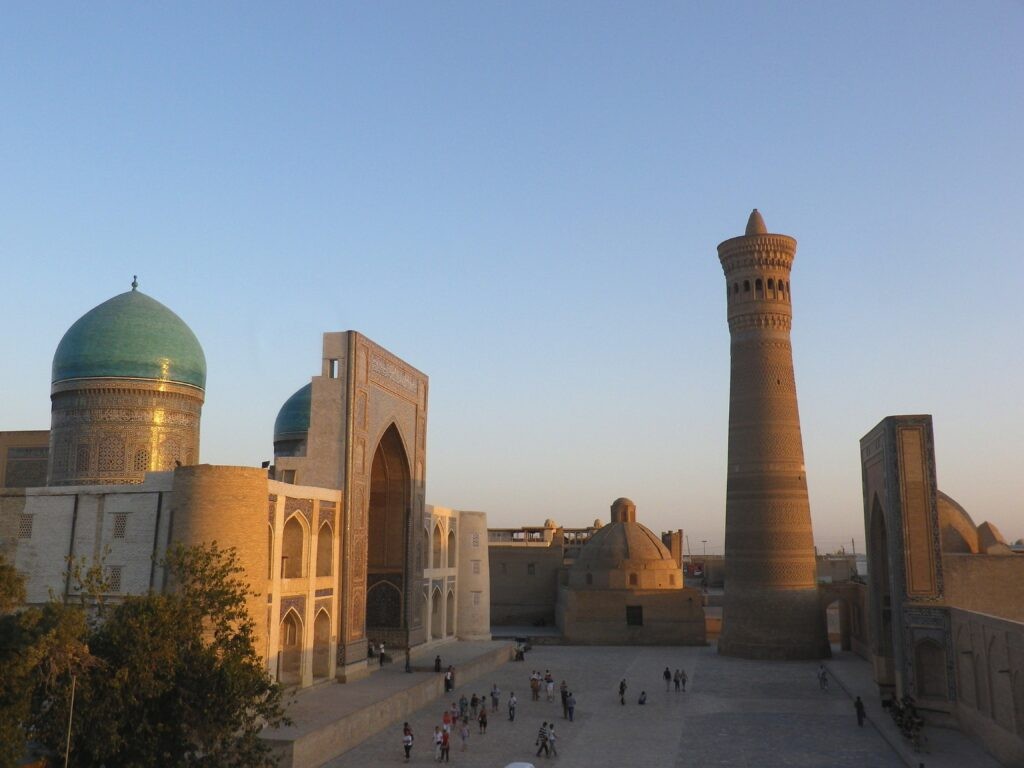
Demolitions in Bukhara's buffer zone continue despite Uzbekistan's promises to harmonize its plans with the United Nations Educational, Scientific and Cultural Organization (UNESCO). On February 26, demolition began on the 23,000-seat Bukhara Arena stadium near Bukhara's historic centre. Ignoring the fact that construction of the Bokii Bukhoro tourist centre is under review by ICOMOS, the advisory body of UNESCO's World Heritage Committee, local authorities are activating their plans. UNESCO claims that on February 8, a letter was sent to the Uzbek government requesting clarification of plans for the project, but have received no response to date. On March 2, Sara Noshadi, head UNESCO in Uzbekistan, issued the statement: "UNESCO is closely monitoring the state of conservation of the Bukhara World Heritage Site, including concerns expressed by civil society about potential construction plans in the buffer zone of the site. The World Heritage Centre has contacted the Uzbek authorities on this matter to request additional information and clarify the situation. The World Heritage Centre hopes that the authorities will fulfil their obligations under the World Heritage Convention and will not undertake any demolition/construction projects without prior notification and assessment by the World Heritage Committee, whose next session is in July 2024. UNESCO stands ready to provide expertise and assistance to safeguard the Outstanding Universal Value of the site." Alerte Héritage is a non-governmental organization for the protection of Central Asian architectural and cultural heritage headed by Boris Chukhovich. A specialist in architecture and the protection of cultural heritage, Chukhovich actively advocates the protection of Bukhara's historic centre. He strongly criticized the plan for the tourist centre, as "disastrous" and a "sham" and stated, "We appeal to UNESCO, which is responsible for World Heritage sites, and to the Uzbek government, which is responsible for the preservation of the country's cultural heritage, as well as to all concerned institutions and individuals: the demolition must be stopped and further plans discussed and made available to the public as soon as possible!" Bukhara joined UNESCO's list of World Heritage Sites in 1993 and reflects the urban planning and architecture of the period of Uzbek rule by the Shibanid dynasty. The territory of the historical centre of Bukhara is 216 hectares, and its protected area, 339 hectares. The total area of the planned tourist centre is 32.6 hectares, all within the protected area of Bukhara's historical centre which contains two objects of cultural heritage included in the National Register: the Sallakhkhana gate, restored in 2012, and the bust of Abu Ali ibn Sina, installed in 1980. However, according to local officials, Bukhara's infrastructure -- much of which was built during the Soviet era -- needs improvement to attract tourists. According to the requirements of the Convention for the Protection of the World Cultural and Natural Heritage of UNESCO, any major facilities planned for construction in Bukhara's historical centre and its buffer zone must be pre-approved by UNESCO and, according to local legislation, by the Cultural Heritage Agency of Uzbekistan.

EU Looks to Help Uzbekistan Develop Vocational Education

The UNESCO office in Uzbekistan participated in the opening ceremony of the renovated Karauzyak Agro-Economic Technical School in Karakalpakstan, which was renovated within the framework of the project, Skills Development for Rural Employment in Uzbekistan, funded by the EU. The renovation of the 1,423 square meter college included laying new floors, installing ceilings, and improving lighting to create a comfortable educational experience. The project also provided the college with the technical equipment necessary for various educational programs. The EU Ambassador to Uzbekistan, Charlotte Adrian, UNESCO Representative in Uzbekistan, Sara Noshadi, as well as education officials, teachers and students of the college visited the renovated campus. Utkir Alijanov, head of the Vocational Education Development Department at the Ministry of Higher Education, said that "within the framework of this project, we have not only revised material and technical aspects, but also updated educational and regulatory documents for specialties integral to agriculture, ensuring their compliance with European standards. The invaluable contribution of our foreign partners and cooperating experts played a key role in this endeavor." The Karauzyak Technical School of Agroeconomics was founded in 1988 and trains young people in 15 professional areas. This year, it has 155 students - twice as many as last year. Sara Noshadi noted that UNESCO seeks to invest not only in immediate results, but at long-term, forward-looking support. Since 2020, UNESCO, with financial support from the EU, has been developing a strategy for technical and vocational education and training in Uzbekistan to provide the population, especially young people, with the necessary vocational skills to access better employment opportunities. Earlier this year, President Mirziyoyev criticized the organization of secondary vocational education in the country, noting that the work of vocational education institutions is far from ideal. In this regard, the overwhelming majority of Uzbekistan's labor migrants abroad are engaged in physically demanding, low-skilled and low-paid work.

AIIB Allocates $670 Million for Uzbekistan’s Economic Transition

The Asian Infrastructure Investment Bank (AIIB) has approved the allocation of $670 million to Uzbekistan to support reforms and its ongoing transition to a market economy. The project is supported by the special fund for Covid-19 crisis recovery and is co-financed by the World Bank. The borrower will be Uzbekistan's Ministry of Economy and Finance, who will use the funds to finance reforms in such areas as improving fiscal risk management, supporting social inclusion, improving environmental sustainability, and market formation. The project will improve the energy, railroad and chemical sectors, as well as agriculture. In addition, funds will be used to create environmentally friendly markets, improve Uzbekistan's fiscal management and procurement system, and develop a more socially adapted economy. Planned reforms will serve to improve the efficiency of health care and public services. "We are pleased to continue to support Uzbekistan's journey towards a sustainable market economy. By strengthening social safety nets and helping to mitigate climate risks, we aim to improve the effectiveness of social assistance initiatives and facilitate Uzbekistan's transition to a green economy, which is in line with AIIB's mission to finance promising infrastructure," said Konstantin Limitovsky, Vice President for Investment Operations at AIIB. In late January 2024, Uzbek president Shavkat Mirziyoyev met with AIIB President Jin Liqiong in Beijing. During the meeting, the two sides signed a three-year investment program for further support of Uzbekistan's development in a number of sectors. To date, the bank has approved 14 projects in Uzbekistan worth $3.1 billion, making it the seventh-largest portfolio among its membership. The AIIB's annual meeting in Samarkand is scheduled for September 2024, which will be the bank's first such event in Central Asia.

Uzbekistan Plans to Increase Exports of Agricultural Products to $3.5 Billion Annually

President Shavkat Mirziyoyev visited the Uzbek Plant Quarantine and Protection Agency on March 18, the president’s official website says, where officials discussed the agency's mandate for managing the cultivation of exportable goods and identifying new markets for them. It's anticipated that projects like those managed by the agency will help increase agricultural product exports to $3.5 billion this year. The amount of agricultural exports in 2023 was close to $2 billion. Measures related to the production of fruits and vegetables date back to an agreement from January 18, 2019, when guidelines were adopted during online meetings on export and industrial matters. The Plant Quarantine and Protection Agency, in particular, was entrusted with executing the agreement. One of the projects is a mobile application called Agroko‘makchi, which provides services related to plant protection, helpful information, export advice, and deeper familiarity with agricultural subjects. Exporters in Uzbekistan can connect with buyers overseas through the Asiaexport.se platform. Information is posted on the platform about a wide range of products, including fruits, vegetables, dried fruits, juices, household goods, confectionery, textiles, leather goods, and pharmaceuticals. Additionally, officials shared details regarding the agency’s collaboration within the ePhyto global solution innovation system. With this system, phytosanitary certificates can be electronically exchanged with 119 nations. This year, eight more countries will receive phytosanitary permits for 25 types of products. Ten mobile labs will be set up around the regions this year. Over 3,000 vineyards, 6,000 gardens, 344 packaging businesses, and more will all be brought into compliance with foreign phytosanitary regulations. Digitalization of pesticide trade and inventories is aimed at ending the illicit import of low-quality pesticides into Uzbekistan.

Samarkand Replaces Paris as Host of UNESCO Conference

The Silk Road Samarkand tourism and convention complex will host the 43rd session of the UNESCO General Conference in 2025 -- the first time the globally significant event will be held outside of Paris since 1985. The conference will focus on discussions and decisions on UNESCO's activities. Besides Samarkand, conference events will also be held in the cities of Tashkent, Bukhara, Khiva and Shahrisabz. Samarkand was not chosen as the host venue by chance. Not only is it a great historical open-air museum city, but it has also managed to host a number of important international events over the past six months. At next year's UNESCO conference, officials plan to develop projects for establishing the State Museum of the Great Silk Road in Samarkand, restoring Amir Timur's gardens, restoring the Bibi-Khanum complex -- as well as a master plan for protecting the historical center of Bukhara, which is on the UNESCO World Heritage List. Samarkand, by the way, has recently become the subject of heated debate over the construction of the ethnographic tourist center Bokiy Bukhoro (Eternal Bukhara) on the borders with the historical center and buffer zone of Bukhara. The complex, which will occupy an area of 32.6 hectares, involves the demolition of 29 state facilities, including the buildings of the hokimiyats (municipal offices) of Bukhara region and Bukhara city, the regional prosecutor's office, school No. 2, Bukhara State Medical College, College of Culture, Bukhara Arena stadium and others. Since 2017, 14 unique examples of Uzbek national cultural heritage have been included in the UNESCO lists. Bukhara was included in the UNESCO Creative Cities Network, and last September, the 1,050th anniversary of the birth of the great polymath and scholar Abu Rayhon Beruni was widely celebrated at UNESCO headquarters.