• KGS/USD = 0.01144 0%
  • KZT/USD = 0.00193 -0%
  • TJS/USD = 0.10858 0.09%
  • UZS/USD = 0.00008 0%
  • TMT/USD = 0.28571 0%
  • KGS/USD = 0.01144 0%
  • KZT/USD = 0.00193 -0%
  • TJS/USD = 0.10858 0.09%
  • UZS/USD = 0.00008 0%
  • TMT/USD = 0.28571 0%
  • KGS/USD = 0.01144 0%
  • KZT/USD = 0.00193 -0%
  • TJS/USD = 0.10858 0.09%
  • UZS/USD = 0.00008 0%
  • TMT/USD = 0.28571 0%
  • KGS/USD = 0.01144 0%
  • KZT/USD = 0.00193 -0%
  • TJS/USD = 0.10858 0.09%
  • UZS/USD = 0.00008 0%
  • TMT/USD = 0.28571 0%
  • KGS/USD = 0.01144 0%
  • KZT/USD = 0.00193 -0%
  • TJS/USD = 0.10858 0.09%
  • UZS/USD = 0.00008 0%
  • TMT/USD = 0.28571 0%
  • KGS/USD = 0.01144 0%
  • KZT/USD = 0.00193 -0%
  • TJS/USD = 0.10858 0.09%
  • UZS/USD = 0.00008 0%
  • TMT/USD = 0.28571 0%
  • KGS/USD = 0.01144 0%
  • KZT/USD = 0.00193 -0%
  • TJS/USD = 0.10858 0.09%
  • UZS/USD = 0.00008 0%
  • TMT/USD = 0.28571 0%
  • KGS/USD = 0.01144 0%
  • KZT/USD = 0.00193 -0%
  • TJS/USD = 0.10858 0.09%
  • UZS/USD = 0.00008 0%
  • TMT/USD = 0.28571 0%
22 December 2025

Viewing results 487 - 492 of 858

Uzbekistan Plans to Export Electricity to Europe by 2030

The first meeting of energy ministers was held as part of the sixth consultative meeting of the leaders of the Central Asian nations. At the meeting in Astana, Uzbekistan announced that it could begin exporting excess electricity to Europe by 2030. According to the Minister of Energy of Uzbekistan, Jorabek Mirzamahmudov, if the tripartite project of Kazakhstan, Uzbekistan and Azerbaijan on the transmission of the cable along the bottom of the Caspian Sea is successfully implemented, Uzbekistan will be able to transfer excess electricity. “By the end of this year, we will increase the total energy capacity obtained from renewable energy sources to the level of more than 4 GW. By 2030, this indicator will exceed 20 GW, of which 2–5 GW of energy will be exported to Europe,” the minister said. According to Mirzamahmudov, the exact volume of exports will depend on the electricity transmission system's capacity and European buyers' needs. Mirzamahmudov also stated that Uzbekistan’s electricity would pass through Kazakhstan through the unified energy system of Central Asia, through the Caspian Sea to Azerbaijan, from there to Georgia, and then through the Black Sea to Romania, Hungary, and Bulgaria. Following Uzbekistan's development strategy, the total generation capacity will be increased by 2.4 times (44.9 GW) by 2030. At the same time, the share of renewable energy sources will be increased to 40%. For this purpose, solar and wind energy production projects with a total capacity of 18.8 GW (8.6 GW solar, 10.2 GW wind) will be implemented.

Uzbekistan and Kazakhstan Sign $5 Billion in Agreements at Business Forum

On August 7, a joint business forum was held in Astana with more than 300 representatives from business circles of Uzbekistan and Kazakhstan in attendance. At the forum, joint projects involving automotive engineering, electrical engineering, pharmaceuticals, the chemical and logistics industries were discussed, and a set of agreements with a total value of $5 billion were adopted, according to the Agency for the Development of the Pharmaceutical Network. A memorandum of understanding was signed between Kazakhstan’s JV KAZ AMT and Uzbekistan’s Estess Atraumatic Sterile Surgical Threads LLC, Kazakhstan’s Dolche LLC and Uzbekistan’s Medproject Technology LLC. The President of the Republic of Uzbekistan, Shavkat Mirziyoyev, arrived in Astana on August 7 at the invitation of the President of Kazakhstan. Within the framework of the visit, Mirziyoyev will participate in the consultative meeting of the leaders of the Central Asian countries and the dialogue in the format Central Asia + Japan. President Mirziyoyev signed the decision to establish a free economic zone of the Central Asia International Industrial Cooperation Center on August 6. The zone will be organized in the Syr Darya region. Industrial cooperation will be expanded by involving enterprises in the production process in the center's territory and establishing the production of import-substituting products. Only products manufactured in Uzbekistan and Kazakhstan are sold in the center's territory under the control of a production certificate. According to the decision, Kazakhstani and foreign citizens can enter the center's territory without a visa through a special checkpoint with an identity document, and stay in the territory for 15 days.

Samarkand to Host International Music Festival “Sharq Taronalari”

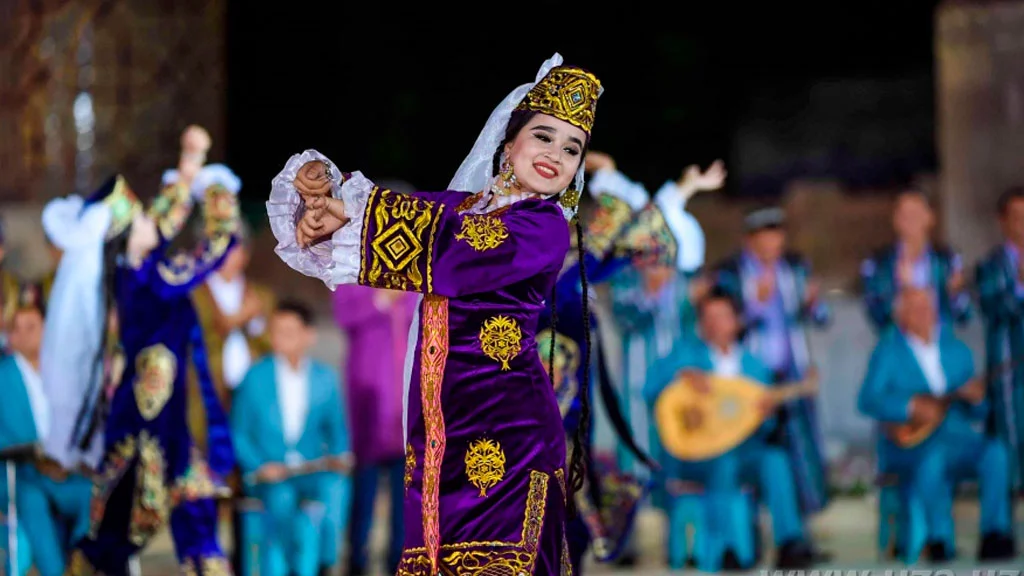
The XIII International Music Festival “Sharq Taronalari” will be held in Samarkand from August 26 to 30 under the auspices of UNESCO, the Ministry of Culture in Uzbekistan reported. “‘Sharq Taronalari’ is considered one of the largest festivals in Central Asia. The main objectives of the festival are to promote achievements in national musical art to the wider public, to preserve and develop the cultures and traditions of nations, to support talented youth in the fields of music and singing, and to expand international creative ties while promoting the ideals of peace, friendship, and mutual tolerance,” according to the festival's press release. More than 300 delegates from 70 countries are expected to participate in the festival this year. As of August 1, delegates from 62 countries have expressed their desire to participate, and applications for the festival are still being accepted. The festival’s opening ceremony will be held on August 26. On August 27-28, an international scientific and practical conference on “Music Culture of Eastern Peoples: Principles of Creative Convergence in the Processes of Globalization” is scheduled. On August 27-29, a competition will be held, and an international jury will evaluate the participants' performances. The closing ceremony will be held on August 30, and the winners will be announced. The “Grand Prix” of $10,000 will not be awarded, however, if a worthy candidate is not found according to the decision of jury.

Steel Highways: The State of Central Asia’s Railways

Railways in Central Asia have always played an important political and economic role, but amid the current geopolitical turbulence, they have become a crucial means of  transporting  goods from China to Europe and the Middle East, bypassing sanctioned Russia. But what is the state of  Central Asia's railway industry, and is it up to the new challenges? The history of rail transport in Central Asia dates back to the end of the 19th century. In 1874, a special commission of the Russian Empire recognized the need to construct a line from Orenburg to Tashkent. Later, however, strategic considerations forced a change of plan and to ensure a stable connection between the Turkestan and Caucasus regions, the first steel highway in Central Asia would be built to connect Tashkent with the eastern coast of the Caspian Sea. This was an active period of the so-called Great Game, when Russia and Great Britain competed in Central Asia. Since then, the geopolitical importance of railways in the region, which lacks access to oceans, has not decreased whatsoever. Indeed, amid armed conflicts in the Middle East and between Russia and Ukraine, railways have become even more important given their role in ensuring the movement of goods along the Trans-Caspian International Transport Route (TITR) and the International North-South Transport Corridor (INSTC). Against this backdrop, Kazakhstan's President Kassym-Jomart Tokayev has tasked the national railway company Kazakhstan Temir Zholy (KTZ) with leading the transformation of the country into a transport and logistics hub.   Kazakhstan: A story of steady development The length of Kazakhstan's mainline rail network is over 16,000 km, with over 800 stations and crossing points. The freight car fleet exceeds 120,000 units, while locomotives number more than 1,700. Kazakhstan’s railways account for 70% of freight traffic, and 60% of passenger traffic in the country. Just under 1% of the country’s population is employed in the rail industry. According to the KTZ's annual report in 2023, container transit rose 14% year-over-year to 1.282 million TEU (twenty-foot equivalent units), which drove a 30.6% year-on-year rise in operating income to KZT1.934 trillion, while net profit came in at KZT136.8 billion ($286.8 million). The volume of freight transported between Kazakhstan and China was also up 22% to 28 million tons. In addition, KTZ reported the completion of large-scale track repairs in 2023, with 1,443 km of railway track repaired, double the figure achieved in 2022. The start of large infrastructure projects was also noted. In particular, construction was launched of the Darbaza–Maktaaral and Bakhty–Ayagoz lines (with a third border crossing with China set to be opened in 2027), while construction of the bypass line around Almaty also commenced. Over 300 km of the second track was laid on the Dostyk-Moyynty railway section. Finally, a Kazakh transport and logistics terminal was opened in the Chinese dry port of Xi'an.   Uzbekistan: First high-speed rail in Central Asia O’zbekiston Temir Yo’llari (UTY), Uzbekistan's national rail carrier, was founded on November 7, 1994, taking over the lines of the Soviet-era Middle...

Taliban Announces Revision of Borders With Central Asian Countries

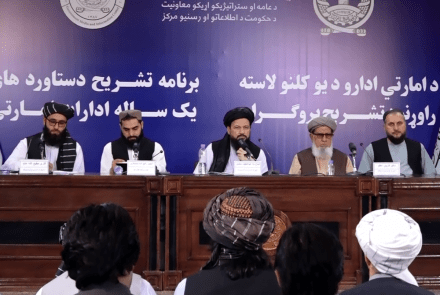
According to the acting Afghan Minister of Energy and Water Resources, Abdul Latif Mansour, Afghanistan's borders with Central Asian countries, which have been eroded, will be revised. "Due to floods, our borders with Tajikistan, Uzbekistan, and Turkmenistan were eroded. We are working to restore these borders and have already discussed this issue with our supreme leader," Mansour said. However, it is still unclear whether the neighboring states have been notified. Mansour stressed that the plan to revise the borders, developed on the instructions of the Islamic Emirati leader, Haibatullah Akhundzad, will be implemented jointly with the ministries of the Interior, Foreign Affairs, Defense, and the General Intelligence Directorate. Mansour did not disclose the details of the strategy, but the ministry spokesman assured those assembled that Afghanistan's actions on water resources management will not harm neighboring countries. It should be noted that the borders of Tajikistan, Uzbekistan, and partially Turkmenistan, along with Afghanistan, run along the Amu Darya River. When the Taliban returned to power in Afghanistan, construction of the Qosh-Tepa irrigation canal, which originates from the Amu Darya, began. Once completed, the canal will supply water to the agricultural northern provinces of Faryab and Balkh. Additionally, land for three projects will be allocated, including provisions for Jawzjan. These plans have raised concerns in neighboring Central Asian countries, especially Uzbekistan and Turkmenistan, which depend on water from the Amu Darya. However, the Afghan authorities argue they have a legal right to their share of the river's flow, which they have not yet utilized.

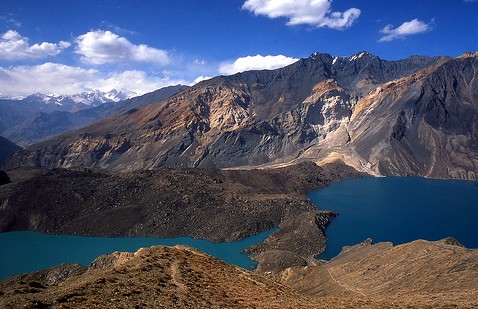
Tajikistan and Uzbekistan Discuss Using Lake Sarez For Drinking Water

On August 3, a Tajik-Uzbek working group on the shared use of water from Central Asia's transboundary rivers met in Dushanbe. Participants discussed the potential for using the water from Lake Sarez, in the Tajik National Park in the east of the country, to provide Central Asian countries with clean drinking water. Other potential joint projects between Tajikistan and Uzbekistan in the field of water management were also considered. In 2018, the presidents of Tajikistan and Uzbekistan, Emomali Rahmon and Shavkat Mirziyoyev, first discussed using the Sarez freshwater as drinking water, during a visit by Rahmon to Uzbekistan. The nations subsequently commissioned a feasibility study from the Intergovernmental Joint Commission on Trade and Economic Cooperation. Rahmon has repeatedly emphasized that Tajikistan has ample freshwater resources, and has previously used speeches at political forums to suggest using the Sarez mountain lake to provide Central Asian countries with drinking water. The Tajik government has also offered to supply drinking water from Sarez to Iran, Jordan, and the United Arab Emirates. The Times of Central Asia has previously written that Central Asia will face severe water shortages in the coming years. More than 80% of the available water in Central Asia is used for irrigation, 40% of which is lost during delivery in the fields. With the commissioning of the Qosh Tepa canal in Afghanistan, the water shortage will become even more serious from 2028. The chairman of the Eurasian Development Bank, Nikolay Podguzov, has warned that the Qosh Tepa's construction could threaten Central Asia's water balance.