Viewing results 223 - 228 of 354
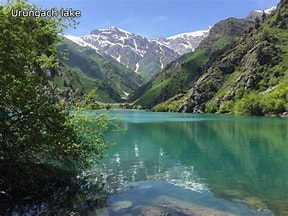
On 3 June, Uzbekistan President Shavkat Mirziyoyev chaired a government meeting to review plans for the forthcoming year to attract 11 million foreign tourists and increase revenue from tourism to $2.5 billion. It was stated that every dollar currently invested in tourism generates 3-4 dollars for the industry’s future and each new job created in the tourism sector spawns two jobs in related industries. Officials reported that to encourage growth, procedures for running tourism businesses have been simplified and specialized policing created to ensure the safety of tourists. Given the year-on-year increase in extreme tourism, Uzbekistan is developing a program to meet demand for access to its wilder regions. To expand tourism around the country’s natural lakes, a decision was made to auction land for the construction of water parks and other attractions around these scenic shores. Triggered by the pandemic, the demand for medical and recreational tourism has soared and last year alone, over 60 thousand foreign visitors were treated in Uzbekistan’s sanatoriums and medical institutions. In response and based on practices in South Korea, Turkey, and India, the government has launched a “Medical Hospitality” initiative. From now on, costs incurred by private clinics for international certification and participation in overseas exhibitions to promote their services, will be covered by the state. In addition, VAT will be refunded on payments made by foreign patients attending Uzbekistan’s clinics. To maximize its potential, the president recommended the launch of a global advertising campaign to demonstrate to the full, the diversity of Uzbekistan’s tourist industry.
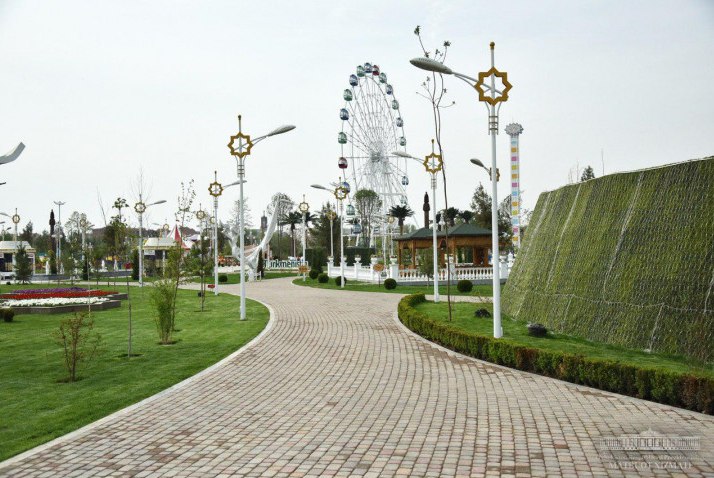
The director, deputy, and head of marketing of the Ashgabat Park in Tashkent have been arrested and detained for 15 days for violating the rules of mass events. According to Gazeta.uz reports, the arrests were made after some 40,000 people had gathered in the park in the hope of receiving free toys. The throng had responded to an advertisement circulated on social media announcing the free distribution of 20,000 soft toys and ice cream at noon on 1 June. However, according to the Department of Internal Affairs, the park's management had been pre- warned and then instructed to cancel the event because of the risks posed by a mass gathering within the park's territory and the event's non-compliance with traffic and citizen safety guidelines. By failing to comply, the park's administration created a danger to citizens and traffic jams at the park's entrance and exit, on some internal routes, and roads leading to the park. The Yashnabad District Department of Internal Affairs drew up an administrative protocol against the park director, deputy director, and head of the advertising department, followed by a sentence of 15 days of administrative arrest imposed by the District Court. The Department of Internal Affairs also published a reminder that according to the requirements of the Cabinet of Ministers resolution of July 29, 2014 (#205), permission to hold mass events must be submitted one month in advance.
On 2 June, Qatar Airways’ first scheduled flight from Doha landed at Tashkent Airport. According to Uzbekistan’s Ministry of Transport, the airline will initially operate four flights a week between Doha and Tashkent before introducing daily flights. The opening of regular flights will make a significant contribution to the growth of tourism between the two countries as well as benefitting the development of multifaceted cooperation between the Persian Gulf and Central Asia. In his presentation at the opening ceremony of the new air service at Tashkent International Airport, reported by Novosti Uzbekistana , Marwan Koleilat Senior Vice President, East Asia & South West Pacific at Qatar Airways, stated: “Tashkent has become a new point in the geography of our route network. We are confident that this new route will not only strengthen ties between Qatar and Uzbekistan, but will also open doors for business, tourism and cultural exchange. Passenger flights on the route Doha-Tashkent-Doha will be carried out four times a week — on Mondays, Wednesdays, Fridays, and Sundays — on Airbus A320 aircraft. In the future, we are considering both increasing the frequency of flights to Tashkent and launching flights to Bukhara and Samarkand.”
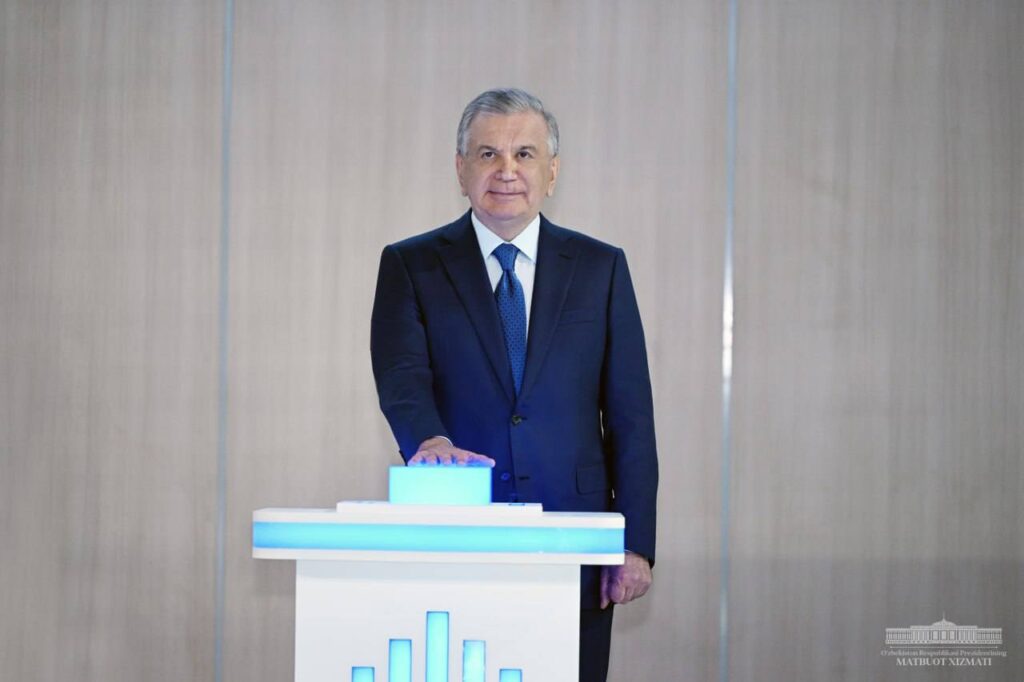
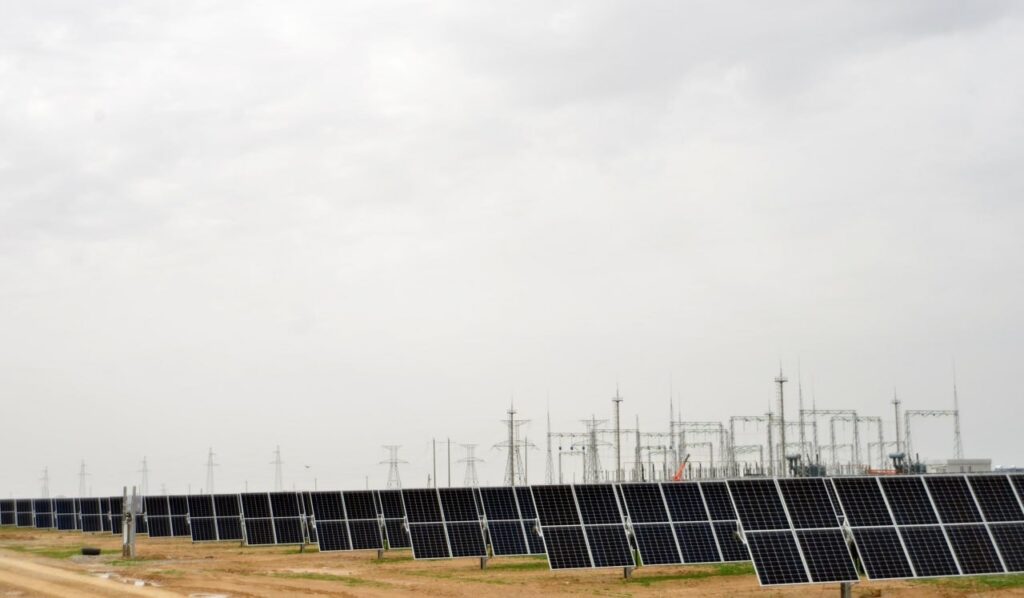
On May 31, construction began on three large facilities in Uzbekistan’s Bukhara region. Officially launched by President Shavkat Mirziyoyev, the ambitious development comprises a gas chemical complex, a solar power plant, and an international airport. The gas chemical complex, to be built in the Karakul free economic zone, is the first plant in the country to employ methanol- to- olefins (MTO) technology. The project aims to attract some $5 billion in investments and advanced technologies from the USA, Germany, Denmark, Austria, Italy, and China. Once completed, the complex will process 1.3 billion cubic meters of natural gas and 430 thousand tons of naphtha per year and manufacture 1.1 million tons of polymer products, in high demand by both domestic and global markets. Two thousand new jobs will be created. The second facility, a 250-megawatt solar power plant to be built by Masdar from the United Arab Emirates, will be connected to the unified energy grid in December 2025. The third initiative is a new international airport which will be much welcomed by the ever-increasing volume of foreign tourists visiting Uzbekistan. In 2023 alone, some 1.4 million tourists flew into Bukhara. Built through private partnership at a cost of $226 million, the airport will have the capacity to process 1.2 thousand passengers per hour. Designed to meet international standards, the airport will both improve the quality of service and help attract more international airlines to Bukhara.
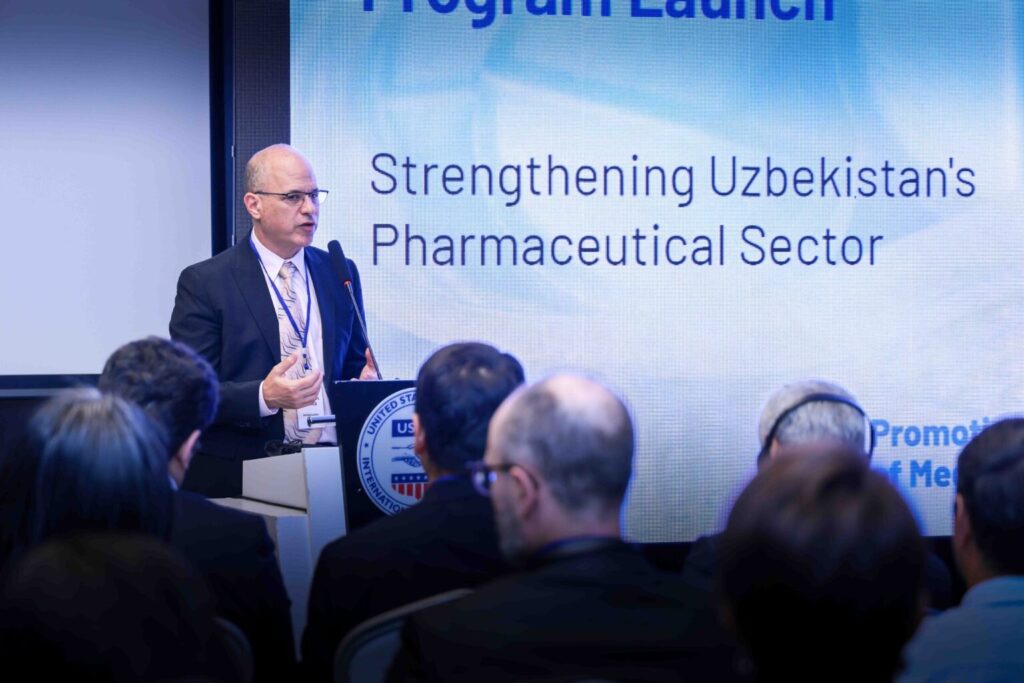
The launch of USAID’s Diversifying Asia’s Pharmaceutical Supply Chain project was attended by U.S. Ambassador to Uzbekistan Jonathan Henick and representatives of the country’s Ministry of Health and Agency for Development of the Pharmaceutical Industry. Running for two years and costing US $2.5 million, the project aims to strengthen local pharmaceutical regulation, enhance local technology and workforce skills, and attract investment in the industry. It will also ensure that medicines produced in Uzbekistan meet both national and international quality standards. Speaking at the launch, Henick stated, “Through our partnership, we will improve the health of the people of Uzbekistan while also improving the strength and responsiveness of the public and private pharmaceutical sectors. By aligning with global standards, we not only protect patients but also boost trust in local medicines, pharmaceutical companies, pharmacists, and the healthcare system as a whole.” A key objective of the project is promoting domestic production of medicines to boost the sector's contribution to the nation’s economic growth. Despite being Central Asia’s largest pharmaceutical supplier, with over 220 private manufacturers, Uzbekistan still relies heavily on imported medicines and raw materials. To address this issue, the Government of Uzbekistan offers various means of support and incentives for local manufacturers including import substitution and robust quality control regulations. Uzbekistan currently produces around 45% of the country’s medicines, a figure which the government aims to increase to 80% by 2026.
China Datang Overseas Investment Co. Ltd is poised to construct a solar photovoltaic power plant with a capacity of 263 MW in the Buka district of Tashkent, Uzbekistan. The project was approved by a Resolution of the President of Uzbekistan, dated 24 May, 2024. To secure its implementation, the Chinese company aims to attract $150 million in foreign investment and the National Electric Networks of Uzbekistan has guaranteed to purchase electrical energy generated by the new power plant for 25 years. According to the resolution, the main objectives of the new solar plant are to ensure a stable supply of electricity to both the local population and economic sectors, reduce natural gas consumption in electricity generation, and attract foreign investment in expanding the use of renewable energy sources in Uzbekistan.