• KGS/USD = 0.01144 0%
  • KZT/USD = 0.00201 0%
  • TJS/USD = 0.10486 0.48%
  • UZS/USD = 0.00008 0%
  • TMT/USD = 0.28571 0%
  • KGS/USD = 0.01144 0%
  • KZT/USD = 0.00201 0%
  • TJS/USD = 0.10486 0.48%
  • UZS/USD = 0.00008 0%
  • TMT/USD = 0.28571 0%
  • KGS/USD = 0.01144 0%
  • KZT/USD = 0.00201 0%
  • TJS/USD = 0.10486 0.48%
  • UZS/USD = 0.00008 0%
  • TMT/USD = 0.28571 0%
  • KGS/USD = 0.01144 0%
  • KZT/USD = 0.00201 0%
  • TJS/USD = 0.10486 0.48%
  • UZS/USD = 0.00008 0%
  • TMT/USD = 0.28571 0%
  • KGS/USD = 0.01144 0%
  • KZT/USD = 0.00201 0%
  • TJS/USD = 0.10486 0.48%
  • UZS/USD = 0.00008 0%
  • TMT/USD = 0.28571 0%
  • KGS/USD = 0.01144 0%
  • KZT/USD = 0.00201 0%
  • TJS/USD = 0.10486 0.48%
  • UZS/USD = 0.00008 0%
  • TMT/USD = 0.28571 0%
  • KGS/USD = 0.01144 0%
  • KZT/USD = 0.00201 0%
  • TJS/USD = 0.10486 0.48%
  • UZS/USD = 0.00008 0%
  • TMT/USD = 0.28571 0%
  • KGS/USD = 0.01144 0%
  • KZT/USD = 0.00201 0%
  • TJS/USD = 0.10486 0.48%
  • UZS/USD = 0.00008 0%
  • TMT/USD = 0.28571 0%

Viewing results 61 - 66 of 105

The Aral Sea: Addressing Water Issues, Crisis, and Striving for a Better Life in Central Asia

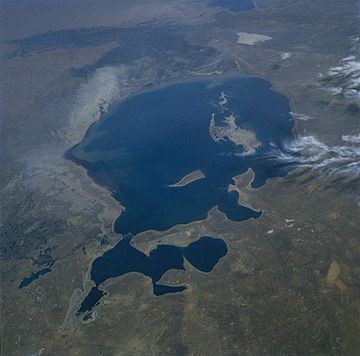
By Arindam Banik and Muhtor Nasirov   The world is currently grappling with the devastating impact of climate change, as rising temperatures have become an undeniable reality. In January 2024, the global temperature exceeded normal levels for the second consecutive month, pushing the global average temperature over the 1.5-degree threshold for the first time. Many human activities, such as unplanned water use, excessive groundwater extraction, and climate change, are thought to be contributing to this situation. One poignant example is the case of the Aral Sea in Central Asia. This once breathtaking and teeming endorheic lake, nestled between Kazakhstan and Uzbekistan, was not just a body of water. It was a symbol of life, a testament to the beauty and resilience of nature. Its azure waters and diverse marine life were a source of sustenance and livelihood for the region's people. It was a vibrant ecosystem, nourished by the almost entire flow of the two main rivers, the Amu Darya and the Syr Darya, in the upstream region of Central Asia. Interestingly, the Amu Darya River used to flow into the Caspian Sea through Uzboy Channel. However, a significant shift occurred during human settlement when the flow of these rivers was redirected into the Aral Sea, marking a crucial turning point in the region's hydrological history. Despite its former glory as the third-largest lake in the world, covering an area of 68,000 km2 (26,300 sq miles), the Aral Sea began shrinking in the 1960s after the rivers that fed it were diverted to support large-scale irrigation for cotton production intended for export. The irrigated area in the Aral Sea Basin has now expanded to eight million hectares. By 2007, it had decreased to only 10 percent of its original size, dividing into four lakes. By 2009, the southeastern lake had vanished, and the southwestern lake had shrunk to a thin strip at the western edge of the former southern sea. In the following years, occasional water flows partially replenished the southeastern lake. In August 2014, NASA satellite images revealed that the eastern basin of the Aral Sea had completely dried up, leading to the formation of the Aralkum Desert. This dramatic change has severely impacted the ecology, risking the survival of numerous fish subspecies and three endemic sturgeon species. The loss of these species disrupts the natural balance and affects the livelihoods of the local communities that depend on fishing. The herring, sand smelt, and gobies were the first planktivorous fish in the lake, and their decline led to the lake's zooplankton population collapse. Consequently, the herring and sand-smelt populations have not recovered. Except for the carp, snakehead, and possibly the pipefish, all introduced species survived the lake’s shrinkage and increased salinity. In an attempt to revive fisheries, the European flounder was introduced. This situation is urgent as the delicate balance of this ecosystem is on the verge of collapse. The region's once-prosperous fishing industry has been devastated, leading to unemployment and economic hardship. Additionally, the diverted Syr Darya River...

Nuclear Power in Uzbekistan Has a Political Aspect – Economist Behzod Hoshimov

A Russian-built and managed nuclear power plant (NPP) is under construction in Uzbekistan's Jizzakh region. However, some experts are not convinced about the project's feasibility. One of them is Uzbek economist Behzod Hoshimov, who has been speaking recently about the economic and political aspects of Rosatom's foray into Uzbekistan. According to Hoshimov, the problem is not the lack of reform in the electricity and energy sectors, but rather poor policy and management. “Even now, without any nuclear power plants, we can import electricity or fuel for its production, and we can attract companies that produce solar energy at fairly normal prices. Therefore, the problem of "lack of electricity" results from artificially created, mismanaged, and wrongly constructed electricity policy. The construction of NPP is not a technological problem that can be solved,” the economist writes on his Telegram channel. He raises questions such as whether the decision to build a nuclear power plant was economically feasible, and how much money the Uzbek government will spend on its construction. “Will it be financed from other financial sources, including the state debt, and most importantly, if the state is building, how much will it cost the people of Uzbekistan?" The amounts intended to be used from all state and non-state financial sources must be fully and completely disclosed. This fiscal requirement is also defined in our constitution,” Hoshimov adds. “But more importantly, there are other conditions in the deal, which are more important than the station's price. We need to talk about them. It is very important who manages the station and at what price electricity is sold. In Turkey, Russia has built entirely at its own expense and made a deal for 12.5 cents per 1 kilowatt hour of energy. There is a reasonable question about whether we should take it under the same conditions. Today, if there are cheaper generation sources in Uzbekistan, how much more expensive nuclear energy is necessary?” Hoshimov has noted that there are also political aspects to the issue: “The second thing that applies to all state expenditures, especially large and important ones, is choosing a contractor. Did companies other than "Rosatom" participate in the tender? Countries like France and Japan have highly developed atomic energy, and they also build excellent stations. What did their companies offer to our government? Why "Rosatom?" The reason I ask this question is, of course, that there is no place for politics in such a thing. Europe has almost completely abandoned Russian energy – the reason for this was the full-fledged war in Europe. Once upon a time, Germany decided that Russian energy was cheap, not considering political calculations but relying only on economic calculations, and this decision cost a lot. But for a much smaller country like ours, the fact that the main contractor in the NPP is the Russian state and a state-owned enterprise should be a very big question.” He also points out: "If the Japanese and the Russians offer the same price, I would say that the Japanese should be...

Is the China–Kyrgyzstan–Uzbekistan Railway Project Losing Steam Again?

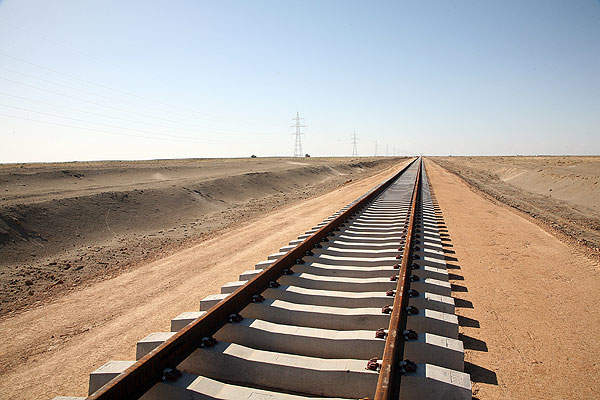
By Robert M. Cutler The China–Kyrgyzstan–Uzbekistan (CKU) railway was first proposed in 1997. There seemed finally to be a prospect for a start to the project after agreements at the Xi'an summit amongst China and the five Central Asian countries in May 2023. Construction on the 523-kilometre route was scheduled to begin several months after, but this has still not happened. Disagreements over the route and—still worse—over the funding risk relegating the project back to the drawing-boards where it has languished for over a quarter-century. After the initial agreement in 1997, it was these essentially unchanging disagreements over financing and the route within Kyrgyzstan that stalled negotiations, and over a final agreement of conditions for its construction in the early 2000s. These disagreements concern the geo-economic strategies of the respective parties, and they have not changed in over two decades.  China favors a shorter route, while Kyrgyzstan pushes for a longer one to benefit its domestic infrastructure. Specifically, Kyrgyzstan wants to use the railway's construction to establish better connections between the northern and southern parts of the country, which are separated by a mountain range.   Further difficulties in CKU implementation For Uzbekistan, a turning-point was its decision in 2017 to send railway experts to discuss the project with Kyrgyzstan. Then in 2019, Uzbekistan invited Turkey to co-finance the Kyrgyz section. The current cost of the whole project is estimated at $6 billion. A preliminary agreement has been reached on the division of this total, according to which each of the three parties will contribute 30 per cent (but at different stages of the project), with the source of the final 10 per cent including the cost of the feasibility study still to be determined. Despite this progress, public concerns in Kyrgyzstan over several critical practical issues remain unaddressed and continue to complicate a final agreement. These include the anticipated influx of Chinese workers, the professional development of local railway engineers, the allocation of investments for industrial projects along the railway corridor and the facilitation of increased exports of Kyrgyzstan's products to the Chinese market. These elements are essential for the long-term viability and success of the CKU railway initiative. Interestingly, these are very similar to the concerns of Kazakhstan that delayed the construction of the first (i.e., the Atasu–Alashankou) segment of the Kazakhstan–China oil export pipeline in the early 2000s. Moreover, China originally insisted on compensation from Bishkek for its contribution in the form of ownership of Kyrgyz mines, including the world’s second-largest iron-ore reserve at Zhetim Too, which Kyrgyz President Sadyr Japarov claims is worth at least $50 billion. It does not help matters that this site adjoins a large glacier, the water from which is crucial for irrigation of major Kyrgyz agricultural holdings.   Other Uzbek initiatives for infrastructure connectivity On 1 November 2023, at a forum of the Shanghai Co-operation Organization (SCO) meeting in Tashkent, transportation officials from Uzbekistan, Kyrgyzstan and Russia signed a memorandum to establish a new Kyrgyzstan–Russia trade corridor through Turkmenistan (who, incidentally,...

What Will Uzbekistan’s Role in Central Asia’s Connectivity Be?

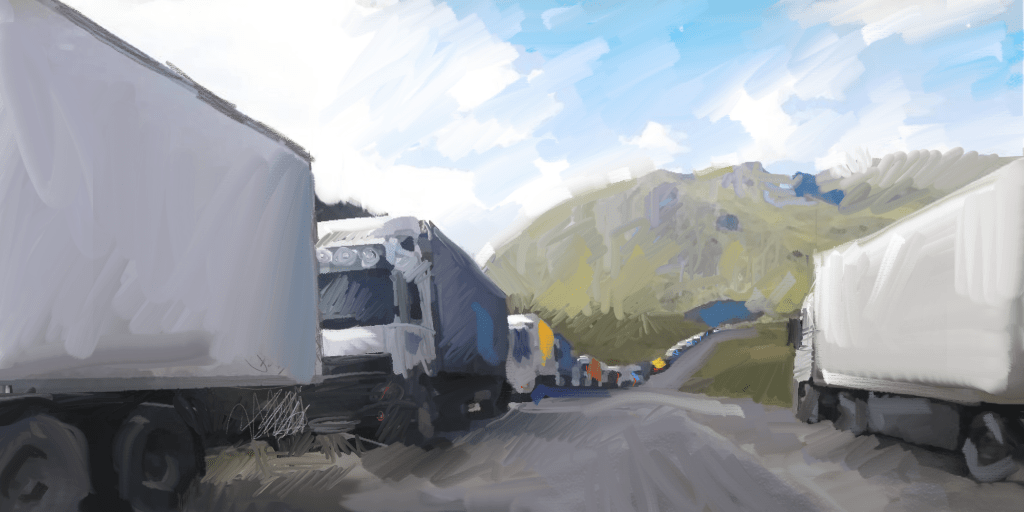
By Robert M. Cutler A new World Bank report on Central Asian connectivity published in April 2024 highlights the importance of the Middle Corridor, a trade route spanning Central Asia, the Caspian Sea, and the Caucasus, connecting China and East Asia with Georgia, Turkey, and Europe. This corridor is seen as a critical alternative to Russian-controlled routes, especially in light of recent geopolitical tensions. The World Bank identifies ten steps to address bottlenecks in the Middle Corridor, aiming to increase trade volumes by tripling them by 2030. This would significantly reduce travel times and increase trade volumes to 11 million tons, with proper investment and efficiency measures in place.   Uzbekistan and the Middle Corridor The report emphasizes the need for a "holistic" approach to improving transport connectivity in Central Asia. By this, it means a comprehensive and integrated strategy that combines improvements in infrastructure and logistics improvements with a reduction in border delays and tariffs, along with the harmonization of standards across countries. This includes improving both physical and digital infrastructure, enhancing governance and efficiency and addressing productivity issues amongst the state-owned enterprises that dominate the transport sectors in the region. The World Bank notes that Uzbekistan would profit from better rail connections with Kazakhstan; yet it does not identify any potentials for such projects. That is likely because a report by the Bank identified the Trans-Caspian International Trade Route (TITR) through southern Kazakhstan as the preferred program for international support.  Uzbekistan's participation in the Middle Corridor is still in a developmental stage. Tashkent has an active interest and a strategic geographic location, but concrete actions and project details are still emerging. There have been no public announcements about specific infrastructure projects or investments that Uzbekistan is undertaking within the Middle Corridor framework. It can be foreseen, however, that railway modernization should be high on the list of programs. There is, however, a new railway project - the Darbaza–Maktaaral line - currently underway in Kazakhstan that could be extended to improve connectivity with Uzbekistan. It is projected for completion in 2025. A second phase including an extension to Kazakhstan's Syrdarya station could then facilitate a further branch line from Syrdarya to Zhetysai, on the border with Uzbekistan. This project would reduce congestion at the existing Saryagash border crossing between the two countries and thus increase the capacity for transporting goods between the two countries by as much as 10 million tons per year.   The Middle Corridor and improvements to digital connectivity At present, the region has only limited connectivity.  The Central Asian countries have heavily invested in infrastructure since the turn of the century, but the region still lags behind middle-income countries in both investment and maintenance. Most areas continue to suffer from insufficient infrastructure and expensive services. These in turn hinder the potential for internal and external trade. The World Bank's report also provides a comprehensive analysis of the challenges and opportunities for enhancing connectivity in Central Asia. For this purpose, it focuses on both physical and...

Uzbekistan Seeks to Expand Trade Horizons with Europe

- Opinion by Robert Cutler   Uzbekistan's economic landscape has been evolving, with announcements of major reforms and international cooperation aimed at economic modernization and increasing its profile in global markets. Its partnership with the European Union (EU) has focused on critical raw materials. At the same time, Tashkent plans to reduce gas exports in favour of expanding petrochemical production and inviting foreign investment into its mining sector. In October 2023, the European Parliament (EP) had endorsed this policy direction by adopting a resolution on Uzbekistan based on a series of broad programmatic documents regarding Central Asia, including a previous Memorandum of Understanding (MoU) with Uzbekistan on energy cooperation. The EP also favorably mentioned the Enhanced Partnership and Cooperation Agreement (EPCA) concluded in July 2022 to "modernize" the EU's Partnership and Cooperation Agreement signed with Uzbekistan in 1999. A new MoU signed earlier this month by the European Commission’s Executive Vice-President Valdis Dombrovskis and Uzbekistan's Minister of Investment, Industry and Trade Laziz Kudratov foresees an ambitious intensification of the partnership. The agreement is touted as a step towards diversifying supply chains to Europe for critical raw materials (CRMs) required for the energy transition.   The EU's strategic economic partnership with Uzbekistan The new MoU follows on the EU's 25 October 2023 agreement with Uzbekistan during the Global Gateway Forum. That agreement had confirmed that Uzbekistan, with its reserves of metals such as silver, titanium, and lithium, would join the so-called Critical Raw Materials Forum. However, a critical evaluation of the MoU shows that a lot of hard work will be necessary to realize its plans and promises. In fact, the MoU represents a list of possibilities for cooperation without a guarantee of follow-through. The new partnership focuses on a number of areas of potential collaboration. These may be grouped under three general categories: (1) integrating CRM value and supply chains and their resilience; (2) mobilization of funding; and (3) cooperation on production, research, innovation and capacity building. The MoU itself admits that further specific cooperation is required to establish an operational roadmap that would specify particular joint actions for implementation. This partnership is in line with the EU's Global Gateway Initiative, which seeks to mobilize up to €300 billion in investments by 2027, although the initiative has been criticized for largely being a re-packaging of previously established programs without significant new funding. As far as Uzbekistan is concerned, the big unspoken problem is the need to enhance the country's economic competitiveness in global markets.   Uzbekistan's mineral resources exploration Only about 20 percent of Uzbekistan’s territory has been explored. Potential mineral resources are evaluated at US$5.7 billion, with the country’s explored reserves representing about US$1 billion of this amount. This unexplored potential represents a significant opportunity for further enhancing Uzbekistan's potential global competitiveness in the mineral resources sector, but only if transportation logistics can be economically put into place. According to the U.S. Geological Service, Uzbekistan also has reserves of other minerals - such as calcium, kaolin, rhenium and vermiculite...

Uzbekistan: From Silk Roads to New Horizons

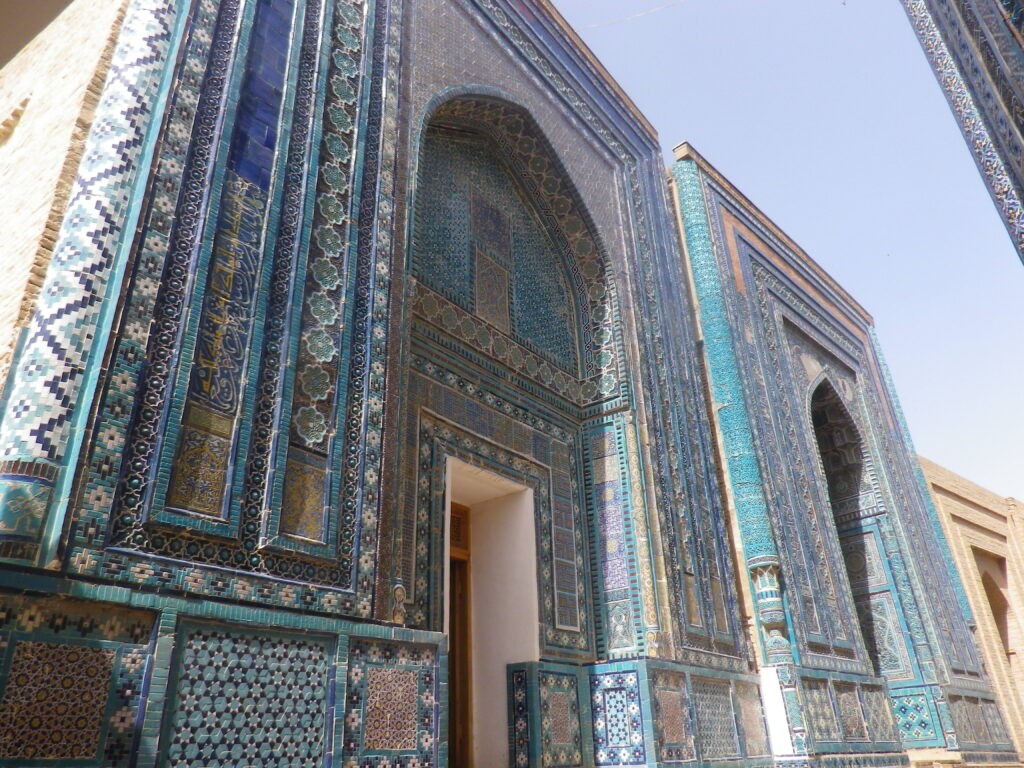
Cradled by the embrace of the Syr Darya and Amu Darya Rivers, Uzbekistan boasts a rich tapestry woven from the threads of history. Being home to trade hubs like Samarkand and Bukhara, this land has been at the center of cultural exchange for over a millennia. From the Turkic-Mongol tribes creating the foundation of Uzbek civilization to the fall of the Soviet Union giving birth to the nation we know now, the history of Uzbekistan consists of a captivating blend of conquests and resilience. In 2016, following the demise of Islam Karimov, who ruled the country for 25 years, Shavkat Mirziyoyev came to power promising to lead Uzbekistan into a new and more progressive era. With a focus on modernization and reforms, Mirziyoyev envisioned bringing the nation out of his predecessor's repressive tenure and propelling it forward while honoring the country’s cherished traditions. With Uzbekistan trying to find its place in the modern world, the President has a significant duty to realize the nation’s potential found in its youthful population and strategic location. Mirziyoyev’s time in office has allowed the country to witness the beginning of a new chapter, with a special focus on economic and social reforms. The economy is on its way to becoming a modern market economy as reforms have opened the doors for foreign investors to direct their money into the country. Uzbekistan’s per capita income tells the story of a rising nation, reaching $1,705 in 2023, an increase of $100 compared to the previous year and a testament to the government's commitment to transforming towards a market-oriented economy. To create a conducive environment for businesses and especially foreign investors, the foreign exchange market was liberalized, and exchange rates were unified, bringing down tax rates for people and firms. The country has also allowed visa-free entry to attract tourists from around the world to their turquoise-domed cities and promote business and tourism. Coupled with all this, the country is also moving towards more relaxed trade policies, where it has opened previously closed borders with neighboring nations, including Kazakhstan, which is currently one of Uzbekistan’s top export destinations. With this modified attitude, the country’s role in international trade has dramatically evolved, making it a significant player in the Central Asian market. Over the past few years, the nation has shown great interest in joining the World Trade Organization (WTO), which will further improve its access to the global landscape. However, until Uzbekistan gains member status, the government hopes to boost their export capabilities by attracting foreign capital and technology through liberalizing trade and investment. Along with this, export permit and licensing requirements were also abolished for wholesale traders. While these measures have allowed the country to take a decisive step towards progression and development, several areas still necessitate immediate action, such as transportation networks and communication infrastructure, which are required to facilitate international trade. Previously, the country primarily focused on the export of cotton but is now expanding into other areas, including oil, gas, and gold. Another...