
• KGS/USD = 0.01144 0%
  • KZT/USD = 0.00210 0%
  • TJS/USD = 0.10563 0%
  • UZS/USD = 0.00008 0%
  • TMT/USD = 0.28530 0%
  • KGS/USD = 0.01144 0%
  • KZT/USD = 0.00210 0%
  • TJS/USD = 0.10563 0%
  • UZS/USD = 0.00008 0%
  • TMT/USD = 0.28530 0%
  • KGS/USD = 0.01144 0%
  • KZT/USD = 0.00210 0%
  • TJS/USD = 0.10563 0%
  • UZS/USD = 0.00008 0%
  • TMT/USD = 0.28530 0%
  • KGS/USD = 0.01144 0%
  • KZT/USD = 0.00210 0%
  • TJS/USD = 0.10563 0%
  • UZS/USD = 0.00008 0%
  • TMT/USD = 0.28530 0%
  • KGS/USD = 0.01144 0%
  • KZT/USD = 0.00210 0%
  • TJS/USD = 0.10563 0%
  • UZS/USD = 0.00008 0%
  • TMT/USD = 0.28530 0%
  • KGS/USD = 0.01144 0%
  • KZT/USD = 0.00210 0%
  • TJS/USD = 0.10563 0%
  • UZS/USD = 0.00008 0%
  • TMT/USD = 0.28530 0%
  • KGS/USD = 0.01144 0%
  • KZT/USD = 0.00210 0%
  • TJS/USD = 0.10563 0%
  • UZS/USD = 0.00008 0%
  • TMT/USD = 0.28530 0%
  • KGS/USD = 0.01144 0%
  • KZT/USD = 0.00210 0%
  • TJS/USD = 0.10563 0%
  • UZS/USD = 0.00008 0%
  • TMT/USD = 0.28530 0%

Viewing results 73 - 78 of 111

Central Asia’s Growing Economic and Strategic Importance Comes to Fore

The Central Asian region has experienced a tremendous economic transformation since the beginning of the century. Its aggregate gross domestic product (GDP) now totals $397 billion, growing 8.6-fold since the year 2000. Its share in global GDP in purchasing power parity (PPP) has also increased 1.8 times. The GDP per capita has tripled as the labor pool has grown to almost 80 million, representing a 1.4-fold increase since 2000. The region’s strategic importance, particularly thanks to its geographic position bridging major economies of Europe and Asia, makes it a key player in geopolitical dynamics. Central Asia’s dependence on commodity exports and remittances has so far limited its integration into global value-chains. The Central Asia Regional Economic Co-operation (CAREC) Program, established by the Asian Development Bank (ADB), plays an important role in fostering regional development and co-operation. CAREC includes the five Central Asia countries (namely Kazakhstan, Kyrgyzstan, Uzbekistan, Tajikistan and Turkmenistan) plus Afghanistan, Azerbaijan, China, Georgia, Mongolia and Pakistan. CAREC also partners with five multilateral international institutions in addition to the ADB (which serves as its Secretariat). These are the European Bank for Reconstruction and Development (EBRD), International Monetary Fund (IMF), Islamic Development Bank (IsDB), United Nations Development Program (UNDP) and the World Bank (a.k.a. International Bank for Reconstruction and Development or IBRD). The Program has constructively helped the countries of Central Asia to address challenges in trade governance. Nevertheless, inefficiencies in cross-border transport and customs procedures continue to hinder their commercial exchanges with one another as well as with external partners. CAREC’s current policy-implementation priorities are integration of regional trade, digitization, climate change, regional co-operation, development of financial technologies and financing in the water sector. There is still significant potential for further development given that the region’s trade within itself has been growing faster than its foreign trade. Enhancing Central Asia’s role in the global economy will require the implementation of co-operative initiatives already identified, especially in infrastructure. Such construction of new physical plants, as well as the renovation and building-out of those that already exist, is crucial for enhancing economic growth and sustainability. This strategy will leverage the region’s strengths such as its strategic location and resource endowments. In 2023, Central Asia’s economic growth is projected to remain relatively steady at 3.9 percent, but this may still be affected by the global challenges of weak external demand, rising inflation and supply-chain disruptions. These global economic conditions, along with the uncertainties that they engender, reflect continuing burdens of the ongoing post-COVID recovery as well as the effects of the war in Ukraine, which significantly impacts the region. In addition to the ADB, the IBRD also focuses on various development initiatives in Central Asia that aim to support regional infrastructure development and the strengthening of cross-border co-operation. These are implemented through relatively low-profile initiatives such as the Central Asia Water and Energy Program (CAWEP) to enhance energy and water security and the Central Asia Hydrometeorology Modernization Project (CAHMP) to improve weather, climate and hydrological services. The IBRD thus aims to increase...

What Will the Future Hold for Uzbekistan’s Gas Problems?

What Will the Future Hold for Uzbekistan’s Gas Problems? Can the infrastructure of Uzbekistan carry the country into a geopolitical resource hub? The country has certainly benefited from energy exports: In terms of available reserves, Uzbekneftegaz remains the sacred cow of the state, which has generated significant foreign exchange earnings. Prime Minister Abdulla Aripov even started to switch industrial enterprises “of no social significance” from natural gas to coal so that more gas would be available for export. In 2019, natural gas was sold on the domestic market at a price of US$118 per thousand cubic meters while Uzbekistan sold gas for export at US$145 per thousand cubic meters. The money came in foreign currency. The conversion of small and medium-sized businesses (such as restaurants and factories for the production of building materials) to coal made it possible to free up over 2.1 billion cubic meters of gas, that is, around US$315 million. On the other hand, gas supply on the domestic market left much to be desired. During the winter period, temperatures unexpectedly dropped below -20 degrees Celsius. Due to a lack of heat in residential buildings in November and December in several regions like Andijan, Karakalpakstan, Nukus, Fergana and Khorezm, the population began to attend unauthorized rallies. In 2020, the Ministry of Energy reluctantly admitted that there was a shortage of gas due to depletion of gas fields. On December 16, 2020, the government decided to reduce the export of gas and direct it towards domestic needs. That said, exports were being reduced even earlier than this. In fact, the first reports of the suspension of fuel supplies to other countries appeared in March 2020, when the global COVID-19 pandemic began and the main gas consumer, China, reduced imports from Uzbekistan. In 2021, Uzbekistan once again experienced extremely low air temperatures. Gas exports were again limited. Even though Deputy Chairman of Uzbekneftegaz, Bakhodir Sidikov, said that fuel reserves would last for several decades (in his words, “We have very large, promising areas for geological exploration, but the current approved hydrocarbon reserves will last for 20-30 years”) the coming months proved that these forecasts to be overly optimistic. Soon after, the Ministry of Energy announced that even with limited exports, Uzbekistan lacked about 20 million cubic meters of gas per day. On the night of December 31, 2022, supplies to Uzbekistan from Turkmenistan stopped due to burst gas pipelines. Unusual frosts caused increased gas consumption, resulting in a shortage of fuel for power plants and boiler houses. The country began experiencing long-term power outages, problems with heating, hot water, and gas pressure in homes. Against the backdrop of the emerging energy shortage, the authorities were forced to close gas stations and industrial enterprises in order to distribute the remaining gas to the population and social facilities. And thus, what was already known by many Uzbeks became apparent to the rest of the world. More than half of the gas pipelines in Uzbekistan (45 thousand km) were laid more than...

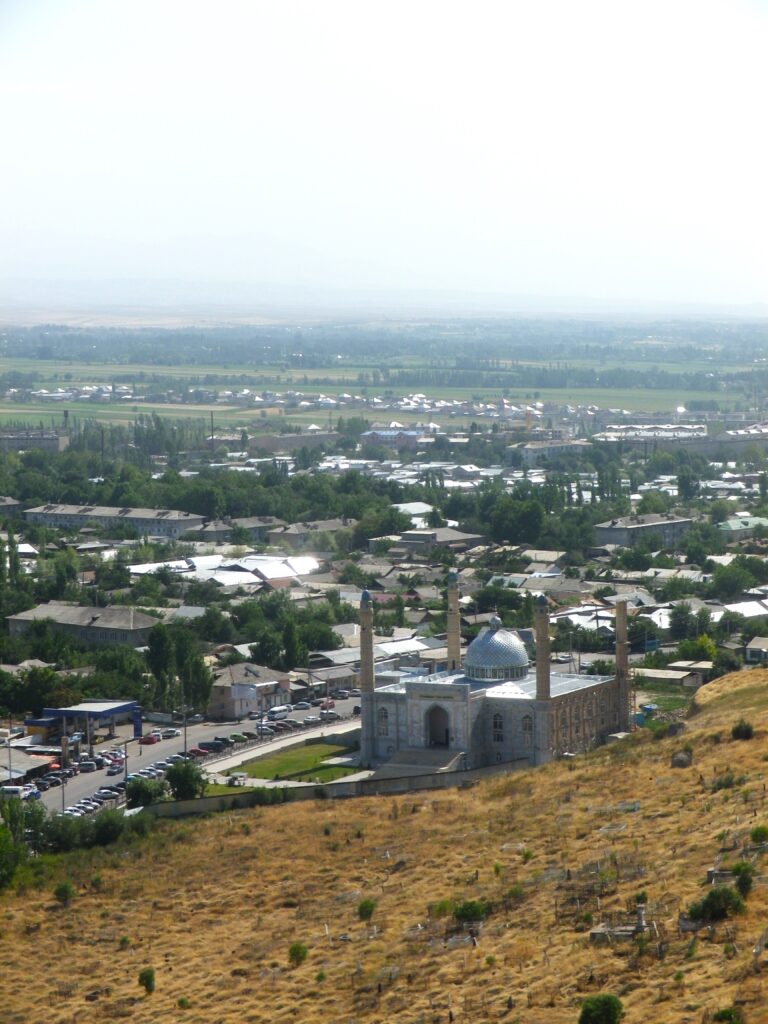
Authorities Close Religious Institutions in Batken Region

On October 10th, Kyrgyzstan’s State Committee of National Security - comprising representatives from the State Committee of National Security, the Emergency Ministry, the Interior Ministry, Health Ministry, the Grand Mufti's office, other state entities and the regional government stated that it had closed 32 mosques and five religious schools in the southern region of Batken. This came following an assessment examining the potential presence of radical Islamic ideology and extremist viewpoints within the religious institutions. Situated on the southern slope of Solomon’s Throne in Osh, Kyrgyzstan’s largest mosque has the capacity to hold 20,000. Built in the 2010s with funds from Saudi Wahhabis, it was inaugurated by former President Atambayev, who, like other regional leaders before him, had been wooed by promises of Saudi money. Sunni supremacists wishing to revert to the seventh-century ways of Mohammed, Wahhabi missionaries first arrived in Central Asia in 1912, setting up cells in Tashkent and the Fergana Valley. Declaring holy war not only on the West, but also on other Muslims, the Wahhabis labelled all who disagreed with them heretics. Having suffered lean times under the Communists, now they were back and loaded with oil money. Of the Osama Bin Laden school of thought, their goal is to destroy secularism and create a region-wide caliphate based on Sharia law, this despite the fact there has never been an Islamic state in Central Asia. Amongst the Wahhabi’s affiliates are the Islamic Movement of Uzbekistan, formed in the early nineties by Tohirijon Yuldashev, a twenty-four-year-old college drop-out, and Juma Namangani, an ex-Soviet paratrooper turned train robber. Raising funds by kidnapping Japanese geologists and American mountaineers, in 2000 the IMU briefly took Osh, holding its mayor for ransom and coming within striking distance of its goal of seizing Tashkent. With the IMU largely absorbed into the Afghan Taliban, ignored warnings of the impending 9/11 attacks on America are said to have emanated from Yuldashev, who like Namangani, has since been killed. Looking to engage those alienated by state-appointed imams, who as a recent recruit noted, offer only ‘prayers for a bigger cotton harvest and instructions for how to go to the bathroom properly,’ the IMU are currently calling for a jihad in Southern Kyrgyzstan. With the IMU mainly moved into Afghanistan and Pakistan, in June of 2014, after swearing allegiance to ISIS, the organization claimed responsibility for the attack on Jinnah International Airport in Karachi, Pakistan, which left 36 dead. There are currently upwards of two thousand ISIS recruits from Central Asia, with the movement's hierarchy focused on recruiting more disaffected Uzbeks.