• KGS/USD = 0.01144 0%
  • KZT/USD = 0.00208 0%
  • TJS/USD = 0.10414 -0.29%
  • UZS/USD = 0.00008 0%
  • TMT/USD = 0.28571 0%
  • KGS/USD = 0.01144 0%
  • KZT/USD = 0.00208 0%
  • TJS/USD = 0.10414 -0.29%
  • UZS/USD = 0.00008 0%
  • TMT/USD = 0.28571 0%
  • KGS/USD = 0.01144 0%
  • KZT/USD = 0.00208 0%
  • TJS/USD = 0.10414 -0.29%
  • UZS/USD = 0.00008 0%
  • TMT/USD = 0.28571 0%
  • KGS/USD = 0.01144 0%
  • KZT/USD = 0.00208 0%
  • TJS/USD = 0.10414 -0.29%
  • UZS/USD = 0.00008 0%
  • TMT/USD = 0.28571 0%
  • KGS/USD = 0.01144 0%
  • KZT/USD = 0.00208 0%
  • TJS/USD = 0.10414 -0.29%
  • UZS/USD = 0.00008 0%
  • TMT/USD = 0.28571 0%
  • KGS/USD = 0.01144 0%
  • KZT/USD = 0.00208 0%
  • TJS/USD = 0.10414 -0.29%
  • UZS/USD = 0.00008 0%
  • TMT/USD = 0.28571 0%
  • KGS/USD = 0.01144 0%
  • KZT/USD = 0.00208 0%
  • TJS/USD = 0.10414 -0.29%
  • UZS/USD = 0.00008 0%
  • TMT/USD = 0.28571 0%
  • KGS/USD = 0.01144 0%
  • KZT/USD = 0.00208 0%
  • TJS/USD = 0.10414 -0.29%
  • UZS/USD = 0.00008 0%
  • TMT/USD = 0.28571 0%

Our People > Jonathan Campion

Jonathan Campion's Avatar

Jonathan Campion

Senior Editor

Jonathan Campion has worked in the Eurasia region since 2007. After leaving Exeter University with a degree in Russian Language, he worked as a writer, editor, analyst and translator for international law firms, market research firms and business forums serving the CIS region's major industries.

With a passion for Central Asia, he has covered the region in esteemed publications such as the Lonely Planet, Open Central Asia magazine, and National Geographic Traveler.

Jonathan's first book, about a sports team from the Eurasia region, was shortlisted at the Charles Tyrwhitt Sports Book Awards in 2025.

Articles

Hydropower, Social Media and Climate Change: Some News From Tajikistan That You May Have Missed

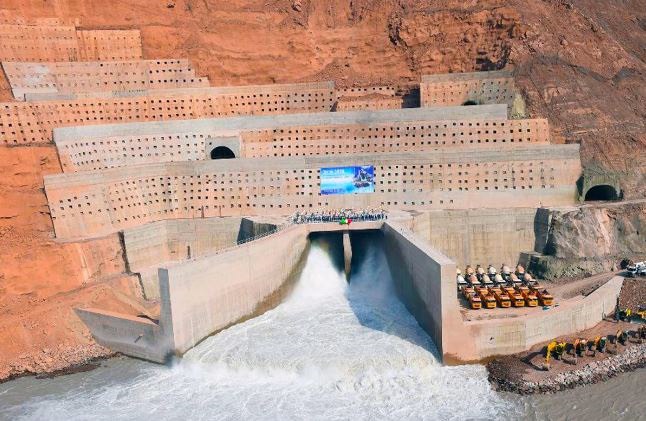
Drought Triggers Power Rationing at Nurek Hydro Station In early December, the Tajik government reintroduced electricity rationing after reservoir levels at the Nurek Hydroelectric Power Station fell sharply, due to an unusually dry autumn. The station normally supplies around 70% of the national grid, but current water levels are significantly below last year’s benchmark, affecting both domestic consumption and exports. According to Reuters, water levels have dropped more than three meters in the past month. With shortages now affecting many regions, authorities have ordered public buildings to cut electricity outside of working hours and have switched off most street lighting. Tajikistan is seeking emergency imports from Uzbekistan, Turkmenistan and Kazakhstan to stabilize supply. The crisis highlights vulnerabilities in a system dominated by hydropower. While Tajikistan has invested heavily in modernizing Nurek and other plants to improve winter reliability, lower precipitation remains a persistent threat. For regional energy markets, particularly those looking at cross-border electricity trade, the situation demonstrates how even large renewable systems are becoming more unpredictable under climate stress. Rogun: Progress, Profits, and Persistent Disputes Ambition continues to define the Rogun hydropower project, intended to make Tajikistan a top electricity exporter in the Eurasia region. With a projected capacity of 3,780 MW, Rogun is designed to host the world’s tallest dam. Financing momentum is building: the Asian Infrastructure Investment Bank has launched a $500 million multi-phase initiative, and Tajikistan has signed an energy-sale agreement with Uzbekistan at 3.4 US cents per kWh, paving the way for long-term regional integration. But Rogun’s size continues to attract scrutiny, especially downstream. An investigation has been approved by the World Bank’s Inspection Panel into claims from Uzbekistan and Turkmenistan that altered flows on the Amu Darya river could damage farmland and ecosystems. The project’s social footprint is also expanding, with resettlement estimates reaching as high as 60,000 people. Development banks have slowed some financing, pending stricter environmental and regional safeguards. Local environmental researchers and activists argue that international oversight is still insufficient, warning that the cumulative ecological impact of Central Asian dam-building could become irreversible if accountability is delayed. Digital “Likes” Decriminalised, But Restrictions Remain President Emomali Rahmon has signed amendments to remove criminal penalties for “liking” or otherwise reacting to online content labelled as "extremist". Under previous legislation, social media users could face up to 15 years in prison for interacting with banned material. More than 1,500 people have been prosecuted under those rules, according to Reuters. The government presented the reform as a correction of overly zealous enforcement, following Rahmon’s public criticism of harsh prosecutions. Yet rights monitors see only minimal change. The latest Human Rights Watch report on Tajikistan notes a continued clampdown on media, opposition figures and citizen journalists. The Committee to Protect Journalists ranks Tajikistan among the most restrictive media environments in Eurasia. European officials have echoed these concerns. An OSCE-backed statement by European embassies denounced the opaque eight-year treason conviction of journalist Rukhshona Khakimova, reportedly linked to analysis of Chinese policy. For many observers, the relaxed online...

3 months ago
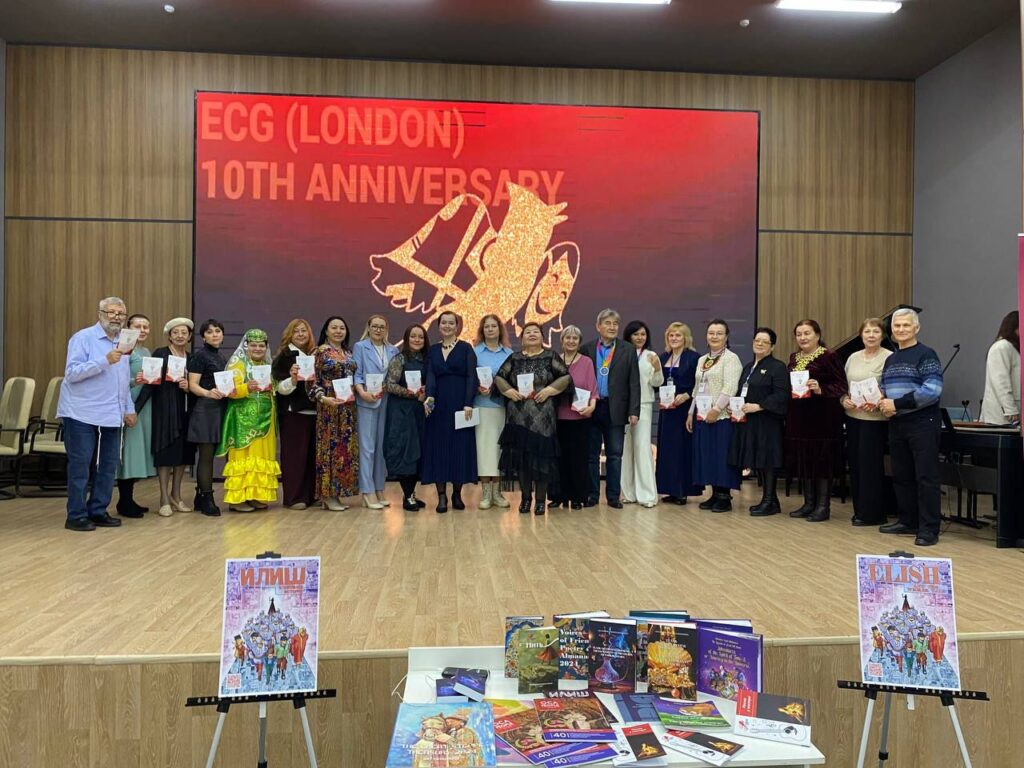
British-Kazakh Cultural Festival Returns to Burabay

Burabay, a popular lake resort in northern Kazakhstan, has hosted the 10th edition of the 'Voices of Friends: Poetry & Art' festival, which ran from 29 November to 2 December. The annual gathering, arranged by the London-based Eurasian Creative Guild (ECG), has become one of Central Asia's events for cultural collaboration, bringing together writers, filmmakers, visual artists and musicians from 20 countries. This year’s programme continued the festival’s mix of literature and modern arts, with an emphasis for 2025 on emerging film talent, through the youth-focused Cinema Future festival and the Burabay International Short Film Festival (BISFF). According to filmmaker and BISFF jury member Timur Akhmedjanov, “Young filmmakers from different countries on one screen [means] the birth of a new generation of cinema.” Alongside film events, the festival featured book presentations from publishers Hertfordshire Press, discussions about art, performances by an international community choir, and creative workshops hosted at the ECG Horizons residency. Organisers emphasised that for the festival, collaboration is as important as presentation. “The festival grows like a living universe of ideas and emotions. Here everyone is a creator – and everyone feels that their voice matters,” said festival director and cultural projects author Taina Kaunis. During the event's closing ceremony, awards were presented to some figures shaping Eurasian culture, while the Eurasian Creative Guild announced a change in leadership ahead of its 2026 season. Founder Marat Akhmedjanov, originally from Uzbekistan but now residing in Scotland, highlighted the organisation’s international ethos, saying: “Creativity knows no borders. We speak dozens of languages, yet understand each other perfectly.” ECG vice-chair Saltanat Khamzeyeva called it “the beginning of a big story” for cultural development in Central Asia. The Guild underscores that the Burabay resort has become more than a picturesque location for a festival. Chair Francesca Mepham summed up its growing impact: “We see Eurasian creativity becoming a global voice – and this voice will only become stronger.”

4 months ago

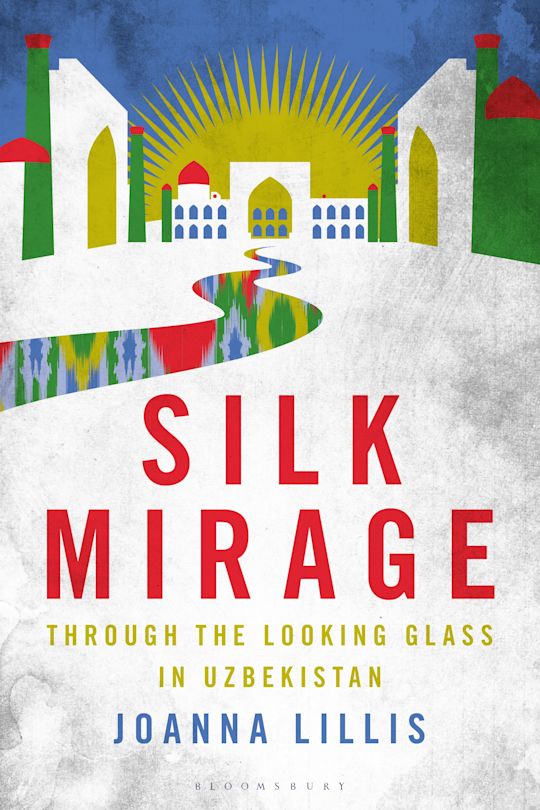
New Book Review: ‘Silk Mirage: Through the Looking Glass in Uzbekistan’ by Joanna Lillis

“Vibrant” and “brutal” are words that British journalist Joanna Lillis uses to describe Uzbekistan in her new book Silk Mirage: Through the Looking Glass in Uzbekistan, released this week through Bloomsbury. But they could just as easily be used to describe the book itself. In her own words, Lillis, a Central Asia correspondent for The Economist and other media, set out to create "a portrait of Uzbekistan from independence to the modern-day, dipping into history to demonstrate where the country came from and how it got where it is today, and offer clues about where it is going." She achieves this with a book that is clear-eyed and meticulously researched, detailing how Uzbekistan’s two 21st-century leaders, presidents Islam Karimov and Shavkat Mirziyoyev, have shaped the lives of Uzbekistan’s remarkable people. The book opens with a summary of the paranoia and violence of the Karimov era (1989-2016), told through Lillis’ experience of having recently arrived in Tashkent in 2001. She lived in the country until 2005, and has spent a lot of time in Uzbekistan thereafter. While the western media that reported on Karimov’s death in 2016 speculated on a battle behind the scenes to succeed him, Silk Mirage is clear that power was always going to pass to Miziyoyev, who had been Karimov's prime minister for the previous 14 years. Lillis does, though, memorably mention that "there may have been a fierce under-the-rug catfight." A recurring topic in Silk Mirage is the repression of the media in Uzbekistan, and local journalists’ need to self-censor and avoid uncomfortable issues. There is none of that in this absolutely fearless book. Lillis gives stark details of Karimov’s human rights abuses, particularly in accounts of the horrific Jaslyk prison. She also confronts his successor’s failure to eradicate some of the injustices in the present day.  When comparisons are made between life under Karimov, referred to as "Old Uzbekistan", and the New Uzbekistan of Mirziyoyev, the progress towards democracy is described as a qualified success. The country now has a parliament with younger, more accountable deputies; however, “opposition” is still a dirty word, and the proliferation of new political parties is misleading.  Economic reforms have led to the previous official corruption and black market profiteering being replaced with a state that is friendlier to local businesses and foreign investors alike. That being said, there are still restrictions on citizens’ rights. So, have Mirziyoyev’s plans for democracy and reforms been slowed down by systemic issues – the need for his government to first dismantle the dictatorship he inherited? Or is Karimov’s old ally too much of a product of Old Uzbekistan to fully stop the past from repeating? Lillis leaves the reader to decide for themself.  Silk Mirage dedicates chapters to events in Uzbekistan that have occasionally caught international attention. The last two decades have seen the authorities’ 2005 massacre of hundreds of people in the eastern city of Andijan, which was blamed on an ambiguous Islamist cult; outcries over forced labour and child labour in...

4 months ago

Uzbek Restaurant in Nashville Recommended by Michelin Guide

It may not have yet earned a coveted star, but a small Uzbek restaurant in Nashville, Tennessee has impressed reviewers from Michelin. This month Uzbegim, on the city’s 28th Avenue North, was named on the Nashville Bib Gourmand list, which is composed by Michelin’s Guide. In its own words, a place on the Bib Gourmand list “acknowledges excellent food at more affordable prices”. The Central Asian diner, whose dishes are halal, appears alongside much bigger and more established spots. The accolade is a reward for the superb traditional Uzbek food offered by owner Ulugbek Fayziev, who opened his restaurant in the east of Nashville in late 2023. Uzbegim is located at the back of a pizzeria, which is owned by different Uzbeks who let Fayziev use their space. Michelin’s Guide mentions that Uzbegim “promises something different, specializing in authentic Uzbek cuisine in a space with a stunning patio. Originating in Islamic China and traveling across to the Middle East, this is a cuisine that features some of the usual suspects (think kebabs) as well as standouts like Uyghur-style, hand-cut noodles.” Nashville local Mark Reese is a fan of the restaurant. “Uzbegim has what I call Central Asian comfort food,” he tells The Times of Central Asia. “It serves chaikhona [cafe-style] plov with tender lamb, rice, raisins and carrots. Shashlik [kebab] with onions and vinegar. 'Kazan kabob' is a highlight with chunks of tender meat and potatoes cooked perfectly, fork tender. My favorite is the Uyghur laghmon [noodles], both boiled and fried. The noodles were freshly prepared with just enough spicy broth, meat and bell peppers to offset the noodles.” Reese is well acquainted with Uzbek cuisine: he has worked in Central Asia’s education and cultural spheres for 30 years, and was awarded Uzbekistan’s Order of Do'stlik for his English translation of Abdulla Qodiriy’s historical novel O’tkan Kunlar (Bygone Days). He explains to The Times of Central Asia: "Nashville is relatively new as an emerging place for Uzbeks and other Central Asians to live. Vanderbilt University is home to quite a few Uzbek students." Noting some links between this part of the southern United States and Uzbekistan, Reese adds: “Uzbeks have lived in Tennessee for decades, especially Memphis. Uzbeks are naturally attracted to an emerging city that has slowly become internationalized. Especially the Umarov family engage in philanthropic activities, including cancer research for children’s hospitals." Nashville's Uzbek diaspora may have discovered Uzbegim first, but since Michelin's review, new American customers are sure to wander in, to taste Central Asian comfort food for themselves.

4 months ago

New Projects, Evolving Trade: Recent News from Tajikistan That You Might Have Missed

Recent weeks in Tajikistan have seen new investment deals, changing trade dynamics, and interesting social developments. Here are some stories that you may have missed. Energy investments pledged at Dushanbe Invest-2025 The Dushanbe Invest-2025 Forum resulted in 26 agreements worth roughly US $3.1 billion across the energy, manufacturing, and telecommunications sectors. Energy projects accounted for nearly US $2.4 billion of that total, reflecting Dushanbe’s aims to position itself as a hydropower hub for Central Asia. Officials also promoted “green investment” and developments in AI, while President Emomali Rahmon met with Qatar’s minister for foreign trade to discuss economic cooperation. These moves signal a drive to attract sustainable finance, and diversify an economy that is still reliant on remittances from Tajik guest workers in Russia. Growing trade with Iran and Uzbekistan Regional trade expanded significantly in October. Tajikistan and Iran reaffirmed their intention to expand industrial and trade cooperation, with mutual turnover nearing $380 million in 2024 and a target to surpass $500 million in the near future. Agreements include joint ventures in mining, agriculture, and pharmaceuticals. At the same time, trade between Tajikistan and Uzbekistan reached over $70o million in 2024 -- an almost three-fold increase from recent years. The governments of the neighboring countries are now exploring logistics corridors and simplified customs rules to further integrate their economies. Tourism boom: International visitors up by a quarter With increased government support, tourism has become one of Tajikistan’s most promising growth sectors. During the first nine months of 2025, the country received nearly 1.4 million foreign visitors -- a 24 percent increase compared with previous years. The influx of tourists is driven by new simplified visa rules, social media campaigns, and improved domestic air routes. Adventure travel in the Pamir Mountains and cultural tourism in ancient cities such as Khujand and Istaravshan are leading this wave. Sharp decline in UK trade New figures show that trade between Tajikistan and the United Kingdom fell by almost 39 percent in the four quarters ending Q2 2025, totaling just £22 million. Imports from the UK dropped 32 percent, while exports from Tajikistan plunged 62.5 percent, according to the UK trade factsheet. Landmark border agreement ratified In late October, Uzbekistan’s parliament approved a trilateral border-junction agreement with Tajikistan and Kyrgyzstan, resolving a long-standing territorial issue. The agreement should ease cross-border trade and transportation, reduce tensions in remote areas, and open the door to regional infrastructure projects linking the three countries. For Tajikistan, which has some of Central Asia’s most complex borders, the agreement represents a diplomatic milestone that could translate into tangible economic gains. Looking ahead The last month’s events highlight that Tajikistan is cautiously re-entering international dialogue in Central Asia and beyond. Tajikistan’s leadership is using investment forums, tourism, and pragmatic diplomacy to stabilize and diversify the economy. Yet challenges remain, chiefly the country's heavy economic dependence on remittances, vulnerability to climate-related shocks, and limited industrial capacity.

4 months ago