• KGS/USD = 0.01143 -0%
  • KZT/USD = 0.00193 -0%
  • TJS/USD = 0.10881 0%
  • UZS/USD = 0.00008 0%
  • TMT/USD = 0.28575 0%
  • KGS/USD = 0.01143 -0%
  • KZT/USD = 0.00193 -0%
  • TJS/USD = 0.10881 0%
  • UZS/USD = 0.00008 0%
  • TMT/USD = 0.28575 0%
  • KGS/USD = 0.01143 -0%
  • KZT/USD = 0.00193 -0%
  • TJS/USD = 0.10881 0%
  • UZS/USD = 0.00008 0%
  • TMT/USD = 0.28575 0%
  • KGS/USD = 0.01143 -0%
  • KZT/USD = 0.00193 -0%
  • TJS/USD = 0.10881 0%
  • UZS/USD = 0.00008 0%
  • TMT/USD = 0.28575 0%
  • KGS/USD = 0.01143 -0%
  • KZT/USD = 0.00193 -0%
  • TJS/USD = 0.10881 0%
  • UZS/USD = 0.00008 0%
  • TMT/USD = 0.28575 0%
  • KGS/USD = 0.01143 -0%
  • KZT/USD = 0.00193 -0%
  • TJS/USD = 0.10881 0%
  • UZS/USD = 0.00008 0%
  • TMT/USD = 0.28575 0%
  • KGS/USD = 0.01143 -0%
  • KZT/USD = 0.00193 -0%
  • TJS/USD = 0.10881 0%
  • UZS/USD = 0.00008 0%
  • TMT/USD = 0.28575 0%
  • KGS/USD = 0.01143 -0%
  • KZT/USD = 0.00193 -0%
  • TJS/USD = 0.10881 0%
  • UZS/USD = 0.00008 0%
  • TMT/USD = 0.28575 0%
21 December 2025

Our People > Zauresh Danayeva

Zauresh Danayeva's Avatar

Regional Editor and Contributor

Zauresh Danayeva is a journalist, editor, and documentary filmmaker. She graduated from the Faculty of Journalism at Lomonosov Moscow State University and has worked as a correspondent for Kommersant and Expert business magazine. She earned her Master’s degree in Documentary Filmmaking from NYFA in Los Angeles.

Zauresh has also worked for the International Organization for Migration, where she covered projects on labor migration and combating human trafficking. While working as a press secretary at WWF Central Asia, she managed the Turanian tiger reintroduction program in Kazakhstan.

Articles

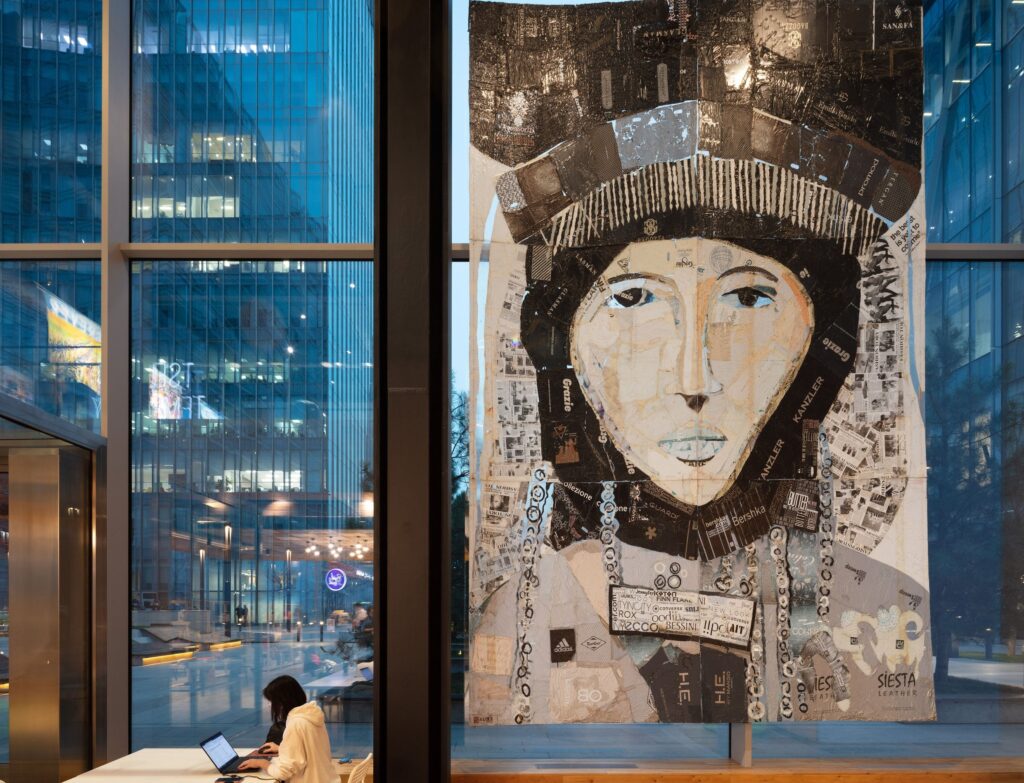
Contemporary Art Center Tselinny Opens in Almaty

Summer in Almaty was rich with music festivals, concerts, and public projects, and this cultural momentum appears set to continue into fall. The grand opening of the Tselinny Center for Contemporary Culture last Friday marked the start of September with a major cultural milestone for the city. A Historic Space Reimagined At a recent press conference, organizers spotlighted the significance of this new cultural landmark within the evolving discourse of Central Asian contemporary art. Director Jamilya Nurkalieva led a short tour ahead of the official opening, sharing insights into the restoration and rethinking of the historic Tselinny cinema. Reinterpreting Almaty’s first panoramic cinema, an iconic piece of Soviet-era modernist architecture, was, in her words, about creating “an architectural pearl.” She described the new space as embodying “inclusivity and acceptance, the ultimate state of tranquility, almost like a hug.” [caption id="attachment_35968" align="aligncenter" width="960"] Image: TCA[/caption] [caption id="attachment_35950" align="aligncenter" width="8605"] Image: Atelier Cauchemar[/caption] The transformation was a deeply local effort. Nurkalieva emphasized the importance of working with Kazakhstani architects, builders, and craftsmen to ensure authenticity throughout the reconstruction process. Among the most unexpected discoveries during renovation were original works by renowned Soviet graphic artist Yevgeniy Sidorkin, long believed lost. His preserved sgraffito now welcomes visitors at the entrance. “Conceptually, we didn’t want the space to become a monument to Sidorkin alone, this is a place for new artists,” said Nurkalieva. “In some areas, craftsmen recreated panels from his sketches. We chose neutral tones so the sgraffito wouldn’t dominate the space.” [caption id="attachment_35983" align="aligncenter" width="782"] Image: tselinny.org[/caption] In just its first three days, Tselinny welcomed more than 12,000 visitors. The public experienced debut exhibitions, the interdisciplinary performance BARSAKELMES, and the launch of an educational program. The former Soviet cinema, now reimagined by British architect Asif Khan, has been reborn as a cultural hub for Almaty and the wider region. Tselinny will gradually extend its hours and programming over the coming months, with full operations set to begin in January 2026. [caption id="attachment_35966" align="aligncenter" width="1280"] Image: TCA[/caption] Asif Khan’s architectural vision reflects a concept of spatial unity rooted in the Kazakh cosmological balance of Tengri (sky) and Umai (earth), representing power and growth. Drawing inspiration from the steppe landscape, Khan has preserved the spirit of the original building while opening a new horizon for each visitor. Launching a New Dialogue Three exhibition projects opened in parallel with the center itself. These include installations by Gulnur Mukazhanova and Daria Temirkhan as part of BARSAKELMES; the architectural showcase From Sky to Earth: “Tselinny” by Asif Khan (curated by Markus Lahtinenmäki); and the archival project Documentation: Imagining Central Asia on the Map of Contemporary Art (curated by Asel Rashidova). These inaugural exhibitions are intended to initiate long-term dialogue between artists, institutions, and the broader public. A full program is available on Tselinny’s official website. The Return of Tselinny Once the largest cinema in Soviet Central Asia, Tselinny has now been transformed into a multifunctional art center. The revamped complex includes exhibition spaces, workshops, a library, a bookstore,...

3 months ago

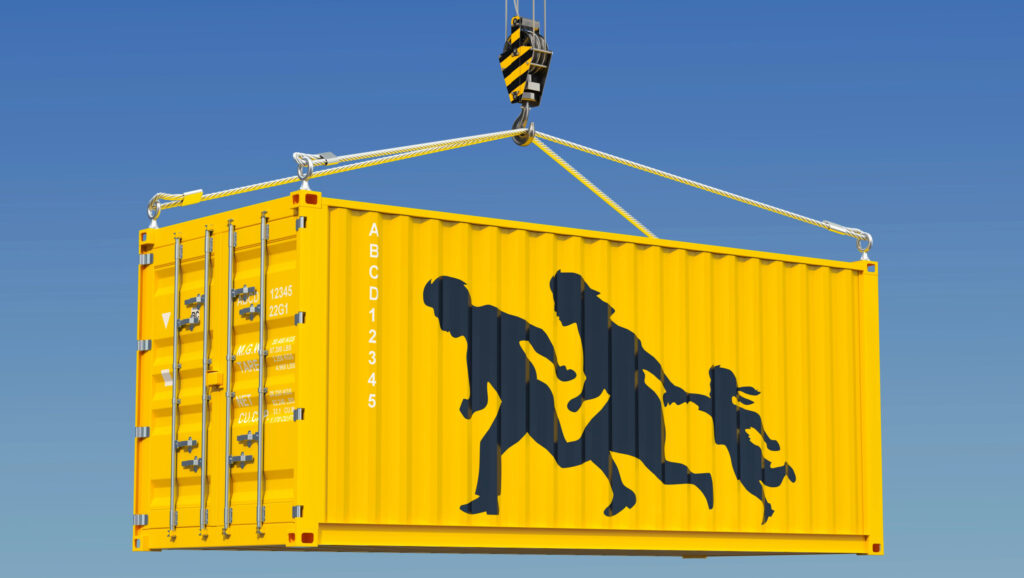
Kazakhstan Reports 134 Human Trafficking Cases in First Half of 2025

July 30 marks World Day Against Trafficking in Persons, established by the United Nations General Assembly in 2013. On this day, global attention turns to one of the gravest human rights violations: the exploitation of men, women, and children in various forms. According to Kazakhstan’s Ministry of Internal Affairs, 134 human trafficking-related crimes were recorded in the first six months of 2025. The country has maintained an anti-trafficking program since 2002, implemented with the support of the International Organization for Migration (IOM). Over this period, 1,891 victims of labor and sexual exploitation have received assistance. “This day reminds us that human trafficking remains one of the most serious violations of human rights, affecting millions of men, women, and children around the world. No country is immune, whether it is a country of origin, transit, or destination,” the IOM stated. Organized Crime and Exploitation The 2025 IOM campaign theme is “Human Trafficking is Organized Crime - End the Exploitation.” According to the UN, 74% of traffickers are affiliated with organized criminal networks. Between 2020 and 2023, over 200,000 cases of human trafficking were officially reported worldwide, though experts caution the real figure is likely far higher due to underreporting and lack of awareness. Kazakhstan's Role in Regional Trafficking Trends IOM data from 2004 to 2020 indicate that Kazakhstan was the leading destination country for human trafficking victims in Central Asia, with 1,741 cases of exploitation documented. Other destination countries included the UAE (61 cases), Turkey and Russia (28 each), and Iran (7), among others. In terms of origin countries, Uzbekistan accounted for the highest number of trafficking victims (944), followed by Kazakhstan (774), Kyrgyzstan (72), and Russia (28). Smaller numbers came from Tajikistan, Mongolia, Ukraine, the Philippines, and several other countries. [caption id="attachment_34461" align="alignnone" width="300"] @iom.int[/caption] Victim Demographics and Exploitation Types Among the identified victims, 52% were men (981), 47.9% were women (907), and 0.1% (3 individuals) identified as transgender. The majority were working-age adults: 35.8% were aged 18-25, while 36.4% were over 30. Labor exploitation was the most common form, accounting for 1,151 cases (60.9%), followed by sexual exploitation with 711 cases (37.6%). Other forms, such as forced begging, childbirth, or participation in armed conflicts, made up 1.5% (29 cases). Support Mechanisms and Legal Developments Until 2020, IOM played a central role in assisting victims with repatriation, shelter, psychological support, medical care, and documentation. In recent years, these responsibilities have increasingly shifted to the state. In 2024, Kazakhstan enacted a new Law on Combating Trafficking in Persons, developed by the Ministry of Internal Affairs with IOM’s technical support. The legislation outlines protections for victims and mandates public awareness campaigns.

5 months ago

World Bank: Poverty Falls in Kazakhstan, but Inequality and Child Poverty Persist

The World Bank has released a comprehensive report on poverty in Kazakhstan, analyzing trends from 2006 to 2021. Presented to journalists in Almaty, the report paints a detailed picture of the country's evolving socio-economic landscape. Defining Poverty Poverty is broadly defined as the inability to meet basic human needs, including food, clothing, clean water, sanitation, education, and healthcare. One standard measure is the subsistence minimum set by the government. As of 2021, the international poverty line was $3 per person per day in low-income countries. For upper-middle-income economies like Kazakhstan, the threshold was set at $8.30 per day. [caption id="attachment_33210" align="alignnone" width="300"] @pip.worldbank.org[/caption] From Poverty to the Middle Class Over 15 years, Kazakhstan witnessed substantial economic growth. Per capita consumption doubled, and GDP per capita rose from 548,900 to 791,300 tenge (KZT). An estimated six million people were lifted out of poverty, and the country advanced into the category of upper-middle-income economies. The World Bank identifies three distinct phases of development: 2006-2013 - Growth: Economic expansion and proactive social policies reduced poverty from 49.5% to 11.1% 2014-2016 - Crisis: A sharp decline in oil prices and the devaluation of the tenge saw poverty spike to 20.2% 2016-2021 - Stabilization: Economic recovery brought the poverty rate down to 8.5% [caption id="attachment_33211" align="alignnone" width="300"] @worldbank.org[/caption] A Rising Middle Class Between 2006 and 2021, the share of Kazakhstan’s population considered middle class increased from 26 percent to 67 percent. The World Bank defines the middle class as individuals who are neither poor nor economically vulnerable. This growth was driven by rising incomes, pensions, and social assistance programs. However, progress began to slow after 2013 due to ongoing structural challenges, low productivity, dependence on extractive industries, and a weak private sector. Child Poverty: An Alarming Trend National gains have not eliminated regional disparities. In the Turkistan region, poverty rose from 14.4 percent in 2006 to 24 percent in 2021. [caption id="attachment_33212" align="alignnone" width="300"] @worldbank.org[/caption] Demographic shifts in poverty are also concerning. The poor are increasingly younger, less educated, and from large families. Child poverty is especially acute: 13% of children live below the poverty line, comprising 40% of the country's poor. In other words, every eighth child in Kazakhstan is living in poverty. [caption id="attachment_33213" align="alignnone" width="300"] @worldbank.org[/caption] Consumption and Inequality Rising consumption, measured via purchasing power parity (PPP), has been the main driver of poverty reduction. Indicators like the Big Mac Index offer accessible insights into shifts in purchasing power. Growth in incomes, pensions, and the small and medium-sized enterprise (SME) sector also contributed, while emergency government support during the COVID-19 pandemic helped avert a sharp decline in living standards. Nevertheless, inequality is on the rise. Since 2016, the Gini Index has shown a growing gap. The wealthiest 10% of Kazakhstanis now spend three times more than the poorest 10%. While this inequality remains moderate by global standards, the upward trend is cause for concern. [caption id="attachment_33214" align="alignnone" width="300"] @worldbank.org[/caption] Looking Ahead World Bank analysts acknowledge Kazakhstan’s progress in reducing poverty. However, they...

6 months ago