• KZT/USD = 0.00224
  • TJS/USD = 0.10850
  • UZS/USD = 0.00008
  • TMT/USD = 0.29850
  • KZT/USD = 0.00224
  • TJS/USD = 0.10850
  • UZS/USD = 0.00008
  • TMT/USD = 0.29850
  • KZT/USD = 0.00224
  • TJS/USD = 0.10850
  • UZS/USD = 0.00008
  • TMT/USD = 0.29850
  • KZT/USD = 0.00224
  • TJS/USD = 0.10850
  • UZS/USD = 0.00008
  • TMT/USD = 0.29850
  • KZT/USD = 0.00224
  • TJS/USD = 0.10850
  • UZS/USD = 0.00008
  • TMT/USD = 0.29850
  • KZT/USD = 0.00224
  • TJS/USD = 0.10850
  • UZS/USD = 0.00008
  • TMT/USD = 0.29850
  • KZT/USD = 0.00224
  • TJS/USD = 0.10850
  • UZS/USD = 0.00008
  • TMT/USD = 0.29850
  • KZT/USD = 0.00224
  • TJS/USD = 0.10850
  • UZS/USD = 0.00008
  • TMT/USD = 0.29850
14 November 2026

Viewing results 1 - 6 of 15

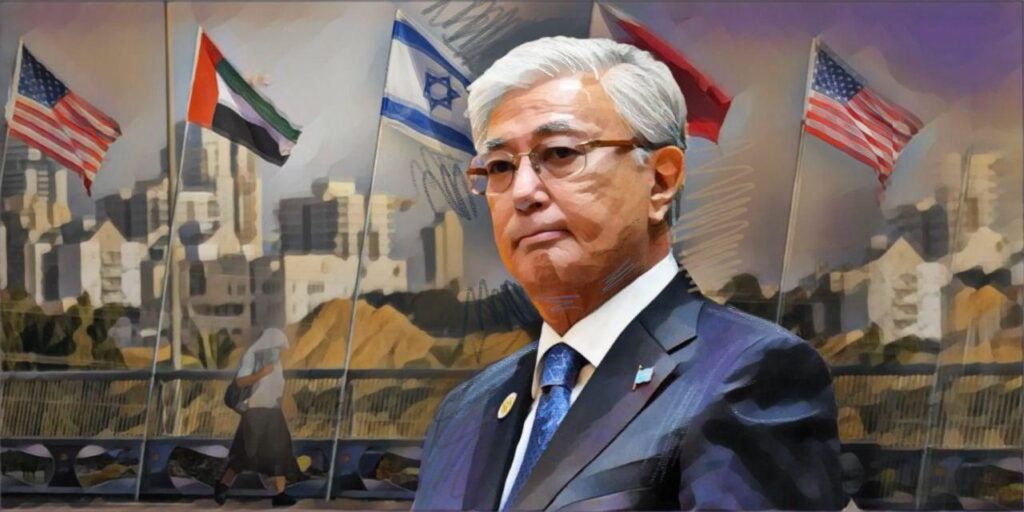
Abraham Accords Frame Kazakhstan–Israel Cooperation to Deliver Tokayev’s Reforms

Kazakhstan’s decision to enter the Abraham Accords is a diplomacy-first move by President Kassym-Jomart Tokayev. Its aims include: 1) converting symbolic capital into policy traction in Washington, 2) arriving at workable co-financing with Gulf partners, and 3) preserving equilibrium with Moscow and Beijing. The step does not alter recognition; the two countries have had diplomatic relations for a third of a century, institutionalized through embassies. Cooperation has been steady, if modest. Entering the Abraham Accords now gives these relations a framework that U.S. agencies, funds, and implementers already use. The timing intersects the C5+1 turn from set-piece dialogues to transactions, with new deals announced alongside the Accords move. What the framework unlocks is execution. It compresses attention cycles inside U.S. bureaucracies, normalizes trilateral packaging with Gulf financiers, and clears diligence pathways for banks and development finance institutions. Those effects matter where Israeli capabilities dovetail with Tokayev’s priorities. The premise of Tokayev’s move is straightforward: diplomacy should shorten the distance between declared policy and the implementation of projects that work. Tokayev’s Diplomatic Architecture and the Bilateral Relationship Kazakhstan recognized Israel in 1992 and opened embassies soon after, setting a cautious but uninterrupted channel for official contact. The institutional scaffolding is visible in public sources. Trade volumes have been modest but steady, with 2024 bilateral turnover reported by Kazakhstan’s statistics at roughly $236 million, a figure that is broadly consistent with third-party trackers such as Trading Economics and OEC profiles. Practical frictions have eased as Air Astana initiated direct air links between Almaty and Tel Aviv in 2023. The Accords move aligns that long, incremental relationship with a framework that is transparent to Washington and to Gulf financiers. Reporting on the Washington week underscores the shift from set-piece dialogues to transactions, as the Accords announcement was paired with commerce headlines. Joining the Abraham Accords reorganizes and reframes practical bilateral activities. By placing existing ties under a known diplomatic wrapper, Astana becomes easier to route inside U.S. agencies and funds, and easier to match with Gulf co-financing for projects that fall in line with Tokayev’s domestic reforms and economic development program. The practical test becomes whether the new wrapper accelerates cooperation, where Israel’s comparative advantages can help Kazakhstan meet the goals of that program. Examples of this are precision irrigation and basin telemetry to optimize steppe agriculture, audit-plus-retrofit toolkits that cut grid and industrial losses without new generation, reinforcing the 2060 neutrality track, and civil-service-embedded cyber training with secure data exchange that lifts administrative credibility. The Accords thus function as additive diplomacy, widening Kazakhstan’s access to recognizable cooperation pathways without demanding a shift in alignments. In Washington, the move plugs into an existing rubric that officials already use for interagency routing and external partnerships. Regionally, it complements the C5+1’s turn toward transaction-focused engagement. Domestically, it moves Tokayev’s reform agenda forward. Internationally, it demonstrates continued leadership. The diplomatic wrapper works because Kazakhstan can route cooperation through recognized counterparties and rules. Samruk-Kazyna and core state-owned enterprises (SOEs) represent accountable anchors consistent with OECD-provided guidance on...
Opinion: Kazakhstan Joins Abraham Accords – More Than a Symbolic Gesture

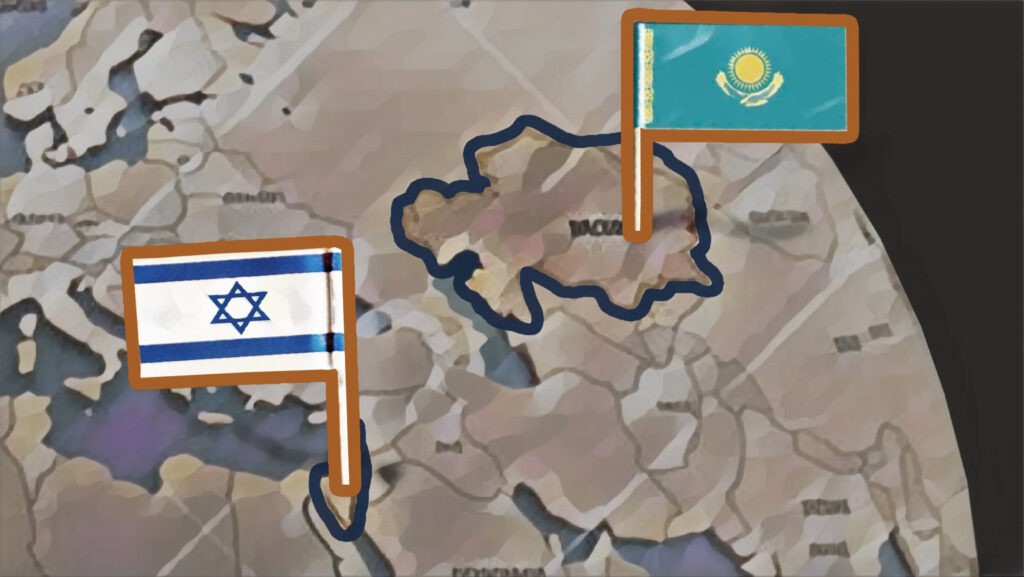
Kazakhstan has officially agreed to join the Abraham Accords during a C5+1 summit, giving another green flag of legitimacy to Israel for its policies and actions in West Asia, especially in Palestine. Reportedly, not only Kazakhstan but also Azerbaijan and Uzbekistan are set to follow this step. The Normalization process, brokered by the United States to advance the culture of peace among the three Abrahamic religions, was initiated by President Donald Trump during his first term. Since then, four Muslim-majority countries - the United Arab Emirates, Bahrain, Morocco, and Sudan - have joined the Abraham Accords. However, other Muslim-majority countries have previously followed the stand taken under the Arab Peace Process of 2002, which emphasizes the resolution of the Palestine issue before starting the normalization of ties with Israel. The joining of the Abraham Accords by Kazakhstan and the quest by other Caucasus and Central Asian Muslim-majority countries are distinctive in multiple aspects. As per the official definition, the Abraham Accords encourage the establishment of relations between Israel and its neighbors in the region. In this context, the extension of the Abraham Accords, originally designed to broker regional peace and stability in West Asia, to other regions and securing legitimacy by Muslim-majority countries outside West Asia reflects the pan-Abrahamic outlook of the U.S.-brokered deal. Moreover, Kazakhstan is a country that has established diplomatic ties with Israel since 1992, after the disintegration of the Soviet Union. So, the question is, what does the joining of the Abraham Accords by Kazakhstan signify for the Central Asian country, which shares a long border with Russia and already has substantial military and economic ties with it? The significance of the Abraham Accords for Kazakhstan can be comprehensively understood from the point of view of Kazakhstan, the United States, and Israel, the major participants of the agreement. Kazakhstan’s attempt to balance regional and global pressure Firstly, for Kazakhstan, the joining of the Accords with the perspective of enhancing ties with Israel can be taken more as a symbolic move, as Kazakhstan already fulfils 25% of Israel’s energy needs. The countries share a strong diplomatic relationship, with Israeli PM Benjamin Netanyahu visiting Kazakhstan in 2016; the two countries have signed several bilateral agreements. Kazakhstan has significant relations with Israel in the fields of irrigation and healthcare, and has also pursued discussions on visa-free travel, tourism, and technology. Kazakhstan and Israel have launched the Israel-Kazakhstan Irrigation Demonstration Centre in the Almaty region. Kazakhstan also hosts the largest Jewish population in Central Asia, which lives in peace and harmony with other ethnic groups. Considering the strong ties already in place, the lingering question is why Kazakhstan had to formally sign an agreement that appears to be a symbolic gesture from the outside. To this question, Adil Husain, PhD scholar of Central Asian Studies at Jamia Millia Islamia (JMI), New Delhi, says that “though the decision to formalize the normalization ties with Israel may appear as a formality, the move carries a strategic significance for the Central Asian country...

Kazakhstan to Join Abraham Accords

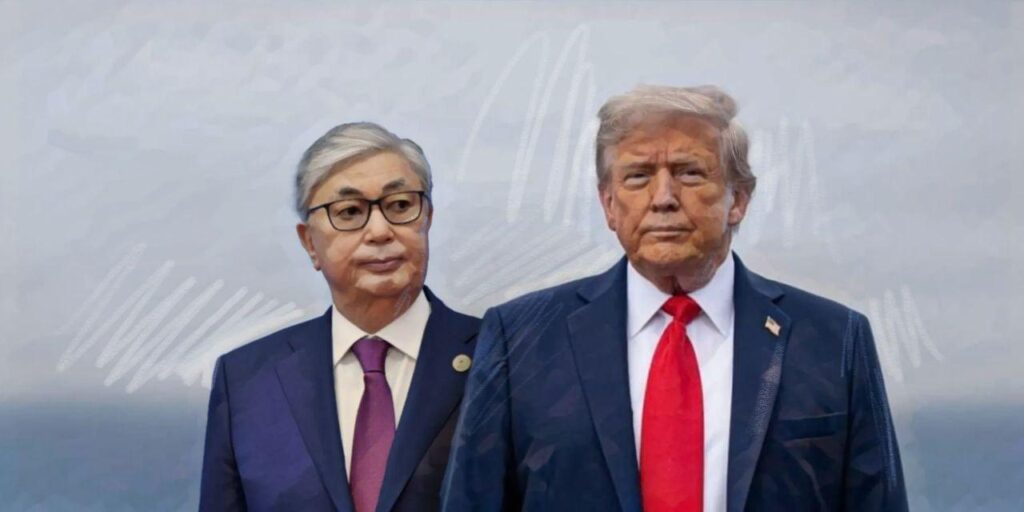
Washington D.C. - The Government of Kazakhstan announced its intention to join the Abraham Accords on Thursday, ahead of a scheduled meeting between President Kassym-Jomart Tokayev and U.S. President Donald Trump in Washington. The move was confirmed by President Trump in a post on Truth Social, where he described Kazakhstan’s decision as “a major step forward in building bridges across the world.” He added that a formal signing ceremony would be held soon to make the accession official. In doing so, Kazakhstan will join the United Arab Emirates, Bahrain, Morocco, Sudan, Israel, and the United States within the framework of the Abraham Accords. Its inclusion represents a significant diplomatic milestone, making it the first Central Asian nation — and the only non–Middle Eastern or North African member apart from the United States — to take part in the initiative. The expansion extends the Accords’ reach into Central Asia, highlighting their growing relevance beyond their original geographic and political context. Kazakhstan’s accession represents a powerful statement from a Muslim-majority nation in favor of peaceful normalization with Israel. By joining, Astana reinforces the framework’s legitimacy across the Islamic world and demonstrates that constructive engagement with Israel can coexist with respect for Islamic values and regional cooperation. As the first Central Asian signatory, Kazakhstan sets a precedent for its neighbors and broader Muslim communities, illustrating that pragmatic diplomacy and peace-building can transcend historical divisions. The move also strengthens U.S.-led efforts to expand the Accords’ vision of dialogue, stability, and coexistence beyond the Middle East — signaling a new chapter in regional diplomacy. The Tokayev administration’s decision carries political risks. The move may draw criticism from some pro-Palestinian factions and Iran-aligned groups that view normalization with Israel skeptically. To manage this, Astana will need careful messaging, emphasizing that engagement with Israel complements its continued support for Palestinian statehood and regional peace. Ultimately, the government’s calculation is that the benefits — including closer alignment with the United States and enhanced international influence — outweigh the potential political costs. Alignment with Washington Joining the Abraham Accords underscores President Tokayev’s continued alignment with President Trump’s foreign policy priorities. By joining a U.S.-led initiative promoting normalization with Israel, he reinforces support for the White House’s approach to Middle East diplomacy. The move builds on Tokayev’s earlier stance: on September 30, 2025, he publicly endorsed former U.S. President Donald Trump’s 20-point Gaza peace plan, calling it a “unique opportunity and a crucial step toward lasting peace in the Middle East.” As a Muslim-majority nation pursuing a balanced foreign policy, Kazakhstan’s support highlights its strategic effort to deepen ties with Washington and Israel while maintaining credibility across the Arab and Islamic world. The decision reflects Tokayev’s broader vision of positioning Kazakhstan as a diplomatic bridge between East and West. Expanding Regional Appeal and Continuity in Israel Ties Kazakhstan’s decision to join the Abraham Accords represents both a continuation of its long-standing relationship with Israel and a forward-looking step to broaden the framework’s regional reach. Since establishing diplomatic ties in 1992,...
