• KZT/USD = 0.00218
  • TJS/USD = 0.10810
  • UZS/USD = 0.00009
  • TMT/USD = 0.29760
  • KZT/USD = 0.00218
  • TJS/USD = 0.10810
  • UZS/USD = 0.00009
  • TMT/USD = 0.29760
  • KZT/USD = 0.00218
  • TJS/USD = 0.10810
  • UZS/USD = 0.00009
  • TMT/USD = 0.29760
  • KZT/USD = 0.00218
  • TJS/USD = 0.10810
  • UZS/USD = 0.00009
  • TMT/USD = 0.29760
  • KZT/USD = 0.00218
  • TJS/USD = 0.10810
  • UZS/USD = 0.00009
  • TMT/USD = 0.29760
  • KZT/USD = 0.00218
  • TJS/USD = 0.10810
  • UZS/USD = 0.00009
  • TMT/USD = 0.29760
  • KZT/USD = 0.00218
  • TJS/USD = 0.10810
  • UZS/USD = 0.00009
  • TMT/USD = 0.29760
  • KZT/USD = 0.00218
  • TJS/USD = 0.10810
  • UZS/USD = 0.00009
  • TMT/USD = 0.29760
25 August 2026

Viewing results 1 - 6 of 13

Kazakh Diplomacy: Why Tokayev Aligned Kazakhstan With the Abraham Accords

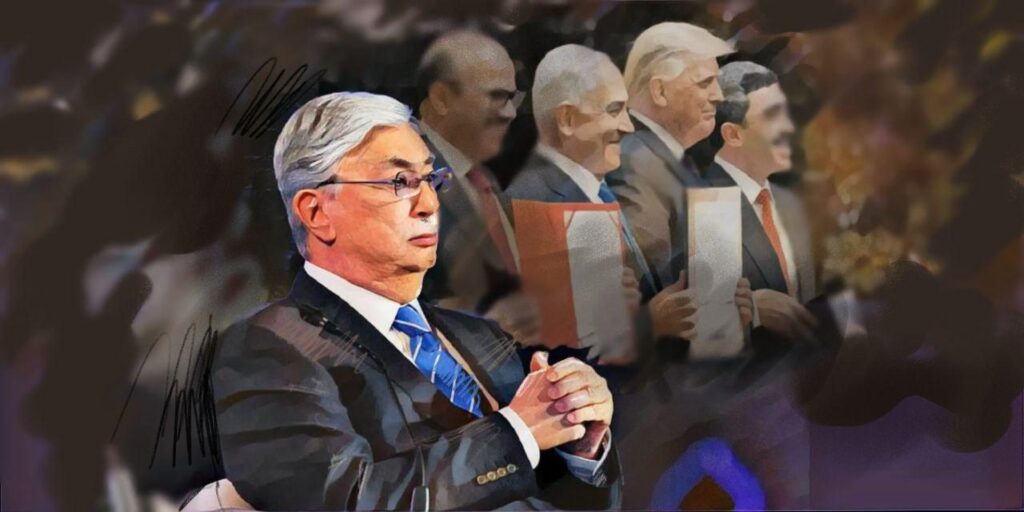
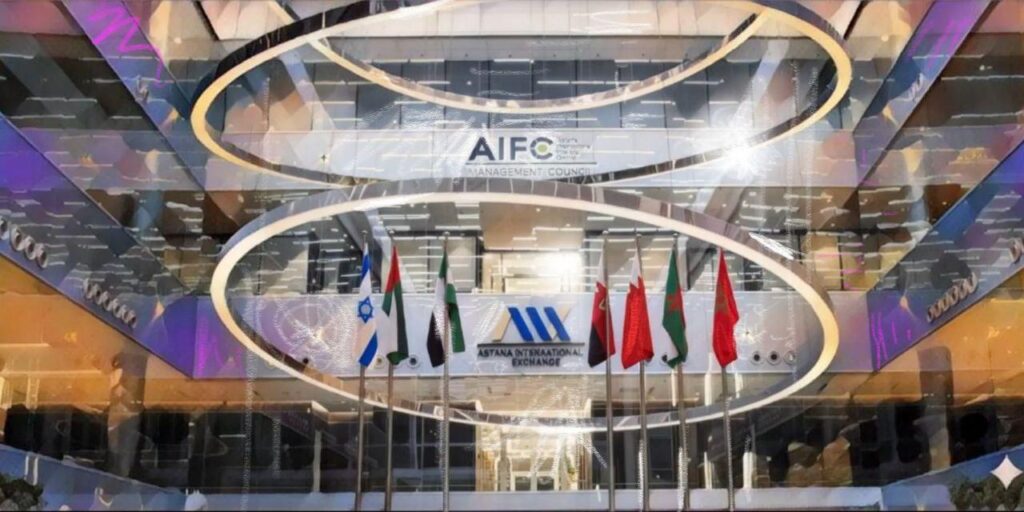
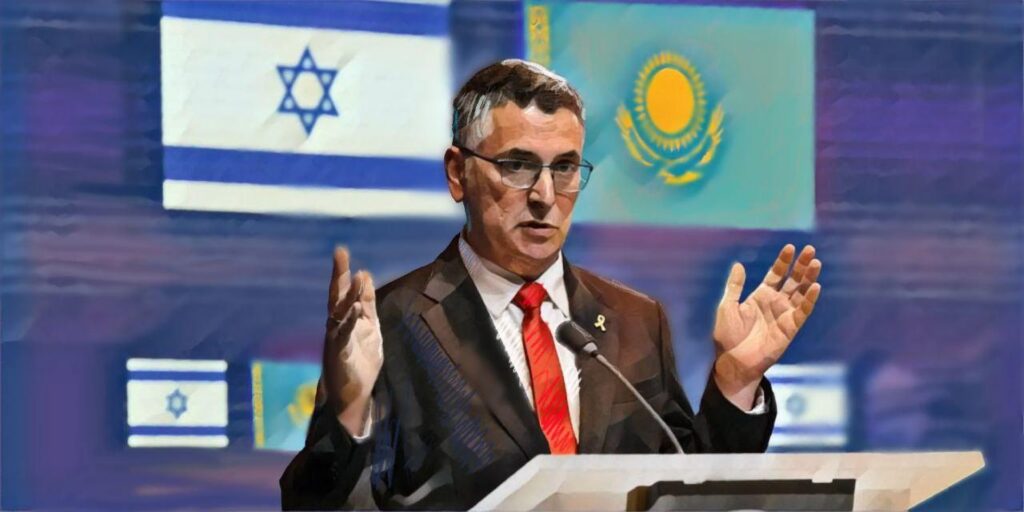
On November 6, 2025, President Kassym-Jomart Tokayev confirmed that Kazakhstan had formally acceded to the Abraham Accords, aligning the Central Asian state with the U.S.-brokered diplomatic framework. Launched during Trump’s first presidential term, the Abraham Accords seek to expand diplomatic normalization between Israel and Muslim-majority states. Initially signed in September 2020 by Israel and the United Arab Emirates, and separately by Israel and Bahrain, the Abraham Accords were later expanded to include Morocco and Sudan. Within the broader Abraham Accords framework, Washington continues to seek Saudi Arabia’s participation, a step viewed as diplomatically significant given the kingdom’s custodianship of two of Islam’s holiest sites. However, the process was derailed following the outbreak of the Gaza war in late 2023, triggered by a Hamas attack on Israel. Riyadh has since insisted that normalization can only proceed once there is meaningful progress toward establishing a Palestinian state. Kazakhstan, a secular state with a Muslim-majority population, has maintained diplomatic ties with Israel since April 1992. Embassies were opened in 1996, and bilateral relations have expanded steadily, including in trade, defense, and humanitarian fields. In 2016, Israeli Prime Minister Benjamin Netanyahu visited Kazakhstan, highlighting the strength of this relationship. These longstanding ties help explain why Kazakhstan’s accession did not mark a shift in its bilateral relationship with Israel. Because Kazakhstan established full diplomatic relations with Israel decades ago, several analysts have described the country’s accession to the Abraham Accords as largely symbolic. Uzbek political scientist Kamoliddin Rabbimov argues that the decision was a calculated gesture rather than a shift in Kazakhstan’s geopolitical orientation. “The question arises: is Kazakhstan really ready to weaken its relations with China, Turkey, and Russia in order to join the American-Israeli alliance? I don’t think so,” Rabbimov said. “President Tokayev most likely just formally supported Trump’s initiative by saying ‘yes’ without putting any real geopolitical meaning into it. Nevertheless, even such a ‘yes’ is capable of slightly upsetting the balance in Kazakhstan’s foreign policy.” Giorgio Cafiero, the CEO of Washington-based Gulf State Analytics, views the move as strategic positioning. “Given the Trump administration’s determination to expand the scope of the Abraham Accords, this move by Kazakhstan was a relatively easy way to win the White House’s favor.” German analysts at Kettner Edelmetalle emphasize Kazakhstan’s natural resource wealth as a key factor. “The country has significant deposits of minerals and rare earth elements, resources that are indispensable for modern technologies. By strengthening ties with Washington, Astana apparently hopes to attract more American investment in this strategically important sector.” Eldar Mamedov, non-resident fellow at the Queens Institute and a former senior advisor to the European Parliament, views the development through the lens of geopolitical balancing. “The Abraham Accords are merely a tool in Astana’s deliberate efforts to diversify its geopolitical dependence on Moscow and strengthen its strategic relations with the United States,” he writes. “Perceiving them as the beginning of a new, ideologically defined bloc misinterprets the fundamentally pragmatic and self-interested nature of Kazakhstan’s calculations.” Kazakhstan’s accession to the Abraham Accords reflects...

Opinion: Iranian Unrest Creates Opening for U.S., Partners in Central Asia

As protests in Iran enter their third week, nationwide unrest is exerting political strain and societal pressure on the Islamic Republic. The nation’s current escalation reflects a level of sustained mobilization comparable to Iranian demonstrations that erupted in 2022 following the death of Mahsa Amini. While the outcome of these developments remains uncertain, ongoing unrest in Iran is more likely to impact Central Asia’s existing energy, transit, and security dynamics, rather than alter the broader regional landscape. This moment nonetheless offers the United States and its partners a strategic opportunity to advance long-term objectives in Central Asia while supporting regional resilience at a time when geopolitical alignments are rapidly shifting. Combined with ongoing disruptions caused by Russia’s War in Ukraine, the recent protests in Iran may create a heightened sense of uncertainty or risk perceptions in global energy markets. In particular, the current Iranian unrest may raise concerns regarding potential oil supply disruptions and broader geopolitical tensions. For neighboring producers like Kazakhstan, which maintains an oil-dependent economy, this elevated volatility could translate into higher revenues from existing exports. Increased fiscal flexibility from rising oil revenues may therefore provide Astana with the opportunity to expand its scope for economic cooperation with Western partners. The United States, which maintains long-standing bilateral energy ties with Kazakhstan, could draw on these existing partnerships to deepen its bilateral energy and technical ties. Beyond its impact on energy markets, ongoing instability in Iran may also affect regional connectivity initiatives. For example, disruptions could emerge along the International North-South Transport Corridor (INSTC), a multimodal network connecting India, Iran, and Russia, with branches that involve the Caspian and Central Asia. Although the Kazakhstan-Turkmenistan-Iran railway sits along this route and facilitates the transport of energy resources and critical minerals across the region, the corridor currently plays a more limited role in regional transit across Central Asia. This route nonetheless remains of interest to Central Asia because it offers the region an opportunity to enhance long-term economic diversification through access to new markets in the Persian Gulf. Minor disruptions could therefore underscore the corridor’s growing geopolitical value as a connector for trade and energy transport across multiple countries and regions. This context creates a strategic opening for the United States and its partners to contribute to the region’s long-term trade and connectivity landscape. By supporting Central Asian nations in reducing reliance on Iranian transit, the United States can accelerate investment in alternative routes like the Middle Corridor that bypass both Russia and Iran. During an investors' forum in Tashkent late last year, Europe announced it would increase its investment in the Middle Corridor. However, the United States continues to remain on the periphery of this project. By collaborating with European partners to enhance infrastructure along this route during a critical time, the United States can help Central Asian nations position the Middle Corridor as the region’s most resilient and viable alternative for trade and exports. This would ultimately advance shared interests by enhancing Central Asia’s connectivity and facilitating greater U.S....

Opinion: After the UN Gaza Resolution – Kazakhstan’s Potential Role

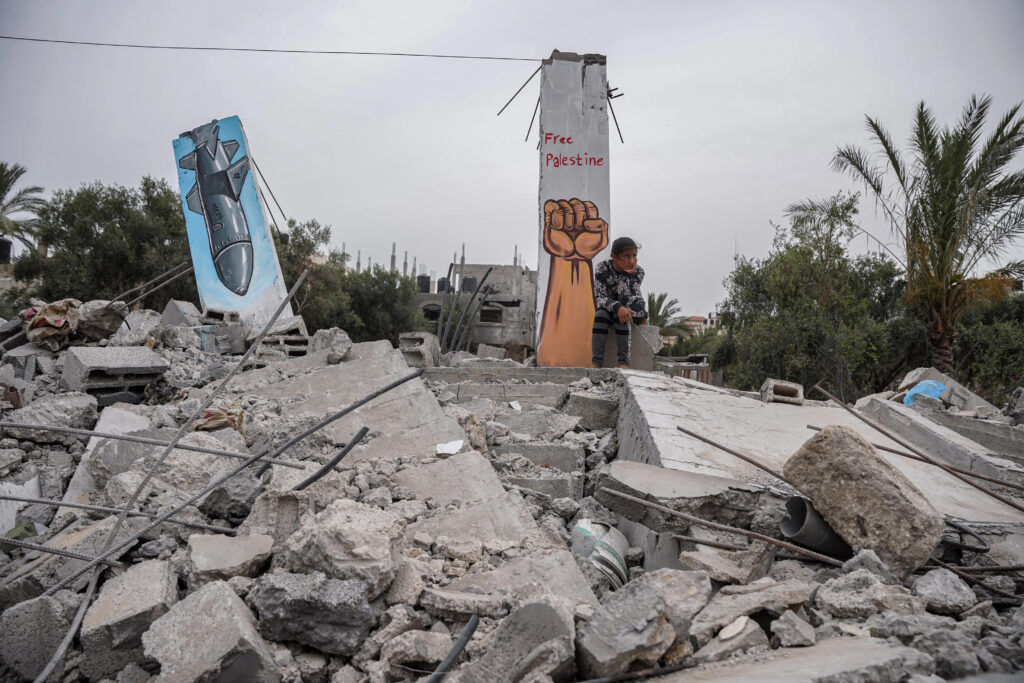
The implementation of any new approaches aimed at a rapid, peaceful resolution of the Middle East conflict, including the latest UN Security Council resolution, which authorizes the deployment of International Stabilization Forces (ISF), shows that the international community is once again reaching the limits of tools that rely solely on security measures, temporary control, and external administration. Even the most carefully calibrated political or administrative frameworks cannot produce sustainable results unless the ideological nature of the conflict, including its spiritual, historical, and value-based foundations, is changed. It is increasingly clear today that peace in the Holy Land requires not only diplomatic and humanitarian efforts, but also a deep dialogue between the religious and civilizational traditions of the region. In this context, the experience of Kazakhstan, which initiated the creation of a unique collective mechanism for religious reconciliation, deserves particular attention. After lengthy discussions, the UN Security Council approved the U.S.-proposed resolution to form an international stabilization force in Gaza. That means authorizing external actors - for the first time through a UN-mandated transitional authority - to participate in Gaza’s administrative and security arrangements. Thirteen countries supported the resolution, with only Russia and China abstaining. This step creates a new legal reality: the international community now holds a formal mandate to support Gaza’s security, humanitarian access, and reconstruction. Yet the resolution raises another question: will this become the foundation for lasting peace, or merely another temporary structure that keeps the situation under control without changing its essence? The U.S.-Israeli planning model - widely discussed in reporting - proposing dividing Gaza into "green" and "red" zones, reflects an approach in which security replaces reconciliation. Historical cases, such as Bosnia and Lebanon, suggest to many analysts that such strategies rarely lead to sustainable stability. Territorial divisions, from Bosnia to Lebanon, tend to freeze conflicts rather than resolve them. The Palestinian enclave risks becoming an example of a “permanent transitional zone,” where military stability exists without political resolution or trust. In the future, a divided Gaza could face humanitarian collapse, intensified radicalization, and deep fractures in how the Islamic world perceives the West, especially if European troops are deployed. All this underscores a key point: without addressing the ideological and religious dimensions of the conflict - as many experts argue - territorial schemes remain temporary. The conflict in the Holy Land cannot be resolved solely with demarcation maps and international mandates. Breaking the deadlock requires more than another control mechanism; it requires a new architecture of reconciliation. And it must engage the roots of the conflict, including religious thinking, historical grievances, and cultural trauma, rather than its surface-level manifestations. Kazakhstan can play a unique role here. It is not just a new participant in the Abraham Accords, but a country with remarkable political, diplomatic, and spiritual legitimacy. It enjoys the trust of the Islamic world, maintains stable relations with Israel, is perceived by the West as a neutral partner, and has a successful record of coordinating great-power and regional actor efforts, such as the Astana process on...

Opinion: Abraham Accords Can Help Kazakhstan Reshape Its Energy Future

On 6 November 2025, after speaking with Kazakhstan’s President Kassym-Jomart Tokayev and Israel’s Prime Minister Benjamin Netanyahu, U.S. President Donald Trump announced that Kazakhstan would join the Abraham Accords. Astana and Jerusalem have maintained full diplomatic relations since 1992, but Kazakhstan’s entry pushes the Accords beyond the Middle East and North Africa and into the Eurasian heartland. This matters at a time when Washington wants to re-energize the initiative and deepen its C5+1 engagement with the region. Kazakhstan’s decision fits its multi-vector policy. The decision also builds on the country’s role as a key component of the Trans-Caspian International Transport Route (TITR, “Middle Corridor”), which links Chinese production to European markets. Cargo volumes reached about 4.5 million tons in 2024 and are expected to rise to around 5.2 million tons in 2025. A recent report by Boston Consulting Group expects rail freight through the Middle Corridor to quadruple by the decade’s end. The Accords do not change Kazakhstan’s formal status with Israel. The question is, rather, whether they unlock deeper economic cooperation. The Times of Central Asia has already reported on clear opportunities for cooperation in sectors such as water and agricultural efficiency, grid and industrial productivity, and cybersecurity and administrative modernization. In the energy sector, like the others, the Accords give Israeli companies a clearer political and legal framework for working with Kazakhstan’s energy and infrastructure sectors. Gulf Cooperation Council states, and the United Arab Emirates (UAE) in particular, could provide project finance as well. Hard Energy, Nuclear Fuel, and Israeli Technology Astana’s principal concern in the energy sector is how to raise net revenue: the goal here is to make the sector more resilient to external pressure without incurring prohibitive capital costs. Israeli firms can address that problem at an operational level. The PrismaFlow sensing system developed by Prisma Photonics is a proven technology that uses existing optical fiber as a sensing system. Thousands of kilometers of pipeline can be monitored in real time for leaks, third-party interference, and attempted theft, without having to install physical sensors along the route. KazTransOil and Prisma Photonics could develop a program through an Abraham Accords framework to overlay this technology on selected trunk network segments and on the systems that deliver crude to export pipelines. Energy-sector cybersecurity is another area where Israeli companies can help Kazakhstan’s hard-energy system. The Israeli firm Radiflow specializes in operational-technology (OT) cybersecurity for oil and gas installations, tailored to pipeline and production environments. Its systems provide continuous network visibility and better anomaly detection. Its risk-based threat management reduces both the likelihood and the cost of cyber incidents that might interrupt flows or force precautionary shutdowns. KazMunayGas, KazTransOil, and their joint ventures could implement a structured audit and remediation program with Radiflow as a strategic partner. The uranium sector presents another opportunity for Kazakhstan–Israel cooperation, potentially a more strategic one. OT security systems can provide monitoring and control layers for uranium mining, in-situ leaching fields, and logistics chains. Kazakhstan accounts for over 40% of the world's uranium...

Abraham Accords Frame Kazakhstan–Israel Cooperation to Deliver Tokayev’s Reforms

Kazakhstan’s decision to enter the Abraham Accords is a diplomacy-first move by President Kassym-Jomart Tokayev. Its aims include: 1) converting symbolic capital into policy traction in Washington, 2) arriving at workable co-financing with Gulf partners, and 3) preserving equilibrium with Moscow and Beijing. The step does not alter recognition; the two countries have had diplomatic relations for a third of a century, institutionalized through embassies. Cooperation has been steady, if modest. Entering the Abraham Accords now gives these relations a framework that U.S. agencies, funds, and implementers already use. The timing intersects the C5+1 turn from set-piece dialogues to transactions, with new deals announced alongside the Accords move. What the framework unlocks is execution. It compresses attention cycles inside U.S. bureaucracies, normalizes trilateral packaging with Gulf financiers, and clears diligence pathways for banks and development finance institutions. Those effects matter where Israeli capabilities dovetail with Tokayev’s priorities. The premise of Tokayev’s move is straightforward: diplomacy should shorten the distance between declared policy and the implementation of projects that work. Tokayev’s Diplomatic Architecture and the Bilateral Relationship Kazakhstan recognized Israel in 1992 and opened embassies soon after, setting a cautious but uninterrupted channel for official contact. The institutional scaffolding is visible in public sources. Trade volumes have been modest but steady, with 2024 bilateral turnover reported by Kazakhstan’s statistics at roughly $236 million, a figure that is broadly consistent with third-party trackers such as Trading Economics and OEC profiles. Practical frictions have eased as Air Astana initiated direct air links between Almaty and Tel Aviv in 2023. The Accords move aligns that long, incremental relationship with a framework that is transparent to Washington and to Gulf financiers. Reporting on the Washington week underscores the shift from set-piece dialogues to transactions, as the Accords announcement was paired with commerce headlines. Joining the Abraham Accords reorganizes and reframes practical bilateral activities. By placing existing ties under a known diplomatic wrapper, Astana becomes easier to route inside U.S. agencies and funds, and easier to match with Gulf co-financing for projects that fall in line with Tokayev’s domestic reforms and economic development program. The practical test becomes whether the new wrapper accelerates cooperation, where Israel’s comparative advantages can help Kazakhstan meet the goals of that program. Examples of this are precision irrigation and basin telemetry to optimize steppe agriculture, audit-plus-retrofit toolkits that cut grid and industrial losses without new generation, reinforcing the 2060 neutrality track, and civil-service-embedded cyber training with secure data exchange that lifts administrative credibility. The Accords thus function as additive diplomacy, widening Kazakhstan’s access to recognizable cooperation pathways without demanding a shift in alignments. In Washington, the move plugs into an existing rubric that officials already use for interagency routing and external partnerships. Regionally, it complements the C5+1’s turn toward transaction-focused engagement. Domestically, it moves Tokayev’s reform agenda forward. Internationally, it demonstrates continued leadership. The diplomatic wrapper works because Kazakhstan can route cooperation through recognized counterparties and rules. Samruk-Kazyna and core state-owned enterprises (SOEs) represent accountable anchors consistent with OECD-provided guidance on...

Opinion: Kazakhstan Joins Abraham Accords – More Than a Symbolic Gesture

Kazakhstan has officially agreed to join the Abraham Accords during a C5+1 summit, giving another green flag of legitimacy to Israel for its policies and actions in West Asia, especially in Palestine. Reportedly, not only Kazakhstan but also Azerbaijan and Uzbekistan are set to follow this step. The Normalization process, brokered by the United States to advance the culture of peace among the three Abrahamic religions, was initiated by President Donald Trump during his first term. Since then, four Muslim-majority countries - the United Arab Emirates, Bahrain, Morocco, and Sudan - have joined the Abraham Accords. However, other Muslim-majority countries have previously followed the stand taken under the Arab Peace Process of 2002, which emphasizes the resolution of the Palestine issue before starting the normalization of ties with Israel. The joining of the Abraham Accords by Kazakhstan and the quest by other Caucasus and Central Asian Muslim-majority countries are distinctive in multiple aspects. As per the official definition, the Abraham Accords encourage the establishment of relations between Israel and its neighbors in the region. In this context, the extension of the Abraham Accords, originally designed to broker regional peace and stability in West Asia, to other regions and securing legitimacy by Muslim-majority countries outside West Asia reflects the pan-Abrahamic outlook of the U.S.-brokered deal. Moreover, Kazakhstan is a country that has established diplomatic ties with Israel since 1992, after the disintegration of the Soviet Union. So, the question is, what does the joining of the Abraham Accords by Kazakhstan signify for the Central Asian country, which shares a long border with Russia and already has substantial military and economic ties with it? The significance of the Abraham Accords for Kazakhstan can be comprehensively understood from the point of view of Kazakhstan, the United States, and Israel, the major participants of the agreement. Kazakhstan’s attempt to balance regional and global pressure Firstly, for Kazakhstan, the joining of the Accords with the perspective of enhancing ties with Israel can be taken more as a symbolic move, as Kazakhstan already fulfils 25% of Israel’s energy needs. The countries share a strong diplomatic relationship, with Israeli PM Benjamin Netanyahu visiting Kazakhstan in 2016; the two countries have signed several bilateral agreements. Kazakhstan has significant relations with Israel in the fields of irrigation and healthcare, and has also pursued discussions on visa-free travel, tourism, and technology. Kazakhstan and Israel have launched the Israel-Kazakhstan Irrigation Demonstration Centre in the Almaty region. Kazakhstan also hosts the largest Jewish population in Central Asia, which lives in peace and harmony with other ethnic groups. Considering the strong ties already in place, the lingering question is why Kazakhstan had to formally sign an agreement that appears to be a symbolic gesture from the outside. To this question, Adil Husain, PhD scholar of Central Asian Studies at Jamia Millia Islamia (JMI), New Delhi, says that “though the decision to formalize the normalization ties with Israel may appear as a formality, the move carries a strategic significance for the Central Asian country...