Reform and Moderate Conservatism: Reading Kazakhstan’s Kurultai Vote
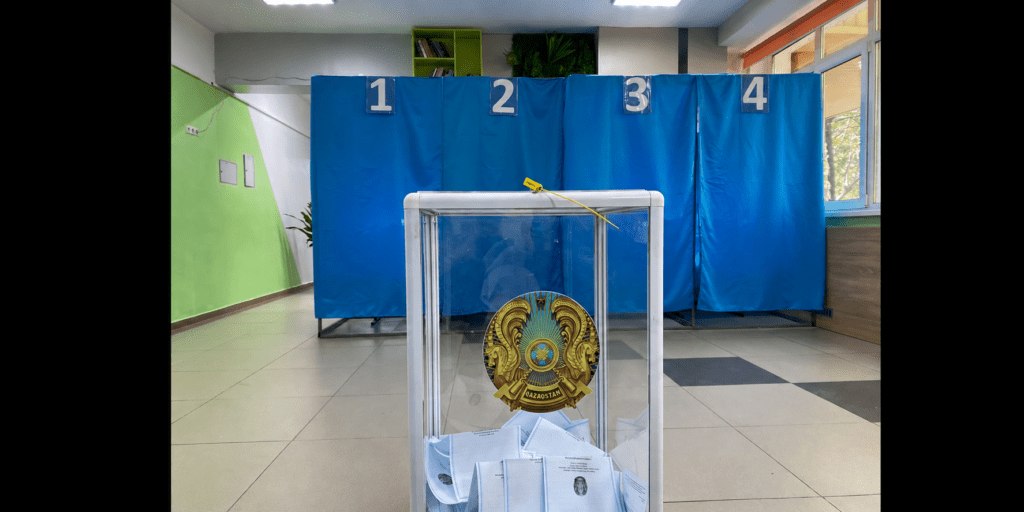
Preliminary results have been announced in Kazakhstan’s election to its new unicameral parliament, the Kurultai. Notably, they differ little from the first exit poll released the previous day. The outcome itself was largely predictable: the newly created ruling Adilet party won by a wide margin, while two parties failed to clear the threshold for representation in the Kurultai. In recent years, Kazakhstan has gone through a series of major electoral campaigns that have, quite literally, revived voters’ interest in exercising their basic civic rights. Along the way, the campaigns have developed a tradition of sorts, combining Soviet-era methods of drawing people to polling stations with elements of the political spectacle more characteristic of Western countries, particularly the United States. [caption id="attachment_54573" align="aligncenter" width="1600"] Image: TCA[/caption] In Soviet times, voters were enticed to polling stations with scarce goods, from candy to sausage. On election day, food fairs appeared near polling stations in Almaty: people could cast their ballots and then eat traditional Kazakh dishes, drink hot tea with milk, and listen to music. Since elections in Kazakhstan are increasingly promoted as family occasions, where parents can pass an important civic experience on to the younger generation, activities were also organized for children near polling stations. Among other things, they could play asyq, a traditional game familiar to generations of Kazakhstanis. [caption id="attachment_54574" align="aligncenter" width="1600"] Image: TCA[/caption] As for the show-like elements, some voters arrived dressed as various characters, from Kazakh batyrs, or traditional warriors, to the American superhero Spider-Man. [caption id="attachment_54568" align="alignnone" width="300"] @Regional Communications Service[/caption] [caption id="attachment_54569" align="alignnone" width="300"] @Regional Communications Service[/caption] [caption id="attachment_54570" align="alignnone" width="300"] @Regional Communications Service[/caption] Public transportation was free for city residents that day, and during the first half of the day it was easy to tell which passengers had already voted and which had not: the latter persistently tried to pay their fares, while the former stopped them from doing so. All of this coincided with an unusually high turnout in Almaty – more than 43%. According to preliminary regional figures announced after polling stations closed, turnout in the city reached 43.23%, the lowest among Kazakhstan’s regions and cities of national significance but unusually high by Almaty standards. Political analyst Andrey Chebotarev noted that turnout at this level had not been recorded in Almaty since 2012, when Kazakhstan was still reeling from the bloody events in Zhanaozen. Chebotarev said the factors behind the current level of voter participation in Almaty would require further study. “Most likely, Almaty residents who are loyal to the authorities were primarily encouraged to vote by the political changes that began with the adoption of Kazakhstan’s new Constitution. Protest-minded residents apparently did not stay away either, expressing their dissatisfaction by voting ‘against all.’ But both groups were united by strong interest in the election campaign that has just ended,” the political analyst suggested. The author of this article exercised his civic right at 11 a.m., when the ballot box at his polling station was already almost one-third full. Election commission members...