
• KGS/USD = 0.01144 0%
  • KZT/USD = 0.00205 0%
  • TJS/USD = 0.10608 0.19%
  • UZS/USD = 0.00008 0%
  • TMT/USD = 0.28490 0%
  • KGS/USD = 0.01144 0%
  • KZT/USD = 0.00205 0%
  • TJS/USD = 0.10608 0.19%
  • UZS/USD = 0.00008 0%
  • TMT/USD = 0.28490 0%
  • KGS/USD = 0.01144 0%
  • KZT/USD = 0.00205 0%
  • TJS/USD = 0.10608 0.19%
  • UZS/USD = 0.00008 0%
  • TMT/USD = 0.28490 0%
  • KGS/USD = 0.01144 0%
  • KZT/USD = 0.00205 0%
  • TJS/USD = 0.10608 0.19%
  • UZS/USD = 0.00008 0%
  • TMT/USD = 0.28490 0%
  • KGS/USD = 0.01144 0%
  • KZT/USD = 0.00205 0%
  • TJS/USD = 0.10608 0.19%
  • UZS/USD = 0.00008 0%
  • TMT/USD = 0.28490 0%
  • KGS/USD = 0.01144 0%
  • KZT/USD = 0.00205 0%
  • TJS/USD = 0.10608 0.19%
  • UZS/USD = 0.00008 0%
  • TMT/USD = 0.28490 0%
  • KGS/USD = 0.01144 0%
  • KZT/USD = 0.00205 0%
  • TJS/USD = 0.10608 0.19%
  • UZS/USD = 0.00008 0%
  • TMT/USD = 0.28490 0%
  • KGS/USD = 0.01144 0%
  • KZT/USD = 0.00205 0%
  • TJS/USD = 0.10608 0.19%
  • UZS/USD = 0.00008 0%
  • TMT/USD = 0.28490 0%
18 February 2026

Viewing results 1 - 6 of 8

Kyrgyzstan to Launch State Nurseries as Part of National Afforestation Campaign

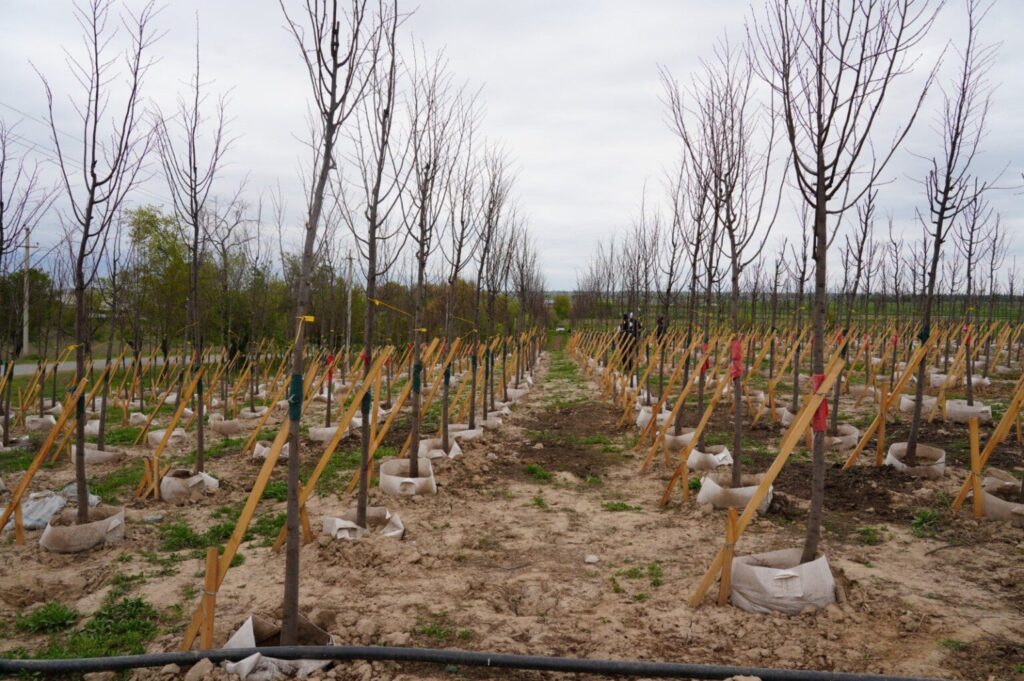
Four institutions in Kyrgyzstan have been awarded a total of $534,000 in grant funding to establish and develop state-owned nurseries for growing tree saplings, as part of a nationwide effort to restore forests, improve sapling quality, and support environmental sustainability. According to the Ministry of Natural Resources, Ecology and Technical Supervision, the funding was allocated through a competitive selection process to Osh Forestry, Chon-Kemin State Nature Park, Kara-Kulja Forestry, and the Kyrgyz National Agrarian University. Applicants were required to submit a business plan and have access to at least five hectares of land to qualify. The grants were approved by the International Fund for Agricultural Development (IFAD), which serves as the project's donor. The Ministry of Water Resources, Agriculture, and Processing Industry stated that the new nurseries will have the capacity to produce up to 2 million saplings annually. These will include nut, fruit, and conifer species and serve as a stable supply of planting material for various regions across the country. “The establishment of modern nurseries is not just an investment in reforestation and environmental health. It is a step toward ecosystem restoration and helping rural communities adapt to climate change,” said First Deputy Minister Janybek Kerimaliev. The nursery initiative is part of Kyrgyzstan’s broader “Jashyl Muras” (Green Heritage) campaign, launched in March 2022 by President Sadyr Japarov. The national program targets the planting of 5 to 6 million saplings annually. In 2024, more than 8.1 million saplings were planted across the country under the program, according to official figures.

Planting Trees to Heal Old Wounds: Can a Desert Forest Save the Aral’s Last Residents?

In the Aralkum Desert, afforestation campaigns have multiplied since the early 2000s. They are meant to slow the sandstorms, temper a rapidly warming climate, and protect the health of those still living in the shadow of the Aral Sea. But the promised results have not appeared yet. The road from Aralsk to Aiteke Bi cuts through a palette of ochre and dust. Trucks drift forward in pale clouds, dragging the desert behind them like a long train. In these villages scattered along the former shoreline of the Aral Sea, the wind never leaves. It is abrasive, restless, and a witness to a vanished water body that once cooled the hottest corner of Kazakhstan. Respiratory diseases now run through family histories, and doctors say they can recognize lungs shaped by ecological collapse. At the polyclinic in Aiteke Bi, patients describe the same symptoms with weary precision: breath shortening too quickly, coughs that never fully recede, a fatigue that never seems to lift. Nuralay, 52, says the storms “get into the house, into the throat, into everything.” She admits she cannot remember a season without irritation in her chest. For Dr. Kuanyshqar Assilov, who has watched the pattern deepen for years, the cause is unmistakable: decades of airborne salts, pesticide residues, and industrial chemicals lifted from the dried seabed of the Aral Sea. [caption id="attachment_39897" align="aligncenter" width="1378"] In Aralsk, sand covers everything[/caption] Marat Narbaev, executive director of the International Fund to Save the Aral Sea (IFAS), recounts the disaster’s origins with a mixture of resignation and habit. He traces it back to the 1960s, when Soviet planners diverted the Amu Darya and Syr Darya to feed cotton monocultures. “The cotton was used to make clothing for soldiers and ammunition,” he says. Today, he argues, the basin faces two pressures: “climate change and demographic growth. Fifty million inhabitants… soon seventy.” In this landscape, the promise of restoring the region through afforestation has acquired symbolic weight. Saxaul trees - hardy, grey-green, capable of surviving in brackish soils - are planted by the millions on the exposed seabed. Officially, they are meant to stabilize sand, calm storms, and cool the surface. Unofficially, they carry the hope that life here might once be breathable again. Survivalist tree? On paper, the saxaul is a biological survivalist: roots plunging more than 30 feet deep, the ability to stabilize dunes, lower surface salinity, and grow dense enough within a few years to slow the wind. In Aralkum, a village east of Aralsk, residents praise the planting that lines a dozen houses. “It really worked, the storms became more bearable,” a man says. Then he shrugs: more trees should have been planted. “We asked for the other side of the village, but there’s no funding left.” Nowadays, half of the trees have died, and the rest lie buried beneath the dunes. [caption id="attachment_39896" align="aligncenter" width="1378"] In Aralkum village, half of the surviving trees barely emerge from the sand[/caption] Sometimes, past plantations have almost zero trees left. According to a 2021...

Kazakhstan Builds Saxaul Nursery on Dried Aral Seabed

Kazakhstan is ramping up its ambitious afforestation efforts on the dried bed of the Aral Sea, with the establishment of a new saxaul nursery in the Kyzylorda region. Minister of Ecology and Natural Resources Yerlan Nyssanbayev recently visited the site to inspect progress on the project. Located directly on the former seabed, the nursery is designed to cultivate saxaul shrubs-hardy, drought-resistant plants well-adapted to the region’s arid conditions. Drilling work is currently underway to construct a well that will provide essential irrigation. Once operational, the 15-hectare facility is expected to produce 1.5 million saxaul saplings annually. Growing the saplings locally will help reduce transportation costs and improve survival rates by acclimating plants to local soil and climate conditions. Reclaiming a Devastated Landscape Kazakhstan’s large-scale planting initiative aims to restore parts of the Aral ecosystem, which was devastated by Soviet-era irrigation policies. Once the world’s fourth-largest inland sea, the Aral spanned 68,000 square kilometers and straddled the border between Kazakhstan and Uzbekistan. Starting in the 1960s, massive water diversion from the Amu Darya and Syr Darya rivers for cotton farming caused the sea to shrink dramatically. By 2007, the Aral had dwindled to just 10% of its original size. In addition to the new nursery, Nyssanbayev visited an existing saxaul facility in Kazalinsk, located in the Kyzylorda region. This nursery began operations in November 2024, initially sowing seeds across 10 hectares with a capacity to produce up to 3 million saplings. As of 2025, planting has expanded to 11,800 hectares of the dried seabed. According to the Ministry of Ecology and Natural Resources, Kazakhstan aims to afforest 1.1 million hectares of the dried Aral seabed with saxaul. From 2021 to 2024, 475,000 hectares were afforested, including 127,000 hectares in 2024 alone. In 2025, the government plans to plant saxaul on an additional 428,000 hectares. By the end of 2025, Kazakhstan expects saxaul forests to cover approximately 40% of its portion of the dried Aral seabed.

Kazakhstan Plants Over 1 Billion Trees as Reforestation Drive Extends to 2027

Between 2021 and 2024, Kazakhstan planted a total of 1.15 billion tree saplings, according to the Ministry of Ecology and Natural Resources. The effort forms part of a sweeping national campaign aimed at reversing deforestation and mitigating climate impacts. Initially, President Kassym-Jomart Tokayev had set a target of planting two billion trees by 2025. However, the government has now extended the deadline to the end of 2027 and re-approved its Comprehensive Plan for Reforestation and Afforestation. As part of the initiative, one and two-year-old saplings of both deciduous and coniferous species are being planted across various ecosystems. Currently, 251 forest nurseries operate across the country on 3,178 hectares of land, producing more than 280 million saplings for future planting. Urban greening is also a key focus. Under the presidential initiative to plant 15 million trees in cities and villages nationwide, 14.3 million have already been planted between 2021 and 2024. The plan calls for more than three million trees to be planted annually through 2025. To support this effort, the government has approved detailed landscaping and green zone development plans for Kazakhstan’s regions, as well as for its three major cities, Astana, Almaty, and Shymkent. Another priority is the afforestation of the dried bed of the Aral Sea, a critical environmental concern in Central Asia. Over the past three decades, trees and shrubs have been planted on more than 600,000 hectares of the former seabed, including 413,000 hectares over the last four years alone.
