• KGS/USD = 0.01144 0%
  • KZT/USD = 0.00194 -0%
  • TJS/USD = 0.10844 -0.46%
  • UZS/USD = 0.00008 0%
  • TMT/USD = 0.28571 0.28%
  • KGS/USD = 0.01144 0%
  • KZT/USD = 0.00194 -0%
  • TJS/USD = 0.10844 -0.46%
  • UZS/USD = 0.00008 0%
  • TMT/USD = 0.28571 0.28%
  • KGS/USD = 0.01144 0%
  • KZT/USD = 0.00194 -0%
  • TJS/USD = 0.10844 -0.46%
  • UZS/USD = 0.00008 0%
  • TMT/USD = 0.28571 0.28%
  • KGS/USD = 0.01144 0%
  • KZT/USD = 0.00194 -0%
  • TJS/USD = 0.10844 -0.46%
  • UZS/USD = 0.00008 0%
  • TMT/USD = 0.28571 0.28%
  • KGS/USD = 0.01144 0%
  • KZT/USD = 0.00194 -0%
  • TJS/USD = 0.10844 -0.46%
  • UZS/USD = 0.00008 0%
  • TMT/USD = 0.28571 0.28%
  • KGS/USD = 0.01144 0%
  • KZT/USD = 0.00194 -0%
  • TJS/USD = 0.10844 -0.46%
  • UZS/USD = 0.00008 0%
  • TMT/USD = 0.28571 0.28%
  • KGS/USD = 0.01144 0%
  • KZT/USD = 0.00194 -0%
  • TJS/USD = 0.10844 -0.46%
  • UZS/USD = 0.00008 0%
  • TMT/USD = 0.28571 0.28%
  • KGS/USD = 0.01144 0%
  • KZT/USD = 0.00194 -0%
  • TJS/USD = 0.10844 -0.46%
  • UZS/USD = 0.00008 0%
  • TMT/USD = 0.28571 0.28%
09 December 2025

Viewing results 1 - 6 of 11

Kazakhstan to Use Innovative Drone Technology for Aral Seabed Reforestation

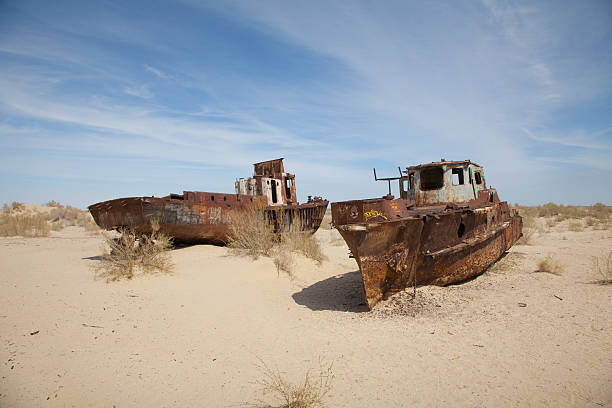
On October 29, a new initiative titled “Improving the Ecosystem of the Aral Seabed” was launched by Korkyt Ata Kyzylorda University, the University of California, Berkeley, the Kazakh Directorate of the International Fund for Saving the Aral Sea (IFAS), and the Bulat Utemuratov Foundation.  The project seeks to rehabilitate the dried Aral Sea bed using innovative E-seed technology developed by scientists at UC Berkeley. The method involves aerial seeding with drones that distribute self-burying seeds encased in biodegradable material, an approach designed to accelerate greening, increase plant survival rates, and reduce labor costs. Once the world’s fourth-largest inland sea, the Aral Sea covered 68,000 square kilometers across Kazakhstan and Uzbekistan. Beginning in the 1960s, large-scale irrigation projects diverted water from the Amu Darya and Syr Darya rivers to support cotton farming. By 2007, the sea had shrunk to just 10% of its original size. Today, the Aral Sea is a symbol of one of the world's most severe environmental disasters. Salt-laden dust from the exposed seabed, estimated in the tens of billions of tons, is carried by wind as far as the Arctic and the Himalayas. This toxic dust, infused with pesticides and heavy metals, contaminates soil, water, and air, threatening regional public health and food security. “The Aral Sea is a wound on the planet that cannot be ignored. We are launching a project that will create a barrier against salt and toxic dust, improve human health, and contribute to the future of the entire Earth,” said Ainur Karbozova, Director of the Bulat Utemuratov Foundation. “The uniqueness of this technology is that it can be applied worldwide from restoring burned-out forests to transforming deserts into green oases.” A test planting on a one-hectare site is planned for March-April 2026. In 2027, the second phase will expand the pilot to 50 hectares. “The use of the innovative E-seed technology will strengthen the soil structure, reduce dust and salt emissions, and ultimately increase the region's biodiversity,” said Rakhat Kurmanbayev, Associate Professor at Korkyt Ata Kyzylorda University. “By 2040, we plan to stabilize the ecosystem over at least 50 square kilometers. The project will reduce air temperatures by 1-2°C and improve the microclimate.” The initiative aligns with broader environmental goals outlined under Kazakhstan’s 2024-2026 chairmanship of IFAS, during which large-scale afforestation efforts aim to green more than 1 million hectares of the Aral seabed. The Times of Central Asia previously reported the construction of a saxaul nursery in the Kyzylorda region. Located directly on the former seabed, the facility is expected to produce 1.5 million drought-resistant saxaul saplings per year. According to the Ministry of Ecology and Natural Resources, Kazakhstan plans to afforest 1.1 million hectares of the dried seabed with saxaul. Between 2021 and 2024, 475,000 hectares were afforested, including 127,000 in 2024 alone. An additional 428,000 hectares are scheduled for planting in 2025. By the end of 2025, Kazakhstan expects saxaul to cover approximately 40% of its portion of the dried Aral seabed. 

Natural Barriers: Kyrgyzstan Fights Disasters with Reforestation

Kyrgyzstan’s Ministry of Emergency Situations, in collaboration with representatives of the World Bank, has surveyed floodplain areas in the Jalal-Abad region to identify zones most vulnerable to erosion and flooding. The ministry's press service reported that environmental protection efforts will soon begin in these areas, aimed at strengthening soil stability and reducing the risk of natural disasters. The Forestry Institute had earlier designated the region as a pilot site for environmental initiatives. Emergency services personnel and forestry specialists plan to plant trees to establish protective forest belts. The trees’ root systems are expected to reinforce the soil and serve as natural barriers against landslides and mudflows. Last year, the region suffered severe rainfall, triggering mudslides that nearly destroyed two villages. A 10-year-old child lost their life, and over 300 families were evacuated. The disaster also inundated a section of the Bishkek-Osh highway, paralyzing traffic for several hours. “Visiting the ravines allowed us to assess their current condition and identify the areas most vulnerable to erosion. The timely implementation of protective measures, such as planting trees and applying bioengineering solutions, will not only mitigate flood risks but also help restore ecological balance,” the ministry stated. The project is funded by the World Bank and the International Development Association. The Jalal-Abad region has been selected for the pilot phase, with similar initiatives planned for other regions across the country. A recent World Bank report emphasized the economic costs of forest loss, noting its impact on the water cycle, soil stability, and drought resilience, factors that contribute to billions of dollars in global losses. “People and communities around the world are facing not only an environmental crisis but also an economic one. The good news is that solutions exist. If countries start investing now, natural systems can be restored, delivering strong returns in economic growth and job creation,” said Axel van Trotsenburg, Senior Managing Director at the World Bank. Experts argue that environmental programs should not be viewed as obstacles to development, but rather as key to building more sustainable and resilient economies.

Turkmenistan to Designate Bolshoy and Maly Balkhan Mountains as Protected Areas

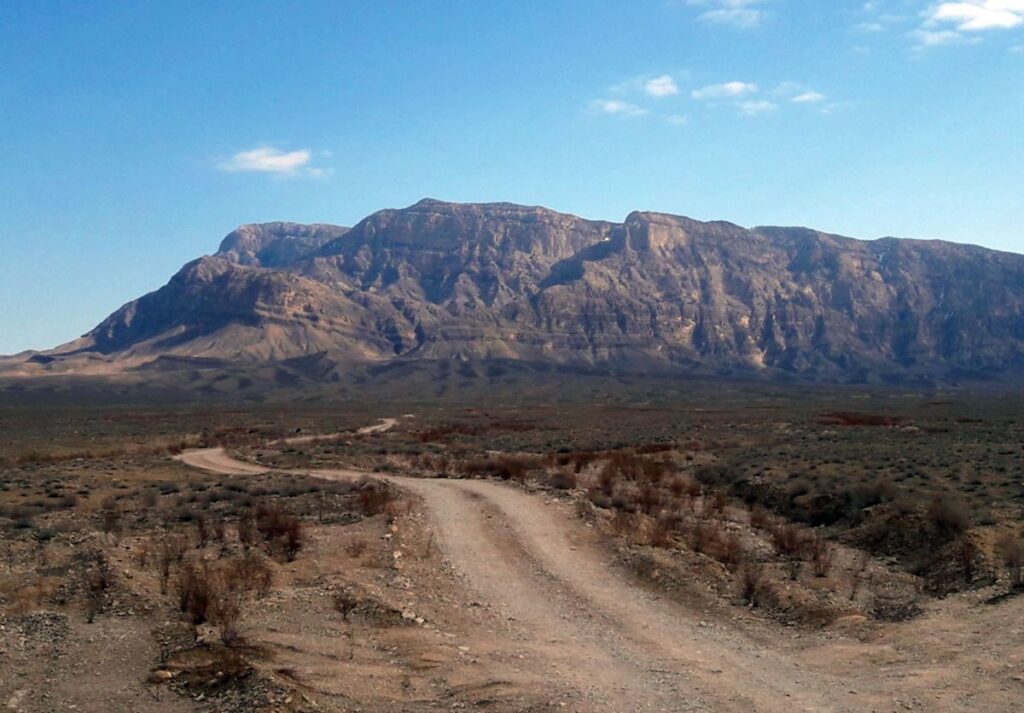
The government of Turkmenistan has announced plans to designate the Bolshoy and Maly Balkhan mountain ranges as protected areas. A new nature reserve is currently being established, with its core zone centered on Bolshoy Balkhan and additional wildlife sanctuaries to be located on Maly Balkhan and the Yuzhny Ustyurt plateau. Ecosystem Under Pressure Concerns about preserving the unique Balkhan ecosystem date back to the 19th century. The first official discussions arose in 1832 following Grigory Karelin’s expedition to the Caspian Sea. By 1836, cartographers had documented the eastern Caspian coastline, the ancient Amu Darya riverbed, and the Bolshoy Balkhan ridge. Zoologists such as Mikhail Laptev (1920s-1930s) and Gheldy Shukurov (1940s) later highlighted the ecological value of this “mountain island in the desert,” a view supported by contemporary scientists who continue to stress its conservation importance. For decades, the slopes of the Balkhans have served as seasonal pastures for small livestock from May to October. This overgrazing has degraded natural ecosystems and reduced biodiversity. The new reserve aims to reverse this trend by limiting cattle grazing to foothills and surrounding pastures. The Natural Wealth of the Balkhans The Balkhan region features a striking mix of desert plains and mountain-steppe terrain. Its highest peak is Mount Arlan, which rises to 1,880 meters. The area is home to two species of amphibians, 28 species of reptiles, 174 species of birds, and 45 species of mammals. Among the most distinctive species is the gray monitor lizard, the region’s largest lizard, growing up to 1.5 meters in length. The Central Asian leopard once roamed these mountains but has since migrated to the Ustyurt Plateau. In its absence, populations of wolves and jackals have increased. Other rare animals found in the area include the Turkmen corsac fox, manul (Pallas’s cat), banded gerbil, rock marten, and Severtsov's jerboa. Maly Balkhan, with its unique topography and the renowned Chalsuv spring, famous for its distinctive taste, reaches a height of 780 meters. In earlier decades, saigas would migrate here from Kazakhstan during winter, though such migrations have not occurred in recent years. Part of a Broader Conservation Push The creation of the Balkhan Reserve is part of Turkmenistan’s National Forest Program (2021-2025). The initiative also includes preparations for establishing the Zengibaba Reserve in Dashoguz velayat and expanding the Amudarya State Reserve. Additional protected areas are planned for Lebap velayat, particularly on the Tallymerdzhen Plain, which is home to the rare sandpiper.

Bishkek Opens Poplar Nursery to Increase City Tree Cover

Bishkek has launched an experimental nursery dedicated to cultivating hybrid poplars as part of a broader initiative to restore the city’s declining green spaces. The project, spearheaded by Kyrgyzstan’s Ministry of Natural Resources, Ecology and Technical Supervision, aims to support long-term urban reforestation. Located on 24 hectares of land, the nursery is expected to produce up to 200,000 saplings each year. In 2025 alone, 12,000 hybrid poplars have already been planted. The selected variety is suited for urban environments; it does not produce fluff, grows up to two meters annually, and develops straight trunks with high crowns. Tree cuttings are used for continued propagation. Minister Meder Mashiev, who visited the site, stressed the strategic importance of the initiative. “If this business develops, all the problems of city greening can be solved,” he stated. The nursery is expected to reduce dependence on imported saplings and play a key role in reversing urban deforestation while improving air quality in the capital. As previously reported by The Times of Central Asia, Bishkek’s municipality is also collaborating with partners from Qingdao, China, to establish a large-scale tree and shrub nursery. This bilateral project forms part of a broader environmental restoration strategy aimed at strengthening the city’s ecological resilience. Once regarded as one of the greenest cities in the former Soviet Union, Bishkek has experienced a steady decline in tree cover over the past three decades due to rapid urban development. Environmental experts have urged authorities to prioritize planting tall, broadleaf deciduous trees, valued for their shade and noise absorption, rather than the coniferous species currently favored in urban landscaping.

Kazakhstan Plants Over 1 Billion Trees as Reforestation Drive Extends to 2027

Between 2021 and 2024, Kazakhstan planted a total of 1.15 billion tree saplings, according to the Ministry of Ecology and Natural Resources. The effort forms part of a sweeping national campaign aimed at reversing deforestation and mitigating climate impacts. Initially, President Kassym-Jomart Tokayev had set a target of planting two billion trees by 2025. However, the government has now extended the deadline to the end of 2027 and re-approved its Comprehensive Plan for Reforestation and Afforestation. As part of the initiative, one and two-year-old saplings of both deciduous and coniferous species are being planted across various ecosystems. Currently, 251 forest nurseries operate across the country on 3,178 hectares of land, producing more than 280 million saplings for future planting. Urban greening is also a key focus. Under the presidential initiative to plant 15 million trees in cities and villages nationwide, 14.3 million have already been planted between 2021 and 2024. The plan calls for more than three million trees to be planted annually through 2025. To support this effort, the government has approved detailed landscaping and green zone development plans for Kazakhstan’s regions, as well as for its three major cities, Astana, Almaty, and Shymkent. Another priority is the afforestation of the dried bed of the Aral Sea, a critical environmental concern in Central Asia. Over the past three decades, trees and shrubs have been planted on more than 600,000 hectares of the former seabed, including 413,000 hectares over the last four years alone.

Bishkek Secures Multi-Million Dollar Grants at COP29 Conference in Baku

Boobek Azhikeev, the head of Kyrgyzstan’s Ministry of Emergency Situations, held several meetings with representatives of international institutions during the COP29 conference in Baku. Protocols and memorandums were signed, and a joint action plan for 2025-27 was developed. “I would like to highlight our meeting with the regional director of the Green Climate Fund, where we discussed a $25 million grant,” stated Kyrgyz EMERCOM spokeswoman Elnura Muktarova. “These funds are intended to support Kyrgyzstan’s Hydrometeorological and Forestry Services, as well as the Training and Research Center of the Ministry of Emergency Situations. We anticipate beginning these projects next year.” Azhikeev also negotiated with FETNet, a Finnish company that will provide advanced training for the Hydrometeorological Service. FETNet has offered to train Kyrgyz specialists in Finland and will present cutting-edge technologies to improve the accuracy and timeliness of weather forecasts. In addition, the Ministry of Emergency Situations announced that it had reached an agreement with the Asian Development Bank (ADB) to secure $60 million for strengthening the banks of the Kara-Darya, Chu, and Yassy rivers. This funding aims to reduce flood risks and enhance the ecological situation in the region. Of the total, 40% will be provided as a grant, while the remainder will be offered as a loan. During a meeting with representatives from the Financial Service under the Government of South Korea, discussions centered on financing Kyrgyzstan’s Forest Service. The South Korean representatives pledged support in the form of laboratory equipment, high-quality seeds, and digital mapping tools to combat pasture degradation and enhance forestry management. Kyrgyz Ministry of Emergency Situations officials also met with Turkish EMERCOM representatives and the Turkish Cooperation and Coordination Agency (TIKA) to discuss joint efforts in responding to emergency situations.