
• KGS/USD = 0.01143 0%
  • KZT/USD = 0.00207 0%
  • TJS/USD = 0.10465 0.1%
  • UZS/USD = 0.00008 0%
  • TMT/USD = 0.28571 0.28%
  • KGS/USD = 0.01143 0%
  • KZT/USD = 0.00207 0%
  • TJS/USD = 0.10465 0.1%
  • UZS/USD = 0.00008 0%
  • TMT/USD = 0.28571 0.28%
  • KGS/USD = 0.01143 0%
  • KZT/USD = 0.00207 0%
  • TJS/USD = 0.10465 0.1%
  • UZS/USD = 0.00008 0%
  • TMT/USD = 0.28571 0.28%
  • KGS/USD = 0.01143 0%
  • KZT/USD = 0.00207 0%
  • TJS/USD = 0.10465 0.1%
  • UZS/USD = 0.00008 0%
  • TMT/USD = 0.28571 0.28%
  • KGS/USD = 0.01143 0%
  • KZT/USD = 0.00207 0%
  • TJS/USD = 0.10465 0.1%
  • UZS/USD = 0.00008 0%
  • TMT/USD = 0.28571 0.28%
  • KGS/USD = 0.01143 0%
  • KZT/USD = 0.00207 0%
  • TJS/USD = 0.10465 0.1%
  • UZS/USD = 0.00008 0%
  • TMT/USD = 0.28571 0.28%
  • KGS/USD = 0.01143 0%
  • KZT/USD = 0.00207 0%
  • TJS/USD = 0.10465 0.1%
  • UZS/USD = 0.00008 0%
  • TMT/USD = 0.28571 0.28%
  • KGS/USD = 0.01143 0%
  • KZT/USD = 0.00207 0%
  • TJS/USD = 0.10465 0.1%
  • UZS/USD = 0.00008 0%
  • TMT/USD = 0.28571 0.28%

Viewing results 1 - 6 of 9

Kazakhstan Increases Export Revenues from Processed Agricultural Products by One-Third

Kazakhstan significantly increased exports of high value-added agro-industrial products in 2025. Revenue from exports of processed agricultural goods rose by nearly one-third compared to the previous year, according to Minister of Agriculture Aidarbek Saparov. By the end of 2025, food production reached $8.1 billion, an 8.1% increase year-on-year. Exports of processed agricultural products totaled $3.2 billion for the first 11 months of 2025, marking a 33.8% increase compared to the same period in 2024. By contrast, total exports of high value-added products in 2024 stood at $2.7 billion, with annual growth not exceeding 15%. The share of processed goods in total agro-industrial exports reached 52% in 2025. According to the Ministry of Agriculture, this reflects a systematic policy aimed at diversifying agricultural exports and shifting toward products with greater added value. The expansion of processing capacity has also increased the sector’s investment appeal. Investments in fixed capital in agriculture doubled, reaching $791.5 million. The structure of exports is also evolving. Previously, Kazakhstan exported raw lentils and imported processed groats at higher prices. Today, domestic processing and packaging facilities enable the country to fully supply the domestic market and export finished products. Kazakhstan ranks sixth globally in lentil exports and retains further growth potential. The oilseed segment has become one of the key drivers of profitability in crop production. In 2025, the oilseed harvest reached 4.9 million tons, up 48% year-on-year. Sunflower oil exports increased to 600,000 tons, placing Kazakhstan eighth globally in export volumes. To support this trend, four major projects were launched in 2024-2025 to expand and modernize oil processing plants. The projects have a combined capacity of approximately 1 million tons and a total investment value of $117 million. A lecithin production line, supplying the food and cosmetics industries, has been launched in the East Kazakhstan region. A similar facility is planned in the North Kazakhstan region. Deep grain processing is also developing. Three enterprises with a combined capacity exceeding 500,000 tons are already operating, producing gluten, bioethanol and starch products. Six additional investment projects worth $3.8 billion are scheduled for implementation over the next three years. These projects involve the production of amino acids, including glutamate, threonine, leucine and lysine, and will be located in the Turkestan, Zhambyl, Akmola and Kostanay regions, as well as in Astana. As previously reported by The Times of Central Asia, Kazakhstan has set a strategic objective for the agricultural sector to become one of the world’s three largest exporters of sunflower oil and to increase total exports of oil and fat products to $1 billion by 2028.
Kyrgyzstan Expands Sales Markets for Agricultural Products

In 2025, Kyrgyzstan significantly broadened the scope of its agricultural exports, entering several new international markets for both raw and processed products. According to the Ministry of Water Resources, Agriculture, and Processing Industry, efforts are actively underway to boost exports to China. To date, eight bilateral protocols have been signed with Chinese authorities, covering the export of Kyrgyz wool, cashmere, beans, poultry meat and by-products, as well as three protocols related to heat-treated meat and raw hides. Exports of dried fruits have already begun, with the first shipment of 23 tons of dried apricots delivered to China. Preparations are also in progress for the export of wine, vegetable oil, and vegetables. Simultaneously, Kyrgyz authorities are working to secure approval for honey exports to the European Union. In a notable milestone, 298 kg of Kyrgyz honey was exported to the United Kingdom for the first time. Export diversification is also extending into the Middle East. In 2025, 144 horses were shipped from Kyrgyzstan to Saudi Arabia. Kyrgyz products have also entered the digital marketplace. Dried fruit, honey, and other processed goods are now available on Russia’s Wildberries online platform, creating new opportunities for e-commerce exports. To support these efforts, 63 agricultural processing facilities were launched in 2025. These enterprises specialize in processing grain, fruit, berries, vegetables, milk, meat, fish, wool, and oilseeds, and many are integrated into trade and logistics centers. Looking ahead, Kyrgyzstan plans to build 385 agricultural processing facilities by 2030. This expansion would enable the country to process up to 25% of its total agricultural output domestically, increasing the added value of exported goods. On December 30, Chairman of the Cabinet of Ministers Adylbek Kasymaliev approved the Cabinet’s Action Plan through 2030. The plan includes initiatives such as the creation of full-cycle livestock farms using feedlot technology, the expansion of organic farming to 202,000 hectares by 2029, support for domestic producers in meeting international quality standards, and the construction of agro-logistics centers to streamline consolidation and export of agricultural products.

Kazakh Food Exports to China Grow After CIIE 2025 Deal

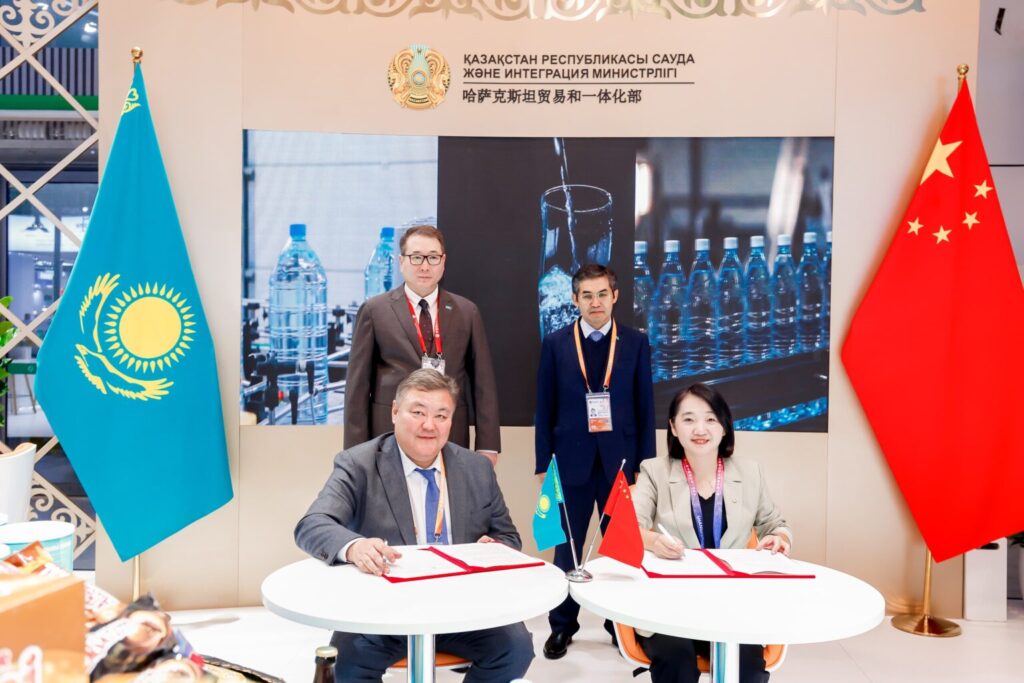
At the China International Import Expo (CIIE 2025) in Shanghai, Kazakhstan’s Trade Policy Development Center, QazTrade, signed a partnership agreement with Optimize Integration Group (OIG), one of China’s leading food importers responsible for 18% of all frozen meat imports into the country. The agreement aims to promote digital trade and create online platforms that will facilitate the entry of Kazakhstani food products into the Chinese market. Under the terms of the agreement, both sides will jointly promote Kazakh agricultural and food products, improve logistics infrastructure, and develop digital trade technologies and payment systems. “This partnership with OIG, one of the most technologically advanced and influential trading platforms in China, opens up significant opportunities,” said QazTrade CEO Aitmukhamed Aldazharov. “Kazakhstani producers will not only increase their exports to China but will also integrate into advanced digital supply chains. This is a major step forward for e-commerce and mutual trust between our countries.” At CIIE 2025, QazTrade also showcased the growing potential of Kazakhstan’s agricultural cooperatives. In collaboration with the National Association of Cooperatives of Kazakhstan and China Coop, China’s largest cooperative retail network, Kazakh products such as honey, kumis, and confectionery are set to enter the Chinese retail market. China Coop encompasses over 340,000 retail outlets with annual turnover exceeding 7 trillion yuan. Aldazharov expressed confidence in the cooperatives' prospects, noting that joint market research has been conducted, trial shipments arranged, and priority export categories identified. These include vegetable oil, meat, honey, dairy beverages, and confectionery. In parallel, QazTrade is launching an acceleration and training program aimed at Chinese companies seeking to expand their operations in Kazakhstan and across Central Asia.
