• KGS/USD = 0.01144 0%
  • KZT/USD = 0.00205 0%
  • TJS/USD = 0.10736 -0.19%
  • UZS/USD = 0.00008 0%
  • TMT/USD = 0.28490 -0.28%
  • KGS/USD = 0.01144 0%
  • KZT/USD = 0.00205 0%
  • TJS/USD = 0.10736 -0.19%
  • UZS/USD = 0.00008 0%
  • TMT/USD = 0.28490 -0.28%
  • KGS/USD = 0.01144 0%
  • KZT/USD = 0.00205 0%
  • TJS/USD = 0.10736 -0.19%
  • UZS/USD = 0.00008 0%
  • TMT/USD = 0.28490 -0.28%
  • KGS/USD = 0.01144 0%
  • KZT/USD = 0.00205 0%
  • TJS/USD = 0.10736 -0.19%
  • UZS/USD = 0.00008 0%
  • TMT/USD = 0.28490 -0.28%
  • KGS/USD = 0.01144 0%
  • KZT/USD = 0.00205 0%
  • TJS/USD = 0.10736 -0.19%
  • UZS/USD = 0.00008 0%
  • TMT/USD = 0.28490 -0.28%
  • KGS/USD = 0.01144 0%
  • KZT/USD = 0.00205 0%
  • TJS/USD = 0.10736 -0.19%
  • UZS/USD = 0.00008 0%
  • TMT/USD = 0.28490 -0.28%
  • KGS/USD = 0.01144 0%
  • KZT/USD = 0.00205 0%
  • TJS/USD = 0.10736 -0.19%
  • UZS/USD = 0.00008 0%
  • TMT/USD = 0.28490 -0.28%
  • KGS/USD = 0.01144 0%
  • KZT/USD = 0.00205 0%
  • TJS/USD = 0.10736 -0.19%
  • UZS/USD = 0.00008 0%
  • TMT/USD = 0.28490 -0.28%

Viewing results 1 - 6 of 45

Kazakhstan Bans Apple Imports to Support Domestic Producers

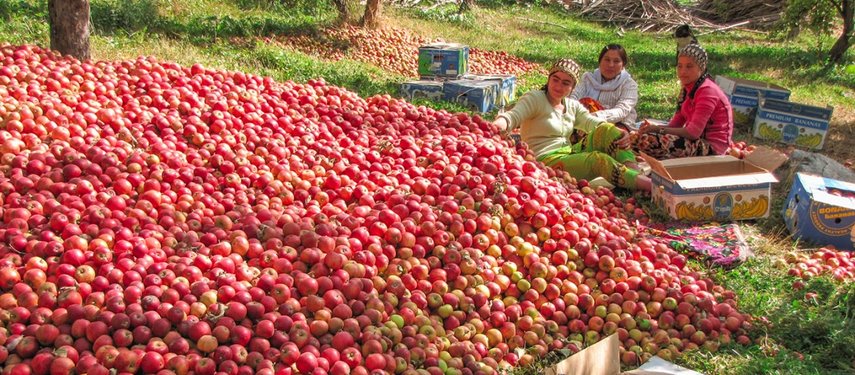
The government of Kazakhstan has temporarily banned the import of apples into the country by motor transport until the end of the year. The decision to introduce the ban was made and announced late in August, but the ban took effect on October 8. According to the Ministry of Agriculture, the ban will last during harvest to support domestic apple production. The move will allow domestic gardeners to sell apples at reasonable prices. During the off-season, apple imports will not be restricted. The government of Kazakhstan has taken support measures in the form of subsidies and preferential loans to develop domestic apple production. As a result, over the past five years, the domestic supply of apples has increased from 62.9% in 2019 to 80% in 2023. At the same time, local farmers are experiencing dumping from foreign producers. High competition with imported products reduces the profitability of domestic producers. With the parallel import of apples during harvest, Kazakhstanis need help selling their products. From January to July 2024, Kazakhstan imported about 107,000 tons of apples, 58% more than in the same period in 2023, from Poland, Iran, Uzbekistan, and China. During that period, apple imports from China increased 18-fold and from Iran — sevenfold. The ban does not apply to imports from fellow members of the Eurasian Economic Union—Armenia, Belarus, Kyrgyzstan, and Russia—or to the international transit of apples through Kazakhstan's territory. Kazakhstan is the birthplace of apples — particularly the famous aport apples, which grow in the Almaty region. Translated from Kazakh, Almaty means “place of abundance of apples.”

Kyrgyzstan Produces All Potatoes, Vegetables, Fruit, and Milk It Needs

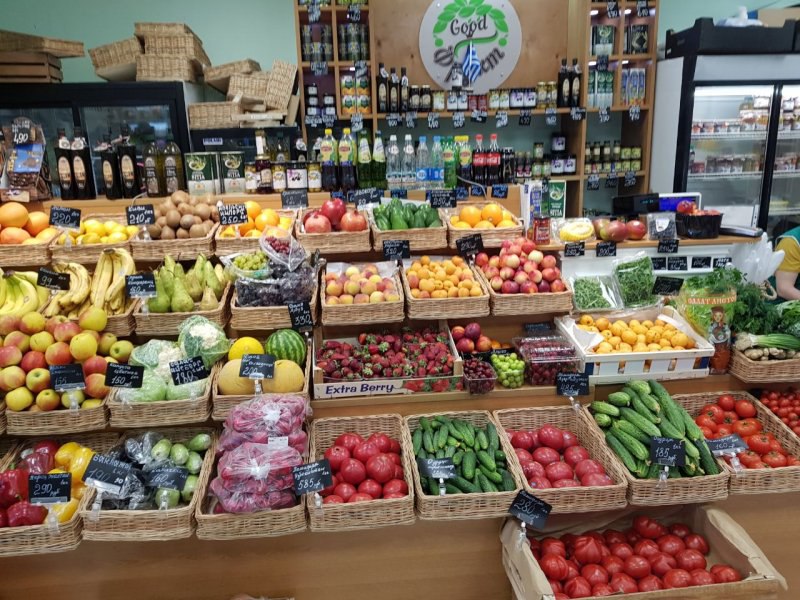
According to government data, of the eight basic socially significant food products in Kyrgyzstan, domestic production meets the demand only for potatoes, vegetables, fruits, and milk. The demand for bread and bakery products, meat, sugar, eggs, and vegetable (cooking) oil is partly satisfied with imports. This was announced at the Council on Food Security and Nutrition meeting on October 3. From January to July 2024, the levels of self-sufficiency were 86.5% for bread and bakery products, 162.8% for potatoes, 159% for vegetables and fruits, 79.1% for meat, 116.3% for milk, 49.2% for sugar, 71.4% for eggs, and 48.5% for vegetable oil. Kyrgyzstan imports food from Russia, Kazakhstan, Belarus, Uzbekistan, and China. At the meeting, Deputy Chairman of the Cabinet of Ministers - Minister of Water Resources, Agriculture and Processing Industry Bakyt Torobaev ordered additional measures to support agricultural production and incentivize local producers. Torobaev also announced the establishment of the Research Institute of Food Security and Nutrition, which will become a center of knowledge and innovation that will help improve the country's food security. The institute's creation will allow scientific research in agronomy and veterinary science and the development of recommendations for improving agricultural product production and processing technologies. It will also cooperate with international organizations and scientific institutions to implement the best global practices in food security.

Chinese Company to Build Sugar Substitutes Plant in Kazakhstan

Chinese state company CITIC Construction plans to invest more than 1 billion dollars in constructing a plant for deep grain processing in the Almaty region. The agreement was reached during the meeting of the Vice-Minister of Agriculture of the Republic of Kazakhstan, Ermek Kenzhekhanuly, with representatives from the Chinese delegation. The parties discussed the development of Kazakhstan's agro-industrial complex and details of the project to build a production line for deep wheat processing with an annual capacity of 300,000 tons. The enterprise will produce maltose, fructose, crystalline fructose, allulose, crystalline dextrose, sodium gluconate, gluten by-products, and feed. The project will be realized in the Kazbek bi-industrial zone in the Almaty region. CITIC Construction's total investment will be about $1.07 billion, and the total value of its products will be $1.87 billion. More than 2,000 jobs will be created. In mid-July, the Ministry of Agriculture of Kazakhstan signed an agreement with Chinese companies CITIC Construction and Beijing Capital Agro to attract $600 million in investment to develop beef cattle breeding in the country. The funds will be used to establish feedlots, with the partnership expected to involve more than 600 farms and existing feedlots. China is Kazakhstan's leading trading partner. At the end of 2023, agricultural exports from Kazakhstan to China doubled and reached $1 billion. In 2023, the volume of bilateral trade turnover amounted to $41 billion, and Kazakhstan intends to double this figure. In addition, Beijing is one of the leading foreign investors in Kazakhstan, having invested about $25 billion in its economy over the past 15 years.

Navigating Challenges: The ICG Reports on Taliban Drug Ban and Its Global Implications

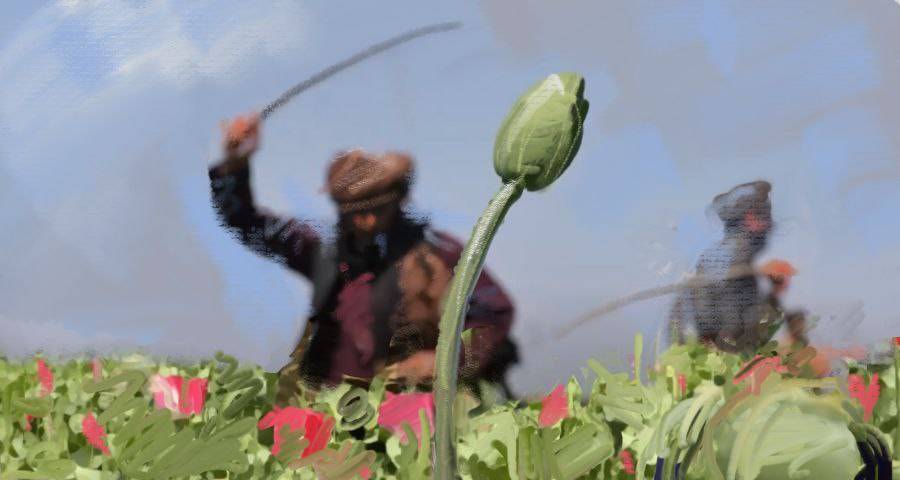
The International Crisis Group, an NGO focused on analyzing conflicts, has reported that “After the Taliban's severe restrictions on women's rights made the regime odious to much of the outside world, the narcotics ban offers a rare opportunity to work with the new authorities on a pressing issue for the benefit of all sides.” Drugs from Afghanistan are a universal problem affecting all regions of the world except for Latin America, with Central Asia remaining one of the main routes for Afghan drugs on their way to Russia and Europe. The so-called “Northern Route” passes through Tajikistan and Uzbekistan, then to Kyrgyzstan and Kazakhstan before reaching the Russian and European markets. Turkmenistan also plays an important role as a transit country for drugs, but on the “Balkan route.” The drug threat from Afghanistan to the five Central Asian republics is not simply a political narrative used by the governments of these republics for their own political purposes. There is a risk of political instability, criminality, corruption, social degradation, and damage to human health as a result of drug trafficking from Afghanistan. Additionally, the elimination of Afghan drug production and trafficking is a key issue in the fight against terrorism, primarily against the Islamic State, as drugs are one of the main sources of income for these groups. In April 2022, hopes for a resolution to this problem appeared following the ban on opium poppy cultivation imposed by the Taliban. Papaver somniferum, commonly known as the opium poppy, has been cultivated in Afghanistan since at least the early twentieth century. The history of opium production is detailed in the Global Illicit Drug Trends report by the United Nations Office on Drugs and Crime (UNODC). Besides the history of opium production, the report provides an overview of measures taken by states in their attempts to regulate and control the drug. Opium began to dominate world drug markets in the early 1980s, after the “April Revolution” and the Soviet invasion of Afghanistan, when the state began to lose control of rural areas, and agriculture itself began to decline. As the UNODC points out, by 1989, opium production was firmly established as the country's main source of income - Afghanistan had become a narco-state. The civil war continued, and the opium economy became firmly entrenched in the country during the 1990s. The first fall of the Taliban in 2001 and the formation of a republican government failed to change the situation due to the newly formed state still having no control over the regions. As a result, its counter-narcotics measures were not effective. It should be noted that only the Taliban managed to reduce drug production. According to the UN, since the Taliban's 2023 ban, opium crops in Afghanistan have declined by 95%, and opium prices have reached record levels. However, many experts wonder if Afghanistan will be able to continue with its chosen policy. Can the new Afghan authorities alone continue to confront the drug threat, and what should be the role of...

Kazakhstan and Germany to Cooperate in Water and Agriculture

During a visit to Germany last week, Kazakhstan Deputy Prime Minister Kanat Bozumbayev met with the German Federal Ministry of Food and Agriculture to discuss the possibility of Kazakh agricultural and organic products entering the German market. The parties agreed to draft a concept for the Regional Center for Sustainable Agriculture in Central Asia, an initiative announced by the President of Kazakhstan during his official visit to Germany back in September 2023. Following Kazakh Deputy Prime Minister's meeting with Boris Greifeneder, Managing Director of the German Water Partnership (GWP), a decision was made to draft an Agreement on a Water Partnership between Kazakhstan and Germany. Cooperation  with GWP, a network of more than 300 companies in the water sector with a strong international focus, marks an essential step towards sustainable and efficient water management in Kazakhstan and will allow the use of proven new technologies. Speaking at the roundtable "Water for Sustainable Development," Bozumbayev noted that the consequences of the unprecedented floods experienced by Kazakhstan in spring, illustrate the need for innovative approaches to combat and prevent similar disasters in the future. To this end, he added that Kazakhstan is currently testing Talsim, a German digital flood forecasting solution, and is ready to study German cases in solving flood problems. The Kazakh Deputy Prime Minister discussed training specialists for Kazakhstan’s water management industry and in turn, the German side expressed its readiness to identify a university to collaborate with the newly- established Kazakh National University of Water Management and Irrigation in Taraz.

Turkish Company to Build Vegetable Storage Facility in Kazakhstan

On July 24, Kazakhstan’s Deputy Minister of Agriculture, Ermek Kenzhekhanuly met managers of the Turkish company Saraylim Tarim to discuss plans for a new vegetable storage facility. A leader in Turkey’s fruit and vegetable storage industry, the company plans to build a 5,000-ton vegetable storage facility in Kazakhstan costing around $15 million. In addition, Saraylim Tarim  plans to invest a further $15 million in establishing a vinegar and canned vegetable production facility in the country's Almaty region. According to the Turkish company, the project would be implemented in cooperation with a Kazakh partner and  Deputy Minister Kenzhekhanuly has promised maximum assistance from the Ministry of Agriculture.