• KGS/USD = 0.01143 -0%
  • KZT/USD = 0.00198 -0%
  • TJS/USD = 0.10899 0.93%
  • UZS/USD = 0.00008 0%
  • TMT/USD = 0.28490 -0.28%
  • KGS/USD = 0.01143 -0%
  • KZT/USD = 0.00198 -0%
  • TJS/USD = 0.10899 0.93%
  • UZS/USD = 0.00008 0%
  • TMT/USD = 0.28490 -0.28%
  • KGS/USD = 0.01143 -0%
  • KZT/USD = 0.00198 -0%
  • TJS/USD = 0.10899 0.93%
  • UZS/USD = 0.00008 0%
  • TMT/USD = 0.28490 -0.28%
  • KGS/USD = 0.01143 -0%
  • KZT/USD = 0.00198 -0%
  • TJS/USD = 0.10899 0.93%
  • UZS/USD = 0.00008 0%
  • TMT/USD = 0.28490 -0.28%
  • KGS/USD = 0.01143 -0%
  • KZT/USD = 0.00198 -0%
  • TJS/USD = 0.10899 0.93%
  • UZS/USD = 0.00008 0%
  • TMT/USD = 0.28490 -0.28%
  • KGS/USD = 0.01143 -0%
  • KZT/USD = 0.00198 -0%
  • TJS/USD = 0.10899 0.93%
  • UZS/USD = 0.00008 0%
  • TMT/USD = 0.28490 -0.28%
  • KGS/USD = 0.01143 -0%
  • KZT/USD = 0.00198 -0%
  • TJS/USD = 0.10899 0.93%
  • UZS/USD = 0.00008 0%
  • TMT/USD = 0.28490 -0.28%
  • KGS/USD = 0.01143 -0%
  • KZT/USD = 0.00198 -0%
  • TJS/USD = 0.10899 0.93%
  • UZS/USD = 0.00008 0%
  • TMT/USD = 0.28490 -0.28%
06 December 2025

Viewing results 1 - 6 of 5

Kazakhstan Launches First Carbon Agro-Climatic Testing Ground

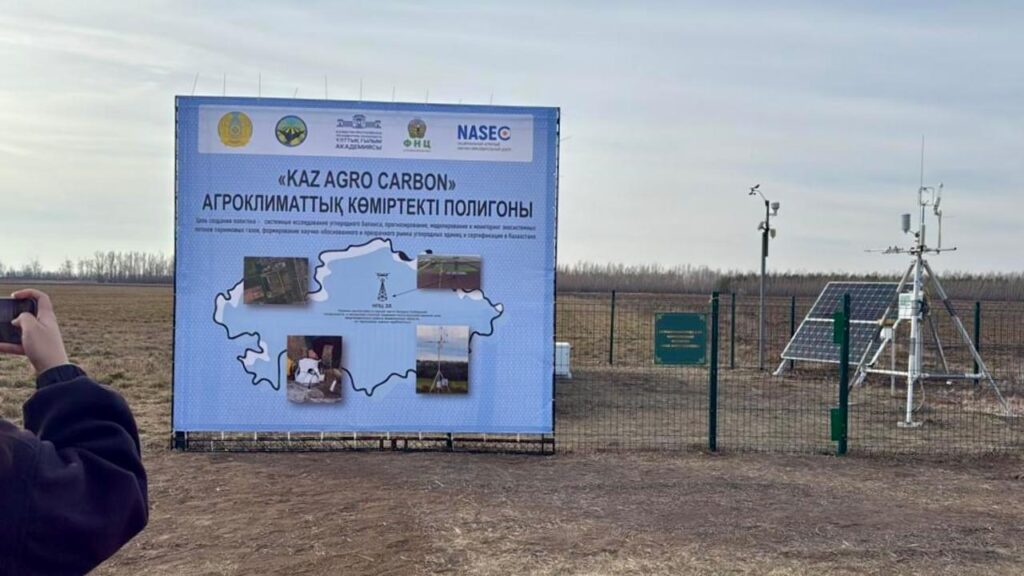
Kazakhstan has inaugurated its first carbon agro-climatic testing ground, Kaz Agro Carbon, at the A.I. Barayev Scientific and Production Center for Grain Farming, marking a significant step toward climate-resilient agriculture. The project is a collaborative effort between the agriculture ministries of Kazakhstan and Russia, the National Academy of Sciences of Kazakhstan, and scientists from the University of Hannover in Germany. According to the Kazakh Ministry of Agriculture, the new facility is designed to manage soil carbon, reduce greenhouse gas emissions, and enhance the climate resilience of the agricultural sector. Kaz Agro Carbon will act as a pilot site for joint research focused on measuring, modeling, and managing the carbon balance in Northern Kazakhstan. Researchers aim to develop technologies that reduce emissions and boost carbon dioxide absorption in local ecosystems. “Kaz Agro Carbon is a platform for integrating science, innovation, and real-world production. It will help preserve soil fertility, adapt agriculture to climate change, and develop a national carbon balance management system. This is an important step toward developing climate-smart agriculture in Kazakhstan,” said Timur Savin, Chairman of the Board at the Scientific and Production Center for Grain Farming, during the opening ceremony. Amid global efforts to combat climate change, carbon farming is emerging as a strategic growth area for Kazakhstan’s agricultural sector. According to the Ministry of Science and Higher Education, Kaz Agro Carbon is equipped for year-round monitoring of ecosystem conditions. The site will track soil carbon levels as well as key meteorological data such as temperature, humidity, and precipitation. Kazakhstan’s carbon sequestration potential is estimated at up to 535 million tons annually. The development of carbon offset trading mechanisms could attract as much as $25 billion per year to the national economy. The new facility will provide farmers with the tools to certify accumulated carbon and participate in the emerging carbon quota market, positioning Kazakhstan to take an active role in international emissions trading.

Opinion: Latecomer Advantage – Central Asia’s Prospects for Embracing Technology

Chinese President Xi Jinping's visit to Astana, Kazakhstan for the second China–Central Asia Summit marks another milestone in reviving a historic bond shaped by the ancient Silk Road — a shared civilizational journey linking China and Central Asia. Today, as the world enters an era dominated by technology as a key driver of development, Central Asian countries have the opportunity to leverage a latecomer advantage by narrowing the digital gap, cultivating technical talent, and harnessing technology for poverty reduction and inclusive growth. Closing the Digital Gap: Role of the Digital Silk Road The rise of the digital economy is reshaping the very foundation of modern development. Just as reliable electricity, transportation networks, and other essential infrastructure once formed the critical foundations for development, digital infrastructure has now become an indispensable pillar for economic and social advancement. The digital world is inherently shared, a phenomenon that can be understood as the ‘digital commons’. It refers to spaces where access and contribution are mutually reinforcing — the value of digital resources grows as more people use them, more knowledge is exchanged, and more services become interconnected. In light of this, Chinese President Xi Jinping proposed building the Digital Silk Road of the 21st Century as early as May 2017 to help close the digital gap among participating countries. For Central Asian countries, the task is to achieve more inclusive digital connectivity. This means not only expanding coverage and improving the quality and speed of connections but also embedding digital solutions more deeply into daily life — across education, commerce, healthcare, etc. These are essential steps toward fully realizing the shared benefits of the digital commons. Mature digital business models from other parts of the world offer valuable blueprints that can be directly adopted or adapted to local contexts. In education, mobile-based learning platforms and virtual classrooms have proven effective in overcoming limited local resources. Expanding access to vocational training, language courses, and digital literacy programs is essential to build a workforce ready for the modern economy. In commerce, the rapid rise of mobile payment systems and cross-border e-commerce platforms has the potential to fundamentally reshape the models small businesses operate. By replicating proven models in mobile finance and logistics management, Central Asian countries can open new pathways for local producers to connect with global markets. ln healthcare, telemedicine provides another avenue where digital solutions can directly address the challenges of limited medical resources and vast geographic distances. Online diagnostic services and remote consultations can expand access to basic healthcare services and help strengthen public health resilience. These models are especially applicable because they are already functioning effectively in comparable emerging markets. Many of today's digital solutions are highly scalable and transferable, requiring only sufficient connectivity and a capable user base. Seizing the latecomer advantage: Talent is the key While lagging in technology may seem a disadvantage, it can also serve as a strategic advantage when viewed differently. This is the essence of what is known as the latecomer advantage — the ability of less developed countries...

Kazakhstan Attracts British Agricultural Technologies

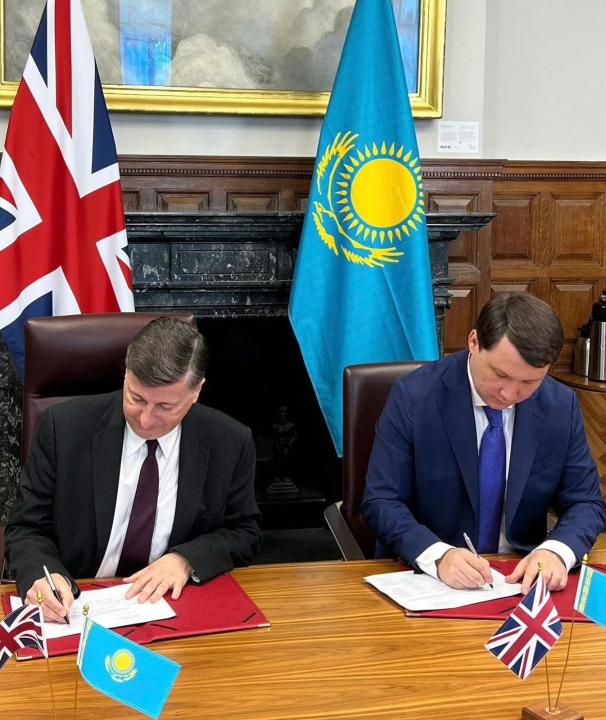
Kazakhstan and the United Kingdom have signed a roadmap for cooperation in agriculture, paving the way for partnerships in agricultural science, the export and processing of agricultural products, and the transfer of British agricultural technologies. According to the Kazakh Ministry of Agriculture, the two countries also signed memorandums of understanding on collaboration in water resource management and the production of biopharmaceuticals in Kazakhstan in partnership with AstraZeneca. These agreements were concluded during the 11th meeting of the Kazakhstan-UK Intergovernmental Commission on Trade and Economic Cooperation, held in London last week. Deputy Minister of Agriculture Ermek Kenzhekhanuly stated that the introduction of British technologies and investment would enhance the competitiveness of Kazakhstan’s agro-industrial sector and improve its resilience to climate change. "In 2024, agricultural trade between Kazakhstan and the UK totaled $50 million. We intend to significantly increase this figure," he said. At the meeting, Deputy Minister of Foreign Affairs Alibek Kuantyrov, who headed the Kazakh delegation, emphasized the UK's strategic role: “The UK is one of Kazakhstan’s key trading partners and top investors, with total FDI (Foreign Direct Investment) exceeding $22 billion. We greatly value the UK’s contribution to the development of Kazakhstan’s key industries and are committed to building a next-level partnership, focused on investment, technology, and knowledge transfer.” The Strategic Partnership and Cooperation Agreement signed between the two countries last year has opened new avenues for collaboration in critical minerals, green energy and climate initiatives, transport and logistics, pharmaceuticals and healthcare, education, and financial services.