
• KZT/USD = 0.00224
  • TJS/USD = 0.10850
  • UZS/USD = 0.00008
  • TMT/USD = 0.29760
  • KZT/USD = 0.00224
  • TJS/USD = 0.10850
  • UZS/USD = 0.00008
  • TMT/USD = 0.29760
  • KZT/USD = 0.00224
  • TJS/USD = 0.10850
  • UZS/USD = 0.00008
  • TMT/USD = 0.29760
  • KZT/USD = 0.00224
  • TJS/USD = 0.10850
  • UZS/USD = 0.00008
  • TMT/USD = 0.29760
  • KZT/USD = 0.00224
  • TJS/USD = 0.10850
  • UZS/USD = 0.00008
  • TMT/USD = 0.29760
  • KZT/USD = 0.00224
  • TJS/USD = 0.10850
  • UZS/USD = 0.00008
  • TMT/USD = 0.29760
  • KZT/USD = 0.00224
  • TJS/USD = 0.10850
  • UZS/USD = 0.00008
  • TMT/USD = 0.29760
  • KZT/USD = 0.00224
  • TJS/USD = 0.10850
  • UZS/USD = 0.00008
  • TMT/USD = 0.29760
13 November 2026

Viewing results 1 - 6 of 3

South Korea Expands Support for Farm Technology in Uzbekistan

South Korea is helping Uzbekistan mechanize rice planting, improve dairy cattle breeding, and grow strawberries year-round. The projects aim to raise farm output and conserve water while opening new markets for Korean equipment and technology. For farmers considering a modern greenhouse, the upfront cost remains a barrier. On September 14, 2026, South Korea’s Rural Development Administration (RDA) and Uzbekistan’s Ministry of Agriculture signed an agreement to expand specialist training. It was one of 13 cooperation documents signed in Seoul that day. Much of the work takes place through two initiatives overseen by the RDA. The Korea Partnership for Innovation of Agriculture (KOPIA) adapts farming technologies to local conditions. The Asian Food and Agriculture Cooperation Initiative brings countries together for joint research. By 2025, the RDA had trained 116 Uzbek specialists in fields including rice cultivation, livestock farming, horticulture, and agricultural advisory services. Rice Planting and Water Conservation Korean rice transplanters have been in use in Uzbekistan since 2018. The RDA reported that mechanized transplanting reduced labor requirements by 70% and increased productivity by as much as 52%. Its May 2026 announcement gave no figures for the trial acreage, the number of participating farms, or the starting levels of labor use and productivity. In August 2024, Uzbekistan approved plans to work with KOPIA on rice seed production centers in Gurlan District in the Khorezm region. The same resolution provided subsidies for 2025 and 2026 covering 20% of the cost of eligible new rice seeders and transplanting equipment. The RDA plans to expand the area used for high-quality rice seed production under its program from 83 hectares in 2025 to 200 hectares by 2027. Uzbekistan’s farms depend on the Amu Darya and Syr Darya, the main rivers of the Aral Sea basin, making water savings in rice cultivation particularly important. In 2024, Uzbekistan’s Ministry of Agriculture reported that drip irrigation used half as much water as conventional irrigation in a trial in Karakalpakstan. A July 2025 government resolution called for drip irrigation trials on at least 10 hectares in each of six regions in 2026. Whether those trials can match the savings reported in Karakalpakstan remains unclear. A separate provision assigned KOPIA a role in training rice seed producers. Dairy Cattle Breeding Embryo transfers allow farmers to breed cattle with desirable traits without importing large numbers of breeding animals. The RDA’s dairy demonstration program in Uzbekistan involved three farms. Of the 30 cows that received Korean embryos, 50% became pregnant, according to the agency. It put the typical pregnancy rate for other imported embryos at 30%. On May 13, 2026, Korean exporters and a farm in the Syrdarya region signed a letter of intent to supply the farm with Korean dairy cattle embryos. The following day, the RDA and the Uzbek agriculture ministry agreed to train specialists in livestock artificial insemination. The agreement also calls for simpler registration of veterinary medicines, which could make it easier for Korean suppliers to enter the Uzbek market. Smart Greenhouses and Strawberry Production With South Korean...
Kazakhstan Attracts British Agricultural Technologies

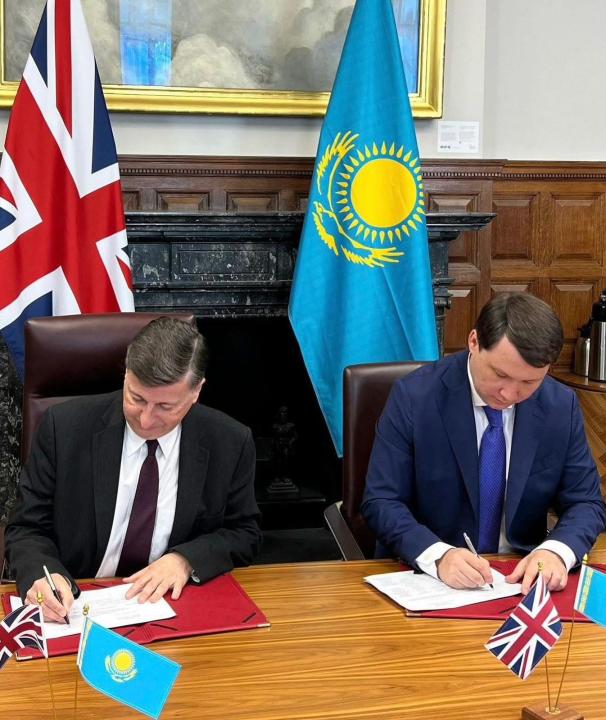
Kazakhstan and the United Kingdom have signed a roadmap for cooperation in agriculture, paving the way for partnerships in agricultural science, the export and processing of agricultural products, and the transfer of British agricultural technologies. According to the Kazakh Ministry of Agriculture, the two countries also signed memorandums of understanding on collaboration in water resource management and the production of biopharmaceuticals in Kazakhstan in partnership with AstraZeneca. These agreements were concluded during the 11th meeting of the Kazakhstan-UK Intergovernmental Commission on Trade and Economic Cooperation, held in London last week. Deputy Minister of Agriculture Ermek Kenzhekhanuly stated that the introduction of British technologies and investment would enhance the competitiveness of Kazakhstan’s agro-industrial sector and improve its resilience to climate change. "In 2024, agricultural trade between Kazakhstan and the UK totaled $50 million. We intend to significantly increase this figure," he said. At the meeting, Deputy Minister of Foreign Affairs Alibek Kuantyrov, who headed the Kazakh delegation, emphasized the UK's strategic role: “The UK is one of Kazakhstan’s key trading partners and top investors, with total FDI (Foreign Direct Investment) exceeding $22 billion. We greatly value the UK’s contribution to the development of Kazakhstan’s key industries and are committed to building a next-level partnership, focused on investment, technology, and knowledge transfer.” The Strategic Partnership and Cooperation Agreement signed between the two countries last year has opened new avenues for collaboration in critical minerals, green energy and climate initiatives, transport and logistics, pharmaceuticals and healthcare, education, and financial services.

U.S. Company John Deere Launches Agricultural Machinery Production in Kazakhstan

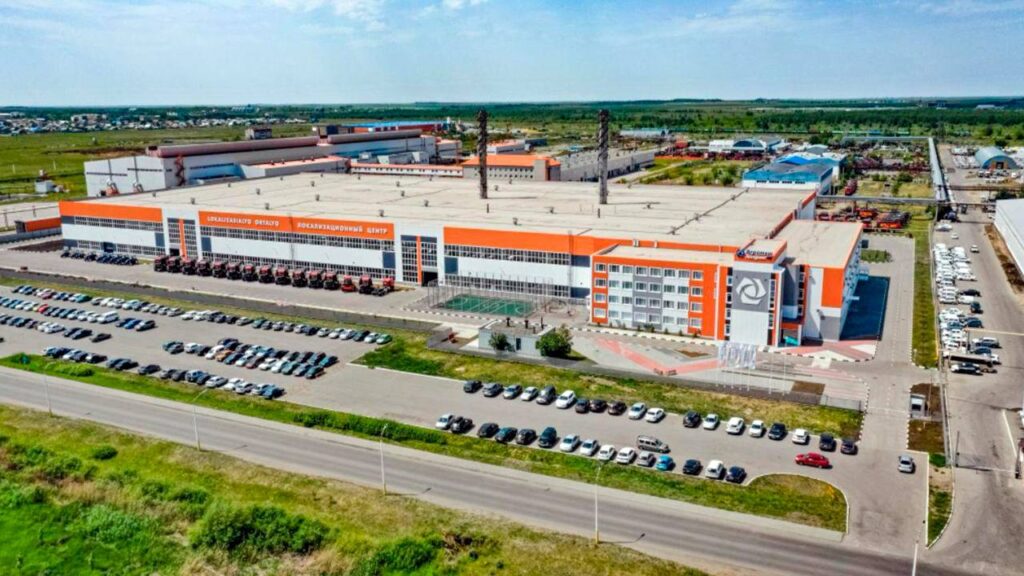
American agricultural machinery giant John Deere has officially launched production in Kostanay, Kazakhstan, marking a milestone in the country’s strategy to localize industrial output and reduce reliance on imports. The new manufacturing line is based at the Agromash plant’s localization center and reflects the Kazakh government’s broader policy to support domestic manufacturing and develop the machine-building sector. A key driver behind this initiative was the government’s recent decision to end subsidies for imported tractors and combines, creating momentum for localized production. The agreement with John Deere, widely recognized as a global leader in agricultural equipment, emerged as a flagship example of this new direction. By partnering with Agromash, Kazakhstan’s largest machinery manufacturer, the venture will produce self-propelled, trailed, and mounted equipment adapted to local agricultural conditions. Local production is expected to help farmers modernize their equipment more affordably. Through a government-backed preferential leasing program with an annual rate of just 5%, supported by 120 billion tenge in allocated funds, over 3,200 farmers will be able to purchase new domestically produced machinery this year. “Kazakhstan's agricultural producers now have access to machinery on favorable terms. This not only simplifies modernization efforts but also boosts the development of the agricultural sector,” the government noted. Agromash President Dinara Shukizhanova credited the country’s economic reforms for making the collaboration with John Deere possible. The initiative is expected to generate jobs, introduce advanced technologies, and prioritize the training of a new generation of engineers and technical specialists. John Deere’s official representative in Kazakhstan, Eurasia Group, will handle sales, service, and implementation of digital agricultural solutions. Over the next five years, three modern service centers will be established across the country to support digitalization in agriculture. These hubs will offer technical support and training for agronomists, mechanics, engineers, and IT professionals, reinforcing the efficient use of modern equipment. In addition to John Deere, the Agromash plant currently produces agricultural machinery under the ESSIL, LOVOL, and DEUTZ-FAHR brands. With an annual production capacity of up to 5,000 units, Agromash supplies machinery nationwide, supported by a regional network that spans major agricultural areas from Almaty to Ust-Kamenogorsk. Deere & Company, the parent corporation behind the John Deere brand, is a U.S.-based multinational manufacturer of agricultural, construction, and forestry equipment, as well as diesel engines and heavy-duty transmissions. The localization of John Deere production not only reinforces Kostanay’s position as Kazakhstan’s leading hub for agricultural machinery but also represents a strategic move toward technological sovereignty, innovation, and a strengthened domestic agro-industrial sector.
