• KZT/USD = 0.00213
  • TJS/USD = 0.10830
  • UZS/USD = 0.00008
  • TMT/USD = 0.29850
  • KZT/USD = 0.00213
  • TJS/USD = 0.10830
  • UZS/USD = 0.00008
  • TMT/USD = 0.29850
  • KZT/USD = 0.00213
  • TJS/USD = 0.10830
  • UZS/USD = 0.00008
  • TMT/USD = 0.29850
  • KZT/USD = 0.00213
  • TJS/USD = 0.10830
  • UZS/USD = 0.00008
  • TMT/USD = 0.29850
  • KZT/USD = 0.00213
  • TJS/USD = 0.10830
  • UZS/USD = 0.00008
  • TMT/USD = 0.29850
  • KZT/USD = 0.00213
  • TJS/USD = 0.10830
  • UZS/USD = 0.00008
  • TMT/USD = 0.29850
  • KZT/USD = 0.00213
  • TJS/USD = 0.10830
  • UZS/USD = 0.00008
  • TMT/USD = 0.29850
  • KZT/USD = 0.00213
  • TJS/USD = 0.10830
  • UZS/USD = 0.00008
  • TMT/USD = 0.29850
06 August 2026

Viewing results 1 - 6 of 2

Kazakhstan Smart Cities Face the Test of Turning AI Ambition Into Results

Almaty has ranked 38th among 61 cities in the inaugural Intelligent Cities Index, a respectable result that also reveals the distance between Kazakhstan’s digital ambitions and the world’s leading urban centers. The index, compiled by Boston Consulting Group (BCG), assesses how cities use artificial intelligence and digital technology to improve services and outcomes for residents. Almaty scored 62 out of 100, placing it in BCG’s “emerging” category. What Almaty's Ranking Reveals This score placed Almaty 38th among 61 major cities worldwide, ranking above cities including Milan, Melbourne, and Istanbul. However, it remained five points below the lowest-ranked city in BCG’s higher “accelerating” category and 23 points behind London, which headed the index with 85 points. Almaty performed reasonably well on strategy, adoption, and digital infrastructure, but its weakest score was for “ways of working,” which covers institutional readiness, governance, and project implementation. BCG found that leading cities combined technology with clear accountability, reliable funding, and measurable improvements for residents. The publication of these rankings has coincided with Kazakhstan’s adoption of a national methodology for  Smart Cities and Smart Regions, approved by the Ministry of Artificial Intelligence and Digital Development. The framework, which took effect on July 12, sets common requirements and deadlines for the country’s cities. The question is whether it will improve urban life or encourage local authorities to accumulate equipment and platforms in pursuit of higher scores. Tackling Everyday Urban Problems The clearest examples in Almaty concern public transport, which residents will be able to judge through their daily journeys. Buses already carry GPS trackers and video cameras, while fares can be paid through the ONAY electronic payment system. The city plans to add payment by bank card, Apple Pay, and Samsung Pay. Electronic information displays are due to be installed at 1,188 bus stops during 2026–27. Officials also announced in February that 50 driverless vehicles would be placed on city roads in cooperation with Yandex Kazakhstan under a pilot program. The stated deadline was May 1, 2026, although no subsequent official announcement confirming the deployment was readily available by late July. This illustrates a wider problem: announcements are often reported more prominently than results. For these projects to improve Almaty’s position, the city will need to show whether digitalization has reduced journey times, made bus arrivals more reliable, improved road safety, or encouraged greater use of public transport. Capital Investment Astana provides a larger-scale example. In February 2025, the capital signed a six-year, $190 million agreement with the UAE-based Presight AI. The project covers traffic management, public services and sensors. Astana is also installing or integrating more than 22,000 AI-enabled facial-recognition cameras. The capital’s iKomek 109 contact center handled approximately 2.5 million requests in 2025, with 83% reportedly resolved during the first call. Alatau City: Kazakhstan’s Largest Test The most ambitious scheme is Alatau City, being developed between Almaty and the Kapshagai Reservoir. Unlike existing cities, Alatau is being designed from the outset with a separate legal and administrative framework and extensive digital management. The government intends...

Tokayev Offers Astana to Host New Global AI Body’s First Meeting

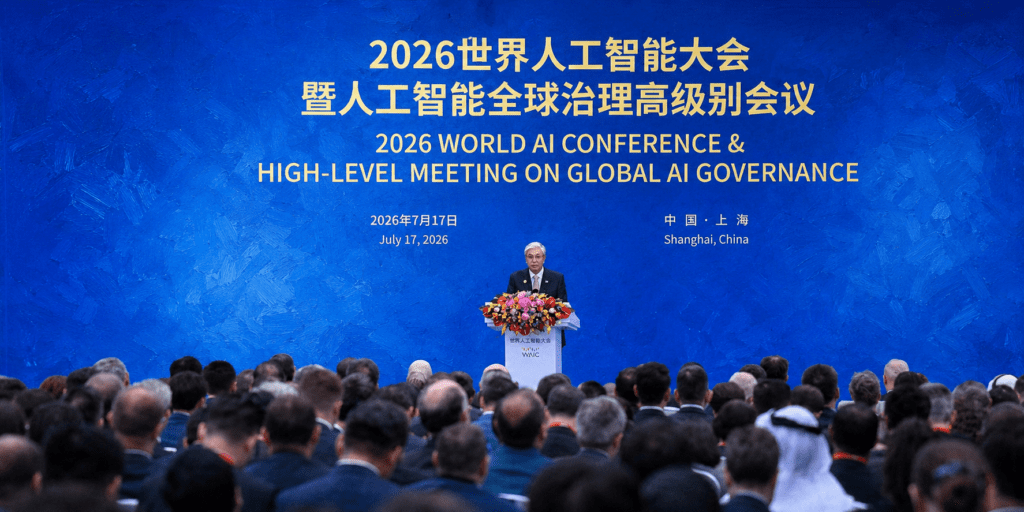
President Kassym-Jomart Tokayev put Astana forward at the opening of the World Artificial Intelligence Conference in Shanghai on July 17, saying that Kazakhstan is ready to host the first meeting of a new global AI organization. He also proposed placing the organization’s Central Asian office in Kazakhstan. Together, the offers set out Tokayev’s wider aim: Kazakhstan wants a role in writing AI rules as well as building the technology at home. Twenty-nine countries signed the agreement establishing the World AI Cooperation Organization on July 16. The founding states included Kazakhstan, Kyrgyzstan, Tajikistan and Uzbekistan, while Turkmenistan did not sign. China first proposed the Shanghai-based intergovernmental body at last year’s conference. Tokayev called the creation of the organization a historic decision and said it could underpin a universal framework for AI governance. “No country should remain merely a consumer of AI,” he said. “Every state must have the opportunity to develop its own human capital, digital infrastructure, and institutional capacity. Here too, the issue is fairness and integrity.” Tokayev also endorsed the conference’s guiding principle, “AI for good, AI for all,” arguing that technological progress should benefit people broadly rather than deepen inequalities within and between countries. His offer to host the new organization’s first meeting in Astana and to establish its Central Asian office in Kazakhstan were aimed at giving the country a role in shaping that agenda. [caption id="attachment_52389" align="aligncenter" width="2560"] Image: Akorda[/caption] Astana Bids for a Role in the New AI Body Tokayev’s proposals went beyond hosting a ceremonial gathering. He called for a permanent expert platform on AI regulation, standards and ethics. He also proposed an international network of schools, centers of excellence and academic partnerships. The Kazakh president urged members to develop common standards for testing and certifying AI systems. He said safeguards should address malicious uses, including cyberthreats, deepfakes and digital fraud. AI should remain under human control, he said. Tokayev placed those proposals within his wider diplomatic agenda. He argued that AI could help spot crises earlier and improve humanitarian work and peacekeeping. He said governments spend too much effort dealing with conflicts after they begin and too little preventing them. The new organization adds another layer to Kazakhstan’s technology policy. Citing a person familiar with the U.S. position, Reuters reported that Kazakhstan is the only country listed in both the 29-member body and Washington’s AI Opportunity Statement. Kazakhstan had already joined the U.S.-backed Pax Silica framework on June 25, which covers chips, critical minerals, energy and secure AI supply chains. That overlap carries Kazakhstan’s long-standing multi-vector diplomacy into AI policy. Astana is deepening ties with China while expanding ties to U.S.-linked technology and supply chains. Tokayev’s speech showed that Kazakhstan also wants a voice in the institutions shaping global AI rules. A Digital Bridge With China In Shanghai, Tokayev also proposed a “Kazakhstan-China Digital Bridge.” He said the project should promote digital trade and provide a working model for connecting digital economies through the Belt and Road Initiative. He asked China to support...