• KGS/USD = 0.01144 0%
  • KZT/USD = 0.00191 -0%
  • TJS/USD = 0.10850 0%
  • UZS/USD = 0.00008 0%
  • TMT/USD = 0.28490 0%
  • KGS/USD = 0.01144 0%
  • KZT/USD = 0.00191 -0%
  • TJS/USD = 0.10850 0%
  • UZS/USD = 0.00008 0%
  • TMT/USD = 0.28490 0%
  • KGS/USD = 0.01144 0%
  • KZT/USD = 0.00191 -0%
  • TJS/USD = 0.10850 0%
  • UZS/USD = 0.00008 0%
  • TMT/USD = 0.28490 0%
  • KGS/USD = 0.01144 0%
  • KZT/USD = 0.00191 -0%
  • TJS/USD = 0.10850 0%
  • UZS/USD = 0.00008 0%
  • TMT/USD = 0.28490 0%
  • KGS/USD = 0.01144 0%
  • KZT/USD = 0.00191 -0%
  • TJS/USD = 0.10850 0%
  • UZS/USD = 0.00008 0%
  • TMT/USD = 0.28490 0%
  • KGS/USD = 0.01144 0%
  • KZT/USD = 0.00191 -0%
  • TJS/USD = 0.10850 0%
  • UZS/USD = 0.00008 0%
  • TMT/USD = 0.28490 0%
  • KGS/USD = 0.01144 0%
  • KZT/USD = 0.00191 -0%
  • TJS/USD = 0.10850 0%
  • UZS/USD = 0.00008 0%
  • TMT/USD = 0.28490 0%
  • KGS/USD = 0.01144 0%
  • KZT/USD = 0.00191 -0%
  • TJS/USD = 0.10850 0%
  • UZS/USD = 0.00008 0%
  • TMT/USD = 0.28490 0%
10 November 2025

Viewing results 1 - 6 of 3

Kipling and Code: Tokayev Advocates Global AI Ethics Principles

Kazakhstan’s President Kassym-Jomart Tokayev has called for the creation of an international body to address the ethical dimensions of artificial intelligence (AI) and to draft universal legislation regulating its development and application. Speaking at the VIII Congress of Leaders of World and Traditional Religions in Astana, Tokayev emphasized that technologies such as AI, big data, and bioengineering are transforming societies at a pace that outstrips the development of ethical and legal frameworks. “New challenges arise, freedom of choice and privacy, digital equality and security, the use of artificial intelligence and many other technologies. Universal moral values and ideals must be included in the discussion of humanity’s digital future. Any technology should work for the benefit of people,” Tokayev said. He proposed the creation of an international commission on AI ethics to draft a set of universal principles for responsible AI use. “We are talking about a kind of ‘commandments for algorithms’ that imply respect for human dignity and the inadmissibility of discrimination when making life-defining decisions,” he explained. Tokayev said such “commandments” would require ongoing dialogue among spiritual leaders, scientists, and technology developers. Expanding beyond AI, Tokayev underlined the growing importance of spiritual diplomacy at both regional and global levels. He reiterated his previous proposal for a global peace movement under the auspices of the Congress, with religious leaders forming its moral foundation. “This initiative could unite not only the broader community of believers, but also politicians, representatives of international organizations, state institutions, experts, and, of course, youth,” Tokayev said. He also warned of mounting risks of global conflict, including the increasing threat of nuclear escalation and what experts have described as a “civilizational crisis”, a worldwide inability to reconcile opposing political ideologies. Citing Kipling, Tokayev noted that divisions between East and West may seem irreconcilable but argued that responsible statecraft and political leadership can bridge cultural and religious divides. Tokayev further expressed concern over the growing convergence of ultranationalism and patriotism, which he said may confuse younger generations. He also pointed to intensifying clashes between conservative and liberal ideologies, warning that such polarization is driving political instability in numerous countries. “In such complex realities, constructive diplomacy must play a key role as the main instrument for dialogue, overcoming alienation, and building trust at the international level,” he concluded.

Digital Geopolitics and AI Strategy in Central Asia

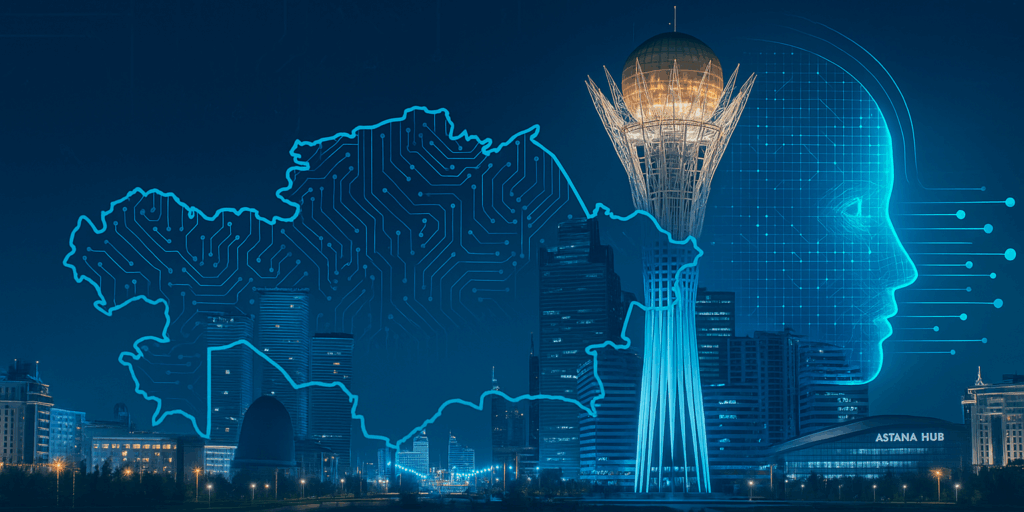
Central Asia, long known as a crossroads of global trade routes, is once again emerging as a stage for strategic competition. This time, the old caravan routes have been replaced by digital highways. The new contest is over technologies and data flows. For countries in the region, especially Kazakhstan, choosing a digitalization model and an AI development strategy is no longer just a technical matter. It is a fundamental decision tied to national security and long-term competitiveness. Equally important is the “digital ideology” behind these choices, something clearly illustrated today by two giants of the Global South: China and India, each with over a billion people and very different approaches to digital growth. The Dragon's Shadow: China's Systematic Expansion in Central Asia China’s ongoing real estate crisis, rising debt, and slowing domestic demand have pushed Beijing to look outward for growth. One major tool is the Digital Silk Road, announced in 2015 as part of the Belt and Road Initiative. This long-term program aims to export Chinese digital technologies. For Central Asian states, it brings an appealing “one-stop shop” of turnkey solutions: everything from 5G mobile and 10G-PON fixed networks to smart city systems (Huawei, ZTE), surveillance platforms (Hikvision), and fintech tools (Ant Group, Tencent). The benefits come with risks. A heavy reliance on one supplier creates the danger of vendor lock-in. When an entire digital ecosystem is tied to a single foreign provider, questions of security and long-term debt become inevitable. Kazakhstan has shown flexibility by experimenting with mixed models rather than relying exclusively on Chinese systems. Competing Models: China's "Walled Garden" and India's "Digital Public Infrastructure" China: The model is centralized, built on state corporations and giant platforms. It delivers speed and scale of growth, but at the cost of strict control and regulation. The Chinese government has tightened its grip on big tech companies (Alibaba and Tencent), imposed stricter rules on the collection and use of personal data under the Personal Information Protection Law (2021), and limited the fintech divisions of major firms to prevent systemic risks. India: The state has developed India Stack, a package of open digital platforms (Aadhaar, UPI, DigiLocker) that serve as the rails for thousands of startups and services. This gave India global leadership in digital payments and created a model of open digitalization. Central Asia is already partially repeating this experience (Kazakhstan’s eGov.kz, Kaspi.kz, and the digital tenge), though without the depth and openness that made the Indian approach unique. Today, Central Asia is forming a pragmatic hybrid: Chinese hardware for rapid infrastructure, Indian logic in public services (GovTech, eGov.kz), and European regulatory standards under the GDPR (in force since 2018), which serves as a global benchmark of trust in data. This “three-axis” hybrid allows a balance between speed of implementation and regulatory control. Europe's Alternative: Global Gateway and the Digital Silk Way Europe seeks to strengthen its position in Central Asia and the South Caucasus by offering an alternative to Chinese expansion. Its key tool is the EU Global Gateway...

Central Asian and Pakistani Leaders Showcase Digital Future at GSMA Summit in Tashkent

The second day of the GSMA M360 Eurasia conference, held on May 21 in Tashkent, delivered a resounding message of partnership, innovation, and forward-looking digital strategies. Leaders from Kazakhstan, Uzbekistan, and Tajikistan, alongside delegates from other countries, shared insights on fostering resilient digital economies through collaboration and technology. Kazakhstan: Digital Leadership and AI Strategy Kazakhstan’s Minister of Digital Development, Innovation and Aerospace Industry, Zhaslan Madiyev, highlighted his country’s digital advancements. Over the past decade, Kazakhstan has ascended into the global top ten for online service quality and now ranks 24th in e-government development. “More than 90% of transactions are cashless,” he noted, “and over 35 personal documents are exclusively digital. Digital documents now carry the same legal weight as paper ones.” Citizens can even travel domestically using only a digital ID on their phones. Madiyev spotlighted Astana Hub, Kazakhstan’s primary IT cluster, which hosts over 1,600 startups and global tech firms, with outposts in Silicon Valley, Singapore, Saudi Arabia, and the UK. “We recently signed an agreement with Uzbekistan’s IT Park,” he said, “and we will soon open a joint mobile lab with Tcell in Uzbekistan.” He emphasized that cross-border collaboration enables startups to access global markets. Artificial intelligence (AI) featured prominently in Madiyev’s address. He announced the formation of a national AI committee and the adoption of a five-year strategy that includes ethical guidelines, product labeling, and a public AI platform. A newly acquired supercomputer, boasting two exaflops of processing power, will soon support universities, startups, and companies. Kazakhstan also plans to train one million individuals over five years, spanning schoolchildren to government employees. Madiyev invited Uzbekistan to join a regional AI collaboration centered around the forthcoming International Center of AI in Astana, which will host labs, exhibits, hackathons, and workspaces for startups and major tech firms. Uzbekistan: Building a 5G Future In an interview with The Times of Central Asia, Dmitriy Shukov, CEO of Perfectum, the first stand-alone 5G mobile network operator in Uzbekistan, discussed the company’s vision. Perfectum primarily serves the business sector with advanced network solutions. “We focus on B2B clients and will continue to develop cutting-edge services for a fast-growing economy,” Shukov stated. On expanding 5G access nationwide, Shukov pointed to device compatibility. “People need access to 5G stand-alone service. We hope GSMA can facilitate discussions with handset manufacturers to unlock all 5G features here,” he said, underscoring that broader access is essential for digital inclusivity. Perfectum’s pioneering role in the region sets a benchmark for others. Discussing Uzbekistan’s telecom infrastructure, Shukov expressed optimism. “Our population grows by 700,000 annually. Sixty percent are under 30, demanding high-speed, low-latency services. And the regulatory environment is now very favorable to investors,” he said. These dynamics, he concluded, set a strong foundation for the next three years. Tajikistan: Rethinking Telecom Models Tcell CEO Ozodkhon Davlatshoev, whose company serves over two million customers and is Tajikistan’s largest mobile operator, addressed the pressures facing the sector. “Our market share is about 14%, growing 7% annually, but with just 2% population...