
• KGS/USD = 0.01144 0%
  • KZT/USD = 0.00206 0%
  • TJS/USD = 0.10812 0.37%
  • UZS/USD = 0.00008 0%
  • TMT/USD = 0.28571 0%
  • KGS/USD = 0.01144 0%
  • KZT/USD = 0.00206 0%
  • TJS/USD = 0.10812 0.37%
  • UZS/USD = 0.00008 0%
  • TMT/USD = 0.28571 0%
  • KGS/USD = 0.01144 0%
  • KZT/USD = 0.00206 0%
  • TJS/USD = 0.10812 0.37%
  • UZS/USD = 0.00008 0%
  • TMT/USD = 0.28571 0%
  • KGS/USD = 0.01144 0%
  • KZT/USD = 0.00206 0%
  • TJS/USD = 0.10812 0.37%
  • UZS/USD = 0.00008 0%
  • TMT/USD = 0.28571 0%
  • KGS/USD = 0.01144 0%
  • KZT/USD = 0.00206 0%
  • TJS/USD = 0.10812 0.37%
  • UZS/USD = 0.00008 0%
  • TMT/USD = 0.28571 0%
  • KGS/USD = 0.01144 0%
  • KZT/USD = 0.00206 0%
  • TJS/USD = 0.10812 0.37%
  • UZS/USD = 0.00008 0%
  • TMT/USD = 0.28571 0%
  • KGS/USD = 0.01144 0%
  • KZT/USD = 0.00206 0%
  • TJS/USD = 0.10812 0.37%
  • UZS/USD = 0.00008 0%
  • TMT/USD = 0.28571 0%
  • KGS/USD = 0.01144 0%
  • KZT/USD = 0.00206 0%
  • TJS/USD = 0.10812 0.37%
  • UZS/USD = 0.00008 0%
  • TMT/USD = 0.28571 0%

Viewing results 1 - 6 of 4

SuperX Considers 1 GW AI Data Center in Kazakhstan

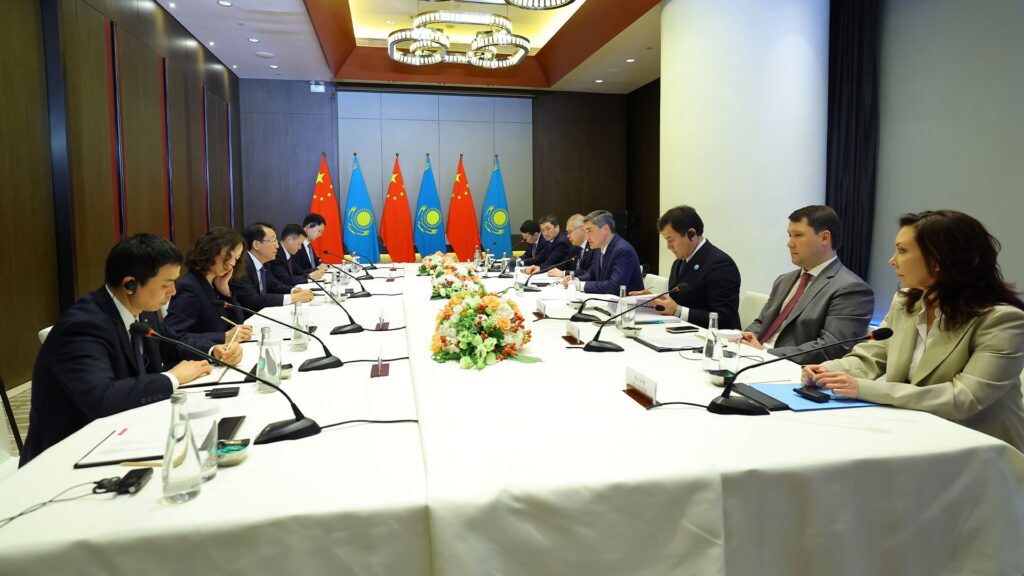
Nasdaq-listed SuperX AI Technology Limited is considering the construction of a large-scale AI data center cluster in Kazakhstan with planned power capacity of up to 1 gigawatt (GW). The company’s chairman and CEO, Dr. Chenhong Huang, discussed the proposal with Kazakhstan’s Prime Minister Olzhas Bektenov on the sidelines of the World Economic Forum’s 17th Annual Meeting of the New Champions, known as Summer Davos, in Dalian, China. SuperX develops AI infrastructure solutions and high-density data centers. The company has expressed interest in launching the project in stages between 2026 and 2029. The project provides for a full-scale AI campus and power supply infrastructure. It also includes digital systems and server equipment for the data centers in Kazakhstan. Kazakhstan’s authorities have repeatedly described digitalization and the use of artificial intelligence across the economy as strategic priorities. The country is also expanding data center capacity through foreign investment and domestic resources. Singapore-based GK Hyperscale Ltd is participating in the construction of two data centers in the Akmola and Karaganda regions. Work has also begun on the Data Center Valley project in the Pavlodar Region. Bektenov also discussed a possible battery and energy-storage production facility with Zeng Yuqun, founder and chairman of Contemporary Amperex Technology Co., Limited (CATL). The meeting focused on joint high value-added projects, including raw material processing and finished-battery production. Energy storage systems and used-battery recycling were also discussed. CATL is the world’s largest electric vehicle battery maker and also leads global energy storage battery shipments, with about 40% of the global power battery market. A separate discussion covered the modernization of Kazakhstan’s metallurgical sector. During a meeting with CISDI Engineering Vice President Yong Liu, the sides discussed the company’s possible participation in the construction of a new casting and rolling complex in Kazakhstan. CISDI is considered one of the global leaders in metallurgical engineering and comprehensive design for large-scale industrial facilities. Kazakhstan’s prime minister also held talks with Feng Xingya, chairman of Guangzhou Automobile Group. The sides discussed prospects for localizing automobile production in Kazakhstan. The project envisions a transition from the current distribution model for GAC vehicles in Kazakhstan to local manufacturing. Between 2026 and 2028, the plan is to produce 17,000 vehicles, including models with internal combustion engines and hybrid powertrains. As previously reported by The Times of Central Asia, Kazakhstan’s automotive industry reached record production volumes last year, manufacturing more than 171,000 vehicles in 2025.

From Ancient Aryks to AI: Almaty Student Proposes Digital Water Solution

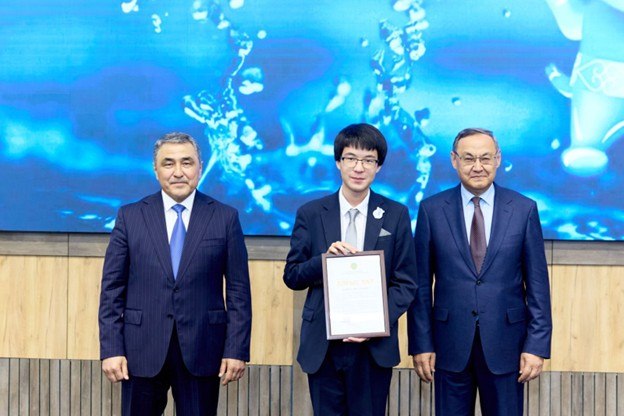
In Almaty, 10th-grade student Amir Alniyazov has developed an artificial intelligence project called ARYK.AI that aims to help city services respond more quickly to clogged aryk channels, localized flooding, and water overflow after heavy rainfall. At first glance, the issue may appear purely municipal: aryks, trash, leaves, rainwater, and utility workers clearing blocked channels. But the aryk system is tied to a much longer urban history. In Central Asia, an aryk is not simply a ditch. It is a traditional water channel that has helped sustain settlements in dry climates for centuries. Aryks irrigated gardens, cooled streets, supplied water, and made urban life possible in parts of the region where summer heat and limited rainfall shaped daily life. In foothill cities such as Almaty, they also became part of the city’s drainage infrastructure. Almaty’s modern aryk network developed during the Verny period, when the city was under Russian imperial rule. By the late 19th century, aryks had become an important part of urban infrastructure. In 1899, a main aryk was built to help distribute water through the city. During the Soviet period, many aryks were lined with stone or concrete, gradually shifting from simple irrigation channels into a visible part of the city’s stormwater system. But the 21st century has brought new pressures. Almaty has expanded rapidly, traffic has increased, and more of the city has been covered with asphalt. Leaves, garbage, and household debris continue to accumulate in aryks. As a result, a system that once quietly carried water through the city is now also expected to help manage urban flooding. [caption id="attachment_49362" align="aligncenter" width="1200"] From a personal photo archive[/caption] Where residents once monitored aryks through daily observation, modern Almaty faces a more complex problem: heavier traffic, denser construction, more paved surfaces, and faster information flows. Alniyazov’s project attempts to bring one of the city’s oldest water systems into the digital age. That is the idea behind ARYK.AI. The system combines AI, water-level sensors, a Telegram bot, an online monitoring map, and routing technology for municipal services. The concept is straightforward. If water levels in an aryk rise sharply, or if trash, silt, leaves, or fallen branches begin to accumulate, the system is intended to issue an early warning before the problem turns into flooding on city streets. The project has two main components. The first is citizen reporting. Residents and visitors to Almaty can use a Telegram bot based on a “single-window” principle to report flooding, blockages, and other problems. Users can attach photos, videos, and geolocation data. AI then processes the information, identifies the nature of the problem, and assesses how urgently municipal services need to respond. The second component relies on sensor data. Water-level sensors installed above aryks can transmit real-time information to the digital platform. If the water rises to a critical level, the system records an alert and sends it to the monitoring program. This is where the system’s more advanced functionality begins. The AI does not simply collect complaints and sensor readings for later...

Kazakhstan to Train “White Hat” Hackers and AI Engineers for the Energy Sector

Kazakhstan plans to train cybersecurity and AI specialists for the energy sector as part of its broader effort to digitally transform the industry, the country’s Ministry of Energy said. In 2026, declared the Year of Digitalization and Artificial Intelligence in the electricity and heat power sector, the ministry plans to develop a professional standard titled Digitalization and the Application of Artificial Intelligence in Energy. The document envisages the creation of new professions, including “white hat” hackers and AI engineers. A “white hat” hacker is a cybersecurity specialist who legally tests IT systems for vulnerabilities with the owners’ permission. Unlike malicious hackers, such experts identify weaknesses so they can be fixed before potential attacks, thereby protecting data and infrastructure. Following a meeting of the Sectoral Council for Electricity and Heat Power Engineering under the ministry, the new standard was expanded to include the following specialties: smart grid designer, engineer for the development and implementation of AI in power systems (Smart Grid), and energy grid cybersecurity specialist (“white hat” hacker). The ministry said these professions were formulated on the basis of Kazakhstan’s Atlas of New Professions and Competencies and are intended to adapt the education system to the demands of the digital economy. The development of Smart Grid systems is seen as one of the key tasks for the next five to ten years. In the future, some energy system management functions, including dispatch control, are expected to be handed over to intelligent algorithms, requiring new competencies at the intersection of energy and IT. As part of the digitalization of the fuel and energy complex, Kazakhstan also plans to create a system of digital models and “digital twins” for facilities within the Unified Energy System as early as 2026. “Our goal is not simply to digitize processes, but to create an intelligent model of the energy system. This will improve the quality of operational management and make it possible to take strategic decisions based on precise data rather than forecasts,” Vice Minister of Energy Bakytzhan Ilyas said. According to him, the introduction of vertical online monitoring using digital twins will make it possible to track key parameters in real time from generation volumes to energy production costs. This will form the basis for tariff-setting policy and investment attraction. Kazakhstan’s energy sector is already implementing a number of projects using artificial intelligence technologies. Among them is AI-based defect detection on power transmission lines using drones, computer vision, and machine learning. The technology can identify support structure defects, overheating, and deformations using data from 4K cameras, thermal imagers, and LiDAR. Another example is robotic diagnostics of heating networks using acoustic resonance, allowing the condition of pipelines to be assessed without excavation or shutting down the system. The ministry emphasizes that the digitalization of the energy sector requires not only technological solutions, but also systematic workforce training. As previously reported by The Times of Central Asia, Kazakhstan plans to expand the use of AI across various sectors from healthcare to the fiscal sphere, including early...

EDB and Tajikistan Expand Cooperation in AI and Digital Technologies

Tajikistan is accelerating the digitalization of its economy through new partnerships aimed at advancing AI and related technologies. The country’s Ministry of Industry and New Technologies has signed a memorandum of cooperation with the Eurasian Development Bank’s Digital Initiatives Fund (EDB DIF), focusing on AI and digital transformation. The agreement was formalized in Dushanbe during the AI Conf 2025 international conference. It outlines joint innovation projects, knowledge exchange, and capacity building in the field of AI. Key areas of cooperation include integrating AI into public administration, developing a multimodal large language model (LLM), and advancing initiatives in energy efficiency and cybersecurity. “An Artificial Intelligence Council has been established under the ministry to supervise major national projects,” said Dauren Rakhimzhanov, Managing Director of the EDB's Digital Initiatives Directorate. “Under the new memorandum, we will jointly develop AI technologies, exchange expertise, and expand the portfolio of digital projects in the Republic of Tajikistan.” The agreement also grants Tajikistan access to the EDB DIF’s financial and technical resources, including grant programs designed to support digital solutions with cross-border integration potential and technology sharing among member states. One of the first joint projects is the creation of the “Electronic Map of Dushanbe,” a digital platform that will underpin broader smart city development. The EDB signed a grant financing agreement for this project with the state unitary enterprise “Smart City” on September 24, 2025. Alexander Petrov, Director of the EDB Digital Initiatives Directorate, emphasized the importance of international collaboration in developing AI. “Strengthening cooperation in AI is essential, not only among EDB member states but also with global institutions,” Petrov said. “These projects facilitate knowledge exchange and contribute to building a resilient digital ecosystem.” According to Petrov, Kazakhstan, Kyrgyzstan, and other countries in the region have already shown interest in joining similar initiatives. He noted that such programs represent a step toward deeper economic integration across the Eurasian region.
