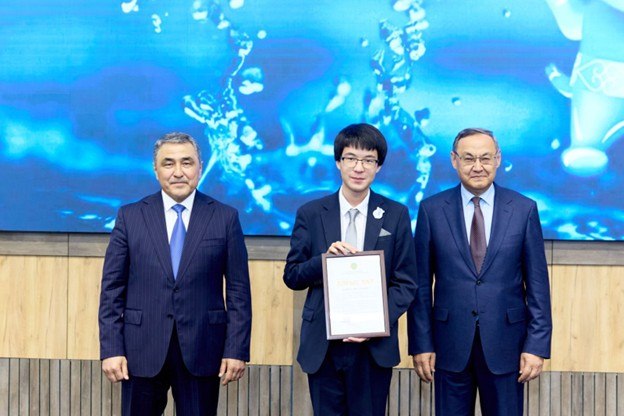
In Almaty, 10th-grade student Amir Alniyazov has developed an artificial intelligence project called ARYK.AI that aims to help city services respond more quickly to clogged aryk channels, localized flooding, and water overflow after heavy rainfall.
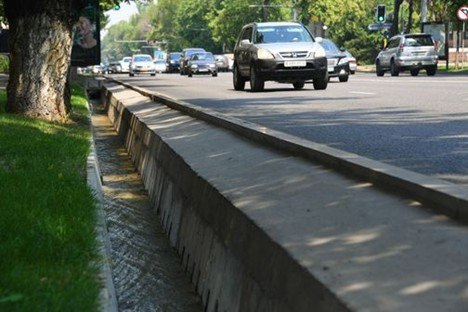
At first glance, the issue may appear purely municipal: aryks, trash, leaves, rainwater, and utility workers clearing blocked channels. But the aryk system is tied to a much longer urban history. In Central Asia, an aryk is not simply a ditch. It is a traditional water channel that has helped sustain settlements in dry climates for centuries.
Aryks irrigated gardens, cooled streets, supplied water, and made urban life possible in parts of the region where summer heat and limited rainfall shaped daily life. In foothill cities such as Almaty, they also became part of the city’s drainage infrastructure.
Almaty’s modern aryk network developed during the Verny period, when the city was under Russian imperial rule. By the late 19th century, aryks had become an important part of urban infrastructure. In 1899, a main aryk was built to help distribute water through the city.
During the Soviet period, many aryks were lined with stone or concrete, gradually shifting from simple irrigation channels into a visible part of the city’s stormwater system.
But the 21st century has brought new pressures. Almaty has expanded rapidly, traffic has increased, and more of the city has been covered with asphalt. Leaves, garbage, and household debris continue to accumulate in aryks. As a result, a system that once quietly carried water through the city is now also expected to help manage urban flooding.
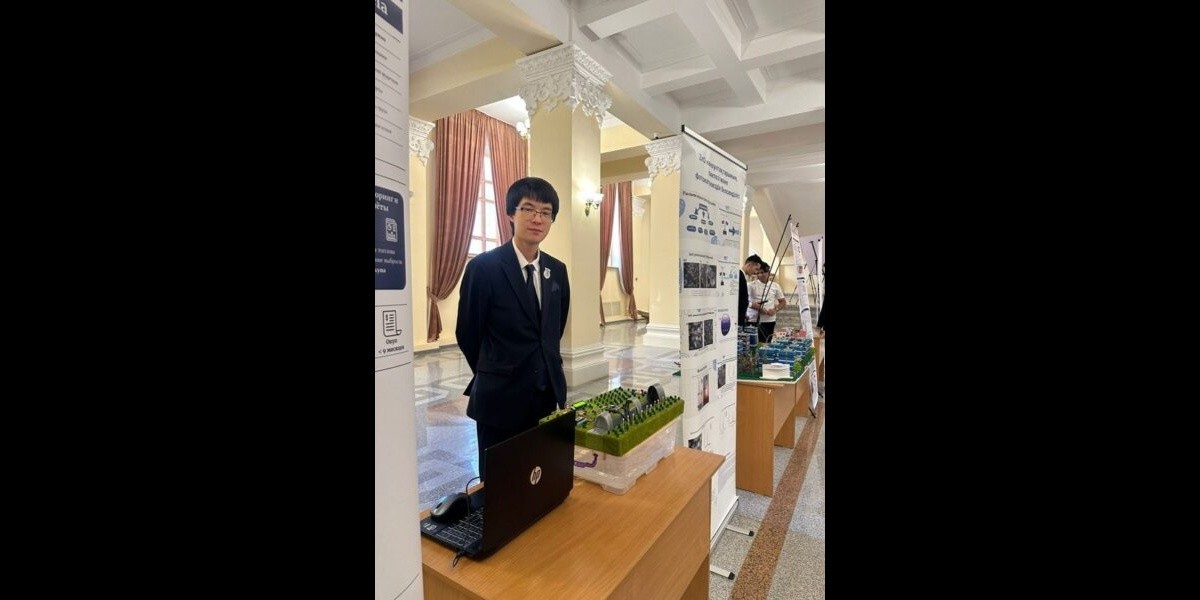
From a personal photo archive
Where residents once monitored aryks through daily observation, modern Almaty faces a more complex problem: heavier traffic, denser construction, more paved surfaces, and faster information flows. Alniyazov’s project attempts to bring one of the city’s oldest water systems into the digital age.
That is the idea behind ARYK.AI. The system combines AI, water-level sensors, a Telegram bot, an online monitoring map, and routing technology for municipal services.
The concept is straightforward. If water levels in an aryk rise sharply, or if trash, silt, leaves, or fallen branches begin to accumulate, the system is intended to issue an early warning before the problem turns into flooding on city streets.
The project has two main components.
The first is citizen reporting. Residents and visitors to Almaty can use a Telegram bot based on a “single-window” principle to report flooding, blockages, and other problems. Users can attach photos, videos, and geolocation data. AI then processes the information, identifies the nature of the problem, and assesses how urgently municipal services need to respond.
The second component relies on sensor data. Water-level sensors installed above aryks can transmit real-time information to the digital platform. If the water rises to a critical level, the system records an alert and sends it to the monitoring program.
This is where the system’s more advanced functionality begins. The AI does not simply collect complaints and sensor readings for later review. It analyzes incoming data, assesses urgency, identifies problems using images and videos, generates short analytical reports, and uses geotags to build optimal routes for municipal crews.
If rising water in one district is caused by fallen leaves, another aryk is blocked by construction waste, and a third location is obstructed by a fallen tree, the system can help determine which site requires immediate attention. Instead of a scattered response, city services would receive a prioritized plan showing where risks are highest, where urgent cleaning is needed, which route is fastest, and which areas require preventive maintenance.
ARYK.AI is also designed to help prevent problems before they occur. The program continuously analyzes conditions across the network, identifies potentially vulnerable sections, and creates a preventive risk map. This is important because effective urban management is not just about removing water after flooding begins. It also depends on preventing overflow in the first place.
As a result, the system could become an additional tool for city services, helping them receive reports from residents, monitor sensor data, coordinate response teams, optimize routes, and identify sections of the aryk network that need cleaning or closer oversight.
@TCA
Alniyazov’s teacher and scientific supervisor, Dinara Yerdaninova, said the project has clear practical value and could prove useful for the city. According to her, initiatives such as ARYK.AI show how modern technologies can be applied to real environmental and infrastructure problems.
The project has attracted the attention of the National Academy of Sciences, including its president, Akhylbek Kurishbayev. ARYK.AI has also been presented to Minister of Water Resources and Irrigation Nurzhan Nurzhigitov, who reportedly gave it a positive assessment.
Alniyazov believes the system could eventually be used in pilot mode to monitor Almaty’s aryk network. A formal proposal has already been submitted to the Almaty city administration.
The project links old urban water-management practices with modern technology. For centuries, aryks helped Central Asian cities manage water in difficult climates. Now, AI may help Almaty monitor and protect the aryk system more effectively.