
• KGS/USD = 0.01144 0%
  • KZT/USD = 0.00207 0%
  • TJS/USD = 0.10407 -0.29%
  • UZS/USD = 0.00008 0%
  • TMT/USD = 0.28571 0%
  • KGS/USD = 0.01144 0%
  • KZT/USD = 0.00207 0%
  • TJS/USD = 0.10407 -0.29%
  • UZS/USD = 0.00008 0%
  • TMT/USD = 0.28571 0%
  • KGS/USD = 0.01144 0%
  • KZT/USD = 0.00207 0%
  • TJS/USD = 0.10407 -0.29%
  • UZS/USD = 0.00008 0%
  • TMT/USD = 0.28571 0%
  • KGS/USD = 0.01144 0%
  • KZT/USD = 0.00207 0%
  • TJS/USD = 0.10407 -0.29%
  • UZS/USD = 0.00008 0%
  • TMT/USD = 0.28571 0%
  • KGS/USD = 0.01144 0%
  • KZT/USD = 0.00207 0%
  • TJS/USD = 0.10407 -0.29%
  • UZS/USD = 0.00008 0%
  • TMT/USD = 0.28571 0%
  • KGS/USD = 0.01144 0%
  • KZT/USD = 0.00207 0%
  • TJS/USD = 0.10407 -0.29%
  • UZS/USD = 0.00008 0%
  • TMT/USD = 0.28571 0%
  • KGS/USD = 0.01144 0%
  • KZT/USD = 0.00207 0%
  • TJS/USD = 0.10407 -0.29%
  • UZS/USD = 0.00008 0%
  • TMT/USD = 0.28571 0%
  • KGS/USD = 0.01144 0%
  • KZT/USD = 0.00207 0%
  • TJS/USD = 0.10407 -0.29%
  • UZS/USD = 0.00008 0%
  • TMT/USD = 0.28571 0%

Viewing results 1 - 6 of 173

AI in Central Asia: Kazakhstan Unveils Multilingual GPT Model

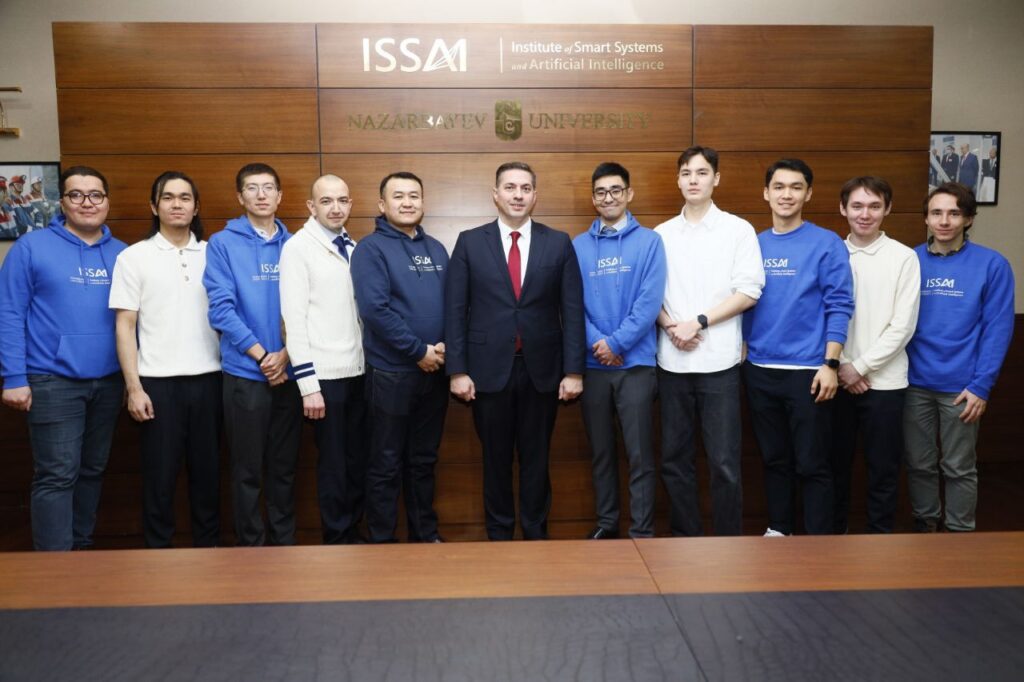
Researchers at the Institute of Intelligent Systems and Artificial Intelligence (ISSAI) at Nazarbayev University in Astana have introduced ISSAI KAZ-LLM, a large language model (LLM) specifically designed for the Kazakh language. Built on advanced neural network technology, the model serves as the foundation for Kazakhstan’s version of a generative AI system similar to GPT. ISSAI KAZ-LLM is tailored to Kazakhstan’s multilingual and multicultural environment, supporting Kazakh, Russian, and English, with additional functionality for Turkish. The model addresses language barriers and advances the field of generative artificial intelligence for resource-limited languages. The development team processed and synthesized over 150 billion tokens to ensure high-performance language capabilities. Beyond creating an AI tool, the project also fostered local expertise, involving Kazakhstani researchers at every stage, from data preparation to model implementation. Collaboration with international institutes enabled the creation of language-specific datasets and comparative analysis tools, utilizing input from linguists and state-of-the-art machine translation techniques. KAZ-LLM has a wide range of applications, including Kazakh language translations, content generation, and bulk text processing. Training data was sourced exclusively from publicly available materials, such as Kazakh websites, news articles, and online libraries, supplemented by contributions from various organizations. ISSAI director, Prof. Hussain Atakan Varol, told The Times of Central Asia: “This model reflects Kazakhstan's commitment to innovation, self-reliance, and the growth of its technology ecosystem. Our team developed two versions of ISSAI KAZ-LLM: one with 8 billion parameters and another with 70 billion parameters. Both are built on the Meta Llama architecture, optimized for use on high-performance systems as well as resource-constrained environments. Released under a CC-BY-NC license, the models are available for non-commercial use on the Hugging Face platform.” The ISSAI team is already exploring next-generation AI systems, including language-vision models, while expanding support for additional Turkic and regional languages. These initiatives aim to strengthen regional ties, promote linguistic integration, and create substantial economic and technological opportunities in Kazakhstan and beyond. Remarkably, this groundbreaking development was accomplished without government funding, with significant contributions from Kazakhstani IT companies. Kazakhstan is also gearing up to launch the International Center for Artificial Intelligence alem.ai. The center is set to become a hub for transforming the country into an AI-driven economy, fostering innovation, attracting investments, and supporting startups. By 2029, the export of Kazakhstani AI solutions is expected to reach $5 billion.


Uzbekistan Sets Sights on $1.5 Billion AI Industry by 2030

Uzbekistan’s Permanent Mission to the United Nations has hosted a presentation at the UN headquarters in New York, unveiling the country’s strategy for developing artificial intelligence (AI) technologies by 2030. The event, organized in collaboration with the UN Counter-Terrorism Office and Interpol, drew attendance from UN officials, experts, and members of the diplomatic corps accredited in New York. Ambitious AI Goals Participants were introduced to the key directions outlined in Uzbekistan’s AI Strategy, along with the country’s ongoing reforms and achievements in the field. Emphasis was placed on President Shavkat Mirziyoyev’s commitment to advancing information technologies and fostering innovation. The presentation highlighted Uzbekistan’s plans to grow its AI-based software products and services sector to $1.5 billion by 2030. This strategy also includes establishing ten scientific laboratories specializing in AI and strengthening the regulatory framework to support technological advancements. Leadership in Responsible AI As previously reported by The Times of Central Asia, Uzbekistan leads Central Asia in responsibly adopting AI, according to the Global Center on AI Governance. The nation’s AI initiatives prioritize cultural and linguistic diversity, foster international partnerships, enhance public sector skills, and promote transparency.

Kazakh AI Startup Enters U.S. and Japanese Transportation Markets

Astana-based startup Call2action.ai, a resident of the Astana Hub International Technology Park, is making strides in the US market. Currently, over 40 transportation companies in the United States have expressed an interest in the startup’s product. Two companies have already become commercial clients, and three others are engaged in pilot projects. Call2action.ai has developed the world’s first SaaS solution based on Generative Artificial Intelligence for automating hiring in the transportation and logistics sectors. This innovative platform streamlines the hiring process, making it more efficient and cost-effective. Following the successful validation of its project hypotheses, Call2action.ai has launched an investment round and entered negotiations with venture capital funds and business angels, some of whom are already supporting the startup and planning investments. “The American market is vastly different from the Kazakh market, but its potential for revolutionizing hiring processes is enormous,” said Ersultan Dzhusakinov, CEO and co-founder of Call2action.ai. “Participation in the Silicon Valley Residency Program, supported by Astana Hub and the Ministry of Digitalization, has allowed us to accelerate our progress in Silicon Valley. Within a few months, we’ve secured contracts with two companies, three pilot projects, and attracted interest from major Japanese corporations like Persol Group and Mitsui Group. We expect our product to reach a valuation of $1 billion in the coming years.” The startup collaborates with US innovation hubs, including the Silkroad Innovation Hub, and actively participates in international trade shows such as TechCrunch Disrupt and CESV 2024. Additionally, Call2action.ai has been selected to join Mitsui Group’s accelerator program, which begins in 2025. Call2action.ai is among 22 Central Asian startups that participated in accelerator programs in Silicon Valley under the AlchemistX and Silicon Valley Residency Program initiatives. These programs were organized by Astana Hub and Silkroad Innovation Hub, with support from the World Bank and FPIP projects. Kazakhstani startups are becoming competitive on global markets. For example: •  ZebraEye project, led by Yana Ten, specializes in diagnosing ophthalmic diseases using artificial intelligence and attracted investor attention at Web Summit Qatar 2024. • ClickLog, which develops freight optimization software, has established companies in Estonia and Poland to target European markets. • Dereknet plans to expand into the Middle East and Europe, including Kuwait, Qatar, Norway, the UK, and the US.
