
• KGS/USD = 0.01144 0%
  • KZT/USD = 0.00202 0%
  • TJS/USD = 0.10685 0%
  • UZS/USD = 0.00008 0%
  • TMT/USD = 0.28571 0%
  • KGS/USD = 0.01144 0%
  • KZT/USD = 0.00202 0%
  • TJS/USD = 0.10685 0%
  • UZS/USD = 0.00008 0%
  • TMT/USD = 0.28571 0%
  • KGS/USD = 0.01144 0%
  • KZT/USD = 0.00202 0%
  • TJS/USD = 0.10685 0%
  • UZS/USD = 0.00008 0%
  • TMT/USD = 0.28571 0%
  • KGS/USD = 0.01144 0%
  • KZT/USD = 0.00202 0%
  • TJS/USD = 0.10685 0%
  • UZS/USD = 0.00008 0%
  • TMT/USD = 0.28571 0%
  • KGS/USD = 0.01144 0%
  • KZT/USD = 0.00202 0%
  • TJS/USD = 0.10685 0%
  • UZS/USD = 0.00008 0%
  • TMT/USD = 0.28571 0%
  • KGS/USD = 0.01144 0%
  • KZT/USD = 0.00202 0%
  • TJS/USD = 0.10685 0%
  • UZS/USD = 0.00008 0%
  • TMT/USD = 0.28571 0%
  • KGS/USD = 0.01144 0%
  • KZT/USD = 0.00202 0%
  • TJS/USD = 0.10685 0%
  • UZS/USD = 0.00008 0%
  • TMT/USD = 0.28571 0%
  • KGS/USD = 0.01144 0%
  • KZT/USD = 0.00202 0%
  • TJS/USD = 0.10685 0%
  • UZS/USD = 0.00008 0%
  • TMT/USD = 0.28571 0%
09 February 2026

Viewing results 1 - 6 of 7

Discovery in Uzbekistan Reveals Early Steps Toward Agriculture 9,200 Years Ago

An international team of archaeologists has uncovered evidence that hunter-gatherer communities in southern Uzbekistan were harvesting wild barley as far back as 9,200 years ago, reshaping current understanding of how agriculture first emerged. Until now, scholars largely believed that the domestication of crops such as barley and wheat began in the Fertile Crescent about 10,000 years ago, particularly among the Natufian people. But new findings from Uzbekistan’s Surkandarya Valley indicate that the cultural practices leading to farming extended much further afield. Researchers argue this challenges long-held assumptions that agriculture arose only once, in response to climate change or population pressures, in a single geographic cradle. Excavations at Toda Cave The discovery was made at Toda Cave, excavated under the direction of Xinying Zhou of the Institute of Vertebrate Paleontology and Paleoanthropology in Beijing, with oversight from Farhad Maksudov, director of the Institute of Archaeology in Samarkand. From the cave’s oldest layers, the team recovered stone tools, charcoal, and plant remains. Archaeobotanical analysis by Robert Spengler of the Max Planck Institute of Geoanthropology confirmed the presence of wild barley, along with pistachio shells and apple seeds, suggesting a diverse diet. Stone blades and flakes, mostly made from limestone, showed clear use-wear patterns consistent with cutting grasses and plants. These tools closely resemble those found at early farming sites elsewhere. Rethinking the Origins of Agriculture “This discovery should change the way scientists think about the transition from foraging to farming,” Zhou said. Spengler added that repeated harvesting of wild plants may have led to unintentional domestication, with early foragers gradually shaping the plants they relied on. The researchers suggest that the behaviors seen in Toda Cave could represent either an independent experiment in cultivation or evidence of an earlier-than-assumed eastward spread of farming traditions from the Fertile Crescent. Either way, the findings highlight the role of Central Asia in the global story of agriculture. Next Steps The team plans to expand excavations in the region to determine whether similar practices existed among other communities. “These ancient hunters and foragers were already tied into the cultural practices that would lead to the origins of agriculture,” Spengler noted. The discovery underscores that Central Asia, long overlooked in studies of agricultural origins, may have played a crucial role in humanity’s shift from foraging to farming.
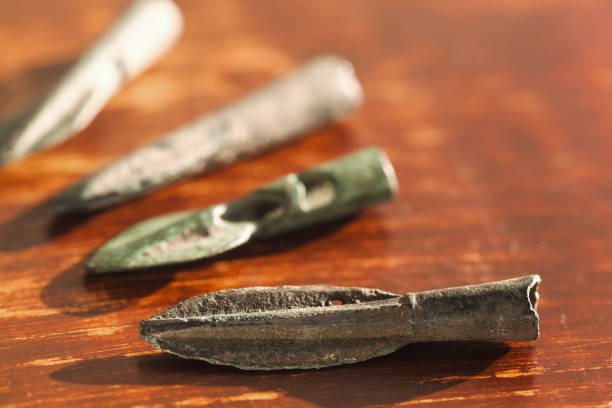

Archaeologists Uncover 80,000-Year-Old Arrowheads in Uzbekistan

Archaeologists in northeastern Uzbekistan have discovered stone arrowheads in the Obi-Rahmat cave that could significantly alter current understandings of early human hunting practices. The findings, published in PLOS ONE, date back approximately 80,000 years and represent some of the earliest known examples of long-range hunting technology in Central Asia. The excavation site, located in the western foothills of the Tian Shan Mountains, yielded a collection of small, triangular stone points embedded within sediment layers representing 40,000 years of human occupation. Researchers concluded that the arrow-like tips are too slender to have served any purpose other than as projectiles, making them among the oldest ranged hunting tools ever found in the region. Until now, such finely crafted projectile points had been primarily associated with later Homo sapiens sites in Europe, dating back only 25,000 years. Their presence in Uzbekistan suggests that sophisticated hunting techniques involving lightweight weapons may have developed far earlier than previously believed. The arrowheads were uncovered alongside a broader assemblage of Early Middle Paleolithic tools, including blades, bladelets, and flakes. The toolset reflects both continuity with Levantine lithic traditions and unique adaptations specific to Central Asia. Researchers used microscopic trace analysis to identify impact damage patterns on the points, clear evidence of high-speed delivery mechanisms such as arrows or darts. Experts note that ranged weapons would have provided early humans with significant evolutionary advantages, allowing them to hunt more efficiently and with reduced risk. This technological innovation may have been crucial in supporting human migration and adaptation across Eurasia. Broader Archaeological Context This discovery adds to a growing body of archaeological breakthroughs in Uzbekistan. In October 2024, researchers using advanced laser scanning technology revealed two lost cities in the country’s southeast. These urban centers, which thrived between the 6th and 11th centuries AD, include a site believed to have been a metalworking hub and another that showed early Islamic cultural influences, underscoring the importance of Uzbekistan along ancient trade routes. Further excavations in December at Mengchaktepa, a key Silk Road settlement on the northern bank of the Syr Darya River, yielded new insights. Known as the “Living Fossil of the Silk Road,” the site has been under continuous investigation since 2012 through a joint expedition by the Chinese Academy of Social Sciences (CASS) and Uzbekistan’s Institute of Archaeology.

Ancient Water Pipeline Unearthed on 65-Meter Hill in Tajikistan

Archaeologists in Tajikistan have uncovered a remarkable ancient water pipeline system atop a 65-meter hill at the Mugtepa settlement, believed to have been constructed approximately 1,500 years ago. The site, towering above the city at the height of a modern twenty-storey building, once hosted fortresses of the rulers of Uratyube across various historical periods. For nearly three decades, however, the archaeological site remained neglected. Construction in 2017-2018 further compromised its integrity, leading many to assume its secrets were lost forever. That changed in the summer of 2025, when an expedition from the Department of Archaeology, Ethnography, and Religious Studies at Khujand State University, led by Professor Nabijon Rakhimov, began new excavations. The project, supported by staff from the Kalai Mug Historical and Cultural Complex under Mirzo Olimov, proceeded without official funding but succeeded thanks to the contributions of students and specialists. Between June 18 and July 18, the team examined three segments of the aqueduct system. Water was drawn from a spring at the base of a nearby hill and transported via ceramic pipes known as kuburs, each approximately 40 cm in length. The pipes were joined using waterproof alabaster mortar and laid in trenches 85 cm wide and 20 cm deep. Small pools, or hauzes, were found along the route, likely used for water collection. All components of the system were uniformly manufactured, suggesting the existence of specialized production workshops. Unearthing Everyday Life In soil layers dating to the 5th to 8th centuries, researchers discovered pottery, stone grain grinders, and spindle whorls, evidence of a thriving agricultural and textile economy. Deeper strata revealed artifacts from earlier eras, ranging from the 1st-3rd centuries CE to the Achaemenid and Hellenistic periods (6th-1st centuries BCE). Notable finds included fragments of tall-stemmed goblets, cup-shaped vessels, and red-slip bowls. “Archaeological monuments are not just stones and shards; they are material evidence of our history. Without protection and careful treatment, they can disappear,” said Rakhimov. The team now plans to petition the Agency for the Protection of Monuments under the Government of Tajikistan to secure official support for continued excavations and preservation efforts at Mugtepa. Other Significant Finds in the Region This discovery follows several notable archaeological breakthroughs in Tajikistan in recent years. In 2023, a 7th-century sewer system was uncovered in Istaravshan by architect Amindjonov Khomid and Professor Rakhim Nabiev. The structure, approximately 1,300 years old, highlights the advanced engineering of the period. A rare 6th-century jug, made of concrete and coated in clay, was found nearby. In May 2025, archaeologists from the National Museum of Tajikistan discovered a Kushan-era clay vessel near the village of Sarband, inscribed in the Bactrian language. The inscription read, “This water jug belongs to a woman named Sagkina,” offering a rare glimpse into ancient literacy and social life. And in November 2024, an international team led by Professor Yossi Zeidner of the Hebrew University reported the discovery of artifacts dating back 150,000 years at the Soyi Khavzak site in the Zeravshan Valley. Finds included stone tools, animal bones,...

Archaeologists in Tajikistan Uncover 7th-Century Sewer System

Archaeologists in Istaravshan, in Tajikistan's northwestern Sughd region, have unearthed a remarkably well preserved sewer system dating back to the 7th century AD. The discovery was announced by architect and excavation participant Amindjon Khomid. The system was first uncovered in 2023 in the Kala-i-Mugh area during work conducted jointly with Professor Rakhim Nabiev, Doctor of Historical Sciences from Khujand. Ancient Engineering in Istaravshan Preliminary estimates place the sewer system’s age at around 1,300 years. Geological studies suggest even older cultural layers may lie beneath, potentially dating to the 1st century AD and as far back as five millennia. During excavations, archaeologists also found ceramic jugs from the 3rd and 6th centuries, as well as earlier eras. One 6th-century jug was made of concrete and lined with clay on the inside, an unusually advanced technology for its time. Khomid noted that the design and condition of the artifacts point to a high level of ancient engineering skill. Unique Jug from Khalkajjar As reported by The Times of Central Asia, earlier this year, archaeologists from the National Museum of Tajikistan uncovered another significant artifact at the Khalkajjar monument near the village of Sarband. In May 2025, they discovered a clay vessel bearing a complete inscription in the Bactrian language, dating to the Kushan Empire (1st-3rd centuries). The inscription, written in a distinctive broken script, was translated by Professor Nicholas Sims-Williams and numismatist Joe Cribb. It reads: “This water jug belongs to the woman Sagkina.” Researchers say such inscriptions are rare and provide valuable insights into literacy, property ownership, and social life in the Kushan Empire. The Kushan Empire was one of the largest states in ancient Central Asia, encompassing parts of modern Afghanistan, Pakistan, India, southern Uzbekistan, and Tajikistan. The Bactrian language, widely used in administration and trade at the time, remains a key tool for understanding the region’s history. Traces of Ancient Life in the Zeravshan Valley In November 2024, an international archaeological team reported the discovery of the multi-layered Soi Khavzak site in the Zeravshan Valley, containing evidence of human activity dating back 150,000 years. Led by Professor Yossi Zeidner of the Hebrew University, excavations revealed stone tools, animal bones, and plant remains from periods spanning the late to middle Paleolithic. Scientists believe the region may have served as a migration corridor for both Homo sapiens and Neanderthals, providing a place where they could meet and interact. The site’s excellent preservation of organic matter, including bones and wood, offers the possibility of discovering human remains, a find that could help identify the species of ancient inhabitants in Central Asia. Experts say these recent discoveries not only expand understanding of Tajikistan’s engineering and cultural history, but also highlight the region’s role as a hub of human innovation and migration over thousands of years.

Kyrgyzstan and China Launch Joint Project to Preserve Ancient Silk Road City

Kyrgyzstan and China have launched a joint initiative to conserve the Ak-Beshim archaeological site, the ruins of the ancient city of Suyab, a major Silk Road settlement in the Chui Valley in northern Kyrgyzstan. This project marks a significant step in cultural cooperation between the two countries, focused on preserving shared heritage along one of history’s most storied trade routes. The Ministry of Culture, Information and Youth Policy of Kyrgyzstan and China’s Dunhuang Research Academy have established a joint laboratory for cultural heritage preservation, which will lead conservation efforts at Ak-Beshim. Located 7 kilometers southwest of Tokmok, the site of Suyab was a prominent cultural and commercial center from the 5th to 8th centuries. It served as the capital of the Western Turkic Kaganate and a key hub for Sogdian merchants along the Chang’an-Tian Shan Corridor, an ancient Silk Road route currently nominated for UNESCO World Heritage status. Chinese sources suggest that Tang dynasty poet Li Bo (701-762/763) may have been born in Suyab. Archaeologists have also uncovered what is believed to be the oldest Christian structure found in Kyrgyzstan: a Nestorian church dating to the 7th or 8th century. Preliminary fieldwork has already been conducted, and a conservation plan for Ak-Beshim has been drafted. The new lab is expected to serve as a regional center for cultural heritage protection, promoting research and conservation at other Silk Road sites across Belt and Road Initiative (BRI) countries. Suyab declined in the 11th century with the rise of Balasagun, another historic city in the Chui Valley near the famed Burana Tower. Nevertheless, its historical significance continues to attract scholarly and public interest as Kyrgyzstan deepens its commitment to preserving regional cultural landmarks. Officials from both countries emphasized that the project supports broader goals of cultural diplomacy and historical preservation, creating a bridge between ancient civilizations and contemporary international collaboration.

Scientists of Ancient Central Asia Still Relevant in the Modern World; The Idea of the Averaged Turkic Language

There is a debate on social media between Uzbek and Tajik communities about the medieval scholar Ibn Sina. The discussion revolves around the question of nationality — was Ibn Sina Tajik, Uzbek, or something else? Similar debates have emerged about other medieval scholars, including Al-Farabi. Ibn Sina (commonly known in the West as Avicenna) and Al-Farabi were two of the most influential scholars of the Islamic Golden Age. Ibn Sina, known for his contributions to medicine, philosophy, and science, wrote The Canon of Medicine, a foundational text in medical education for centuries. First published in 1025, his work stood as the standard medical textbook in Europe from its translation into Latin in the twelfth century through to the 1650s. Al-Farabi, often called the Second Greatest Teacher after Aristotle, made significant contributions to philosophy, logic, and political theory, shaping intellectual thought in the Islamic world and beyond. To explore this further, TCA spoke with two scholars — Fakhriddin Ibragimov, PhD, and Dr. Bakhtiyor Karimov — who have studied the lives and works of Ibn Sina and Al-Farabi extensively. [caption id="attachment_30258" align="aligncenter" width="1280"] Fakhriddin Ibragimov; image courtesy of the subject.[/caption] Fakhriddin Ibragimov, a researcher at the Abu Rayhan Biruni Institute of Oriental Studies, has spent nearly 15 years studying Ibn Sina. According to Ibragimov, historical sources provide no direct evidence of Ibn Sina’s nationality. “Ibn Sina (980 – 1037) was born in the village of Afshona, near Bukhara. Nowhere in his works or those written by his contemporaries is his nationality mentioned,” Ibragimov told TCA. “However, he is identified as a Muslim, like most people in Central Asia at the time. Also, many manuscript sources indicate that he was from Bukhara.” Ibragimov explains. Ibragimov also highlights that Ibn Sina himself wrote about his upbringing, describing how he was raised in an intellectual environment where philosophical and religious discussions were common: “We had a lot of scientific discussions, debates, and gatherings at home. Issues of faith were also raised there. My father and brother adhered to the Ismaili faith [one of the religious movements in Islam that was widespread in the Near and Middle East in the 10th and 11th centuries], but I did not join them,” Ibn Sina wrote. However, he did not mention any ethnic identity in his works or in those written by his contemporaries. [caption id="attachment_30260" align="aligncenter" width="575"] Avicenna at the sickbed, miniature by Walenty z Pilzna, Kraków (ca 1479–1480); image: jbc.bj.uj.edu.pl[/caption] The claim over Ibn Sina’s legacy is widespread. While Uzbeks and Tajiks both regard him as one of their own, Iranians also consider him Persian due to the language of his writings. In 2018, a bust of Abu Ali Ibn Sina was installed in front of the campus of the Autonomous University of Madrid as a gift from the Iranian embassy. The inscription on the bust reads, “Persian physician and philosopher.” Even Jewish scholars have cited him as part of their intellectual heritage. However, Ibragimov argues that Ibn Sina should be seen as a global figure rather...