• KGS/USD = 0.01144 0%
  • KZT/USD = 0.00211 0%
  • TJS/USD = 0.10769 -0.28%
  • UZS/USD = 0.00008 0%
  • TMT/USD = 0.28571 0%
  • KGS/USD = 0.01144 0%
  • KZT/USD = 0.00211 0%
  • TJS/USD = 0.10769 -0.28%
  • UZS/USD = 0.00008 0%
  • TMT/USD = 0.28571 0%
  • KGS/USD = 0.01144 0%
  • KZT/USD = 0.00211 0%
  • TJS/USD = 0.10769 -0.28%
  • UZS/USD = 0.00008 0%
  • TMT/USD = 0.28571 0%
  • KGS/USD = 0.01144 0%
  • KZT/USD = 0.00211 0%
  • TJS/USD = 0.10769 -0.28%
  • UZS/USD = 0.00008 0%
  • TMT/USD = 0.28571 0%
  • KGS/USD = 0.01144 0%
  • KZT/USD = 0.00211 0%
  • TJS/USD = 0.10769 -0.28%
  • UZS/USD = 0.00008 0%
  • TMT/USD = 0.28571 0%
  • KGS/USD = 0.01144 0%
  • KZT/USD = 0.00211 0%
  • TJS/USD = 0.10769 -0.28%
  • UZS/USD = 0.00008 0%
  • TMT/USD = 0.28571 0%
  • KGS/USD = 0.01144 0%
  • KZT/USD = 0.00211 0%
  • TJS/USD = 0.10769 -0.28%
  • UZS/USD = 0.00008 0%
  • TMT/USD = 0.28571 0%
  • KGS/USD = 0.01144 0%
  • KZT/USD = 0.00211 0%
  • TJS/USD = 0.10769 -0.28%
  • UZS/USD = 0.00008 0%
  • TMT/USD = 0.28571 0%

Viewing results 1 - 6 of 45

Discovery in Uzbekistan Reveals Early Steps Toward Agriculture 9,200 Years Ago

An international team of archaeologists has uncovered evidence that hunter-gatherer communities in southern Uzbekistan were harvesting wild barley as far back as 9,200 years ago, reshaping current understanding of how agriculture first emerged. Until now, scholars largely believed that the domestication of crops such as barley and wheat began in the Fertile Crescent about 10,000 years ago, particularly among the Natufian people. But new findings from Uzbekistan’s Surkandarya Valley indicate that the cultural practices leading to farming extended much further afield. Researchers argue this challenges long-held assumptions that agriculture arose only once, in response to climate change or population pressures, in a single geographic cradle. Excavations at Toda Cave The discovery was made at Toda Cave, excavated under the direction of Xinying Zhou of the Institute of Vertebrate Paleontology and Paleoanthropology in Beijing, with oversight from Farhad Maksudov, director of the Institute of Archaeology in Samarkand. From the cave’s oldest layers, the team recovered stone tools, charcoal, and plant remains. Archaeobotanical analysis by Robert Spengler of the Max Planck Institute of Geoanthropology confirmed the presence of wild barley, along with pistachio shells and apple seeds, suggesting a diverse diet. Stone blades and flakes, mostly made from limestone, showed clear use-wear patterns consistent with cutting grasses and plants. These tools closely resemble those found at early farming sites elsewhere. Rethinking the Origins of Agriculture “This discovery should change the way scientists think about the transition from foraging to farming,” Zhou said. Spengler added that repeated harvesting of wild plants may have led to unintentional domestication, with early foragers gradually shaping the plants they relied on. The researchers suggest that the behaviors seen in Toda Cave could represent either an independent experiment in cultivation or evidence of an earlier-than-assumed eastward spread of farming traditions from the Fertile Crescent. Either way, the findings highlight the role of Central Asia in the global story of agriculture. Next Steps The team plans to expand excavations in the region to determine whether similar practices existed among other communities. “These ancient hunters and foragers were already tied into the cultural practices that would lead to the origins of agriculture,” Spengler noted. The discovery underscores that Central Asia, long overlooked in studies of agricultural origins, may have played a crucial role in humanity’s shift from foraging to farming.

Archaeologists Uncover 80,000-Year-Old Arrowheads in Uzbekistan

Archaeologists in northeastern Uzbekistan have discovered stone arrowheads in the Obi-Rahmat cave that could significantly alter current understandings of early human hunting practices. The findings, published in PLOS ONE, date back approximately 80,000 years and represent some of the earliest known examples of long-range hunting technology in Central Asia. The excavation site, located in the western foothills of the Tian Shan Mountains, yielded a collection of small, triangular stone points embedded within sediment layers representing 40,000 years of human occupation. Researchers concluded that the arrow-like tips are too slender to have served any purpose other than as projectiles, making them among the oldest ranged hunting tools ever found in the region. Until now, such finely crafted projectile points had been primarily associated with later Homo sapiens sites in Europe, dating back only 25,000 years. Their presence in Uzbekistan suggests that sophisticated hunting techniques involving lightweight weapons may have developed far earlier than previously believed. The arrowheads were uncovered alongside a broader assemblage of Early Middle Paleolithic tools, including blades, bladelets, and flakes. The toolset reflects both continuity with Levantine lithic traditions and unique adaptations specific to Central Asia. Researchers used microscopic trace analysis to identify impact damage patterns on the points, clear evidence of high-speed delivery mechanisms such as arrows or darts. Experts note that ranged weapons would have provided early humans with significant evolutionary advantages, allowing them to hunt more efficiently and with reduced risk. This technological innovation may have been crucial in supporting human migration and adaptation across Eurasia. Broader Archaeological Context This discovery adds to a growing body of archaeological breakthroughs in Uzbekistan. In October 2024, researchers using advanced laser scanning technology revealed two lost cities in the country’s southeast. These urban centers, which thrived between the 6th and 11th centuries AD, include a site believed to have been a metalworking hub and another that showed early Islamic cultural influences, underscoring the importance of Uzbekistan along ancient trade routes. Further excavations in December at Mengchaktepa, a key Silk Road settlement on the northern bank of the Syr Darya River, yielded new insights. Known as the “Living Fossil of the Silk Road,” the site has been under continuous investigation since 2012 through a joint expedition by the Chinese Academy of Social Sciences (CASS) and Uzbekistan’s Institute of Archaeology.

Ancient Water Pipeline Unearthed on 65-Meter Hill in Tajikistan

Archaeologists in Tajikistan have uncovered a remarkable ancient water pipeline system atop a 65-meter hill at the Mugtepa settlement, believed to have been constructed approximately 1,500 years ago. The site, towering above the city at the height of a modern twenty-storey building, once hosted fortresses of the rulers of Uratyube across various historical periods. For nearly three decades, however, the archaeological site remained neglected. Construction in 2017-2018 further compromised its integrity, leading many to assume its secrets were lost forever. That changed in the summer of 2025, when an expedition from the Department of Archaeology, Ethnography, and Religious Studies at Khujand State University, led by Professor Nabijon Rakhimov, began new excavations. The project, supported by staff from the Kalai Mug Historical and Cultural Complex under Mirzo Olimov, proceeded without official funding but succeeded thanks to the contributions of students and specialists. Between June 18 and July 18, the team examined three segments of the aqueduct system. Water was drawn from a spring at the base of a nearby hill and transported via ceramic pipes known as kuburs, each approximately 40 cm in length. The pipes were joined using waterproof alabaster mortar and laid in trenches 85 cm wide and 20 cm deep. Small pools, or hauzes, were found along the route, likely used for water collection. All components of the system were uniformly manufactured, suggesting the existence of specialized production workshops. Unearthing Everyday Life In soil layers dating to the 5th to 8th centuries, researchers discovered pottery, stone grain grinders, and spindle whorls, evidence of a thriving agricultural and textile economy. Deeper strata revealed artifacts from earlier eras, ranging from the 1st-3rd centuries CE to the Achaemenid and Hellenistic periods (6th-1st centuries BCE). Notable finds included fragments of tall-stemmed goblets, cup-shaped vessels, and red-slip bowls. “Archaeological monuments are not just stones and shards; they are material evidence of our history. Without protection and careful treatment, they can disappear,” said Rakhimov. The team now plans to petition the Agency for the Protection of Monuments under the Government of Tajikistan to secure official support for continued excavations and preservation efforts at Mugtepa. Other Significant Finds in the Region This discovery follows several notable archaeological breakthroughs in Tajikistan in recent years. In 2023, a 7th-century sewer system was uncovered in Istaravshan by architect Amindjonov Khomid and Professor Rakhim Nabiev. The structure, approximately 1,300 years old, highlights the advanced engineering of the period. A rare 6th-century jug, made of concrete and coated in clay, was found nearby. In May 2025, archaeologists from the National Museum of Tajikistan discovered a Kushan-era clay vessel near the village of Sarband, inscribed in the Bactrian language. The inscription read, “This water jug belongs to a woman named Sagkina,” offering a rare glimpse into ancient literacy and social life. And in November 2024, an international team led by Professor Yossi Zeidner of the Hebrew University reported the discovery of artifacts dating back 150,000 years at the Soyi Khavzak site in the Zeravshan Valley. Finds included stone tools, animal bones,...

Archaeologists in Tajikistan Uncover 7th-Century Sewer System

Archaeologists in Istaravshan, in Tajikistan's northwestern Sughd region, have unearthed a remarkably well preserved sewer system dating back to the 7th century AD. The discovery was announced by architect and excavation participant Amindjon Khomid. The system was first uncovered in 2023 in the Kala-i-Mugh area during work conducted jointly with Professor Rakhim Nabiev, Doctor of Historical Sciences from Khujand. Ancient Engineering in Istaravshan Preliminary estimates place the sewer system’s age at around 1,300 years. Geological studies suggest even older cultural layers may lie beneath, potentially dating to the 1st century AD and as far back as five millennia. During excavations, archaeologists also found ceramic jugs from the 3rd and 6th centuries, as well as earlier eras. One 6th-century jug was made of concrete and lined with clay on the inside, an unusually advanced technology for its time. Khomid noted that the design and condition of the artifacts point to a high level of ancient engineering skill. Unique Jug from Khalkajjar As reported by The Times of Central Asia, earlier this year, archaeologists from the National Museum of Tajikistan uncovered another significant artifact at the Khalkajjar monument near the village of Sarband. In May 2025, they discovered a clay vessel bearing a complete inscription in the Bactrian language, dating to the Kushan Empire (1st-3rd centuries). The inscription, written in a distinctive broken script, was translated by Professor Nicholas Sims-Williams and numismatist Joe Cribb. It reads: “This water jug belongs to the woman Sagkina.” Researchers say such inscriptions are rare and provide valuable insights into literacy, property ownership, and social life in the Kushan Empire. The Kushan Empire was one of the largest states in ancient Central Asia, encompassing parts of modern Afghanistan, Pakistan, India, southern Uzbekistan, and Tajikistan. The Bactrian language, widely used in administration and trade at the time, remains a key tool for understanding the region’s history. Traces of Ancient Life in the Zeravshan Valley In November 2024, an international archaeological team reported the discovery of the multi-layered Soi Khavzak site in the Zeravshan Valley, containing evidence of human activity dating back 150,000 years. Led by Professor Yossi Zeidner of the Hebrew University, excavations revealed stone tools, animal bones, and plant remains from periods spanning the late to middle Paleolithic. Scientists believe the region may have served as a migration corridor for both Homo sapiens and Neanderthals, providing a place where they could meet and interact. The site’s excellent preservation of organic matter, including bones and wood, offers the possibility of discovering human remains, a find that could help identify the species of ancient inhabitants in Central Asia. Experts say these recent discoveries not only expand understanding of Tajikistan’s engineering and cultural history, but also highlight the region’s role as a hub of human innovation and migration over thousands of years.

Kazakh Archaeologists Unearth Unique Bronze Knives Attributed to Saka Nomads

In Kazakhstan’s Pavlodar region, archaeologists from Margulan University, accompanied by students, have uncovered two rare bronze knives believed to date back to the early Saka period. The discovery was made in Bayan-Aul National Park near Lake Toraygyr, within the newly identified Toraygyr-7 burial complex. According to Elena Tusheva, chief curator of the university’s archaeological collection, the knives were cast using ancient techniques from locally sourced bronze. “Stylistically, they already belong to the early Iron Age, confirming the existence of advanced metallurgical practices and stable cultural ties in the region,” she explained. In addition to the knives, archaeologists uncovered the remains of individuals from the Tasmola culture. Student Angelina Grishchenko noted, “The remains are well preserved, allowing us to determine sex, age, and anthropological features. While excavating a lower layer, we also discovered an older burial attributed to the Andronovo culture.” Margulan University has been conducting research in the Bayanaul region for over a decade and plays a key role in preserving its archaeological heritage. Symbols of Power and Medieval Ruins In a separate find in the Almaty region, archaeologists from Al-Farabi Kazakh National University uncovered a gold ring weighing nearly eight grams, engraved with the image of a lion, a symbol of power and strength. Discovered within a Saka burial, the artifact is believed to reflect the mythological beliefs of the Saka elite from the 4th-3rd centuries BCE. The site also yielded the remains of a man and a woman, along with artifacts including ceramics, iron tools, and additional gold ornaments. Meanwhile, in the Zhetysu region, archaeologists have unearthed the ruins of a medieval city, a discovery previously supported only by written records. Olga Gumirova, executive director of the Petroglyph Hunters Foundation, stated that findings included brick walls, the remnants of a tower, and evidence of fire damage, suggesting the city may have been destroyed during the Mongol invasions. Comparisons are already being drawn to UNESCO-recognized sites such as Talkhiz and Koylyk. Further west, in the Shet district of the Karaganda region, researchers from the Saryarka Archaeological Institute identified 25 sites dating from the Bronze Age through the Middle Ages. These include burial mounds, necropolises, and complex funerary structures. Formal dating will proceed once excavation permits are secured, according to institute director Alexei Kukushkin. The “Golden Man” and a Buddhist Heritage Site Among the most celebrated recent discoveries was the 2018 unearthing of a burial site in East Kazakhstan. Led by archaeologist Zeynolla Samashev, the team discovered over 3,000 gold objects, including women’s earrings, necklaces, and horse harness fittings from the 8th-7th centuries BCE. The remains are popularly dubbed the “Golden Man” of Eastern Kazakhstan. In southern Kazakhstan’s Merken district, within the Ayranada Gorge, archaeologists uncovered remnants of an ancient Buddhist temple. Artifacts include temple fragments and a carved stone Buddha head. Anna Krokosheva, a senior researcher at the Museum of Ancient Taraz, emphasized the find’s importance in understanding the region’s cultural role along the Great Silk Road. Despite being situated more than 3,000 meters above sea level, the site...

Rare Dinosaur Fossils Discovered in Kyrgyzstan

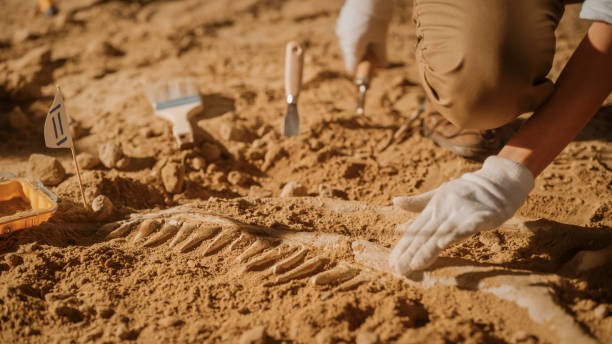
Rare dinosaur fossils unearthed in Kyrgyzstan have been identified as species endemic to the region, according to Ayzek Bakirov, acting director of the M.M. Adyshev Institute of Geology at the National Academy of Sciences of Kyrgyzstan. Bakirov shared the findings in an interview with 24.kg. The discoveries stem from a series of joint expeditions in 2025 involving scientists from Kyrgyzstan, Germany, and the United Kingdom. As a result, new Jurassic-era sites, dating back approximately 165 million years, were located near the town of Tash-Kumyr in southern Kyrgyzstan. While these sites hold significant scientific promise, excavation has been temporarily suspended due to a lack of funding. Notably, a new species of theropod, a group of predatory dinosaurs, was discovered in the Tash-Kumyr area last year during earlier fieldwork conducted with researchers from Munich’s Paleontological Museum. “Discoveries of dinosaur remains began in the early 20th century and still continue. New sites are being found, and new species are being studied,” Bakirov noted. He added that more than 30 dinosaur fossil sites are now known across Kyrgyzstan, highlighting the steady progress of local scientific efforts. Elsewhere in the region, significant paleontological discoveries have also been made. In November 2024, scientists unearthed dinosaur fossils estimated to be 85 million years old in Tajikistan’s Sughd region. Excavations took place in the village of Kansai, a site long recognized for its wealth of prehistoric remains, including reptiles, turtles, crocodiles, amphibians, and fish from the Cretaceous period. That expedition, led by Russian and Tajik researchers, built upon Soviet-era studies. Among the participants were Umed Nabiev, a master’s student in paleontology, and ecologist Gafurjon Karimov. The team focused on recovering smaller vertebrates to help expand the understanding of prehistoric ecosystems in Central Asia.