
• KGS/USD = 0.01144 0%
  • KZT/USD = 0.00198 -0%
  • TJS/USD = 0.10901 0%
  • UZS/USD = 0.00008 0%
  • TMT/USD = 0.28490 0%
  • KGS/USD = 0.01144 0%
  • KZT/USD = 0.00198 -0%
  • TJS/USD = 0.10901 0%
  • UZS/USD = 0.00008 0%
  • TMT/USD = 0.28490 0%
  • KGS/USD = 0.01144 0%
  • KZT/USD = 0.00198 -0%
  • TJS/USD = 0.10901 0%
  • UZS/USD = 0.00008 0%
  • TMT/USD = 0.28490 0%
  • KGS/USD = 0.01144 0%
  • KZT/USD = 0.00198 -0%
  • TJS/USD = 0.10901 0%
  • UZS/USD = 0.00008 0%
  • TMT/USD = 0.28490 0%
  • KGS/USD = 0.01144 0%
  • KZT/USD = 0.00198 -0%
  • TJS/USD = 0.10901 0%
  • UZS/USD = 0.00008 0%
  • TMT/USD = 0.28490 0%
  • KGS/USD = 0.01144 0%
  • KZT/USD = 0.00198 -0%
  • TJS/USD = 0.10901 0%
  • UZS/USD = 0.00008 0%
  • TMT/USD = 0.28490 0%
  • KGS/USD = 0.01144 0%
  • KZT/USD = 0.00198 -0%
  • TJS/USD = 0.10901 0%
  • UZS/USD = 0.00008 0%
  • TMT/USD = 0.28490 0%
  • KGS/USD = 0.01144 0%
  • KZT/USD = 0.00198 -0%
  • TJS/USD = 0.10901 0%
  • UZS/USD = 0.00008 0%
  • TMT/USD = 0.28490 0%
07 December 2025

Viewing results 1 - 6 of 3

Artificial Glacier Technology to Support Kyrgyz Farmers Amid Climate Change

Artificial glacier technology is emerging as a promising solution to help Kyrgyz farmers adapt to the growing challenges of climate change. By enhancing irrigation efficiency and ensuring a more reliable water supply, these innovations aim to strengthen the resilience of mountain communities dependent on agriculture. The technology was the focus of a roundtable discussion held on June 17 in Bishkek, titled “Technical Solutions for Improving Water Availability in Irrigation Systems for Mountain Communities in Kyrgyzstan Under Climate Change.” At the event, Oleg Guchgeldiyev, the Food and Agriculture Organization (FAO) Representative in Kyrgyzstan, presented a new FAO initiative to develop and expand artificial glacier infrastructure in the country. The project is being implemented in partnership with the Ministry of Water Resources, Agriculture and Processing Industry of Kyrgyzstan. With natural glaciers rapidly retreating due to global warming, water scarcity during the summer months has become a critical concern for Kyrgyz farmers. Artificial glaciers, engineered ice structures formed in winter and melted during warmer periods, offer a low-cost, scalable method of ensuring water availability during the growing season. “Artificial glaciers are not just a technological solution,” Guchgeldiyev said. “These innovations serve as a pillar of resilience for rural communities in a changing climate. Such projects strengthen food security and promote long-term agricultural development.” How the Technology Works The FAO’s “Glacier - Reservoir - Farmer” system combines artificial glaciers with small water reservoirs and modern irrigation methods such as drip systems. Water is collected from mountain springs and funneled through a pipeline to a vertical outlet pipe, 10 to 15 meters high. The elevation difference generates pressure that sprays water into the air. In winter, this spray freezes, gradually forming an ice cone. In summer, the stored ice melts and is directed to nearby reservoirs, from which it is distributed to fields for irrigation and livestock use. “Location is critical for glacier construction,” noted Matraim Jusupov, an FAO expert in agriculture and water management. “On average, one artificial glacier can supply water for 300 to 500 hectares of land.” The integration of reservoirs and pipeline systems minimizes water loss and enhances distribution efficiency, improving crop yields and rural livelihoods. Early Implementation and Expansion Kyrgyzstan already has over 30 artificial glaciers, with early projects implemented in the Uzgen, Kochkor, and Aksy districts.  As previously reported by The Times of Central Asia, In autumn 2024, seven more artificial glaciers were constructed in villages across the Batken region as part of the FAO’s broader climate adaptation strategy. These initiatives are part of Kyrgyzstan’s growing efforts to modernize its water infrastructure and build resilience against the intensifying impacts of climate change on its agriculture-dependent economy.

Kyrgyzstan Offers Support to Tajikistan with Innovative Water-Saving Technology

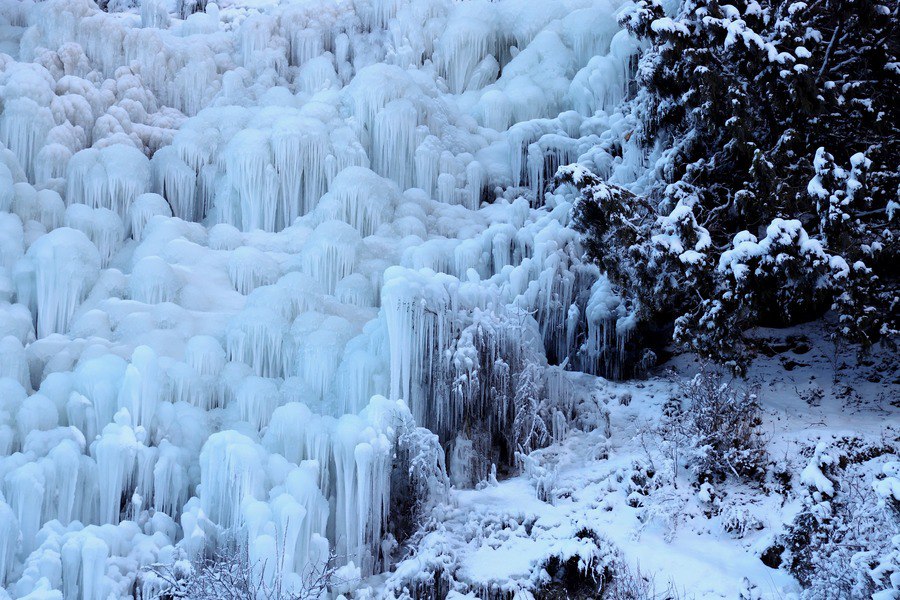
Kyrgyzstan is offering a novel solution to Tajikistan’s mounting water scarcity and pasture degradation: the construction of artificial glaciers, or so-called “ice towers.” These structures store water during the winter and release it during the arid summer months, providing a lifeline for communities affected by climate change. Innovation Amid a Warming Climate The initiative was highlighted during the session “Activating Global Action to Enhance Glacier Resilience: Civil Society Experiences in Central Asia,” held as part of the recent International Conference on Glacier Conservation in Dushanbe. According to Anar Alymkulova, executive director of Kyrgyzstan’s Institute for Sustainable Development, artificial glaciers have proven effective in mitigating the effects of climate change and addressing water shortages. Since the first ice tower was constructed in 2022 in Jalal-Abad, the initiative has expanded significantly. Two more towers were added in 2023, and in 2024, seven were built in Batken region, collectively storing over 1.5 million cubic meters of ice during the winter. By the end of this year, four additional towers are planned in the Batken and Leylek districts. In total, approximately 30 such structures now operate across Kyrgyzstan. How Ice Towers Work The technology is simple yet effective. Water from springs is channeled via an underground pipeline, spanning several kilometers, to a vertical pipe up to 20 meters tall. During winter, water is sprayed from the pipe and freezes, forming an ice tower 30 to 50 meters high. In the spring and summer, the ice melts gradually, supplying water for people and livestock. Oleg Guchgeldiev, Kyrgyzstan's representative in the UN's Food and Agriculture Organization (FAO), noted that each ice tower costs between $3,000 and $4,000 and can store up to 50,000 cubic meters of water. This method offers a practical solution in remote, arid regions where traditional water sources have become unreliable. A Critical Issue for Tajikistan Sustainable water management is a growing concern in Tajikistan, where more than 1,000 glaciers have disappeared in the last 23 years. The country has lost about 20% of its glacier volume and 30% of its glacier area over the past five to six decades. According to UNEP projections, Central Asia could lose over half its glaciers by 2050, jeopardizing water security for more than 64 million people, particularly in rural and mountainous areas. In response, the Tajikistan's President Emomali Rahmon spearheaded a successful campaign at the UN General Assembly to declare 2025 the International Year of Glacier Conservation. The initiative culminated in a major conference from May 29 to 31 in Dushanbe, attracting over 2,500 delegates from 80 countries and numerous international organizations. A Scalable Regional Solution The Kyrgyz model of artificial glaciers presents a scalable solution for Tajikistan and potentially the broader Central Asian region. As glacier retreat accelerates and drought risks rise, such technologies could play a key role in national climate adaptation strategies. “Artificial glaciers are not only a way to store water, but also a tool for adapting to a changing climate,” experts at the Dushanbe conference emphasized. “They demonstrate how local communities...

Artificial Glaciers Created in Kyrgyzstan for Sustainable Agriculture and Climate Change Adaptation

As the international community observed the first-ever World Day for Glaciers on March 21, a project led by the Food and Agriculture Organization of the United Nations (FAO) has demonstrated how artificial glaciers can help rural communities in Kyrgyzstan adapt to the effects of climate change. As part of the FAO initiative, seven artificial glaciers were constructed in villages across the Batken region of southern Kyrgyzstan in late autumn 2024​. Over the winter, these glaciers accumulated more than 1.5 million cubic meters of ice. As spring temperatures rise, the ice begins to melt, providing essential irrigation water for downstream agricultural lands. According to FAO experts, more than 1,750 hectares of land, equivalent to 2,451 football fields, can be irrigated using furrow irrigation. If modern systems are introduced, this could expand to as much as 15,000 hectares. These artificial glaciers are relatively simple structures designed to collect and freeze water in winter for agricultural use in summer, including for irrigation and livestock. On average, one glacier can support irrigation on 300 to 500 hectares. “The key is to choose the right location,” said Matraim Jusupov, FAO expert on water-saving technologies. “We channel water from a mountain spring through a pipeline ending in a vertical pipe 10-15 meters high. The elevation difference generates pressure, which allows us to spray water into the air. At sub-zero temperatures, it freezes and gradually forms an ice cone.” To build the glaciers, 6,956 meters of pipeline were laid. FAO supplied construction materials and technical guidance, while the work was carried out by local residents. The FAO office in Kyrgyzstan has since developed universal guidelines for building artificial glaciers and distributed them across the country. Based on this experience, new glacier construction is already underway in other regions. Global Glacier Melt According to the World Meteorological Organization (WMO) and the World Glacier Monitoring Service (WGMS), five of the past six years have seen the fastest glacier retreat ever recorded. The years 2022–2024 marked the largest three-year loss of glacier mass in history​. Once regarded as “eternal ice,” many glaciers are now unlikely to survive the 21st century. There are more than 275,000 glaciers worldwide, covering approximately 700,000 square kilometers. Along with ice sheets, glaciers store about 70% of the planet’s freshwater. Their depletion threatens water supplies for hundreds of millions of people. In response to this growing crisis, the UN General Assembly declared 2025 the International Year of Glaciers’ Preservation and designated March 21 as the annual World Day for Glaciers. The initiative aims to raise awareness of the critical role glaciers play in the global climate and hydrological systems, and their significance to economic and ecological stability. UNESCO and WMO are leading the global coordination effort, supported by over 200 organizations and 35 countries. Kyrgyzstan’s Initiatives A Kyrgyz delegation led by Dinara Kemelova, the President’s Special Representative for the Five Years of Action for Mountain Regions Development, participated in World Day for Glaciers events at UNESCO headquarters in Paris on March 20-21​. The meetings focused on...
